Air quality standards ‘increase pollution and health risks’

Deadly air pollution continues to be a problem in Australia because air quality standards are being misused, say experts.

The standards governing six key outdoor pollutants are being interpreted as an acceptable upper limit of pollution, says health statistician Associate Professor Adrian Barnett of the Queensland University of Technology.

But, he adds, this approach is not supported by scientific evidence.

“Study after study has shown there is simply no safe level of air pollution; health problems in the population rise in line with increases in average pollution levels,” says Barnett.

He says many reports to state governments imply it is safe to pollute up to the limits provided in the National Environment Protection Measure for Ambient Air Quality (Air NEPM).

“I have lost count of the number of government-commissioned environmental reports that have used this fallacy. This practice should have ended years ago,” says Barnett, who lays out his argument in today’s issue of theAustralian and New Zealand Journal of Public Health.

“The governments are getting bad advice.”

Air pollution causes an estimated 3.7 million deaths per year worldwide, and 3000 deaths per year in Australia.

Drawing on existing research on the health effects of air pollution, Barnett has quantified the number of extra deaths that could result from using the Air NEPM standards as an upper limit for five pollutants in Sydney, Melbourne and Brisbane.

“I’ve found that increasing pollution levels to just below the NEPM standards would cause the deaths of an extra 6000 people each year,” says Barnett, whose analysis included carbon monoxide, nitrogen dioxide, sulphur dioxide and particulate matter (diameter less than 2.5 micrometres and less than 10 micrometres).

“The increase would hospitalise a further 20,700 people per year across those cities.”

New infrastructure projects

One major area of concern to Barnett is the application of the Air NEPM in the approval of new freeways and tunnels.

“Traffic pollution is roughly 80 per cent of pollution in Australia,” he says. “It’s the one that most people are exposed to.”

He says while car technology has led to a fall in some pollutants, others remain a problem.

Barnett points to an environmental report for the East West Link in Melbourne that implies predicted increases in particulate matter (PM10) would be below the Air NEPM standard and therefore not pose an “unacceptable risk to human health”.

He says even though such projects are likely to increase air pollution and health effects in the local area, the NEPM effectively silences discussion about this fact.

“Locals who are concerned about the potential health effects have found it difficult to get past the argument that the increases are below the standards and therefore everything is fine,” says Barnett.

“Instead of using a simplistic (and wrong) threshold argument, studies should be based on a thorough cost-benefit analysis, where the increase in health effects due to increased exposure is quantified.

“The increased health effects can then be balanced against the economic and societal benefit of the new road, tunnel or industry.”

Environmental epidemiologist Dr Christine Cowie of the University of Sydney agrees with Barnett’s concerns about the use of thresholds.

She points to an environmental impact statement for the proposed NorthConnex tunnel in Sydney, which found there would be a slight increase in pollution around exhaust stacks.

“Their argument was because it was below the standards and it was such a small increase that it was all fine,” says Cowie. “Whereas really we should ensure new projects don’t contribute to more air pollution being emitted.”

Standards not enough

A 2011 review of the Air NEPM found that in light of evidence relating to thresholds “compliance with the standards alone may not achieve the desired environmental outcome of ‘adequate protection’.”

Among other things, it recommended “exposure reduction targets” for pollutants.

But, according to environmental Lawyer Nicola Rivers from non-profit group Environmental Justice Australia, little has been done since then.

“The 2011 recommendations that all the states and territories agreed to have not been implemented yet,” she says, although there is currently public consultation underway on some of them.

Rivers points to other failings of the NEPM system, which requires states to monitor pollution.

“There are no consequences if you don’t monitor and report back and you are certainly not required to reduce pollution levels to below those standards.

“It’s completely ineffective,” she says “Our view is we need to move beyond the NEPM.”

A spokesperson for the federal environment minister, Greg Hunt says the Emissions Reduction Fund will reduce (greenhouse) emissions by 5 per cent on 2000 levels by 2020, and future research funded by National Environmental Science Programme will focus on clean air issues.

“The Government is also committed to implementing a National Clean Air Agreement with the states by 1 July 2016.”

But Rivers says what’s needed are national air pollution laws that require the states to reduce pollution.

“My question is, what is the government going to do to actually ensure air pollution levels reduce in Australia,” she says. “I don’t think anything that’s happening at the moment is actually going to result in that.”

via Air quality standards ‘increase pollution and health risks’ › News in Science ABC Science.

Posted in Air Quality, Australia & Oceania | Tagged , , , , , | Leave a comment

UK failed to meet NO2 limits for 2013, latest figures show

UK’ Government’s submission to European Commission shows that only five out of 43 zones met limits set for last year

Only five of the UK’s 43 air quality zones were compliant with EU annual mean limits for nitrogen dioxide in 2013, according to the UK government’s submissionon air quality to the European Commission.

The five zones which met the annual mean limit for NO2 of 40 micrograms per cubic metre (ug/m3) in 2013 were: Blackpool Urban Area; Preston Urban Area; Highland; Scottish Borders; Northern Ireland.

And, 12 the 38 zones failing to comply have been given time extensions from the original 2010 deadline to meet the limit value.Thirty-eight zones in the UK meanwhile failed to meet annual mean limits for NO2 in 2013, although seven of these were in fact within the annual mean limits ‘plus margin of tolerance’ in 2013, according to the report.

Only five zones also met the annual limits value for NO2 in 2012, while a further four were within the applicable ‘margin of tolerance’.

London

Meanwhile, the Greater London Area was the only UK zone which failed to meet the one-hour limit value for nitrogen dioxide (200ugm3) on more than the permitted 18 occasions in 2013.

In addition, the UK also exceeded the long-term objective for ozone in 33 zones exceeded, and failed to meet EU limits in six zones for benzo[a]pyrene in 2013.

The findings come in Defra’s ‘Air pollution in the UK 2013 – Compliance Assessment Summary’ report, which was prepared by consultancy Ricardo-AEA and published online on Friday (September 26).

The UK is required to report air quality data on an annual basis under the ambient air quality Directive (2008/50/EC) and the Fourth Daughter Directive (2004/107/EC) under the Air Quality Framework Directive (1996/62/EC).

However, on a more positive note for Defra – which is facing legal action from the European Commission over failing to meet nitrogen dioxide limits– the report shows that all UK zones met the limits for sulphur dioxide and PM10 particulate matter.

All zones also met the target value for annual mean concentration of PM2.5 particulate matter, and the Stage 1 limit value, which comes into force in 2015.

Improve

Commenting on the report, a Defra spokesperson said: “We recognise that clean air is vital for people’s health and have seen air quality improve significantly in recent decades. Work is underway to ensure compliance with EU NO2 limits – we’ve invested £2 billion since 2011 to increase the uptake of ultra-low emission vehicles, sustainable travel and green transport initiatives.

“Local Authorities are responsible for improving the air quality in their areas and it is for them to identify the best solution for their area. The government supports these efforts through our Air Quality Grant Scheme and Clean Vehicle Technology Fund.”

The European Commission’s decision to pursue legal action followed the UK Supreme Court’s ruling in May 2013 that the UK was in breach of air pollution limits in 16 of 43 zones in 2010 and the UK government is failing in its duty to tackle the problem (see airqaualitynews.com story).

New, tighter limits for a number of air pollutants are also being proposed by the Commission up to 2030 as part of a package of air quality measures unveiled in December 2013

via UK failed to meet NO2 limits for 2013, latest figures show | AirQualityNews.

Posted in Air Quality, Europe, London, UK | Tagged , , , | Leave a comment

Environmentalists: Air pollution can be curbed if Israel implements more efficient transportation

Transitioning to a more efficient transportation structure could save Israelis billions of shekels and prevent enormous amounts of pollution annually, the founders of an air pollution monitoring app have concluded.

Seemingly minor changes like optimizing traffic flow, filling buses to near capacity and improving bus exhaust pipes could be instrumental in both attracting Israelis to use public transportation as well as curb pollution levels that plague the country’s cities, according to environmental engineers Ziv Lautman and Ran Korber, co-founders of the BreezoMeter air pollution monitoring app. Lautman and Korber recently analyzed a slew of data about air pollution emitted by vehicles, originally compiled by Yaniv Ronen, at the Knesset Center for Research and Information in December 2010.

BreezoMeter, which went live at the end of June, offers real-time access to 300 air pollution monitoring stations around the country and using an algorithm to calculate a user’s air-pollution level at any given location. BreezoMeter was founded by Lautman and Korber along with software engineer Emil Fisher, after they raised $200,000 in seed funding from the venture capital firms Jumpspeed and Entree Capital. Today, the app has accumulated more than 11,000 downloads – about 40 percent of which represent daily users.

The data compiled by the Knesset Center for Research and Information indicated that the emissions level of a full bus is equivalent to that of between 20 and 24 private cars. Assuming that there are about 1.2 passengers on average per private car, and a busy bus line contains about 65, a full bus eliminates the need for about 54 cars on the road – thereby saving more than twice the air pollution, Lautman said.

Looking at these numbers, Lautman and Korber concluded that “the real contribution of buses in reducing air pollution” actually lies today in the tendency of Israelis to travel in nearly empty private vehicles. Meanwhile, they saw that when the occupation of a bus is only 24 out of the 65 total passengers, the pollutant emissions data per passenger compares to that of a private vehicle.

“A bus has the potential to contribute significantly to the reduction of air pollutants, but if the lines are not optimally designed or if there are less busy hours, full private vehicles can also be a good alternative,” Lautman and Korber wrote in their analysis.

The two environmental engineers also examined the impact of Israel Railways operation on the country’s air pollution levels. While the effect of train operations on the country’s air pollution balance is minimal on a national scale, the diesel engines may have a significant impact on a local scale, particularly near major train stations, Lautman and Korber said.

Despite the fact that studies conducted around the world have shown that massive transitions to public transportation can sharply reduce hospitalized asthma events and ozone levels measured in urban space, private car travel in Israel has increased significantly alongside population growth, Lautman and Korber explained. While train travel has also grown considerably in recent years, bus travel has dropped – in terms of the number of buses, number of passengers and amount of seats available, they said.

Many initiatives can be taken to overhaul the country’s transportation structure, thereby saving billions of shekels and making the air more breathable, according to Lautman and Korber. Some such measures include synchronizing traffic lights for better vehicle flow, limiting speeds for reduced fuel burning, improving bus exhaust pipes, encouraging vehicle sharing and bettering both bicycle and pedestrian infrastructure, they said.

“There are many more things that we can do in order to cut down air pollution and make our environment better,” Lautman told The Jerusalem Post.

While it is crucial to encourage people to make more use of public transportation modes, doing so means not only investing in the buses themselves, but also in increasing bus frequency, Lautman said.  Revamping the country’s transportation structure requires “a more holistic approach,” which takes into account the diverse array of factors that allow travelers a smooth drive, he added.

As far as the BreezoMeter app is concerned, Lautman said he and his colleagues are please to see people using the app’s features particularly in the morning and the afternoons. Following the request of many users, they will soon be upgrading the app to include the most offensive pollutants in a user’s location, rather than just a general pollution level.Just a week ago, BreezoMeter won the StartUp Open Israel competition in Tel Aviv, held as part of the city’s DLD Digital Conference.

“I think air pollution is the next big thing,” Lautman said.

via Environmentalists: Air pollution can be curbed if Israel implements more efficient transportation.

Posted in Air Quality, Middle East | Tagged , | Leave a comment

‘Reverse graffiti’ highlights traffic pollution in cities

It may come as a surprise to Londoners to learn that not all walls are actually black.Air pollution is the problem that a “reverse graffiti” artist is seeking to highlight in a new London mural, created by washing away the dirt ingrained in the city’s walls.

London has the worst air pollution in the UK, causing around 3,000 people to die prematurely every year. Recently, the air on Oxford Street was found to have the highest recorded levels of pollutant NOx on the planet. The primary culprit is London traffic, which spews particulate matter over the city’s busiest streets, turning them black.

Today, street artist Moose unveiled a new 10-metre long mural in Waterloo, depicting London’s famous landmarks including Buckingham Palace, the Shard, Battersea Power Station and the London Eye.

The work was commissioned by Nissan to highlight the benefit of electric cars like its LEAF model in creating cleaner cities. And the image was drawn with a pressure washer powered by the LEAF’s car battery.“I’ve been using reverse graffiti for fifteen years now, in fact I named it,” said Moose.“My whole ethos is about highlighting the amount of pollution we endure daily using a very positive harmless method that never fails to ask questions about what we accept and what we shouldn’t accept in our environment.”

via ‘Reverse graffiti’ highlights traffic pollution in cities.

Posted in Air Quality, London, UK | Tagged , , , , | Leave a comment

World Pollutionwatch: A breath of not-so-fresh air

On Saturday afternoon, 6 September, the Irish Environmental Protection Agency’s twitter feed began issuing air pollution warnings for rural Ireland and across towns and cities. Sulphur dioxide concentrations briefly resembled those experienced downwind of large, old coal power stations or oil refineries before quickly returning to normal. Largest peaks were seen on the west coast in County Clare and Limerick, but it was also detected in Galway and in Dublin. By early evening the pollution peak reached Cork and Wexford in the south. Similar but smaller pollution peaks were measured that weekend across Northern Ireland and mainland UK reaching south east England on Sunday evening. Scientists at King’s College London also detected traces of mineral dust in the air as the sulphur dioxide passed through.

When air pollution is simultaneously measured over a wide area it normally comes from somewhere far away. Satellite images and weather models point to Iceland’s Bárðarbunga volcano, which is erupting in the Holuhraun lava field. Gases from the eruption on Friday 5 September reached Ireland and the UK on the following two days. Rotten egg smellsfrom sulphurous gases were also reported on the west coast of Norway. Closer to the source, people in Iceland were issued with health warningsand told to stay indoors if the volcanic gases approached.

The huge quantities of ash spewed into the skies by the Eyjafjallajökull and Grímsvötn volcanos caused massive disruption to air travel over Europe in 2010 and 2011 but Bárðarbunga is a different sort of eruption, it contains little ash but is proving remarkable for its emissions of sulphurous gases.

via World Pollutionwatch: A breath of not-so-fresh air | Environment | The Guardian.

Posted in Air Quality, Europe | Tagged , , , , | Leave a comment

Spain warned to tackle ‘poor’ air pollution

SPAIN is among a number of European countries being urged to tackle their air pollution problem.

New research by the European Respiratory Society has highlighted an underlying link between Europe’s poor air quality and an increase in poor lung health among adults.

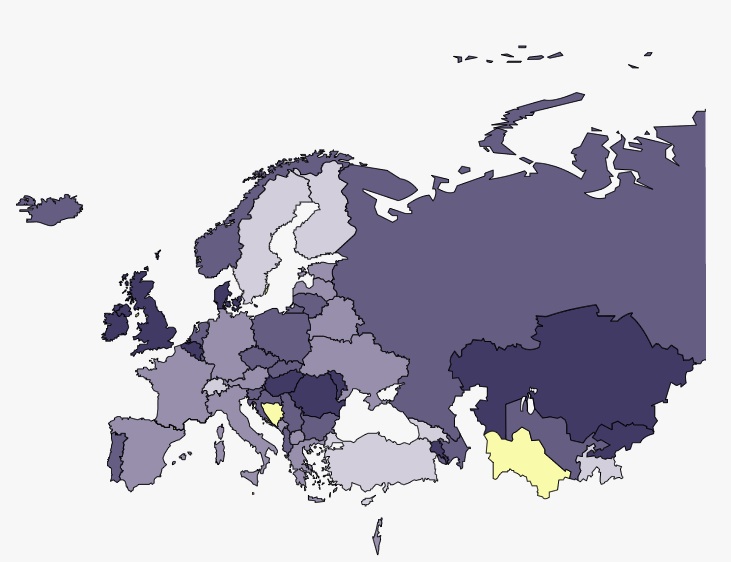
The study evaluated the correlation between air pollution and lung function in adults from the UK, Switzerland, France, Germany, Italy, Belgium, Spain and Sweden.

Professor Peter Barnes, president of the European Respiratory Society, said: “Urgent action is needed to tackle air pollution in Europe.

“It is crucial that policymakers in Europe take note of these findings and update guidelines in Member States to meet the WHO-recommended air quality standards.

“This will ensure equal protection of all citizens’ health across the continent.”

via Spain warned to tackle ‘poor’ air pollution.

Posted in Air Quality, Europe, Spain | Tagged , | Leave a comment

Boris Johnson wins international award for London’s air quality efforts

Boris Johnson, mayor of London, surprised clean air campaigners on Tuesday night by winning a prestigious international award for his efforts to improve the city’s air quality.

The city faces stiff fines from Brussels over its repeated breaches of European Union air quality standards, with air quality likely to continue to fall below standards for years to come. Johnson was recently sharply criticised by a committee of MPs for failing to tackle air quality. Earlier this year, London suffered serious smog problems that led to warnings for vulnerable people, including children, the elderly and those with respiratory illnesses, to stay indoors for days.

The C40 award judges cities around the world on their efforts to tackle air quality and climate change. London won the air quality award for its work on low-emissions taxis, and separately received another award for a new carbon accounting standard, described as an international best practice benchmark.

Matthew Pencharz, the mayor’s senior adviser on environmental and energy issues, told the Guardian: “This is very good for us. This is going to stimulate the low-carbon economy, and taxi drivers will benefit from energy efficiency savings. London is showing practical delivery solutions to these problems [of air pollution and climate change].”

He said: “We are the first to accept that air quality is a challenge. People accuse of us not doing anything, but I think anyone reasonable would say that Boris Johnson is doing everything he can to improve air quality in the capital.”

The new zero-emission capable taxis are expected to reduce emissions by more than 75% compared to the average London taxi. In central London, where they will mainly operate in zero emission mode, emissions per taxi will be reduced by almost 100%. At present, London’s iconic black cabs account for around 15% of nitrogen oxide emissions in central London, and around 35% of PM10 emissions of large particles, which the mayor said would rise to 45% without intervention.

But campaigners were critical of the award, saying that Johnson has not done enough to tackle London’s growing air pollution problem and it was “laughable” for him to receive such an accolade.

Darren Johnson, London assembly member for the Green Party, said: “We are running out of time to avert a climate catastrophe and the mayor of London should be at the forefront, advocating and delivering carbon reduction programmes on the scale needed, as well as zero carbon energy generating technologies like solar energy. Instead, Boris Johnson criticises wind farms, ignores the scientific consensus on global warming and promotes climate sceptic views. His backing of aviation expansion and fracking can only lead to one thing and that is the acceleration of global warming.”

Johnson has made moves to tackle the air pollution problem, for instance by announcing this summer a rise in the congestion charge on the most polluting diesel-fuelled vehicles, but these plans will not come into effect until 2020. He has also introduced the city’s first age limits on taxis, which has resulted in the retirement of more than 3,000 of the oldest vehicles.

The air quality award was made for a measure that would see “low-emissions capable” taxis on London’s streets from 2018. These taxis would cut down on emissions of particulate matter and nitrogen oxides, which cause breathing difficulties in vulnerable people and can cause permanent harm to children’s lung development.

However, the rules would only apply to new taxis licensed from 2018, which make up a small proportion of the total number of cabs, and they would only be required to use their low-emission capabilities in the central London low emissions zone, which does not cover the whole capital.

Simon Birkett, founder and director of the Clean Air in London pressure group, said: “Boris is killing the taxi industry not saving it. He should be using his Twitter account to issue smog warnings not begging people to vote for him to win this prestigious international award.”

He said: “The reality of Boris’s taxi strategy is that drivers are forced to buy one of two large, relatively expensive diesel vehicles because they are the only ones meeting the anachronistic 25 foot turning circle requirement. At the stroke of a pen he should remove the turning circle requirement and allow drivers to buy mass market petrol and other low emission vehicles at a fraction of the current cost of a taxi.”

London’s iconic black cabs have long been required to have a tight turning circle, because of historic concerns over their manoeuvrability on London’s narrow streets.

Birkett questioned whether the new rules would make a real difference, and asked: “Will Boris deliver a successful new taxi when he says he will, with funding complying with state aid rules and at a cost that allows taxi drivers to compete with private hire vehicles?”

He also suggested it could take 15 years from 2018 to replace London’s existing 23,000 strong taxi fleet.

via Boris Johnson wins international award for London’s air quality efforts | Environment | theguardian.com.

Posted in Air Quality, London, UK | Tagged , , , , | Leave a comment

Smoke From King Fire Brings Air Pollution Advisories, Travel Warnings

The National Weather Service in Reno issued a Dense Smoke Advisory Monday for an area stretching from north of Reno to south of Gardnerville and throughout Lake Tahoe and Truckee through 8 p.m. Monday.

The Dense Smoke Advisory will resume Tuesday from 11 a.m. to 8 p.m. But National Weather Service forecasters don’t expect the air to improve much through Wednesday.

Reno’s air is considered unhealthy for the elderly, young children and people with respiratory problems. The most unhealthy air quality levels have been where the fire is burning, in El Dorado and Placer counties. But as winds shift, so does the smoke. The air quality where the fire started has improved over the past week.

“In Camino and Pollock Pines today [Monday] the levels are down in the good range, zero to 50, whereas last week they were up over 500 to a thousand in the hazardous range,” said Dave Johnston, with the El Dorado County Air Quality Control District. He said dust masks, “N-95 or P-100 rated,” can provide protection from fine particulate matter, which is the major pollutant in wildfire smoke.

The Placer County Air Pollution Control District Monday recommended closure of schools in the Colfax and Foresthill areas due to hazardous levels of fine particulate matter. The District also advised people to avoid outdoor activity in Squaw Valley, Truckee and Auburn.

Officials said Monday the smoky conditions are expected to continue from Placer County to the Lake Tahoe area, depending upon wind direction, until the King Fire is completely out.

The National Weather Service in Reno forecast said visibility could drop to near one mile at times, “especially during the afternoon and evening, when smoke from the King Fire is most likely to spread east of the Sierra Crest.” The forecast also said periods of dense smoke from the fire could create low visibility on I-80, Highway 50 and Highway 89.

The Sacramento NWS issued a Fire Weather Watch for Wednesday. The forecast covers northeast California and northwestern Nevada, including northern Washoe County. The forecast is for gusty winds and 10-15 percent humidity.

via Smoke From King Fire Brings Air Pollution Advisories, Travel Warnings – capradio.org.

Posted in Air Quality, USA & Canada | Tagged , , , , , | Leave a comment