WSU helps predict air quality during smoke season

As wildfire smoke clouds Pacific Northwest skies, researchers from Washington State University are helping improve air quality predictions with the first high-resolution, Web-based air-quality forecast system in the country.

Created by researchers in WSU’s Laboratory for Atmospheric Research (LAR), the system uses numerical weather forecasts and pollution emission data to predict concentrations of ozone, particulates and other pollutants as they are emitted, transformed, removed and transported across the region.

smoke air qualityThe AIRPACT (Air Indicator Report for Public Awareness and Community Tracking) system is receiving wildfire data from satellites and producing air-quality forecasts nightly. Especially significant during fire season is the system’s ability to model particles under 2.5 micrometers in size, which are indicative of wildfire smoke.

To see hourly projected wildfire smoke concentrations for the region, visit http://lar.wsu.edu/airpact/index_pm25.html. The date and clock on the right show what hour into the future the map is predicting – up to 48 hours. The best air quality shows as white on the map while the worst is red.

Find more fire and smoke information at the Washington Smoke Information blog at http://wasmoke.blogspot.com.

via WSU helps predict air quality during smoke season | WSU News Washington State University.

Posted in Air Quality, USA & Canada | Tagged , , , , , | Leave a comment

Only 9 Chinese Cities Pass Clean Air Test

If you are looking for a Chinese city with clean air, your best bets would be Shenzhen, Zhuhai, Zhoushan, Zhanjiang, Yunfu, Beihai, Haikou, Sanya or Lhasa, according to the Ministry of Environmental Protection.

Those are the only nine out of 161 monitored cities that met China’s new air quality standards in the first half of this year, the ministry announced on Wednesday. The stricter standards were rolled out by the government in 2012 as part of a continuing battle with air pollution in the country, the state news agency Xinhuareported.

Chinese leaders have vowed a “war” on pollution as one of its most visible forms, smog, regularly envelops the country’s major cities, particularly in the north. Health officials warn that exposure to fine particulate matter, known as PM 2.5, can lead to serious health problems. Last year, a doctor treating the country’s youngest patient ever diagnosed with lung cancer, an 8-year-old girl, attributed the disease to air pollution.

One city that did not meet the air quality benchmark was the country’s capital, Beijing. The city’s 20 million residents — migrant workers and government leaders alike — regularly experience unhealthy levels of PM 2.5 and other pollutants.

In January 2013, Beijing residents endured particularly choking, yellow air with a concentration of fine particulate matter 40 times the recommended maximum exposure limit set by the World Health Organization.

On Monday, the municipal government announced its latest measure to curb pollution. In a statement on its official website, the Beijing Municipal Environmental Protection Bureau said the capital would ban the use of coal in six districts and neighboring regions by the end of 2020. Other high-polluting fuels, such as petroleum coke, and some biomass fuel will also be banned. Electricity and natural gas will be promoted for heating and cooking instead.

Last September, the Chinese government announced a nationwide plan to curb air pollution that included a goal of reducing overall coal consumption as a percentage of energy use. Some critics of the initiative voiced disappointment that the plan did not set specific limits on coal use by region.

China accounts for roughly half of the world’s annual coal consumption, the burning of which creates pollutants like fine particulates and greenhouse gases like carbon dioxide.

But a ban on coal in Beijing alone will not put much of a dent in China’s overall coal use, because Beijing is “a very minor coal-consuming region,” Rohan Kendall, the China consulting manager at Wood Mackenzie, a consultancy, said in a telephone interview on Thursday.

“Total coal consumption in China is more than four billion tons annually, of which Beijing consumed only 15 million tons last year,” Mr. Kendall said, adding that Beijing receives most of its energy, and pollution, from neighboring provinces.

He said he doubted that many other cities would emulate Beijing’s plan. “Coal is just too important for China,” he said.

via Only 9 Chinese Cities Pass Clean Air Test – NYTimes.com.

Posted in Air Quality, Asia, China | Tagged , , , | Leave a comment

Iran Plans to Increase Supply of Euro-4 Petrol to Reduce Air Pollution

Saeed Mahjoubi, a top official of the National Iranian Oil Refining and Distribution Company NIORDC, announced proper catalyst is being purchased for the refinery to start producing euro-4 gasoline by March 2015.

He further added that the Lavan oil refinery is expected to produce 3.5 million liters per day ml/d of euro-4 gasoline.

In mid-March, Deputy Head of the NIORDC Shahrokh Khosravani said boosting the quality of production in refineries has been seriously pursued in recent years.

via Farsnews.

Posted in Air Quality, Iran, Middle East | Tagged , , | Leave a comment

Respro® Masks FAQ: Do the filters need replacing, if so, how often?

Do the filters need replacing, if so, how often?

Yes the filters do need replacing.

1. The effective working life of the City™ filter depends on a number of factors, such as; the breathing rate of the user; ambient levels of pollution; the length of time the filter is actively working; hygiene levels. Taking these factors into account we recommend that the filter should be replaced every month or every 69 hours, whichever is sooner.

2. Replacement of the Sportsta™ filter should be carried out every month or when the filter becomes noticeably discoloured.

For more frequently asked questions,  go to Respro® Mask FAQs

Do you need to change the filter in your Respro® Face Mask? Watch this video to learn the correct procedure.

Posted in Air Quality | Tagged | Leave a comment

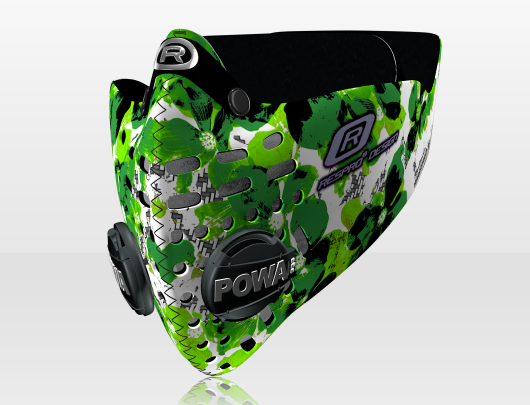
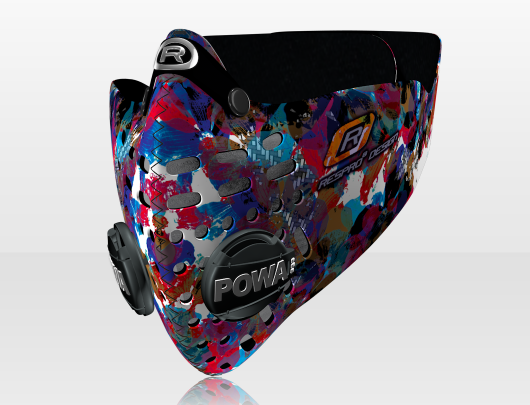
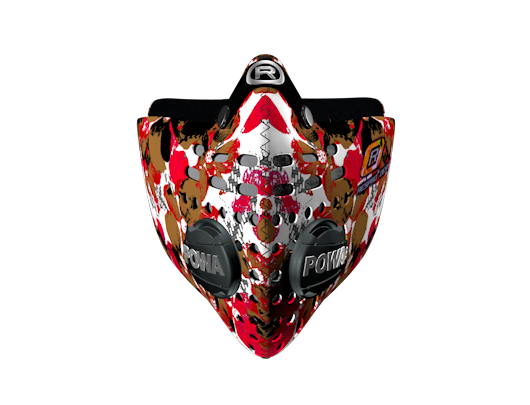
Respro® Skins™ pollution mask PETAL

Refresh your old Respro® Mask with a new skin to #matchyourstyle

SKINS_SIGNATURECustomise your new Respro® mask:

Choose your Skin design and colour, together with a filter and valve accessory pack to match your style. You get to build your mask to your own unique specification.

Refresh your old Respro® mask:

If you already own a Respro® Mask, you can buy a just the Skin™ without the filter and valves and use your own components. To assemble your mask or change the filter, watch this video.

Respro® Skins™ are available online via respro.com

Respro® Skins™ pollution mask - PETAL Green #matchyourstyle

Respro® Skins™ pollution mask – PETAL Green #matchyourstyle

Respro® Skins™ pollution mask - PETAL Blue #matchyourstyle

Respro® Skins™ pollution mask – PETAL Blue #matchyourstyle

Respro® Skins™ pollution mask - PETAL Mixed #matchyourstyle

Respro® Skins™ pollution mask – PETAL Mixed #matchyourstyle

Respro® Skins™ pollution mask - PETAL Red #matchyourstyle

Respro® Skins™ pollution mask – PETAL Red #matchyourstyle

Posted in Air Quality | Tagged , | Leave a comment

Europe launches mobile app to help public monitor air pollution

The EU has launched the AirProbe system that uses a small sensor box and an app to help the public track how much ozone, black carbon and other pollutants they are being exposed to.

Partners from Belgium, Germany, Italy and the UK have developed this system to increase people’s awareness of their environment. More than 300 people in Antwerp, Kassel, Turin and London participated in the first tests.

A similar app related to noise pollution – WideNoise – has already been used by more than 10,000 people and was at the centre of a study around Heathrow airport. Data collected is available to all, citizens, authorities and scientists so that they get a better picture of the environment.

“The EVERYAWARE project really aimed to empower people, to give them easy but accurate tools to measure air quality and noise. And then we analysed their use of the system as well as the data they had collected,” explains project coordinator Vittorio Loreto, a research leader at ISI Foundation in Turin and a physics professor at Sapienza University of Rome.

Five partners joined their expertise, from social sciences to computer and environmental sciences. €2 million of EU funding was invested in the project to create the tools and organise various case studies.

Two smartphone apps were developed: AirProbe monitors exposure to air pollution and WideNoise measures noise levels. Both apps include social games to share information and impressions as well as interactive maps. The AirProbe app works in conjunction with a small battery-operated sensor box that can easily be carried in a backpack or in a bicycle basket, and connects to your phone via Bluetooth. After sucking in air, the box sends readings for the level of ozone, black carbon and other pollutants to a central server, which then sends around information about the town’s polluted areas as well as peak pollution times to avoid.

During the project, researchers tested the system with volunteers during four challenges in London, Antwerp, Kassel and Turin. These Air Ambassadors collected over 28 million air quality points. They gave their feedback on the tools – for example some advised to make the sensor box smaller and to water-proof it – and on their perception and feelings.

“It is interesting to see the difference between the feeling we have, our perception and the actual data,” explained several participants. “Even the big streets were not as evil as I had thought prior to participating”, said a runner who took part in the tests.

The system is currently used in schools and for new studies. For example, data collected via WideNoise has informed a response to a proposed expansion of Heathrow Airport.

Regarding AirProbe, the sensor box would need to be mass-produced in order to widen its use.

“For the time being, I imagine a much smaller, ideally wearable sensor box integrated into our clothes and objects”, says Professor Loreto. “The integration with the smartphones is of course also envisioned, though on a longer timescale. It all depends on which companies are interested in producing the sensor box, and how much smartphone makers are willing to invest”.

Scientists can also use the information gathered to analyse pollution trends and post this information online for citizens and public authorities. This could, for example, help deal with traffic congestion. “It is still too early to draw any conclusions, but it will be interesting to see how people change their behaviour as their awareness of the environment increases,” added Professor Loreto.

Vice-President of the European Commission Neelie Kroes, responsible for the Digital Agenda, says: “Thanks to new technologies we are now firmly in the era of citizen science where everyone can create, collect and share data for the common good. Data about the environment, but also about health and culture for example. Opportunities to be better informed and connected are higher than ever before, we have to grab them.”

Air pollution is one of Europe’s biggest silent killers. In 2010 more then 400 000 people are estimated to have died prematurely from air pollution in the EU. Poor air quality also increases medical costs, reduces economic productivity, and damages crops and buildings. EU legislation ensures high air quality standards, member states are obliged to monitor air pollutants and ensure limit values are respected. The European Commission has also proposed new measures aimed at saving lives and protecting people’s health.

via Europe launches mobile app to help public monitor air pollution > International News > News | Click Green.

Posted in Air Quality, Europe | Tagged , , | Leave a comment

The great diesel scandal: how cheap fuel is choking our cities

Stand at a busy road junction on a bright day and chances are you will see it: a Wacky Races cloud of black smoke left hanging in the air after a car pulls away. These clouds are actually particles of soot – partially burnt fuel from diesel engines – and they are arguably the worst environmental menace facing city-living Britons – and children in particular.

Diesel vehicles have enjoyed a surge in popularity on our roads, rising from less than a quarter to more than half of all cars sold in the last five years. In the recent past, they were even touted as more environmentally friendly than petrol vehicles, because they burn less fuel and so can produce, overall, less CO2. This green image, however, was always an illusion: diesel engines burn fuel less cleanly than petrol-driven models, resulting in a large excess of particulates – the visible clumps of soot left behind in the exhaust fumes.

Particulates are one of the worst offenders in air pollution because they damage the lungs when inhaled. “It has been known for a long time that diesel particles are harmful, and the links to lung cancer have been widely published,” says Penny Woods, chief executive of the British Lung Foundation. “Along with other major factors such as poor diet and smoking, diesel levels in a large city like London have been associated with significant health problems.” For children, especially, this can cause a permanent stunting of lung growth. And the picture may be even worse than current studies show: “There is a growing consensus in the medical community that diesel particulate emissions are more dangerous to health, particularly lung health, than previously thought,” adds Woods.

Yet despite our growing knowledge of the problem, the coalition’s policies – which follow on from equally harmful policies under the previous government – still favour diesel over petrol, and motorists continue to respond by opting for diesel in the showroom and at the pump. Diesel is taxed at exactly the same rate as petrol, a situation that the Treasury argues is fair and shows no favouritism between the fuels. The problem with this argument is that diesel cars travel further on a gallon of fuel than their petrol-driven counterparts, so the tax per mile is much lower.

The answer, according to a growing number of experts, is to tax diesel more heavily and regulate its use more strictly. The British Lung Foundation would firmly support such measures, says Woods. Simon Birkett, founder of Clean Air in London, also supports higher taxes, as does the environmental group Client Earth, and the RAC Foundation, while Friends of the Earth wants a fuel-tax review and Greenpeace says higher taxes in urban areas may be the best approach.

Boris Johnson, the mayor of London, favours a localised response. Stung into action by the threat of large fines from Europe as London repeatedly burst through the permitted air-pollution levels, he unveiledplans last week for a doubling of the congestion charge for diesel vehicles, to come into effect from 2020. In case that is not sufficiently effective, he is also lobbying government for an increase in diesel taxes relative to petrol across the board.

Across Europe, the favourable treatment of diesel compared with petrol is even more pronounced. According to the European Commission, most EU member states tax diesel at a lower headline rate, meaning diesel costs on average 10% less than petrol at the pump even though it can cost 10% more to produce. In 2011, the commission proposed a minimum price on diesel. But the plans have since been bogged down in Brussels under pressure from the motoring lobby and automotive industries. “There is not the political will,” said one Brussels official.

While politicians stall, the automotive industry insists it is cleaning up its act, without the need for new taxes or regulations. “The automotive industry has committed billions of pounds in recent years to reduce and eliminate emissions from all engines types: it takes 100 cars produced today to emit as many polluting elements as one car made in the 1970s. Vehicles manufactured today feature filters that capture over 99% of particulates,” says Keith Lewis, head of communications at the Society of Motor Manufacturers and Traders, which represents the industry. “Nitrogen oxides (NOx) emissions from cars [were] reduced 81% between 1990 and 2010, despite a 19% increase in distance travelled.”He points out that “building generators, aeroplanes, trains, commercial boilers, patio heaters, all of which also produce the same emissions our sector is working so hard to reduce” have an impact in urban areas such as London. However, none of these produce the widespread ground-level particulate emissions that are the main hazard from diesel, particularly to children.

The British Lung Foundation says it is too soon to say whether the new filters will prove clean enough, or whether the improvements will be outweighed by the rapid growth in the number of diesel vehicles: “We can’t tell until studies have been done to measure the effectiveness.”

Tax is not the only means that should be used to reduce the impacts of diesel use, according to experts. Iain McLellan, policy officer for Environmental Protection Scotland, also sees the need for “policies such as incentivising ultra-low-emission vehicles, integrating public transport and increasing city-centre pedestrianised areas”. Tony Juniper, long-time environmental campaigner and adviser to the Prince of Wales, agrees that a fuel tax could be a blunt instrument, particularly in rural areas where there are few vehicles and air pollution is not an issue. “Other tools are needed, including road-use charges for those areas where air-quality standards are regularly breached.”

In London, diesel emissions are now so bad that on several days earlier this summer, children, older people and vulnerable adults were warned not to venture outside. How long before this starts to have an effect on London’s economy? Diesel fumes do not respect house price boundaries, with London’s royal borough of Kensington and Chelsea one of the worst polluted areas in the country. Rich bankers in a famously mobile industry may eventually balk at bringing their children to a city where they cannot safely breathe. Perhaps this democracy of the air will prove more effective than the special pleading of the motoring lobby.

via The great diesel scandal: how cheap fuel is choking our cities | Environment | The Guardian.

Posted in Air Quality, Europe, London, UK | Tagged , , | Leave a comment

Air pollution to be monitored in Newcastle across the city

NEWCASTLE now has access to an air quality monitoring network that will provide rolling information about pollution levels across the city.

The network, based on the successful Upper Hunter Air Quality Monitoring network, was launched in Carrington this morning.

In addition to existing monitors at Newcastle, Wallsend and Beresfield, the network has three new sites at Mayfield, Carrington and Stockton.

‘‘We will use this air quality data to establish and monitor trends, inform longer-term government actions and policies and provide public access to reliable information,’’ environment minister Rob Stokes said at this morning’s launch.

The location of the new monitors was based on local meteorology, potential emissions sources and existing monitoring stations.

The sites were also selected in consultation with with the Newcastle Community Consultative Committee on the Environment and NSW Health.

‘‘This is a major phase in understanding air quality in the Lower Hunter,’’ committee chairman John Tate said.

‘‘It shows what can be achieved when communities and governments work together. I urge everyone to log on an have a look at the information that is available.’’

The Newcastle network is part of the NSW air quality monitoring network, which provides continuous measurements of a range of pollutants, including particulate matter.

‘‘The NSW government takes air pollution in NSW very seriously and nowhere is this more evident than in the Hunter region where we are focusing much of our effort into investigating sources and impacts of particulate pollution,’’ Mr Stokes said. The Environment Protection Authority will initially fund the operation of the network pending the finalisation of ongoing funding from key industries with environment protection licences in the Newcastle local government area.

via Air pollution to be monitored in Newcastle across the city | Newcastle Herald.

Posted in Air Quality, Europe, UK | Tagged , , , | Leave a comment