Mayor’s office: keep children out of the playground when air pollution is bad

The Mayor’s office have advised that London’s schoolchildren should be kept indoors for their own safety when air pollution is bad – on average once a month.

LBC Radio’s Daniel Freedman spoke to Matthew Pencharz, the Mayor’s environmental advisor, who admitted that “in areas of high smog, which do happen now and again because of climatic conditions, it may be sensible for the children not to be in the playground then.”

This news was coupled with discussion of the irreversible impact on children’s lungs. Frank Kelly from Kings College London talked about scientific research which shows that “children who go to school or live within 500m of a busy freeway had an under-developed lung by the time they reached 18 years of age – this is very serious serious because it’s something they cannot regain and will carry with them through the rest of their lives.”

I am pleased to see the Mayor’s office forced to make such a stark statement which makes clear how real the impacts can be. It’s a complete contrast to the usual underplaying of risks that goes on in government. The Mayor’s Air Quality Strategy talks about how it ‘can be a contributory factor in the premature deaths of vulnerable people with existing illnesses’. Defra’s air pollution forecast adopts a reassuring tone: ‘Whilst most people will not be affected by short term peaks in ozone, some people, particularly vulnerable groups such as those with existing heart or lung conditions, may experience increased symptoms.’

The reality is that the ‘vulnerable groups’ are nowhere near as small as they would have us believe, and I hope this advice for schools helps this hit home. The official figures of 29,000 premature deaths each year in the UK at an average loss of life of 11.5 years is shocking but perhaps hard to relate to. While the picture conveniently painted of air pollution contributing to the premature deaths of those with existing illness might be easily ignored – an image of children growing up with smaller lungs is surely not so easy to push to the back of your mind.

Or so you might think. The Healthy Air Campaign met with Lord de Mauley, Defra minister with responsibility for air quality in January of this year. Frank Kelly attended and outlined the same shocking evidence relating to children’s lung capacity. I was shocked by how easily this was shrugged off and rebuffed with the (more?) worrying cost to industry that would be involved in reducing pollution to legal limits, and the need to adhere to government’s growth agenda. Never mind that it would cost the most polluting industries but also provide a roughly equivalent boost to green industry which would provide the cleaner technology. Never mind that the premise of economic growth is that it is a good indicator of wellbeing – doesn’t it cease to be so if we use it as a reason to disregard such a clear indicator of children’s health?

Things are gearing up in the world of air quality.

The scientific evidence is stronger with each month that passes

Politicians are feeling the increasing public pressure to do more, even if they aren’t quite doing it yet

2013, the EU’s Year of Air, ensures international attention on the issue

The UK Government face the Supreme Court a week from today when ClientEarth’s case against Defra will be heard.

This latest statement from the Mayor’s office is the latest in a line of events which add to the feeling that doing nothing won’t remain an option for very much longer.

via Mayor’s office: keep children out of the playground when air pollution is bad | HealthyAir.
Posted in Air Quality, London, UK | Tagged , , , , , | Leave a comment

Scientists flight plan to measure UK air pollution

SCIENTISTS are taking to the skies to measure the amount of greenhouse gas emitted in the UK.

• Edinburgh University researchers to lead manned aircraft mission to measure air pollution levels

• Four-ear-project will track greenhouse gases against 80 per cent pollution cut target

A team led by University of Edinburgh will man a research aircraft equipped with sensors to measure carbon dioxide, methane and nitrous oxide levels.

Samples will also be taken from sensors on a North Sea ferry and several towers, including the BT Tower in London.

The four-year project will track progress on UK Government targets to cut pollution by 80 per cent by 2050. It will measure greenhouse gas emissions from industry including from landfill and agriculture.

Tracking their movements is expected to help researchers improve their understanding of how the gases change the climate.

Results will be compared with observations from European, US and Japanese satellites.

Project leader Professor Paul Palmer, of University of Edinburgh’s school of geosciences, said: “This will deliver robust greenhouse gas emissions estimates from the UK and the world by bringing together comprehensive data and talented scientists who can make sense of it. This should help track progress towards tackling climate change.”

The study is funded by the Natural Environment Research Council and will be carried out with the universities of Bristol, Cambridge, Leeds, Leicester and Manchester, the NERC Centre for Ecology and Hydrology, the Met Office and the Science and Technology Facilities Council’s Rutherford Appleton Laboratory.

via Scientists flight plan to measure UK air pollution – Environment – Scotsman.com.

Posted in Air Quality, London, UK | Tagged , , , , , | Leave a comment

Government fights Europe over air pollution reduction

The Government will argue in the Supreme Court this week that it has no obligation to reduce Britain’s harmful levels of air pollution within the time limits set by Europe.

Nitrogen dioxide NO2 levels are dangerously high in 16 regions of Britain, exceeding the EU limit which member nations were supposed to have complied with by 2010. Britain is the only nation not to apply for a time extension having failed to meet its 2010 deadline, because the Coalition has decided to fight European air regulations in court while lobbying to have them weakened.

The case comes just weeks after a World Health Organisation review found that exposure to nitrogen dioxide is harmful at even lower levels than the limits currently set by Europe.

Air pollution is estimated to cause 29,000 premature deaths each year in the UK at an average loss of life of 11.5 years. Nitrogen dioxide is one of the pollutants known to contribute to this figure, with links to conditions such as asthma and chronic obstructive pulmonary disease.

London has the highest recorded level of NO2 of any capital city in Europe. Mean levels of the toxic gas are not supposed to exceed 40 cubic micrograms over a calendar year, but some of London’s busiest roads are routinely at triple this level.

The Department for Environment and Rural Affairs will argue on Thursday that it is not possible to comply with European limits by 2015, so there was no point asking for an extension to the 2010 deadline. Instead they have made plans that mean most regions including Manchester, Birmingham, and Glasgow will not achieve legal limits for NO2 until 2020, and in the case of London, 2025.

continue reading Government fights Europe over air pollution reduction – Environment – The Independent.

Posted in Air Quality, UK | Tagged , , , , , , , , , , | 1 Comment

€46 billion a year: the air pollution cost of road haulage

Air pollution has hidden economic and health costs; causing some 3 million sick days and 350,000 premature deaths in Europe each year, according to the European Environment Agency (EEA).

A new technical study from the European NGO entitled ‘Road user charges for heavy goods vehicles (HGV)’, reveals that air pollution from HGVs alone has a huge economic impact, costing European countries some €43-46 billion per year.

Volvo FH Truck

The Agency wants to see these costs reflected in road charges for HGVs, to encourage healthier transport methods and cleaner technologies, as is already recommended EU.

The 2011 Eurovignette Directive lays out how EU Member States could incorporate the health costs from air pollution into any charging structure for large roads and motorways. The revenue from such schemes should be invested in sustainable transport, the Directive states. However, adoption of road user charges depends on a decision by individual countries.

Jacqueline McGlade, EEA Executive Director, said: “European economies rely on transporting goods long distances. But there is also a hidden cost, paid in years of reduced health and lost life. This cost is especially high for those living close to Europe’s major transport routes. By incorporating these costs into the price of goods, we can encourage healthier transport methods and cleaner technologies.”

EEA recommends different levels of charging per country for HGVs to reflect the varied health effects of traffic pollution in different European countries. In some countries, the cost of air pollution from HGVs is up to 16 times higher than the least affected European countries

continue reading  €46 billion a year: the air pollution cost of road haulage | TheGreenCarWebsite.co.uk.

Posted in Air Quality, Europe, Germany | Tagged , , , , , , , , , , | Leave a comment

Smog and sandstorm engulf China’s capital

Air quality in China’s capital, Beijing, has once again hit serious levels, with thick smog and a sandstorm blanketing the city.

State news agency Xinhua, quoting officials, said the pollution levels were “dangerous”.

Beijing’s environment agency blamed large amounts of dust blowing in on strong winds from Inner Mongolia, and urged people to stay indoors.

Last month, air pollution also soared past levels considered hazardous.

The Beijing Municipal Environmental Monitoring Center said high pollutions were also recorded in others parts of China, including Tianjin and Hebei province.

“We would hope that everyone stays indoors as much as possible and that people carry out appropriate measures for protection,” the agency said on its verified account on Sina Weibo, China’s version of Twitter.

Xinhua says that readings in Beijing for the tiniest pollution particles – called PM2.5 – reached more than 400 microgrammes per cubic metre on Thursday, which is considered “dangerous”.

An unofficial reading from the US embassy’s air quality index recorded over 500 early in the morning, but changed to 168 as of 13:00 (05:00 GMT).

Panda statues are seen in front of buildings on a hazy day in Beijing, 28 February 2013 The smog made visibility difficult

World Health Organization (WHO) guidelines say average concentrations of PM2.5 should be no more than 25 microgrammes per cubic metre. Air is unhealthy above 100 microgrammes and at 300, all children and elderly people should remain indoors.

via BBC News – Smog and sandstorm engulf China’s capital.

Posted in Air Quality, Asia, China | Tagged , , , , , , , | Leave a comment

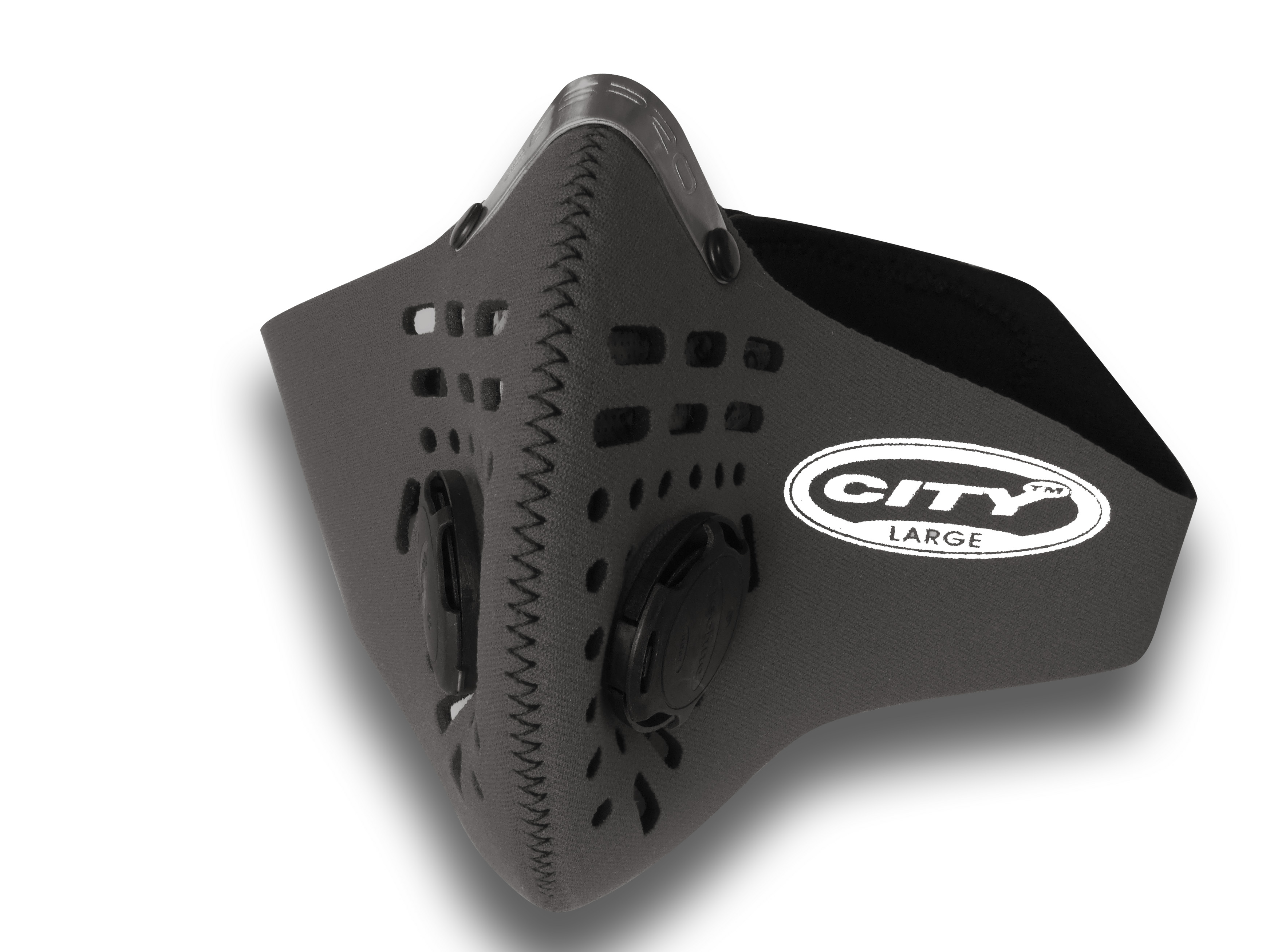
FAQ: How do the Sportsta™ and City™ filters differ?

How do the Sportsta™ and City™ filters differ?

Each filters type has a primary use in a specific environment.

1. The City filter uses Dynamic Activated Charcoal Cloth (DACC) a 95% pure charcoal weave, originally developed by the U.K. Ministry of Defence for use in the protection against chemical and bacteria warfare situations. We use DACC to effectively filter out Primary pollutants associated with vehicle exhaust emissions. The DACC is laminated with medical grade non woven polypropylene material which filters particulates from the air and helps prevent them from entering the respiratory system.

The City™ filter offers protection against: – Hydrocarbons. e.g. Benzene; Pyrene; 1,3 Butadiene. – Acid gases. e.g. Nitrogen dioxide; Sulphur dioxide. – Photo-chemical pollutants. e.g. Low level Ozone – Particulates. e.g. Black smoke; Pollen; Lead oxide. For a more comprehensive list of all the chemicals that have tested with DACC, please go to the Industrial section of the website.

2. The Sportsta™ filter uses electrostatically charged fibres to attract airborne particulates down to 0.3 microns in size. 1 Micron = 1/1000mm. Unlike most particle filters which rely on mechanical retention, which inherently results in high inhalation resistance or very large cumbersome filters, the Sportsta™ filter offers extremely low inhalation resistance, by like comparison. The Sportsta™ filter offers protection against: – Pollen dust; Building dust; Clay dust; Grain dust; Soya dust; Carbon dust; House dust; Cigarette smoke. – PM10’s. e.g. Diesel smoke. – Lead & Tar.

For more FAQ,  see Respro® Mask FAQ

Posted in Air Quality | Tagged | Leave a comment

Irish air pollution breaches EU target

Air pollution linked to road traffic in Ireland breached the specified EU emission ceiling in 2011, the Environmental Protection Agency (EPA) said today.

The latest EPA emissions data showed levels of nitrogen oxide (NOx) in the air exceeded the target level of 65 kilotonnes by 2.6 kilotonnes in 2011.

High nitrogen oxide emissions can pose a threat to human health as a respiratory irritant, particularly in people with asthma.

The road transport sector represents the largest source of NOx emissions, accounting for 55 per cent of total NOx emissions in 2011.

Emissions of NOx fell by 47 per cent between 1990 and 2011 as a result of stricter EU standards for emissions from cars and heavy duty vehicles in combination with the economic downturn in more recent years.

However, the EPA said advances in emission controls have been “largely off-set” by increases in vehicle numbers and fuel use during the economic boom.

“Reducing NOx emissions requires travelling less by car as well as the uptake of new vehicles with improved emission control technologies,” it said.

In the power generation sector, the agency said a substantial reduction in NOx emissions had been achieved as a result of emission control technology and fuel-switching from oil to gas and renewable energy.

EPA senior manager Dr Eimear Cotter said: “The key to decreasing nitrogen oxide emissions lies in reducing travel and incentivising the purchase of cleaner vehicles with improved emission controls.”

“Changing behavioural patterns in these two areas will reduce emissions so contributing to a cleaner, healthier environment and a better quality of life”.

via Irish air pollution breaches EU target – The Irish Times – Tue, Feb 26, 2013.

Posted in Air Quality, Europe | Tagged , , , , , | Leave a comment

Valley’s air quality deteriorating

The ministry of environment (MoE) has recently released a fresh data on air pollution.

“Level of fine particles in the air with diameters less or equal to 10 micrometer is known as PM10. The national standard of pollutant PM10 is 120 microgram per cubic meter (UG/M3 – chemical vapors, fumes, or dust in the ambient air as a measurable value unit),” said Surendra Subedi, senior divisional chemist at the ministry. “And our latest data is simply alarming,” he added.

The air quality monitoring stations at various places in the valley have reported that PM10 in Putalisadak is 300 UG/M3, Thamel 200 UG/M3 and Bhaktapur 150 UG/M3.

These places recorded PM10 far beyond the national air quality standard, while Machchhegaun showed its PM10 at just 70 UG/M3.

It is essential to monitor the air quality on a regular basis so that measures to fight deteriorating air quality can be put in place.

However, six monitoring stations set up with an aid of Rs 60 million from the Danish government plus two stations in Kirtipur and Patan established by the MoE in 2002 remained useless for five years. Only four of them are in working condition at present.

When last measured in 2008, Patan, Thamel and Putalisadak showed the highest air pollution levels ranging from 120 UG/M3 to 135 UG/M3.

Subedi informed that the stations at Patan and Kirtipur may not come into operation any time soon as they are finding it hard to get spare parts for the equipment.

“We arranged the spare parts for the four stations that are now operational with a great difficulty. We have not been able to find parts for the other two machines yet,” he said.

A recently published report by ICIMOD says that the route from Kalanki to Thankot is massively polluted.

Pointing at the significant rise in respiratory diseases among Kathmandu residents over the years, the study, conducted from 2009 to 2011 at various places in Kathmandu, calls for immediate steps to tackle the problem of air pollution in the Valley.

via Valley’s air quality deteriorating MYREPUBLICA.com – News in Nepal: Fast, Full & Factual, POLITICAL AFFAIRS, BUSINESS & ECONOMY, SOCIAL AFFAIRS, LIFESTYLE, SPORTS, OPINION, INTERVIEW, INTERNATIONAL, THE WEEK news in English in Nepal.

Posted in Air Quality, Asia | Tagged , , , , , , , , , , | Leave a comment


