𝗧𝗵𝗲𝘀𝗲 𝗯𝗲𝗻𝗱𝘆 𝗻𝗼𝘀𝗲 𝘁𝗵𝗶𝗻𝗴𝘀, 𝗵𝗼𝘄 𝗳𝗮𝗿 𝘀𝗵𝗼𝘂𝗹𝗱 𝗜 𝗯𝗲𝗻𝗱 𝘁𝗵𝗲𝗺?

RC01 BK_maska antysmogowa Respro CITY MASK Black_07


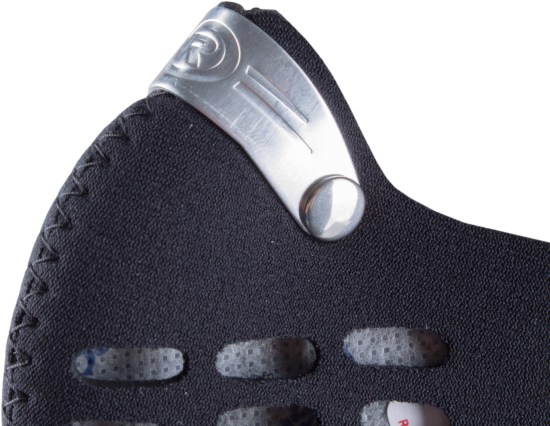
The malleable nose clip deforms easily so that a good fit can be formed around the bridge of the nose. Continuous or exaggerated deformation will eventually cause failure in the metal – it will snap.

Once a good fit has been found, it is best to maintain the shape, rather than folding it flat when storing it or when not in use.

If the nose clip breaks, all you have to do is send a picture of it, indicating size, model and address details to customerservices@respro.com and we will send a replacement shell FOC. There is a small shipping charge which is charged at cost and dependent on country location.

Posted in Air Quality, Help & FAQs, Respro® Products | Tagged , | 2 Comments

Babies in popular low-riding pushchairs are exposed to alarming levels of toxic air pollutants

Parents who are using popular low-riding pushchairs could be exposing their babies to alarming levels of air pollution, finds a new study from the University of Surrey.

In a paper published by Environment International, experts from Surrey’s Global Centre for Clean Air Research (GCARE) investigated the amount of harmful air pollutants babies potentially inhale while out in a pram with their parents or carers.

The study looked at three different pushchair types — single pushchairs facing the road, single pushchair facing the adult and double pushchairs facing the road — and assessed the difference in concentration of pollutants compared to those experienced by adults. The GCARE team also investigated whether pushchair covers altered exposure levels.

The team simulated 89 school drop off and pick up trips in Guildford, Surrey, walking just over 2km, between the times of 8am to 10am and 3pm to 5pm.

Significantly, the team found that on average, regardless of the type of pushchair, babies could be breathing 44 per cent more harmful pollutants than their parents during both morning and afternoon school runs.

The GCARE team also found that a child at the bottom of a double pushchair faced up to 72 per cent higher exposure to pollutants than a child on the top seat.

However, the team from Surrey found a ray of hope in the form of pushchair covers, discovering that they reduced concentration of small-sized particles by as much as 39 per cent.

Professor Prashant Kumar, Founding Director of GCARE at the University of Surrey, said: “For parents, nothing is more important than the health of our children and this is why we at the University of Surrey are continuing to build on this research to understand the impact air pollution has on babies travelling in pushchairs.

“Our research shows that choices such as the type of pushchair you use, can impact on the amount of pollution your child faces when you are running a typical errand. But there is cause for some optimism, as our study confirms that pushchair covers and upping the buggy heights appears to have shielded children from an appreciable amount of pollution under certain conditions.”

via Babies in popular low-riding pushchairs are exposed to alarming levels of toxic air pollutants — ScienceDaily

Posted in Air Quality, Health Effects of Air Pollution | Tagged , | Leave a comment

Coronavirus: Mandatory for all in Singapore to wear mask when out, except for kids under 2 and those doing strenuous exercise

It is mandatory, with immediate effect, for everyone to wear a mask when they step out as part of stricter measures to curb the further spread of the coronavirus.

Those who do not risk a $300 fine for first-time offenders.

There are exemptions for those engaging in strenuous exercise and children below the age of two, as medical experts recommend against them wearing masks, National Development Minister Lawrence Wong said at a media conference on Tuesday (April 14).

People may remove their masks when engaging in exercise such as running or jogging, but they must put them on afterwards, he said.

Mr Wong, who co-chairs the multi-ministry task force tackling the outbreak, said the Government is also seeking to reduce the number of services considered essential.

About 20 per cent of Singapore’s workforce, including foreign workers, continue to commute to work as they are in essential services, he said.

“We will now proceed to look at the list of companies classified as essential services and tighten this list further”, with the objective of further minimising movement and keeping people at home, said Mr Wong.

Details will be announced when finalised, he said, adding: “We will trim it down as much as we can.”

Responding to a question from The Straits Times on whether older workers in essential services should continue to work amid the advisory for the elderly to stay home as they are more vulnerable, Manpower Minister Josephine Teo said that such individuals should be relieved from having to go to work, if possible.

“The alternative is that if the person really has to come to work, then, within the work environment, can the person be redeployed to a different role where the interactions with co-workers is kept to a minimum?”

If interaction with others is unavoidable and senior workers cannot be provided adequate protection, arrangements should be made for them to clear leave, so they can continue to receive payment while at home, said Mrs Teo.

On the mandatory use of masks, Mr Wong stressed that the new requirement does not mean going out is encouraged.

He said: “You should not go out as much as possible… but on the rare occasion that you do need to go out for purchase of your groceries or essentials, it’s only at that time that you wear a mask.”

He noted that many have been complying with the stricter measures in the week since Singapore’s circuit breaker began, and hot spots such as parks and wet markets are now under control.

Noting that some have complained of cabin fever, he said it is early days, and there are “at least another three weeks to go”.

“We have to double down our efforts and stay home,” he said.

Mr Wong said the requirement to wear masks in public may extend even beyond the circuit breaker period, which ends on May 4.

Health Minister Gan Kim Yong said that there will be a need to review whether to extend the circuit breaker after the month is up, and if measures will need to be tweaked.

“It is also important to bear in mind that even at the end of the circuit breaker, with or without extension, it’s not likely that we’ll open the entire system altogether and then (it becomes) free for all, (where) everyone does what they like,” said Mr Gan.

Relaxing of the safe distancing rules will be a gradual process informed by risk assessment, he said.

“So I think we should not have the idea that at the end of the circuit breaker, everything will revert to normal and you don’t have to wear a mask anymore, (and) we don’t have to (practise) safe distancing anymore,” he said.

The Ministry of Health (MOH) said in a statement on Tuesday that the rules on mask-wearing apply to all forms of transport as well as walking to markets.

All essential workers must also don masks, whether they are frontline staff or performing back office functions, the ministry said.

It noted that medical experts have advised that some groups may have difficulties wearing a mask, including children with special needs and young children.

“We will exercise flexibility in enforcement for these groups,” the ministry said.

For workplaces which remain open, cross-deployment of staff to different branches will no longer be allowed, to reduce the risk of transmission.

Teams working in different locations should also not interact, though essential service providers who need to move between different locations in the course of duty may continue to do so as long as safe distancing measures are complied with.

Businesses face a fine of $1,000 for first-time offences, and essential service providers may be required to suspend operations should staff become infected.

More than 6,200 warnings and 500 fines have been issued to individuals who flouted safe distancing measures since April 7, when the circuit breaker period began.

Singaporeans have made significant efforts to stay home over the last week, and public transport ridership and traffic volume has dropped by more than 70 per cent, MOH said.

However, it added that are still cases spreading within the community, including at workplaces.

“We must make this circuit breaker period count, and tighten where there are areas of risk,” the ministry said.

via Coronavirus: Mandatory for all in Singapore to wear mask when out, except for kids under 2 and those doing strenuous exercise, Singapore News & Top Stories – The Straits Times

Posted in Air Quality, Asia, Health Effects of Air Pollution, Singapore | Tagged , , | Leave a comment

How do I stop my glasses from misting up?

ALLERGY-BLUE-FEMALE

The Respro® Allergy™ Mask

How do I stop my glasses from misting up?

When using a mask with glasses, it is best to fit the mask first to get the correct fit with no seal leakage, then place the glasses in front of the nose clip on the mask. It is really dependent on the seal of the mask. Having adjustable nose pads facilitates a better fit than plastic moulded rims. A good seal around the nose and cheekbone will mean no leakage in that region which equals no misting. This is how/ why glasses get misted up on the inside of the lens. In our experience most glasses wearers manage to figure a way of fitting glasses with a mask without them getting misted up.

Posted in Air Quality, Help & FAQs, Respro® Products | Leave a comment

Chiang Mai air pollution hits dire levels

Chiang Mai province was hit by unprecedented levels of air pollution on Wednesday as intensifying forest fires sent PM2.5 levels in some areas up to 592 microgrammes per cubic metre (ug/m3) of air, almost 12 times above safe levels.

The level of PM2.5 — fine dust that can get lodged in lungs and cause coronary disease — rose to 592 ug/m3 at Chiang Mai University’s Mae Hia Campus in Muang district, and at 321 ug/m3 at a school in Hang Dong district, according to data from Chiang Mai University’s Climate Change Data Centres (CMU-CCDC), the most popular air-monitoring network used by locals.

The CMC-CCDC network gathers air-quality data from air-monitoring kits set up at community level across the North. This system provides real-time air-pollution measures as it is close to the pollution source, while the air-monitoring system run by the Pollution Control Department (PCD) provides a general average over 24 hours.

Thailand’s safe threshold for PM2.5 stands at 50 ug/m3, while the World Health Organisation’s is set it at 25 ug/m3.

Komsan Suwan-ampa, deputy governor of Chiang Mai province, said that though forest fires have been a chronic problem for more than a decade, this year’s situation was dire because fires had erupted in areas that are not accessible by firefighters and volunteers.

A fire erupted yesterday in Doi Suthep-Pui National Park in Hang Dong district, which had to be doused by helicopters, Mr Komsan said. Meanwhile, the fire-control centre reported that 218 hotspots in 18 districts in Chiang Mai have been detected by the Geo-Informatics and Space Technology Development Agency (GISTDA).

Pralong Dumrongthai, director-general of the PCD, said that as forest fire hotspots in the North continue rising due to arson, open burning and pollution from bush fires set in neighbour countries, PM2.5 and PM10 particles will continue polluting the air. He added that six pollution control stations detected severely hazardous levels in their areas.

Known for providing conservative readings, even the PCD air-monitoring system showed alarming pollution levels yesterday. For instance, the PM2.5 level in Doi Suthep area was measured at 234 ug/m3 and was 212 ug/m3 in Chiang Dao district.

Mr Pralong blamed the pollution on the lack of humidity and poor ventilation, adding the major culprits were still arsonists and open burning.

The authorities are offering a 5,000 baht bounty and imposing such as 1 to 30 years in prison and fines of 10,000 to 3 million baht for the crimes.

via Chiang Mai air pollution hits dire levels

Posted in Asia, Thailand | Tagged , , , | Leave a comment

Will a beard affect the performance of a mask?

Will a beard affect the performance of a mask?

Any beard will interfere with the sealing of a mask, it goes without saying. How much leakage is governed by the thickness of the beard and the correct size of mask.

SPORTSTA BLACK MALE

The Respro® Sportsta™ Mask

Posted in Air Quality, Respro® Masks, Respro® Products | Leave a comment

The smart and easy way to put on a Respro® Streetsmart™ Mask

Posted in Air Quality, Help & FAQs, Respro® How To Videos, Respro® Products | Leave a comment

INSTRUCTIONS ON HOW TO MEASURE FOR A RESPRO® MASK

Sizing guide:

This video demonstrates how easy it is to measure yourself for a Respro® mask. Follow the instructions and click the link below to send us your measurements.

respro.com/pg/faqs/mask-sizing-guide

Posted in Air Quality, Help & FAQs, Respro® How To Videos, Respro® Products | Leave a comment