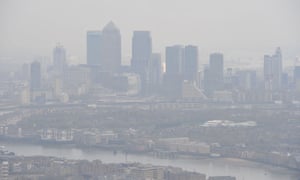
AIR pollution in South London has risen to high levels due to the UK heatwave.
The London Air Quality Network is reporting that the high levels of air pollution could continue across today with thunder showers predicted for tomorrow.
The network is encouraging those with conditions such as lung and heart problems, along with asthma, to reduce the amount of physical exertion they go through.
It has been advised that anyone experiencing discomfort such as sore eyes, cough or sore throat should consider reducing activity, particularly outdoors.
A spokesman said: “The weather is set for another fine day turning hot to very hot by late morning and continuing into the evening with sunshine and light winds.
“Ground level ozone production is also expected to continue in these conditions.
“Cloud is forecast for mid afternoon, with some thundery showers possible.
“Light winds from the continent are expected along with ozone and particulate import from this region.
“High levels of ozone are possible along with possible Moderate particulate levels.
“Thursday is still set to be very warm, but with a slight reduction in temperatures reaching the high twenties.
“There is a stronger possibility of thundery showers later in the afternoon.
“Easterly light winds are forecast along with pollution import from the continent as seen of late. This together with the production of ground level ozone is likely to result in ‘moderate’ levels of ozone and particulates.
“This forecast is intended to provide information on expected pollution levels in areas of significant public exposure. It may not apply in very specific locations close to unusually strong or short-lived local sources of pollution.”
Car users from the world’s least affluent cities are exposed to a disproportionate amount of in-car air pollution because they rely heavily on opening their windows for ventilation, finds a first of its kind study from the University of Surrey.
According to the World Health Organisation (WHO), air pollution kills an estimated seven million people worldwide every year and nine out of 10 people breathe air with high levels of pollutants.
In a study published by the Science of the Total Environmentjournal, a global team of researchers led by Surrey’s Global Centre for Clean Air Research (GCARE) investigated air pollution exposure levels for commuters in 10 different global cities — Dhaka (Bangladesh), Chennai (India), Guangzhou (China), Medellín (Colombia), São Paulo (Brazil), Cairo (Egypt), Sulaymaniyah (Iraq), Addis Ababa (Ethiopia), Blantyre (Malawi), and Dar-es-Salaam (Tanzania).
The research team investigated PM2.5 and PM10 exposure levels inside vehicles during peak hours in the morning and evening, as well as off-peak hours in the middle of the day. The scientists measured how exposure levels changed when drivers used recirculation systems, fans and simply opened the windows.
The study discovered that drivers in some of the world’s poorest cities experienced higher levels of in-car pollution.
Irrespective of the city and car model used, a windows-open setting showed the highest exposure, followed by fan-on and recirculation. Pollutionexposure for windows-open during off-peak hours was 91 percent and 40 percent less than morning and evening peak hours, respectively. The study also found that the windows-open setting exposed car passengers to hotspots of air pollution for up to a third of the total travel length.
The study found that commuters who turn on the recirculation are exposed to around 80 percent less harmful particles than those who open their car windows. Car cabin filters were more effective in removing pollution than fine particles, suggesting that if new cars had more efficient filters, it could reduce the overall exposure of car commuters.
Professor Prashant Kumar, Director of GCARE at the University of Surrey, said: “To be blunt, we need as many cars as possible off the road, or more green vehicles to reduce air pollution exposure. This is yet a distant dream in many ODA countries. Air-conditioned cars are unattainable for many poor and vulnerable commuters across the world, but our data is clear and coherent for all 10 participating cities.
“We must now work with our global partners to make sure they have the information needed to put in place programmes, policies and strategies to protect the most vulnerable in our communities and find realistic solutions to these serious problems.”
Professor Abdus Salam from the University of Dhaka said: “The study has drawn important conclusions that can help commuters make decisions in their day-to-day lives to protect their health. Simple choices, like travelling during off-peak hours, can go a long way in reducing their exposure to air pollution.”
Professor Adamson S. Muula from the University of Malawi said: “Working with the GCARE team and global collaborators on this study has been an insightful experience. We were given access to affordable technology to collect novel datasets that haven’t been available for cities in this part of the world. We also got to see where our cities stand in comparison to other global cities in developing countries. This has allowed for the sharing of much needed knowledge and best practices.”
Professor David Sampson, Pro Vice-Chancellor for Research and Innovation at the University of Surrey, said: “I commend Professor Kumar and his GCARE team for their continued global leadership in air quality challenges around the world. The collaborative research of the GCARE team represents best in class, taking evidence from quality science and turning it into leading-edge policy for the betterment of all.”
The study was part of the Clean Air Engineering for Cities (CArE-Cities) project. CArE-Cities is a seed funding project, awarded by the University of Surrey under the Research England’s Global Challenge Research Funds. CArE-Cities involves 11 Development Assistance Committee (DAC) listed countries and aspires to bring cleaner air to cities by building a knowledge exchange platform. Its activities include joint workshops, researchers exchange and pilot studies to address urban development and health impact assessment agendas in ODA countries.
Brain injuries, excessive alcohol consumption and exposure to air pollution can all increase the risk of dementia, according to new research.
Those three actions have been added to a list of risk factors avoidable behaviours that experts believe to be responsible for approximately 40 per cent of all dementia cases.
“We’ve shown that a lot of dementia is potentially preventable and that could give individuals hope of not developing dementia, and also change things for their families and for society,” Dr. Gill Livingston, the lead author of the research and a professor of psychiatry of older people at University College London, told CTV News.
Livingston’s team estimates that three per cent of all dementia cases are caused by mid-life head injuries, two per cent by exposure to air pollution late in life, and one per cent by excessive mid-life alcohol consumption.
Given there are 50 million people living with dementia around the world, this suggests that alcohol consumption alone is responsible for approximately 500,000 cases of dementia, with air pollution being the cause of one million and head injuries 1.5 million cases. All of these numbers will likely multiply over the coming decades, the research says, as the worldwide number of dementia cases is expected to hit 152 million by 2050.
Among the previously identified dementia risk factors, the most significant are mid-life hearing loss, education and smoking in later life.
“I think that very few people know that the biggest risk factor for dementia is … hearing loss and mid-life,” Livingston said.
Lesser risk factors, in order of significance, include depression, social isolation, physical inactivity, mid-life hypertension, mid-life obesity and diabetes.
The research was compiled by 28 leading dementia experts and published Thursday in The Lancet.
Nalini Sen, the director of research at the Alzheimer Society of Canada, said she believes the specifics the research offers around blood pressure, alcohol consumption and other health indicators is beneficial.
“By providing those parameters, we’re given better guidance and information … to make informed decisions and to take control of our health,” she said.
“The more information we have, the better it’ll be for us.”
More than 20 units of alcohol per week approximately two bottles of wine is considered excessive.
Dr. Kenneth Rockwood, a geriatric medicine professor at Dalhousie University in Halifax, described the research as important, in part because there is no cure or effective long-term treatment for dementia only ways to prevent the memory loss and cognitive decline it causes.
“When I started in this field in the late 1970s, the notion of … prevention was felt to be unreasonable,” he told CTV News.
“Now, we’ve begun to realize in the last 20 years that it looks like we can prevent dementia, to some extent.”
That discovery is increasingly important as the world’s population ages, Rockwell said. The oldest baby boomers will turn 75 in 2021, entering the age bracket where dementia is most likely to strike.
To that end, the experts also offered nine recommendations to help prevent future cases of dementia, some aimed at governments and others at individuals. The list includes:
Maintaining systolic blood pressure at or below 130 mm Hg from the age of 40 onward
Encouraging the use of hearing aids and protecting ears from high noise levels
Reducing exposure to air pollution and secondhand smoke
Preventing head injuries, in part by targeting high-risk occupations
Limiting alcohol consumption to less than 21 units per week
Stopping smoking and governmental anti-smoking measures
Providing all children with primary and secondary education
Leading an active life into the mid-life years, and perhaps even later
Reducing obesity and diabetes
The experts say evidence from countries where dementia rates have fallen suggests that taking these actions and addressing the risk factors can make a significant difference in preventing dementia cases.
“Putting all of these things into effect will not only reduce the risk of dementia, but make people more likely to live a better, healthier life with increased quality of life and without side effects,” Livingston said.
Those changes don’t have to start at a young age. Both Livingston and Rockwell stressed that even for those already moving into retirement, there is still time to adopt behaviours that can reduce the risk of dementia.
“For people who are in their 70s and feel ‘This doesn’t mean anything to me because it is too late for me,’ that’s not true,” Rockwell said.
“It’s never too late. It’s never too late to stop smoking. It’s never too late to moderate your drinking. It’s never too late to engage in physical exercise.”
Current regulations on air pollution mainly focus on the mass of particles of a particular size range in a sample, and this has been used as a marker for their threat to human health. But these air quality standards do not address the medical implications of the very smallest particles – nor other attributes that may be damaging, such as their chemical makeup.
‘(Mass) is indeed a useful metric, but perhaps not enough on its own and laboratory research could help to establish (other) metrics for air quality that are more health-related,’ said Dr Konstantina Vasilatou, who heads the Particles and Aerosols Laboratory at the Swiss Federal Institute of Metrology (METAS).
The clean air brought about by reduced road and air traffic during coronavirus lockdowns, along with indications that air pollution may be linked with higher coronavirus death rates, is bringing questions about the effect of air pollution on human health to the fore.
While we know that air pollution can play a significant role in long-term health problems such as respiratory and cardiovascular diseases, cancer and dementia, there is still a lack of granularity about the exact effects of different types of particles.
Chemistry
By studying a particular class of airborne pollutants – known as secondary organic aerosols – Dr Vasilatou aims to assess how their chemistry, as well as their physical properties, may affect the cells of the human respiratory system.
These pollutants form when particles from natural or human-caused sources, including soot from vehicle engines, factories or fires, become coated in chemicals formed during the breakdown of so-called volatile organic compounds (VOCs) in the air. Those may be fumes from paints or solvents, or even the natural chemicals that give pine trees their scent.
Typically, these volatile organic compounds go through oxidation by interactions with ozone, nitrogen oxide or hydroxyl radicals in the atmosphere, helped along by sunlight. The resulting chemical residues, known as secondary organic matter, are then deposited on the particles or even coalesce into new ones.
Dr Vasilatou and her colleagues in the AeroTox consortium have been running experiments to assess how pure carbon particles coated with different amounts of secondary organic matter affect lung tissue or sections of the human trachea, to measure their cytotoxicity – how they damage and destroy cells, or cause inflammation.
‘The more we coat these particles, the larger the cytotoxic effects,’ Dr Vasilatou said, adding that the project’s early findings are still being analysed, but show clearly that the chemistry of the coated particles plays a role in destroying cells.
The researchers are still working to understand how the mass or the surface area of the coated particles may affect the cells, in addition to their chemical composition.
Ethical considerations rule out such tests on human volunteers, but the researchers are using donated tissue and three-dimensional multicellular lung scaffolds, along with novel methods for aerosol-cell interaction, to give a more realistic picture of what would happen during inhalation, rather than just soaking cells in liquid with the pollutants.
‘We would hope to be able to advise public health policy, or (help) national health authorities by providing evidence… to make more informed decisions,’ Dr Vasilatou said.
This kind of research could help in a rethink of current air pollution standards, which are usually regulated by the mass concentration of particles smaller than 10 micrometres in diameter (PM10) or smaller than 2.5 micrometres (PM2.5).
These categories do not adequately address the ultrafine airborne particles – smaller than 100 nanometres – that can be inhaled into the furthest reaches of the lungs, and, according to some studies, then cross into the bloodstream and carried around the body. These particles are usually found in higher concentrations in areas with a lot of road traffic.
Ultrafine
Some epidemiological research suggests that decreasing particle size may have serious negative health effects, though there are inconsistent results in exploring the associations between ultrafine particles and mortality and hospital admissions.
‘It’s important to know if these particles are playing this negative health role, because if they are, then one can bring in approaches which reduce their production in society,’ said Professor Frank Kelly, from the environmental research group in the school of public health at Imperial College London, UK.
Part of the difficulty in regulating such ultrafine particles is that they are more difficult to measure and monitor, requiring more sophisticated and expensive equipment. It would not be viable to set regulatory standards that could not be monitored effectively, Prof. Kelly says.
He oversaw a research project on ultrafine particle pollution while at King’s College London, confirming suspicions that road traffic was a major source of ultrafine pollutants in four European cities with differing climates and other conditions.
But a surprising finding of the Health1UP2 study was the notable impact of aircraft emissions on the air quality in the four cities – Barcelona, Helsinki, London and Zurich – even when the airports were sited far from the urban centre.
‘Many, many kilometres away we were still seeing these ultrafine particles coming from the aircraft emissions,’ Prof. Kelly said.
While traffic was the major contributor to urban concentrations of the measured airborne particles, the Health1UP2 research showed that Barcelona experienced a strong seasonal effect in the abundance of ultrafine particles because of the effect of sunshine.
This was particularly noticeable in the bright summer months, when sunlight played a greater role in breaking down gases in the atmosphere and forming new aerosols.
While the Health1UP2 research did not identify a relationship between the detected ultrafine particles and mortality rates in the four cities, Prof. Kelly said it would be useful for future research to analyse the data for any associations with hospitalisation rates for specific chronic health conditions.
Even in the absence of new rules to reduce production of problematic particles, that knowledge can help people to recognise their sources – and change their behaviour and lifestyles so as to reduce their exposure.
The research in this article was funded by the EU.
Exclusive: best analysis to date indicates significant increases in infections, hospital admissions and deaths
There is “compelling” evidence that air pollution significantly increases coronavirus infections, hospital admissions and deaths, according to the most detailed and comprehensive analysis to date.
The research indicates that a small, single-unit increase in people’s long-term exposure to pollution particles raises infections and admissions by about 10% and deaths by 15%. The study took into account more than 20 other factors, including average population density, age, household size, occupation and obesity.
There is growing evidence from Europe, the US and China that dirty air makes the impact of Covid-19 worse. But the study of the outbreak in the Netherlands is unique because the worst air pollution there is not in cities but in some rural areas, due to intensive livestock farming.
This allows the “big city effect” to be ruled out, which is the idea that high air pollution simply coincides with urban populations whose density and deprivation may make them more susceptible to the virus.
The scientists are clear they have not proven a causal link between air pollution and worse coronavirus impacts. Conclusive evidence will only come with large amounts of data on individual people, which is not yet available, rather than average data for regions as used in the analysis.
But scientists said it was important to do the best research possible as understanding the link may be important in dealing with further Covid-19 outbreaks and could signal where subsequent waves will hit the hardest.
Many scientists agree that air pollution is likely to be increasing the number and severity of Covid-19 infections, as dirty air is already known to inflame the lungs and cause respiratory and heart disease that make people more vulnerable. But not all agree that the evidence so far is good enough to demonstrate a large impact.
“What I was struck by was this really was a strong relationship,” said Prof Matthew Cole, who conducted the research with his colleagues Ceren Ozgen and Eric Strobl at the University of Birmingham, UK. Unlike most studies to date, the paper has been reviewed by independent scientists and accepted for publication in a journal, Environmental and Resource Economics.
The team concluded: “Using detailed data we find compelling evidence of a positive relationship between air pollution, and particularly [fine particle] concentrations, and Covid-19 cases, hospital admissions and deaths. This relationship persists even after controlling for a wide range of explanatory [factors].”
The most prominent previous study was conducted by Harvard University researchers and found an 8% increase in coronavirus deaths for a single-unit rise in fine particle pollution. Cole said: “We used data at much finer resolution, with the average size of the 355 Dutch municipalities being 95 km2 compared to the 3,130 km2 for a US county.”
“This means we can more precisely capture each region’s characteristics, including pollution exposure,” he said. The new analysis also uses Covid-19 data up to 5 June 2020, allowing it to capture almost the full wave of the epidemic.
An additional factor considered was the Netherlands carnival gatherings that take place in late February, particularly in the livestock farming regions in the south and east of the country. This is where coronavirus cases were highest and where air pollution is highest, due to the ammonia emitted from livestock farms, which forms particle pollution. Coles’ team used statistical methods to estimate the impact of these gatherings. “But it did not knock out the effects of pollution, which I really thought it would,” he said.
Among the other factors taken into account were average income, level of education, smoking, share of population receiving incapacity benefits and closeness to international borders.
“As analyses of a possible link between air pollution and Covid-19 progress we are beginning to see much better studies emerge,” said Prof Frank Kelly, at Imperial College London, UK. “This new study appears to be the best to date.”
He said the work used high quality data and controlled for multiple possible confounding issues. “Further research elsewhere is required to confirm these findings, but we have now reached a point in the pandemic where datasets are robust enough to ask the question,” he said.
Prof Francesca Dominici, who led the Harvard Study, praised the work as “very good” and agreed that it added to her team’s work. She said it was important to examine the relationship between air pollution and Covid-19 outcomes across many countries, as each country’s data would have its own strengths and weaknesses and different confounding factors can be at play.
“Air pollution is not yet getting enough attention because of the slow peer-review process [for academic studies]” Dominici said. “But hopefully as this and other studies are published, the topic will get more attention and most importantly will affect policy.”
However, Prof Mark Goldberg, at McGill University in Canada, warned that averaging data across a region masked the variations among individuals and could mask other potential explanations for the correlation between dirty air and coronavirus. He is concerned that over-interpreting the correlation distracts from other important factors.
“The issue with severe cases is social and economic deprivation – which correlates with air pollution – and [underlying health] conditions,” he said. “I see it in Montreal: the poorest areas with high numbers of people living together, on low incomes and working multiple jobs were hardest hit.”
Cole accepts that only individual-level data will conclusively resolve the question of a link. “We can’t rule out [some unknown factor] until the data gets better. But it’s difficult to know what that would be.”
Air quality sinks to hazardous levels as biggest cloud seen in a generation swamps region after transatlantic journey
A vast cloud of Sahara dust is blanketing the Caribbean as it heads to the US with a size and concentration that experts say hasn’t been seen in half a century.
Air quality across most of the region reached record “hazardous” levels and experts who nicknamed the event the “Godzilla dust cloud” warned people to stay indoors and use air filters if they had them.
“This is the most significant event in the past 50 years,” said Pablo Méndez Lázaro, an environmental health specialist at the University of Puerto Rico. “Conditions are dangerous in many Caribbean islands.”
Many health specialists were concerned about those battling respiratory symptoms tied to the coronavirus pandemic. Lázaro, who is working with Nasa to develop an alert system for the arrival of Sahara dust, said the concentration was so high in recent days that it could even have adverse effects on healthy people.
Climate crisis: alarm at record-breaking heatwave in Siberia
Read more
Extremely hazy conditions and limited visibility were reported from Antigua down to Trinidad & Tobago, with the event expected to last until late Tuesday. Some people posted pictures of themselves on social media wearing double masks to ward off the coronavirus and the dust, while others joked that the Caribbean looked like it had received a yellow filter movie treatment.
José Alamo, a meteorologist with the US National Weather Service in San Juan, Puerto Rico, said the worst days for the US territory would be Monday and Tuesday as the plume heads toward the US south-east coast. The main international airport in San Juan was reporting only 8km (5 miles) of visibility.
The mass of extremely dry and dusty air is known as the Saharan Air Layer and forms over the Sahara desert. It moves across the North Atlantic every three to five days during the northern hemisphere’s late spring to early autumn, peaking in late June to mid-August, according to the US National Oceanic and Atmospheric Administration. The layer can be 3km thick, the agency said.
People with asthma and other lung conditions report decrease in symptoms, finds survey
Two million people in the UK with respiratory conditions such as asthma have experienced reduced symptoms during the coronavirus lockdown, according to the British Lung Foundation.
A survey by the charity of 14,000 people with lung conditions found one in six had noticed improvements in their health. Among children, the figure was higher, with one in five parents saying their child’s condition had been alleviated. Asthma sufferers in particular reported benefits, with one in four noting relief.
There is a well-established link between air pollution and lung disease. Of the 12 million people in the UK who live with conditions such as asthma and chronic obstructive pulmonary disease, about 8 million have been diagnosed with asthma, of which 5.4 million are receiving treatment.
The number of visits to hospital emergency departments for asthma in England have also fallen by half during lockdown, according to Public Health England data. But it is unclear how much of the decrease is due to a reduction in symptoms or people’s reluctance to visit hospital during the Covid-19 pandemic.
Zak Bond, of the British Lung Foundation, said: “Now, more than ever before, we have all become aware of how important it is to look after our lungs, and the government has a duty to ensure that as the country recovers from Covid-19, we can continue to keep air pollution levels down and keep pushing them lower.”
There is growing evidence from around the world linking increased Covid-19 infections and deaths to air pollution exposure. On Friday, a cross-party group of MPs said air pollution must be kept at low levels to help avoid a second peak of infections.
Bond called for the rapid introduction of clean air zones in cities, where charges deter the use of the most polluting vehicles. But these have been delayed in cities such as Manchester, with officials citing the need to focus on the coronavirus response.
Bond said more support was needed for public transport, cycling and walking, and tougher air quality laws: “We want to see the government commit to reaching the World Health Organization’s guidelines for fine particulate matter by 2030 at the latest.”
Stephen Holgate, Medical Research Council clinical professor of immunopharmacology at the University of Southampton, said: “As one of the biggest health problems of our time, air pollution has the potential to harm everyone. It is so important we take this opportunity to recognise the lived experiences of people with lung conditions and apply what we have learned from the impact of lockdown to build a future where we prioritise clean air.”
The lockdown led to traffic falling to 1955 levels while both fine particle and NO2 pollution fell by up to half in cities. The British Lung Foundation survey found that more than 50% of people with lung conditions said they had noticed a decrease in air pollution since the start of lockdown.
One asthma sufferer, Paul, 14 from Liverpool, has often found it difficult to breathe, but has had to use his reliever inhaler a lot less during lockdown. “You can really feel the difference now,” he said. “I walk out, and I’m hit with clean air which is like a utopia compared to before.”
Dr Alison Cook, the chair of the Taskforce for Lung Health, a coalition of 30 organisations, said: “Children deserve to breathe cleaner air and to grow up in a country where their health is not put at risk by going outside.”
Wearing masks has become increasingly common during the coronavirus pandemic, but they should not be used by children under the age of two, according to the Japan Pediatric Association.
Japan’s coronavirus guidelines encourage people to wear masks but the medical body warned parents not to put them on infants because it makes it difficult to notice changes in face color, expression and breathing, it said in a leaflet.
“It is possible that masks make it difficult for infants to breathe and increase the risks of heat stroke,” reads the leaflet.
Infants have narrower airways and masks can make it more difficult to breathe, increasing the burden on their lungs, it continues.
There is also an increased risk of suffocation, particularly if small children vomit behind a mask.
Infants are relatively low risk for coronavirus infections and the association concludes that masks are not necessary for infants under two years old.
On Monday Japan’s Prime Minister Shinzo Abe lifted the country’s nationwide state of emergency. It had been in place almost a month but authorities lifted it a week earlier than originally planned.
However, Abe expanded a travel ban to 111 countries effective Wednesday, now including the United States, India, and South Africa.
The ban list expanded by 11 countries this week and forbids foreign nationals who stayed in those countries from entering Japan.
Japanese citizens are still allowed to enter the country, although they will need to go through medical tests and self-quarantine for 14 days.
Japan now has a total of 16,581 confirmed cases and 830 deaths linked to the coronavirus, according to the latest numbers from Johns Hopkins University.
Pollution Masks since 1993 - The 'Original' and still the best - Made in the UK - respro.com
THE AIR WE BREATHE
The Respro® Bulletin Board is designed to keep you up to date with current views and issues relating to Air Pollution and its health implications in our daily lives.









 Respro® Masks are reusable

