Extreme heat and air pollution doubles risk of a fatal heart attack, study finds

Hot weather and fine particulate matter – like the smoke from the Canadian wildfires – are independently hard on the body. Together, they’re even worse

Philadelphia endured its first heat warning of the summer last week, with temperatures reaching the upper 90s and the heat index making it feel even hotter. Earlier this summer, smoke from the Canadian wildfires lingered for several days, casting a haze over the skyline and making it difficult to breathe. 

Both conditions – extreme heat and air pollution – are independently known to make cardiovascular disease worse. But when they occur at the same time, they appear to be even more taxing on the heart. 

New research suggests that heat waves that are coupled with high levels of fine particulate pollution doubles the risk of dying of a heart attack. Women and older adults are particularly at risk, researchers found.

The study, published by the American Heart Association, analyzed 202,000 heart attack deaths in a Chinese province between 2015 and 2020. Researchers estimated that up to 2.8% of heart attack deaths may be attributed to the combination of extreme heat and fine particulate matter in the air.

Exposure to high heat stresses the cardiovascular system and makes the heart work harder, which can lead to an increased risk of heart attack, irregular heartbeat and heart failure. Particulate matter is easily inhaled and pushed deep into the lungs, where it can irritate the lungs and blood vessels around the heart, leading to similar heart problems. 

The researchers found that the risk of a fatal heart attack was 18% higher during two-day heat waves when the heat index was between 82.6 to 97.9 degrees, increasing with temperature and duration. And it was 74% during four-day heat waves when the heat index was between 94.8 and 109.4 degrees. The heat index captures the combined effect of temperature and humidity on the body. 

Cold spells also were linked to an increased risk of heart attack deaths, but cold days with high levels of fine particulate matter did not increase the risk to the extent that extreme heat and pollution did. Previous research has found that winter weather is more dangerous on the heart than summer weather, because cold temperatures can cause blood vessels to contract, increasing blood pressure and stress on the heart.

“Extreme temperature events are becoming more frequent, longer and more intense, and their adverse health effects have drawn growing concern,” said Dr. Yuewei Lieu, an epidemiologist at Sun Yat-sen University in China. “Another environmental issue worldwide is the presence of fine particulate matter in the air, which may interact synergistically with extreme temperatures to adversely affect cardiovascular health. Our findings provide evidence that reducing exposure to both extreme temperatures and fine particulate matter pollution may be useful to prevent premature deaths from heart attack, especially for women and older adults.” 

The American Heart Association stresses the importance of reducing exposure to air pollution and reversing the impact of poor air quality in order to improve cardiovascular health and reduce health inequities in historically marginalized communities.

Most heart attacks occur in people with other risk factors like old age, obesity, tobacco use, high blood pressure, high cholesterol, diabetes, stress and an unhealthy diet. People at increased risk are advised to heed warnings about extreme heat and high levels of air pollution. 

The health effects of climate change and rising temperatures have been well-studied. They have been linked to increased seasonal allergiescongenital heart defects, risk of dementia and premature death from natural disasters and extreme weather events, including flash flooding, hurricanes, wildfires and drought, the Washington Post reported. 

Previous research has tied exposure to fine particulate matter — which are the result of fuel combustion from cars and wildfire smoke — to heart disease, stroke and other health issues. 

“Many people don’t recognize that this could be life threatening,” Dr. Sanjay Rajagopalan, chief of cardiovascular medicine at University Hospitals Harrington Heart and Vascular Institute, told AARP. “Being in an environment where temperatures are regulated is of the utmost importance.” 

There are plenty of ways for people to keep themselves safe and protected during heat waves or days with high levels of fine particulate matter in the air. Liu suggests staying inside when weather is extreme, using fans and air conditioners, staying hydrated and installing window blinds to keep indoor temperatures down. 

When air pollution is high, it’s important to use air purifiers in the house, wear a mask outdoors, stay clear of busy roadways when walking and choose less strenuous physical activities. People with respiratory illnesses or asthma should be especially cautious, as fine particulate matter has been linked to a higher risk of asthma attacks. 

https://www.phillyvoice.com/heart-attacks-hot-weather-air-pollution-study/

Posted in Air Quality | Tagged , , , , , | Leave a comment

Worse air quality in L.A. expected during heat wave. Why do high temperatures cause more smog?

The heat wave baking Southern California not only raises the risk of wildfires and heat-related illness but could bring another hardship: bad air quality.

The South Coast Air Quality Management District issued an air quality alert for inland areas of the South Coast Air Basin and the Coachella Valley because of elevated levels of ozone likely to cause poor air quality during the afternoon and early evening. The alert took effect Friday at 2 p.m. and continues until Tuesday at 8 p.m.

High temperatures often lead to more pollutants in the air — specifically ozone, the main pollutant during the summertime.

The AQMD has forecast good-to-moderate air quality for coastal regions and Orange County for Tuesday. Central and Southeast portions of Los Angeles County and Antelope Valley are projected to have moderate air quality, with ozone being the primary pollutant.

The air quality is expected to be unhealthy for sensitive groups in the San Gabriel Valley, Pomona, Walnut Valley, Santa Clarita Valley and the San Gabriel Mountains. That means pregnant women, children, older adults and people with heart or lung disease should avoid heavy outdoor exertion.

“It’s the high temperatures that increase the contents of ozone in the air, and we also have very weak winds, which allows the air to stagnate,” said National Weather Service meteorologist David Sweet. “All that ozone production occurs over the city and just sits there.”

Ozone is created in the presence of heat and sunlight through the interaction of oxides of nitrogen, which come from combustion, and volatile organic compounds, which result from consumer products such as deodorant, hairsprays and gasoline.

“There’s a lot of reactions that make ozone in the atmosphere, and most of those reactions get faster as temperatures go up,” said Scott Epstein, air quality assessment program supervisor for the South Coast Air Quality Management District.

Ozone air pollution can lead to problems with respiratory health, including asthma attacks, trouble breathing and lung damage. Older adults, children and people with chronic obstructive pulmonary disease or asthma could be more sensitive.

Air quality can fluctuate depending on weather and time of day. To mitigate pollution levels, people should should try to limit the use of gasoline-powered garden and lawn equipment until the evening, set their thermostats to a higher temperature, conserve electricity and try to delay the use of household chemicals and trips to the gas station until the evening.

Because ozone is at its worst during the afternoon and early evening hours, Epstein said, people can shift their activities to the morning when the air is cleaner. When the air quality is poor, people should also try to stay inside with the windows and doors closed and try to avoid house fans that bring the outside air indoors.

Southern California has been grappling with triple-digit high temperatures over the last week as a “heat dome” has trapped heat near Earth’s surface and kept the region warm, along with the rest of the Southwest and much of the globe.

Phoenix set a record Tuesday with its 19th straight day of at least 110-degree heat, standing alone among major U.S. cities. Night has offered little relief, as the city has also set local records with its streak of nine straight days of temperatures that never dropped below 90 as well as an overnight low of 95 on Monday.

The high pressure system behind the heat dome over Arizona and the Southwest is also preventing the cooling rains of monsoon season from reaching the area.

In Southern California, Tuesday was forecast to be the coolest day of the week due to weaker high pressure and strong onshore winds, according to the weather service. Temperatures were expected to drop by 2 to 4 degrees in most areas, cooler than normal near coastal regions and hotter than normal inland.

“We’re cooling down just a little bit,” Sweet said. “It’s going to go back up this weekend, but we’re not sure it’s going to be quite as warm as last weekend.”

It’s expected to warm back up Friday into Saturday, bringing temperatures just below heat warning levels. Interior regions could end up seeing heat advisories and warnings if temperatures climb high enough. Saturday is expected to be the warmest day, with high temperatures forecast to be 8 to 12 degrees above normal in the warmest areas.

Overnight high temperature records were broken Monday night into Tuesday morning in Lancaster and Palmdale, where it reached 86 and 84 degrees, respectively. The previous records were 82 and 79 degrees.

Downtown Los Angeles is forecast to see temperatures in the upper 70s to the 80s through Wednesday before climbing back into the mid 80s and 90 by Friday.

Antelope Valley will likely be the warmest area in the region, with projected highs between 96 and 104 through Wednesday and 99 and 108 degrees over the weekend.

About 38.5 million Californians live in communities with unhealthy levels of fine particles or smog, according to the American Lung Assn.’s annual “State of the Air” report, which has served as a national scorecard for the two major air pollutants since 2000.

Southern California tends to experience its worst air quality over the summer and also during wildfire season, Epstein said. There is fine particle pollution during the winter, but it’s not nearly to the same level as during warmer months.

Changes in ozone levels are driven by meteorology and emissions over longer periods of time, according to Epstein. Because temperatures are warmer due to climate change, the question is whether it’s possible to reduce emissions fast enough to counteract the heat.

“Before this heat wave, we had one of our cleanest several months in decades,” Epstein said. “After the heat wave, things started to look a bit more like a normal year.”

via https://www.latimes.com/california/story/2023-07-18/l-a-region-expected-to-see-worse-air-quality-during-heat-wave-why-do-high-temperatures-lead-to-pollution

Posted in Air Quality, USA, USA & Canada, World News | Tagged , , , , | Leave a comment

Air pollution associated with poor mental health

Air pollution is linked to poor mental health outcomes, as well as specific mental disorders, in a research review by the University of Cambridge.

The findings show that poor air quality, both indoors and outdoors, may lead to depression, anxiety, psychoses, and perhaps even neurocognitive disorders, such as dementia.

Children and adolescents exposed to air pollutants at critical stages in their mental development were at the highest risk of significant future mental health problems.

The findings, published in the British Journal of Psychiatry, indicate that modifying exposure to poor indoor and outdoor air quality could impact rising levels of mental health disorders.

Air pollution and mental health are both significant global health challenges. The World Health Organization (WHO) state that air pollution is the single biggest environmental threat to human health, with an estimated that 4.2 million and 3.8 million premature deaths attributable to outdoor and indoor air pollution, respectively. Alongside the effects on cardiovascular and respiratory health, there is emerging evidence that exposure to air pollutants may lead to neurocognitive disorders and poor mental health.

The research aimed to conduct a rapid narrative review of existing research to assess the current understanding and highlight knowledge gaps where future research can address the intersection between mental health and levels of air pollution.

The researchers, who were part of the BioAirNet programme, looked at a broad range of pollutants, including bioaerosols- airborne particles which contain living organisms such as fungi, pollen or bacteria- heavy metal ions, inorganic particulate matter and gaseous pollutants. They examined how these air pollutants affected psychiatric, cognitive and neurodevelopmental pathways over a lifetime, from pregnancy and birth to adolescence and adulthood.

Evidence emerged that polluting air particles, including bioaerosols, are associated with poor mental health and specific mental health disorders such as depression, psychoses and anxiety. Air pollution exposure at key developmental periods for children and adolescents was observed to lead to more severe mental health outcomes later in life. In addition, long-term health conditions were observed to deteriorate with poor air quality, both indoors and outdoors.

Professor Kam Bhui from the psychiatry department at the University of Oxford said the research was ‘a vital public health priority’ as the world grapples with both air pollution and mental health challenges.

‘Our review shows that there is emerging evidence of links between poor air quality and poor mental health, as well as links to specific mental disorders. In particular, polluting air particles, including bioaerosols, have been implicated,’ Professor Bhui said.

Additional factors that increase the risk of air pollution affecting mental health include poor housing, overcrowding, poverty, a lack of green spaces, and a lack of access to support, carers or safe spaces.

Professor Bhui added: ‘We need more research to understand these webs of causation and to investigate a number of other critical knowledge gaps such as the mechanisms by which particles matter, and bioaerosols may cause and worsen health conditions. We need better ways to measure exposure to pollution and understand how climate change affects air pollution. We also call for more longitudinal studies to understand the effects on children and young people as they grow.’

Posted in Air Quality, Health Effects of Air Pollution, Medical Studies | Tagged , , , | Leave a comment

Air pollution-related deaths: exhaust fumes biggest killer in Europe, finds report

Air pollution is the largest environmental cause of death. The Barcelona Institute for Global Health has now estimated which sources contribute most to mortality.

Transport, domestic activities and agriculture are the main contributors to air pollution-related deaths in European cities, a new study by the Institute for Global Health in Barcelona found. 

The research centre analysed two of the main pollutants in the atmosphere, nitrogen dioxide (NO2) and fine particle matter (PM2.5). Emissions from vehicles lead to 50% of all NO2-related deaths, followed by industrial pollution and fumes generated by the energy sector.

Domestic activities such as the use of coal and gas-related heating systems, followed by agriculture, are the main contributors to PM2.5-related deaths.

Domestic activities accounted for more than 22% of all air pollution-related deaths in 857 cities included in the report.

“If we look at NO2 and PM2.5 combined, traffic remains the largest contributor to both poor air quality and associated mortality,” said Sasha Khomenko, ISGlobal researcher and the first author of the study.

However, the results varied from city to city, for example, in Lisbon, where air pollutants generated from agriculture are not a major issue, maritime pollution is of greater concern. 

Emissions from cruise and cargo ships are a big source of maritime traffic pollution which contributed to 10,116 air pollution-related deaths across Europe in 2022.

via https://www.euronews.com/2023/06/30/air-pollution-related-deaths-exhaust-fumes-biggest-killer-in-europe-finds-report

Posted in Air Quality, Health Effects of Air Pollution | Tagged , , , , , | Leave a comment

How Bad Is Wildfire Smoke for Your Health?

A Yale medical expert discusses how poor air quality affects adults and children.

Overview

It hasn’t been that long since the threat of COVID-19 drove people outdoors to avoid infection. Recently, people living in the Northeast were encouraged to do the opposite when wildfire smoke from Canada created poor air quality hundreds of miles from the flames.

Stay inside. Wear masks. Get an air purifier. The advice from public health and medical experts has been consistent. And as with the COVID-19 variants that caused surges followed by periods of relative calm, air quality has gone back and forth between healthy and unhealthy levels.

As long as there are wildfires, experts expect these shifts in air quality to continue. Below, Yale Medicine’s Carrie Redlich, MD, MPH, who is trained in internal medicine, pulmonology, and occupational and environmental medicine, discusses air quality and how we can stay safe.

What is the Air Quality Index?

The United States Environmental Protection Agency (EPA) established an Air Quality Index (AQI) to measure air pollutants. A higher AQI, with color codes and corresponding numbers ranging from 0 to 500, means a greater health concern.

Particle pollution, also known as particulate matter (or PM), is a type of air pollutant made up of tiny particles of solids or liquids suspended in the air. It’s one of the main components of wildfire smoke, which is a mix of gases and fine particles from burning vegetation, as well as building and other materials.

Particulate matter includes PM10, inhalable particles that are 10 micrometers and smaller in diameter, and PM2.5, inhalable particles with diameters of 2.5 micrometers and smaller. PM2.5 poses a greater health risk than PM10 because the particles are so small (30 times smaller than the diameter of a human hair) and can get deep into the lungs and bloodstream.

Local AQI information is available on various apps and websites, including www.airnow.gov.

Although air pollution is not good for anyone, certain groups are more sensitive to it than others, including those with heart or lung disease, older adults, infants and children, and pregnant women. As the AQI levels increase, the risk of health effects increases, especially among these more sensitive groups.

“The advice to limit strenuous activities is because when your respiratory rate is higher, you inhale more particulates,” says Dr. Redlich.

When the AQI is 201 and higher, everyone should be concerned about health risks and limit physical activity outdoors as much as possible, she adds.

For context, with the recent wildfires in Canada, the AQI of PM2.5 climbed above 400 for a brief period in New York City in early June.

Why is particulate matter dangerous?

PM2.5 particles are so tiny that they get through the usual defense mechanisms of the upper airway and can penetrate deep into the lungs, where they can impair lung function, cause illnesses, such as bronchitis, and increase asthma attacks. The particles can also pass into the bloodstream and travel to other organs, where they can cause damage. In addition to respiratory problems, PM2.5 exposure has been linked to an increased risk of heart attackstrokelung cancer, and a decline in cognitive function.

“The health effects extend beyond respiratory issues and include the cardiovascular system,” Dr. Redlich says. “There is more extensive literature on particulate air pollution, in general, than forest fires specifically, but the indication is that wildfires have similar health effects. And there has been an explosion in research and understanding that even relatively low levels of air pollution can impact your lungs and heart, especially if you have asthma, chronic obstructive pulmonary disease [COPD], or cardiac disease.”

The reason particle pollution has such systemic effects, Dr. Redlich explains, is that when you inhale these tiny particles, “they get everywhere through the bloodstream and trigger inflammatory pathways, which can exacerbate a number of underlying cardiac and respiratory conditions.”

Furthermore, even if you don’t see or smell smoke in the air, it can still affect you, she adds.

Are there other kinds of air quality alerts?

The EPA has an AQI for five major pollutants: ground-level ozone, particle pollution, carbon monoxide, sulfur dioxide, and nitrogen dioxide. However, the two air pollutants of greatest health concern in the U.S. are particles and ozone.

Ground-level ozone is created by pollutants from cars, power plants, refineries, and other sources reacting chemically in the presence of sunlight.

“Ozone levels are generally highest on hot, sunny days, often in the summer in the late afternoon and evenings,” Dr. Redlich says. “High ozone levels can also aggravate lung diseases, such as asthma, bronchitis, and COPD.”

When should you seek medical help?

For many people, the symptoms of inhaling particulate matter are similar to what someone with allergies experiences: stinging eyes, scratchy throat, runny nose, coughing, sinus irritation, wheezing, and shortness of breath. Breathing in smoke can also cause headaches, fatigue, and a fast heartbeat.

If the above symptoms are minor, there’s no reason to seek medical care, Dr. Redlich explains. However, if you have asthma and the outdoor air quality causes an exacerbation that you can’t manage at home, such as with a rescue inhaler, you should contact your doctor, she adds.

“Or, if you are having chest pain or trouble breathing, you should contact your medical provider,” Dr. Redlich says.

Why are kids more susceptible to poor air quality?

Children are more likely to be affected by air pollutants because their airways are small and still developing, and they breathe in more air relative to their body weight than adults do, according to the Centers for Disease Control and Prevention (CDC). Plus, kids typically spend more time outside than adults, which places them at higher risk.

Also, pregnant women are more likely to be affected by smoke because of increased breathing rates and other physical changes that occur during pregnancy. Smoke exposure may also put women at risk for preterm birth.

What is the risk from smoke exposure if you are in good health?

Through its color system, the AQI spells out recommendations on when everyone should avoid being outdoors. But what if the AQI is “unhealthy” and you aren’t considered high risk? Is it OK to go for a run outside—or even a brisk walk?

Dr. Redlich doesn’t have a firm answer to that question. “I would be more concerned if someone has a pre-existing heart issue, and this might be the thing that tipped the balance,” she says. “It’s harder to say what the risk to any one person is of, say, three days of poor air quality. Still, even at low levels of air pollution, studies have shown adverse health effects across a large population.”

However, if someone comes to the hospital with a cardiac event, it typically is not associated with high air pollution levels, she adds.

Does a mask protect against wildfire smoke?

The best type of mask to wear for protection against wildfire smoke is a well-fitted N95 or P100 respirator with two straps that go around your head. The “95” and “100” refer to the percentage of particles filtered out by the mask. They are not specially made for children.

“A surgical mask probably does some good, but the N95 or even a KN95 is better,” Dr. Redlich says. “KN95s may be easier to find and may come in sizes that fit children better.”

The EPA provides a one-sheet with information on how to choose the right mask for wildfire smoke.

Is staying inside always best when the outdoor air quality is poor?

When the air quality is poor, the general advice is to go inside, shut the windows, and use an air conditioner (with a clean filter and the fresh-air intake closed). But, not every home has air conditioning or can be tightly sealed to keep the bad air out, Dr. Redlich explains.

“It’s not as though you go inside and the level drops to zero. Yes, going inside is usually a good idea, but you can also store poor air quality levels—or even air pollutants—in your home,” she says. “Plus, you can generate air pollutants inside by cooking, smoking cigarettes, and burning candles.”

These, Dr. Redlich says, are all things we have control over and can be avoided or mitigated with steps like using a vent over your kitchen stove. Another step people can take to improve particulate air quality or reduce particulate air pollution in their homes is to use a portable air purifier with a high-efficiency particulate air (HEPA) filter. The air purifier should be sized appropriately for the size of the room.

And if none of these protective measures can work for you, seek emergency shelter if the smoke is affecting your health.

via https://www.yalemedicine.org/news/how-bad-is-wildfire-smoke-for-your-health

Posted in Air Quality, Health Effects of Air Pollution | Tagged , , , , | Leave a comment

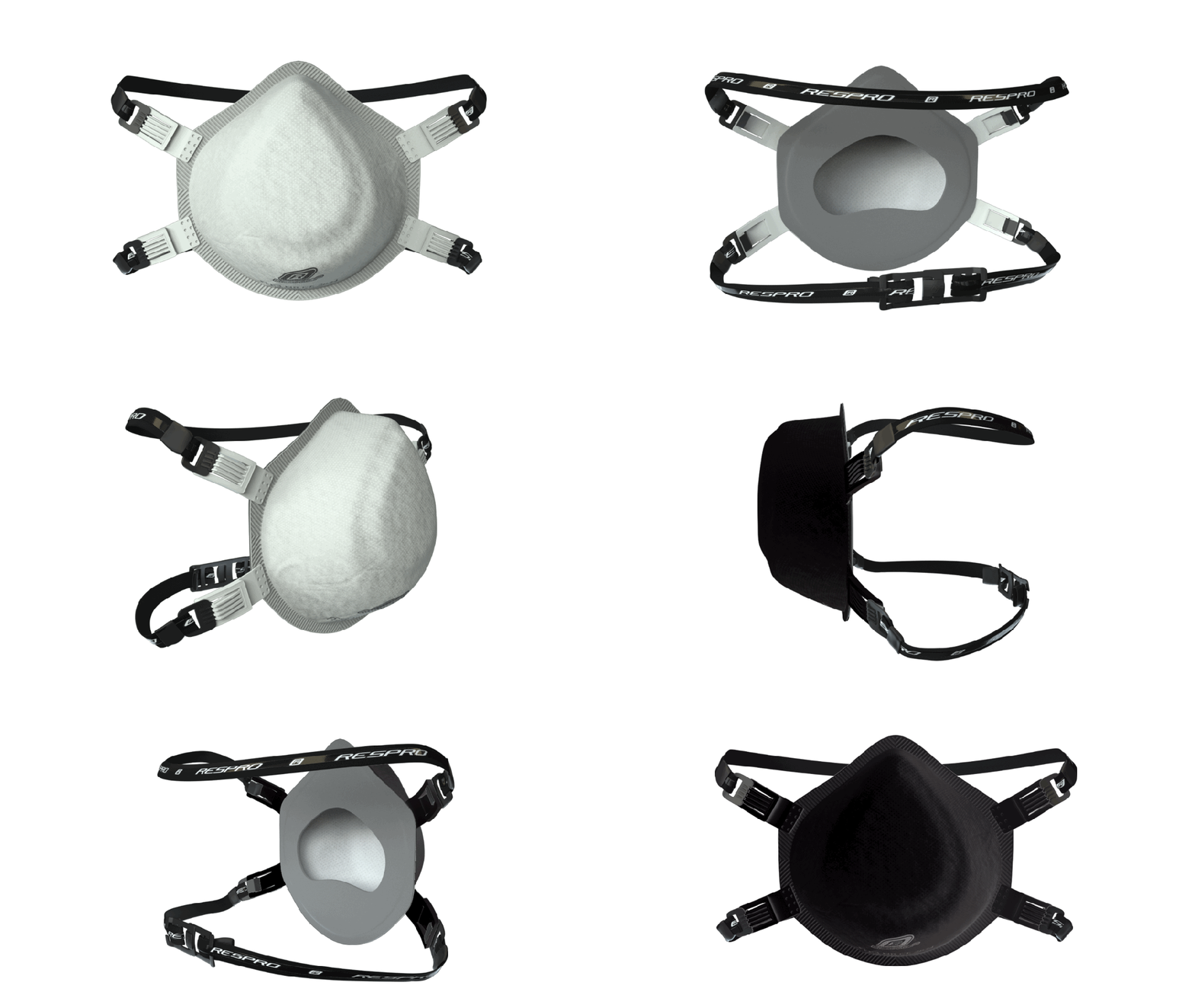
WILDFIRE PROTECTION: GET STREETSMART™

The Respro® StreetSmart™ Mask is valveless and FFP3 certified.
FFP3 is the highest European professional standard for a face mask and on par with the American standard N99.

It has a uniquely developed seal on the inside to ensure that the wearer has an excellent fit which is airtight around the nose and mouth.

The StreetSmart™ Mask fits all adults and children over the age of 10 years. Each mask comes with durable, 4-point adjustable elastic head straps for maximum protection and comfort.

Posted in Respro® Masks, Respro® Products | Tagged , , , , , , | Leave a comment

London high pollution alert triggered for Tuesday

A “high” air pollution alert for London on Tuesday has been triggered by City Hall, after it said local emissions had combined with warm weather and winds blowing pollutants from the continent towards the capital.

Imperial College London forecasters advised the Mayor of London’s office to issue the alert, the second this year, due to a strong likelihood of high ozone levels, City Hall said.

The last alert was in January, with one day of “high” pollution followed by three days of “moderate” air pollution.

Londoners are being asked by the mayor’s office to consider choosing to walk, cycle or take public transport, and to “avoid unnecessary car journeys, stop their engines idling and refrain from burning wood or garden waste”, a spokesperson said.

Tuesday will be the 201st day of either moderate or high levels of air pollution in London over the past five years, City Hall said.

In total, there have been 14 high pollution days and 186 moderate pollution days since the start of 2018.

The moderate and high daily thresholds are based on the national Daily Air Quality Index (DAQI) from the Department for Environment Food and Rural Affairs (Defra).

‘Climate ready’

The alert has been issued on the same day as the mayor announced an independent review into how the capital can better utilise technology to adapt to climate change.

Speaking at the start of London Tech Week, the mayor said the London Climate Resilience Review would explore how the capital could harness technology – including AI – to better adapt to, and prepare for, the impacts of a changing climate and future-proof the capital against its devastating impacts.

It would then recommend what more could be done to protect against climate risks such as wildfires, flooding and extreme heat.

The review is being led by Emma Howard Boyd CBE, a UN Global Ambassador for the Race to Resilience and former Chair of the Environment Agency.

She said: “London needs to be climate ready.

“During 2022’s heatwave, London hospitals had to cancel operations as systems crashed in the record-breaking heat. In 2021, flash flooding stopped people getting to work as roads and underground stations were inundated.”

via https://www.bbc.co.uk/news/articles/ckvzldzegnyo

Posted in Air Quality, Europe, London, UK, World News | Tagged , , , | Leave a comment

WILDFIRE SMOKE ADVISORIES AND FORECASTS 🔥

Information on smoke from Wildfires and Forest Fires,  
Smoke Advisories & Forecasts
Global Forest Watchfires.globalforestwatch.org
Map: globalforestwatch.org/map
NASA Earth Observatoryearthobservatory.nasa.gov/topic/natural-event
Canadian Interagency Forest Fire Centre
ciffc.ca
FireSmoke Canada
firesmoke.ca
Air Now USAairnow.gov/wildfires
fire.airnow.gov
Fogos, Portugal
fogos.pt

Posted in Air Quality | Tagged , , , | Leave a comment