Dozens of bonfires lit across Belfast on the Eleventh Night saw dangerous air pollution reach more than double internationally accepted levels.
Pollution in the city began to rise after 10pm on Tuesday and peaked at midnight before dropping and then peaking again at 6am on Wednesday.
Levels of potentially lethal fine particulates soared during monitoring, prompting concerns about the impact on health – particularly for the young, old, vulnerable and sick.
Pollutants known as PM2.5 were detected at four or five times the levels normally seen in Belfast.
“Some problems associated with PM2.5 are lung problems, cardiovascular problems, and recent studies link exposure to fine particles to dementia,” Dr Liz Coleman, from NUI Galway’s School of Physics and Centre for Climate and Air Pollution Studies, said.
The levels in the city were found to be more than twice the limit recommended by the World Health Organisation.
The UK’s Department for Environment, Food and Rural Affairs states that there is no safe level for this type of pollution.
It warns that long-term exposure is the biggest issue, but high concentrations over a short period can exacerbate lung and heart conditions, significantly affecting quality of life, and increase deaths and hospital admissions.
Air quality is monitored at seven locations across greater Belfast.
Bonfires lit on the Eleventh Night were still smouldering as Twelfth of July parades got underway on Wednesday, ahead of the clean-up operation.
In some areas, damage was caused to nearby homes with windows cracked or frames melted.
Firefighters were kept busy dealing with incidents and calls peaked at a rate of one every minute.
About 40% Americans live in counties where a “double whammy” of unhealthy levels of smog and ragweed pollen — both tied to climate change — combine to threaten respiratory health, a Natural Resources Defense Council report released Tuesday finds.
“Today, 127 million Americans live where ragweed and ozone can threaten their next breath,” said Kim Knowlton, senior scientist at the NRDC, who oversaw the project. “This health threat will just get worse if we don’t curb climate change soon.”
Climate change, caused by the burning of fossil fuels such as oil, gas and coal, both worsens ozone pollution and extends the ragweed season, the report said.
The late summer and early autumn season for ragweed pollen is now almost a month longer in many parts of the U.S. than 20 years ago, and that trend is likely to continue, the NRDC said.
Smog forms on warm, sunny days and is made worse from the chemicals that come out of vehicle tailpipes and from power plant and industrial smokestacks. It worsens respiratory illnesses such as asthma and chronic obstructive pulmonary disease (COPD). Plus, allergies alone can be life-threatening, especially in children, said Perry Sheffield, a pediatrician at Mount Sinai in New York.
In addition, air pollution from smog and allergens doesn’t just impact the lungs, it also affects the brain, heart and skin. “Clean air is so important for human health,” Sheffield said.
Ragweed was selected for this report instead of other pollens, such as tree and grass, because more people are allergic to it than to all the others combined, Knowlton said. Also, ragweed comes out toward late summer when temperatures, and thus smog levels, are highest.
The report includes a special focus on 15 of the worst jurisdictions and states where both smog and pollen are especially bad. Those, listed in order starting with the worst, include: the District of Columbia, Connecticut, Rhode Island, Illinois, Pennsylvania, Utah, Ohio, Arizona, Michigan, Massachusetts, Delaware, Wisconsin, New Hampshire, Indiana and Kansas.
“It’s ironic and tragic that the nation’s key ‘hot spot’ is Washington, D.C., the very place where wrongheaded policy threatens to make climate and pollution problems worse by the day,” said Juanita Constible of the NRDC. Instead of dismantling the Clean Power Plan, the federal government should focus on limiting smog, curbing power plant pollution and increasing vehicle fuel efficiency, she added.
The group said governments at the state and local levels should also work to ramp up the use of clean energy and diminish smog levels, among other actions.
The National Climate Assessment, a federal report released in 2014, also warned both ozone levels and allergens would likely worsen due to climate change. The NRDC report is a follow-up to previous air quality reports released in 2007 and 2015.
The concept of travelling in non-peak hour is slowly disappearing as Delhi faces rush hour between 8 am-8 pm, every day and it is only getting worse day by day. A study by the Centre for Science and Environment for the month of June has shown there is virtually no difference in travel time between peak and non-peak hours. During the peak hour with lower traffic speed, the level Nitrogen oxide emitted by the vehicles increase by 38 per cent, according to a report by Indian Express.
The study was conducted through Google maps on 13 connecting roads with more than 60,000 passenger car units per day on an hourly basis for one month, the report said.
Using Central Pollution Control Board’s real-time monitoring data in four stations, the study found that when the average speed reduces to 25km/hr the NO2 level increases to 94 microgramme/cubic metre from 68 microgramme/cubic metre in the morning when the average speed 28km/hr is present, the IE report said. The report presented the grim picture of traffic in the national capital and warned off even worse situation during the winter when temperature inversion happens during evenings.
The CSE Director Anumita Roychowdhury has said to the newspaper that if the action is not taken immediately, Delhi will merely run to a standstill. Raising concerns she also pointed out that the number of cars in the city will only increase as prices drop after the implementation of Goods and service tax, the IE report said. Roychowdhury said the consequence is inevitable as in 2017 unrestrained vehicle numbers have crossed the 10 million-mark.
Government agencies must not become complacent in the effort to provide clean air to all citizens, warn authors of a new report.
The Forum of International Respiratory Societies (FIRS) warns today that government agencies must not become complacent in the effort to provide clean air to all citizens. Despite the advancements that have been made since the 1963 introduction of the Clean Air Act in the United States, much more remains to be done. The most recent example of this is a report published in the New England Journal of Medicine looking at 12 years of Medicare beneficiary data, which showed the risk of death increased in proportion to the amount of fine particulate matter in the atmosphere. Most concerning was the finding that, although the current National Ambient Air Quality Standards declare that 12 micrograms per cubic meter of fine, inhalable particles (those with an aerodynamic diameter of 2.5 micrometers or less, or “PM2.5“) is an acceptable level, there was a 13.6% increase in the risk of death for every increase in 10 micrograms of fine particles per cubic meter of air below that “acceptable” threshold. The study also found there was no “safe” level of exposure, or level where the risk of death was unchanged.
Major producers of PM2.5 particles globally include the burning of solid fuels (such as coal and wood), and various fuels for transportation. “More than 2.8 billion people worldwide use solid fuel for cooking, and many more use solid fuels for heating their homes,” according to Dr. Akshay Sood, Professor of Medicine at the University of New Mexico and member of FIRS Environmental Committee.
Dr. Sood continues, “People have seen pictures of New Delhi, Beijing, or Los Angeles smog. This smog is made up of these fine particles. It is concerning that communities in the United States that meet the National Ambient Air Quality Standards and believe their air is ‘safe’ may not entirely be protected from the adverse health effects of PM2.5.” Certain segments of the population, such as children, the elderly, and those with cardiopulmonary diseases are at higher risk of the health effects of pollution.
Inadequate outdoor air quality affects many people around the world. The World Health Organization (WHO) estimates that 92% of the world’s population live in areas with inadequate outdoor air quality, and this pollution contributes to 1 out of every 8 deaths. This new data from the United States should spur governments to redouble their efforts to provide their citizens with the cleanest air possible. FIRS strongly recommends compliance with WHO Air Quality Guidelines, as well as the Paris Climate Agreement.
Tube travellers could be at risk of developing dementia as it emerged passengers can inhale more than 12 million toxic air particles a minute on the Underground.
Monitors placed on the Tube network by Transport for Londonfound that “nanodusts” comprised mostly of iron oxides surge with the movement of trains.
They are thought to spike because of the grinding of wheels and rails as trains brake, and are also blown up from the tracks as trains move along them.
Peaks measured by TfL and released to The Sunday Times under freedom of information laws found that particle levels on the Central line exceeded two million particles for every litre of air.
Ten litres of air are breathed in by adults every minute, meaning passengers could inhale between 12 and 20m particles in that time. Despite being different from pollution on roads, the “nanodusts” are said to be equally toxic and are often so small they can pass straight into people’s organs and brains.
The British Lung Foundation’s Professor Stephen Holgate warned such exposure could lead to dementia.
He told The Sunday Times: “The particles in underground railways are rich in iron and other metals such as copper, chromium, manganese and zinc. Metal particles increase our risk of asthma, lung and cardiovascular disease and possibly dementia.”
The World Health Organisation (WHO) says humans should not be exposed to more than 50 micrograms of particles per cubic metre in an average 24-hour period.
But on the Northern line, TfL measured the mass of particles per cubic metre of air peaking at between 250 micrograms and 1,000 micrograms. Similar levels were reportedly found on the Victoria and Piccadilly lines.
TfL insisted commuters and staff would not be exposed to excessive levels of toxic air because they do not spend all day in the Tube.
Mark Wild, managing director of London Underground, said: “We have a new air quality programme to ensure particles are kept to a minimum. Levels are well within Health and Safety Executive guidelines.”
But Professor Barbara Maher of Lancaster University told the Sunday Times: “There is growing evidence that exposure to iron magnetite nanoparticles, from urban air pollution, raises the risk of Alzheimer’s disease.”
The June heatwave brought dangerously high ozone levels and caused serious summer smog
The hottest June day in the UK since 1976 caused widespread summertime smog across southern England and the Midlands. Sevenoaks in Kent and Lullington Heath, East Sussex, measured the greatest ozone level for 11 years; reaching eight on the UK government’s ten-point scale for the first time. The winds then turned westerly and carried our polluted air eastwards to create problems over Germany.
Ozone can take days to form in the atmosphere. It therefore spreads across very wide areas. To reduce the worst impacts, Paris once again banned the oldest vehicles from its roads and, in a targeted approach, restrictions were placed on industries that emit volatile hydrocarbons that contribute to ozone formation. In a re-run of the 2003 heatwave, smoke from the tragic forest fires in Portugal spread over France and reached the UK during the hot weather.
Ozone in the stratosphere protects us from the sun’s harmful UV, but breathing the ozone that forms at the ground is very harmful. Health guidelines are set assuming eight-hour exposure, based on studies of schoolchildren in summer camps. A new study of 60m elderly people in the US showed the health impacts from breathing ozone over many years in outdoor air, even at levels below current US standards.
Health impacts of air pollution are dominated by exposure to particle pollution and nitrogen dioxide, leading to the much quoted figures of around 40,000 early deaths yearly in the UK. According to European Environment Agency, including ozone exposure would add around 700 early deaths to the annual tally.
Air quality index data between 2016 to June 2017, available with the Central Pollution Control Board, revealed that pollution levels in Delhi refused to drop even during the rainy season. Not even in the month of June 2017, when the city received one of the heaviest rains in the last decade.
Delhi might have just experienced the wettest June in more than a decade, but even the heavy rains failed to wash away some of the city’s deadliest air pollutants.
Air Quality Index data between 2016 to June 2017, available with the Central Pollution Control Board, revealed that pollution levels in Delhi refused to drop even during the rainy season. Not even in the month of June 2017, when the city received one of the heaviest rains in the last decade.
“Delhi hasn’t witnessed a single day in the last 535 days, in which air quality could be termed ‘good’. The air quality in nearly 50% of the days had poor category air quality followed by very poor,” said D Saha head of the air laboratory in the Central Pollution Control Board.
Scientists and environment experts were alarmed and apprehends that this could be the effect of the Green Field Gap — a phenomenon in which even heavy rains fail to wash air pollutants.
“Usually rains wash away the particulate matter. But there are some particulate matters, whose size varies between 0.1 micron and 1 micron. They are not cleaned and linger even after heavy rains. They are hydrophobic and tend to bounce away whenever a rain drop hits them,” said SN Tripathi coordinator of Centre for Environmental Science & Engineering at IIT Kanpur.
These are mostly the secondary particles (nitrates and sulphates) which form in the air from primary particles (SO2 and NO2) because of some complex reactions. Even the Supreme Court mandated EPCA had warned of such secondary particles in its action plan.
“Triggers such as high solar radiation and high relative humidity help primary particles to graduate into secondary ones. These particles may at times play havoc with the local rains by delaying and dispersing the rains,” said Abhijit Chatterjee, atmospheric scientist of Bose Institute in Kolkata.
Scientists have warned that long term exposure to pollution levels even in the satisfactory and moderate category could prove harmful to humans and can trigger a range of pulmonary and cardiac diseases.
The AQI is considered good if the PM10 level is below 50 micrograms per metre cube and PM2.5 level is below 30 micrograms per metre cube on a 24 hour average.
“But these are just permissible standards which we maintain for regulatory purposes. The safe standard is much lower and anything above 25 is considered unsafe for humans. Long term exposure even to such low doses of pollution could trigger several diseases,” said Sagnik Dey, associate professor at Centre for Atmospheric Sciences in IIT Delhi.
In the NCR region, air pollution levels in Noida too was equally bad in June 2017 as the city failed to register a single day in which air quality was in the good category. Gurgaon, however, experienced at least five days during June when air quality was in the good category.
“This means we are adding more pollution that what rains can wash away,” said Dey.
Move by Emmanuel Macron’s government comes a day after Volvo said it would only make fully electric or hybrid cars from 2019
France will end sales of petrol and diesel vehicles by 2040 as part of an ambitious plan to meet its targets under the Paris climate accord, Emmanuel Macron’s government has announced.
The announcement comes a day after Volvo said it would only make fully electric or hybrid cars from 2019 onwards, a decision hailed as the beginning of the end for the internal combustion engine’s dominance of motor transport after more than a century.
Nicolas Hulot, the country’s new ecology minister, said: “We are announcing an end to the sale of petrol and diesel cars by 2040.” Hulot added that the move was a “veritable revolution”.
Hulot insisted that the decision was a question of public health policy and “a way to fight against air pollution”. The veteran environmental campaigner was among several political newcomers to whom Macron gave top jobs in his government.
Pascal Canfin, the head of WWF France and a former Green politician who served in François Hollande’s government, said the new policy platform to counter climate change went further than previous administrations in France. “It places France among the leaders of climate action in the world,” he told France Inter radio.
Prof David Bailey, an automotive industry expert at Aston University, said: “The timescale involved here is sufficiently long term to be taken seriously. If enacted it would send a very clear signal to manufacturers and consumers of the direction of travel and may accelerate a transition to electric cars.”
Norway, which has the highest penetration of electric cars in the world, has set a target of only allowing sales of 100% electric or plug-in hybrid cars by 2025.
Other countries have floated the idea of banning cars powered by an internal combustion engine to meet air quality and climate change goals, but have not yet passed concrete targets.
The Netherlands has mooted a 2025 ban for diesel and petrol cars, and some federal states in Germany are keen on a 2030 phase-out.
India, where scores of cities are blighted by dangerous air pollution, is mulling the idea of no longer selling petrol or diesel cars by 2030, and said it wants to introduce electric cars in “a very big way”.
The UK has an aspiration of all new cars being electric or ultra low emission by 2040, but has been criticised by campaigners and politicans for being slow to act on air pollution.
Sadiq Khan, the mayor of London, said: “I welcome the strong leadership the French government has shown by making the decision to end the sale of petrol and diesel cars by 2040.
“This radical step shames the timid and insufficient response of our own government to the health threat posed by poor air quality.”
France’s announcement came as Bloomberg New Energy Finance predicted electric cars would come to dominate the automotive market more quickly and dramatically than previously thought.
Electric vehicles will make up 54% of all light-duty vehicle sales by 2040, up from the 35% share Bloomberg was forecasting just last year, according to a new report by the research group.
Bloomberg said such a widespread uptake of electric vehicles would globally reduce oil demand by 8m barrels a day and increase electricity consumption by 5% to charge all the new cars.
But Tony Seba, a Stanford University economist who has published research predicting electric cars will even more rapidly take over from conventional cars, said of France’s plan: “Banning sales of diesel and gasoline vehicles by 2040 is a bit like banning sales of horses for road transportation by 2040: there won’t be any to ban.”
French car manufacturers Peugeot, Citroën and Renault ranked first, second and third on a 2016 list of large car manufacturers with the lowest carbon emissions, the European Environment Agency said.
Just 0.6% of new car registrations across the EU last year were for pure electric vehicles, compared with 1.1% of new cars sold in France.
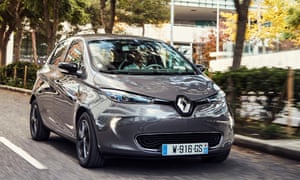
French-Japanese carmaker Renault-Nissan has been an enthusiastic early advocate for the vehicles, taking 14.6% of the EU market share for battery-powered vehicles. The firm has built 425,000 of the more than 2m electric cars sold globally.
France’s reliance on nuclear power stations for 80% of its electricity supply means that a shift to electric vehicles rather than oil-powered ones would dramatically cut its remaining carbon emissions.
Pollution Masks since 1993 - The 'Original' and still the best - Made in the UK - respro.com
THE AIR WE BREATHE
The Respro® Bulletin Board is designed to keep you up to date with current views and issues relating to Air Pollution and its health implications in our daily lives.


 Tube travellers could be at risk of developing dementia as it emerged passengers can inhale more than 12 million toxic air particles a minute on the Underground.








 Respro® Masks are reusable
 Respro® Bulletin Board