Gurgaon air ‘deadly’ but can be fixed, says Centre for Science and Environment report

The report titled ‘Gurugram: A framework for sustainable development’ was released on Thursday ahead of the upcoming World Environment Day on June 5.

As per a report released on challenges staring at Gurgaon and possible solutions prepared by the Delhi-based Centre for Science and Environment (CSE) and Gurgaon First – under the aegis of the Municipal Corporation of Gurugram, the city is experiencing poor air quality because of large scale usage of diesel generators, dirty fuel, large scale construction and losing green areas.

The report titled ‘Gurugram: A framework for sustainable development’ was released on Thursday ahead of the upcoming World Environment Day on June 5. For the last six months, the Central Pollution Control Board (CPCB) has marked the city’s air quality as poor. To address the issue, an environment conclave was organised in the city on Thursday.

Out of all the pollutants, the suspended particulate matter (PM) 2.5 has been way above the permissible limit, which is 60 micrograms per cubic metre (µg/m³). PM2.5 is particulate matter 2.5 micrometres or less in diameter and is a major component of what constitutes air pollution. These are very fine particles and can reside in the lungs and aggravate asthma or respiratory conditions. The elderly and children are most vulnerable to adverse effects on health caused by PM2.5.

According to a study conducted by Central Pollution Control Board (CPCB), every third child in Delhi has reduced lung function and their sputum contains four times more iron-laden macrophages than those from cleaner environments, said the report.

During the discussion at the conclave, it was concluded that the city should focus on vehicular emission standard and energy efficiency to reduce air pollution.

“It is time that we should move towards solar power and reduce our dependency on diesel. At present 61% of all energy used in the city is from diesel which is a major source of air pollution,” said Vibhor Jain, Altanta Healthcare, an air quality management company.

The panelists agreed that growing dependence on personal vehicles is a major reason behind the city’s poor air quality. The number of people using public transport for their daily transportation is 17 % and about 50,000 vehicles are added on city’s roads every year, noted the study done by CSE.

“The number of cars entering Gurgaon from Delhi daily is more than three times the number of cars registered in Gurgaon in 2015. Nearly 900 trucks cross the city every day,” said Dr Anumita Roychowdhury, executive director, research and advocacy and head of the air pollution and clean transportation programme, CSE.

The environmentalists also pointed out that there is a need for more study on this issue to get a clear picture of the situation.

Similarly, Bhawani Shankar Tripathi, founding member, Mission Gurgaon Development, said, “There are no local health studies in the city to connect to public health with air pollution levels.”

Source: Gurgaon air ‘deadly’ but can be fixed, says Centre for Science and Environment report | gurgaon | Hindustan Times

Posted in Air Quality, Asia, India | Tagged , , , , | Leave a comment

Human activity has polluted European air for 2,000 years 

A new study combining European ice core data and historical records of the infamous Black Death pandemic of 1349-1353 shows metal mining and smelting have polluted the environment for thousands of years, challenging the widespread belief that environmental pollution began with the Industrial Revolution in the 1700s and 1800s.

The new study, accepted for publication in GeoHealth, a journal of the American Geophysical Union, provides evidence that the natural level of lead in the air is essentially zero, contrary to common assumptions. The research shows lead pollution from mining and smelting was detectable well before the Industrial Revolution and only when the Black Death pandemic halted those activities did lead in the air return to natural levels.

“These new data show that human activity has polluted European air almost uninterruptedly for the last ca. 2000 years,” the study’s authors write. “Only a devastating collapse in population and economic activity caused by pandemic disease reduced atmospheric pollution to what can now more accurately be termed ‘background’ or natural levels.”

The new findings could affect the current standards for lead pollution. Current public health and environmental policy deem pre-industrial lead pollution levels to be “natural” and thus presumably “safe,” but this assumption may need to be re-examined, according to the study’s authors.

Lead is one of the most dangerous environmental pollutants and is toxic to the brain at extremely low levels. No levels of lead can be considered safe in children, according to Philip Landrigan, Dean of Global Health for the Icahn School of Medicine at Mount Sinai Medical Center in New York, who was not connected to the new study.

“It’s clear that lead has lasting effects on children’s lives,” said Landrigan, who has researched lead poisoning in children and was instrumental in the implementation of abatement policies in past years.

Reconstructing past lead levels

In the new study, historians at Harvard University in Cambridge, Massachusetts, collaborated with climate scientists at the Climate Change Institute at the University of Maine in Orono. The team chose to examine past lead levels in the air because it is a dangerous pollutant and serves as a proxy for economic activity, ramping up when economies grow and tailing off when they decline.

The researchers matched new, high-resolution measurements of lead in an ice core taken from a glacier in the Swiss/Italian Alps with highly detailed historical records showing that lead mining and smelting activity plummeted to nearly zero during the plague pandemic years of 1349 to 1353.

The researchers found that lead levels declined suddenly in a section of the ice core corresponding to that four-year window of time. That decline is unique in the last 2,000 years of European history, according to Alexander More, a historian at Harvard and lead author of the new study.

“When we saw the extent of the decline in lead levels, and only saw it once, during the years of the pandemic, we were intrigued,” More said. “In different parts of Europe, the Black Death wiped out as much as half of the population. It radically changed society in multiple ways. In terms of the labor force, the mining of lead essentially stopped in major areas of production. You see this reflected in the ice core in a large drop in atmospheric lead levels, and you see it in historical records for an extended period of time.”

The researchers also found other, lesser, drops in lead accumulation in the ice core. One occurred in 1460, which the authors show may have also been due to an epidemic-related downturn. Other drops occurred during an economic slowdown in 1885 and most recently in the 1970s when abatement policies phased out leaded gasoline and other sources of lead air pollution.

More said the ice core holds much additional data, accessible due to the precision of the Climate Change Institute’s next generation laser facility and the expertise of climate scientists on the research team. Combining that data with historical sources can lead to new discoveries in the fields of climate science, the history of human and planetary health, environmental and economic history, he said.

“This research represents the convergence of two very different disciplines, history and ice core glaciology, that together provide the perspective needed to understand how a toxic substance like lead has varied in the atmosphere and, more importantly, to understand that the true natural level is in fact very close to zero,” said Paul Mayewski, Director of the Climate Change Institute at the University of Maine and co-author of the new study. “Using the ultra-high resolution ice core sampling offered through our W. M. Keck Laser Ice Facility, we expect to be able to offer new insights, previously unattainable with lower-resolution sampling, into the links between climate change and the course of civilization.”

Source: Human activity has polluted European air for 2,000 years — ScienceDaily

Posted in Air Quality, Europe, World News | Tagged , , | Leave a comment

Air pollution results in 7,700 premature deaths in Canada each year: report

Air pollution cost Canadian families an estimated $36 billion in 2015 due to premature death and illness, a new research report says.

The report, Costs of Pollution in Canada, is a compilation of scientific data on all aspects of pollution, from smog to oil spills and fertilizer use. It is being released today by the International Institute for Sustainable Development.

“The more scientists look at the costs of air pollution, the more they find those costs are large,” said Robert Smith, a senior associate at the institute and the report’s lead author.

A 2008 Canadian Medical Association study concluded that about 1,500 people die prematurely every year because of air pollution — a study once considered the gold standard, Smith said.

More recently, that study was found to have vastly underestimated the impact; new research in 2015 suggested the number of premature deaths caused by air pollution is closer to 7,700 people a year.

“We now know the costs of air pollution are much higher than we thought they were,” Smith said. “The morbidity and mortality is much worse than we thought.”

The IISD report compiles scientific research on the impacts of pollution across a number of areas, including human and animal health and costs to business and government. It includes things such as the cost to clean up contaminated sites, the impact of acid rain, the deaths of honey bees, algae blooms and oil spills.

A lot of the costs of pollution are not known at all because the research simply isn’t there, the report notes.

Pathogens in tap water add another $895 million in costs. Climate change-related heat waves cost $1.6 billion in 2015, the report says.

Heat waves are the only consequence the study priced, since there is no clear picture what portion of other events such storms and droughts can be attributed to climate change, Smith said.

Scientists have been able to attribute about 50 per cent of heat waves to climate change, and the $1.6 billion cost reflects that figure, he noted.

While much of the world is taking steps to address air pollution largely by cutting greenhouse gas emissions, there is a fear the United States is poised to rekindle the use of coal to generate electricity.

President Donald Trump has famously promised to breathe new life into the struggling U.S. coal industry, which used to be responsible for more than half of America’s power, and now produces about one-third.

Regulations on coal-fired plants have put a damper on coal production, as have market forces that made other sources more attractive, such as natural gas from fracking. Burning coal remains the largest source of air pollution in the U.S.

As Trump now ponders withdrawing from the Paris climate change agreement, Smith said fear of more coal has grown. Even though Canada isn’t going down that road, “pollution knows no boundaries.”

Toronto, which has finally started to see its air pollution levels go down, would get hit if there is suddenly a ramping-up of coal production in the Ohio Valley, Smith said.

In many ways, he added, the bright light these days is China, which recently shelved plans to open more than 100 new coal plants.

“I guess all we can, in some sense, pin our hopes on is the Chinese population — that their rising middle class isn’t going to put up with this.”

Source: Air pollution results in 7,700 premature deaths in Canada each year: report

Posted in Air Quality, USA & Canada | Tagged , | Leave a comment

UK government sued for third time over illegal air pollution from diesels 

Environmental lawyers who have defeated ministers twice return to court in a bid to remove ‘major flaws’ from air quality plans

Environmental lawyers are taking the government to the high court for a third time in a bid to remove “major flaws” from minister’s plans to tackle the UK’s illegal levels of air pollution.

ClientEarth has inflicted two humiliating defeats on the government over previous plans, which were ruled not to meet legal requirements. Lawyers from ClientEarth had requested improvements to the latest plan from the Department for Environment, Food and Rural Affairs (Defra) but were refused, prompting the new court action.

Levels of nitrogen dioxide (NO2), emitted mostly by diesel vehicles, have been above legal limits in almost 90% of urban areas in the UK since 2010. The toxic fumes are estimated to cause 23,500 early deaths a year and the problem was declared a public health emergency by a cross-party committee of MPs in April 2016.

“We have been looking at the fine detail of the draft air quality plans published by the government,” said James Thornton, chief executive of ClientEarth. “We have found some major flaws. The law requires the final plan to bring air pollution down to legal levels in the shortest time possible. These flaws seriously jeopardise that timetable. These are plans for more plans, what we need are plans for action.”

The government’s latest proposals were published on 5 May and were widely condemned, with the mayor of London, Sadiq Khan, calling them “woefully inadequate”.

ClientEarth’s lawyers argue that technical documents published show that the most effective way to reduce toxic air is by discouraging polluting vehicles from entering cities and towns. However, the consultation published by the government states that charging zones should only be the option of last resort, after all other measures such as removing speed bumps and encouraging cycling have been tried.

But as the technical documents show these other measures are not nearly as effective, ClientEarth’s lawyers say the government’s plan does not meet the court order to cut air pollution in the shortest time possible, as the law requires.

Lawyers also say that while the court ordered the government to produce a new plan, it produced only a consultation for a plan. Defra declined to comment during ongoing legal proceedings.

Conservative ministers are reluctant to implement charges on diesel drivers who were given tax breaks to buy diesel cars, which have lower carbon dioxide emissions.

Regulations were supposed to limit NO2 emissions but cheating and the exploitation of loopholes by car manufacturers led to vehicles that emitted far more pollution on the road than in lab tests. Such cars are still on sale, including Renault and Nissan models that emit 15 times more NO2 on the road than in the lab test.

ClientEarth’s legal action will be considered by the court, which will decide whether a hearing will be granted. The judge in the most recent case, Justice Garnham, was critical of the government: “The continued failure of the government to comply with directives and regulations constitutes a significant threat to public health.”

Therese Coffey, environment minister, said: “The Conservatives will further improve air quality while making sure that ordinary working families are not penalised for Labour’s mistakes. The government is also consulting on what further steps can be taken to mitigate any cost and burdens on ordinary working families and local firms – including the options of targeted scrappage schemes and retrofitting initiatives.”

Proposals put forward within government for a previous plan did include 16 new clean air zones, which would have charged drivers of polluting vehicles to enter urban areas. But court documents revealed that the Treasury, then run by George Osborne, had blocked these proposals due to concern about the political impact.

The global human health impact of the diesel emissions scandal was revealed earlier in May by new research showing a minimum of 38,000 people a year die early due to the failure of diesel vehicles to meet official limits in real driving conditions.

Source: UK government sued for third time over illegal air pollution from diesels | Environment | The Guardian

Posted in Air Quality, Europe, UK | Tagged , , , , | Leave a comment

India’s first early warning system in Ahmedabad aims to reduce health impact of air pollution 

An early warning system will notify people of excessive air pollution days as part of the response plan, while medical professionals will be trained to respond to emergencies.

The first Indian monitoring and early warning system for air pollution was launched on May 12, 2017, in the nation’s fifth most populous city, with the hope that it will reduce the health impacts and deaths from air pollution, a growing problem in a country with nine of the world’s 20 most polluted cities in 2016, according to the World Health Organization (WHO).

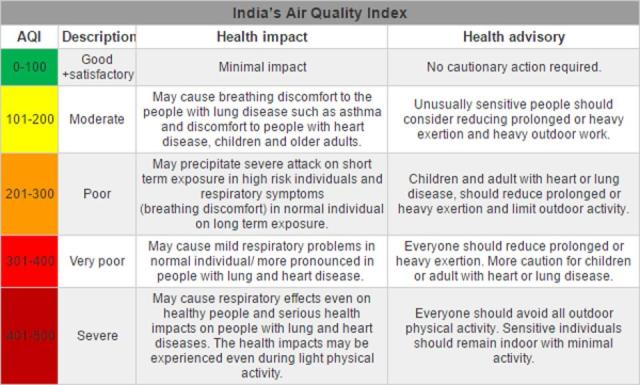
Combining the efforts of local government, scientists and non-profits, eight new air quality monitoring sites across Ahmedabad will produce a daily air quality index (AQI) that will be accessible to citizens through 11 LED screens across the city, as part of what is called the Air Information and Response (AIR) plan.

An early warning system will notify people of excessive pollution days as part of the response plan, while medical professionals will be trained to respond to air-pollution emergencies. The monitors are installed at eight locations (Bopal, Satellite, Pirana, Raikhad, Navrangpura, Rakhiyal, Chandkheda and the airport) in a city of over 5.5 million people.

An AQI is a metric on a sliding scale that tells people about the quality of the air and associated near-term health impacts. It transforms complex air quality data of various pollutants into a single number (index value), nomenclature and colour.

Ahmedabad was among the five most polluted cities in India in terms of PM 2.5, according to the WHO’s 2014 Ambient Air Pollution database.

PM 2.5 is particulate matter finer than 2.5 micro-meters, or about 30 times finer than a human hair. Inhaled deep into the lungs, they can cause heart attacks, strokes, lung cancer and respiratory diseases, and are known to pose the greatest risk to human health. Their measurement is considered to be the best indicator of the level of health risks from air pollution, according to the WHO.

In the footsteps of Beijing

People living in more polluted areas die prematurely after long-term exposure to air pollution, and inconsistent monitoring makes it difficult to assess the threat posed by ambient air pollution.

The AIR plan is a collaborative effort between the Ahmedabad Municipal Corporation (AMC), Indian Institute of Public Health (IIPH), a nonprofit in Gandhinagar, Natural Resources Defense Council (a non-profit head-quartered in New York), Indian Institute of Tropical Meteorology (government institute) and the Indian Meteorological Department’s System of Air Quality and Weather Forecasting And Research (SAFAR) network.

The monitoring and warning system will be tried for the first time in India, but follows the successful example of Beijing, that started the program for issuing colour-coded pollution alerts in 2013, according to this report by The Scientific American.

However, this warning plan was accompanied by other measures like restricted driving schedules, school closures and reduced industrial production to curb emissions, according to a 2014 paper in the Journal of Epidemiology and Community Health, which is missing in the Ahmedabad plan.

The AMC has set aside a budget of Rs 30 lakh for 2017, Chirag Shah, nodal officer of the AIR plan and the Deputy Health Officer of the West Zone at the AMC, told IndiaSpend.

“All the recurring costs, such as the maintenance of screens and stations, issuing advisories and initiating programs to increase public awareness will also be borne by us,” said Shah. “The land for installing the AQI monitors has been provided free of cost to SAFAR by the AMC, and SAFAR has invested about Rs 20 crore to install ten AQI monitors in Gandhinagar and Ahmedabad, eight of which are here.”

The AMC had drafted a comprehensive Air Action Plan to combat pollution from construction activities, vehicular emissions and industries in 2016, its second such plan since 2002, but it is yet to be implemented, according to a Times of India report on May 12, 2017.

Forecast air quality, issue early warnings and be better prepared

The AMC Health Department is responsible for coordination of the AQI and AIR Plan. This includes monitoring the daily AQI, issuing alerts and warning on bad air days and disseminating public health messages to local departments and community service providers.

The AIR plan is modelled after Ahmedabad’s Heat Action Plan (HAP), launched in 2013 to reduce health impacts and mortality from extreme heat waves through measures that included early warning systems, increased public awareness and training health professionals.

Source: India’s first early warning system in Ahmedabad aims to reduce health impact of air pollution | india-news | Hindustan Times

Posted in Air Quality, Asia, India | Tagged , , , , , , , , , , , , , | Leave a comment

What is an Air Quality Alert? 

The Texas Commission on Environmental Quality has issued
an Ozone Action Day, also known as an Air Quality Alert, for the Dallas-Fort Worth area Tuesday.

Air Quality Alerts were designed by the government to communicate to the public on how much pollution there is in the low levels of our atmosphere, the air we breathe. They are common across North Texas this time of year.

An Air Quality Alert is issued when there is a high level of pollutants, such as ozone, near the surface that can potentially affect your health. Ozone at the surface is harmful to your lungs and health and breathing it can trigger asthma attacks and other respiratory issues. The elderly and very young are most at risk.

Ozone in the upper levels of our atmosphere helps protect us from harmful rays from the sun. This is the good ozone.

Pollution from ozone occurs when oxide nitrogen gasses and chemical reactions from volatile organic compounds mix together. Sunlight and heat help to combine oxide nitrogen gasses and volatile organic compounds together forming smog. Cars, trucks and factories are all big contributors to ozone pollution.

You can do your part in preventing pollution by carpooling, walking, riding a bicycle, taking your lunch to work, avoiding drive-through lanes, conserving energy and keeping your vehicle properly tuned.

Source: What is an Air Quality Alert? | NBC 5 Dallas-Fort Worth

Posted in Air Quality, USA & Canada | Tagged , , , , | Leave a comment

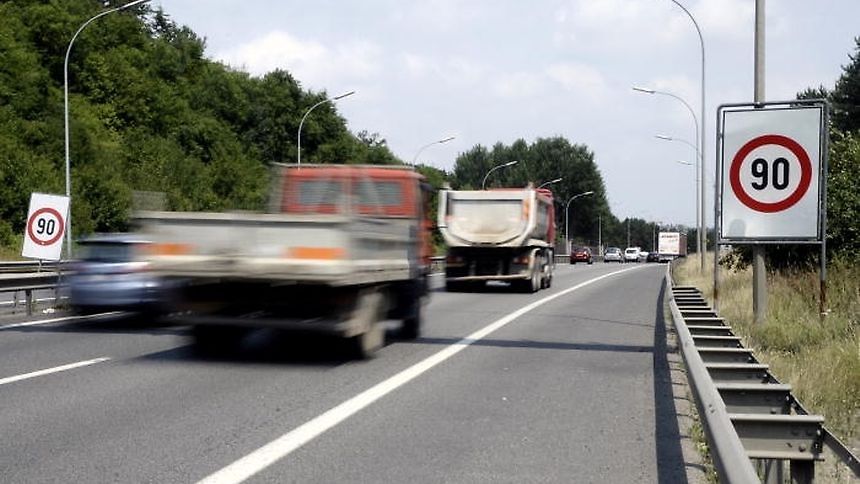
Speed limit reduced to 90km/h on Luxembourg motorways

Due to hot weather, drivers on Luxembourg’s motorways must slow down to 90km per hour to help reduce air pollution, effective immediately.

The warning was issued by the Automobile Club de Luxembourg (ACL) on Monday afternoon and will be in force until further notice.

Source: Luxemburger Wort – Speed limit reduced to 90km/h on Luxembourg motorways

Posted in Air Quality, Europe | Tagged , | Leave a comment

South Korea to suspend eight older coal-fired power plants to tackle pollution 

South Korea will halt operations at eight of the country’s older coal-fired power plants for a month in June as part of measures to tackle air pollution, the energy ministry said on Tuesday.

New President Moon Jae-in earlier this month announced plans to temporarily shut operations at 10 coal-fired plants that are more than 30 years old and to bring forward their permanent closure to within his presidency which ends in May 2022.

The energy ministry said in a statement that eight of the 10 older coal-fired plants will be temporarily shut down from June 1 for one month, while the other two will remain operational to ensure stable power supply.

From next year, the plants will be regularly shut down for four months over spring, and operations will be permanently suspended by 2022, three years earlier than previously planned.

Coal power currently accounts for about 40 percent of South Korea’s total electricity needs.

The country operates a total of 59 coal-fired power plants and the 10 older power plants account for 10.6 percent of the installed coal power capacity, or 3.3 gigawatts.

Source: South Korea to suspend eight older coal-fired power plants to tackle pollution | Reuters

Posted in Air Quality, Asia, South Korea | Tagged , | Leave a comment