What is an Air Quality Alert? 

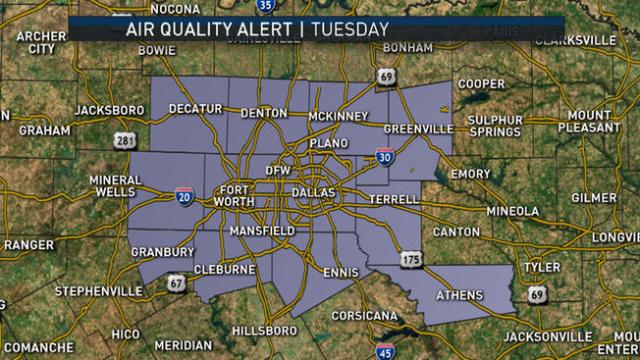
The Texas Commission on Environmental Quality has issued
an Ozone Action Day, also known as an Air Quality Alert, for the Dallas-Fort Worth area Tuesday.

Air Quality Alerts were designed by the government to communicate to the public on how much pollution there is in the low levels of our atmosphere, the air we breathe. They are common across North Texas this time of year.

An Air Quality Alert is issued when there is a high level of pollutants, such as ozone, near the surface that can potentially affect your health. Ozone at the surface is harmful to your lungs and health and breathing it can trigger asthma attacks and other respiratory issues. The elderly and very young are most at risk.

Ozone in the upper levels of our atmosphere helps protect us from harmful rays from the sun. This is the good ozone.

Pollution from ozone occurs when oxide nitrogen gasses and chemical reactions from volatile organic compounds mix together. Sunlight and heat help to combine oxide nitrogen gasses and volatile organic compounds together forming smog. Cars, trucks and factories are all big contributors to ozone pollution.

You can do your part in preventing pollution by carpooling, walking, riding a bicycle, taking your lunch to work, avoiding drive-through lanes, conserving energy and keeping your vehicle properly tuned.

Source: What is an Air Quality Alert? | NBC 5 Dallas-Fort Worth

Posted in Air Quality, USA & Canada | Tagged , , , , | Leave a comment

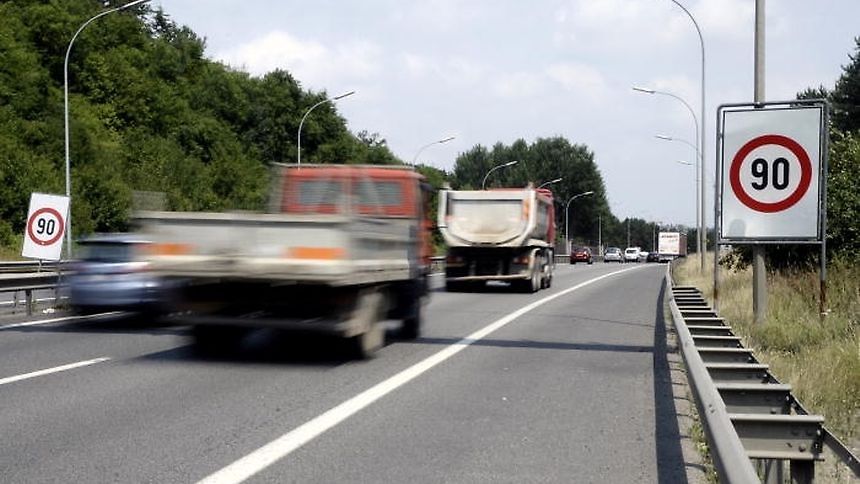
Speed limit reduced to 90km/h on Luxembourg motorways

Due to hot weather, drivers on Luxembourg’s motorways must slow down to 90km per hour to help reduce air pollution, effective immediately.

The warning was issued by the Automobile Club de Luxembourg (ACL) on Monday afternoon and will be in force until further notice.

Source: Luxemburger Wort – Speed limit reduced to 90km/h on Luxembourg motorways

Posted in Air Quality, Europe | Tagged , | Leave a comment

South Korea to suspend eight older coal-fired power plants to tackle pollution 

South Korea will halt operations at eight of the country’s older coal-fired power plants for a month in June as part of measures to tackle air pollution, the energy ministry said on Tuesday.

New President Moon Jae-in earlier this month announced plans to temporarily shut operations at 10 coal-fired plants that are more than 30 years old and to bring forward their permanent closure to within his presidency which ends in May 2022.

The energy ministry said in a statement that eight of the 10 older coal-fired plants will be temporarily shut down from June 1 for one month, while the other two will remain operational to ensure stable power supply.

From next year, the plants will be regularly shut down for four months over spring, and operations will be permanently suspended by 2022, three years earlier than previously planned.

Coal power currently accounts for about 40 percent of South Korea’s total electricity needs.

The country operates a total of 59 coal-fired power plants and the 10 older power plants account for 10.6 percent of the installed coal power capacity, or 3.3 gigawatts.

Source: South Korea to suspend eight older coal-fired power plants to tackle pollution | Reuters

Posted in Air Quality, Asia, South Korea | Tagged , | Leave a comment

Diesel pollution linked to heart damage: PM2.5 associated with harmful changes to heart structure and function

Diesel pollution is linked with heart damage, according to research presented today at EuroCMR 2017.1

“There is strong evidence that particulate matter (PM) emitted mainly from diesel road vehicles is associated with increased risk of heart attack, heart failure, and death,” said lead author Dr Nay Aung, a cardiologist and Wellcome Trust research fellow, William Harvey Research Institute, Queen Mary University of London, UK. “This appears to be driven by an inflammatory response — inhalation of fine particulate matter (PM2.5) causes localised inflammation of the lungs followed by a more systemic inflammation affecting the whole body. ”

The current study examined whether PM2.5 may damage the heart directly. The study included 4 255 participants from the UK Biobank, a large community-based cohort study. Cardiac magnetic resonance imaging was conducted to measure left ventricular volume (structure) and left ventricular ejection fraction (function). Annual average exposure to PM2.5 was calculated based on participants’ home address.

The association between PM2.5 exposure and heart structure and function was estimated using multivariable linear regression, a form of statistical modelling which adjusts for potential factors that could influence the relationship such as age, gender, diabetes and blood pressure.

Participants were 62 years old on average and 47% were men. The annual average PM2.5 level was 10 µg/m3. The investigators found linear relationships between ambient PM2.5 level and heart structure and function. Every 5 µg/m3 increase in exposure was associated with a 4-8% increase in left ventricular volume and a 2% decrease in left ventricular ejection fraction.

Dr Aung said: “We found that as PM2.5 exposure rises, the larger the heart gets and the worse it performs. Both of these measures are associated with increased morbidity and mortality from heart disease.”

The researchers also looked for potential factors that could modify the relationship. They found that people with degree-level education were less prone to having a larger heart and had a smaller reduction in ejection fraction when exposed to PM2.5 than people with a lower level of education.

Dr Aung said: “People who were highly educated were less likely to have harmful effects on the heart from pollution. This could be due to a number of factors including better housing and workplace conditions, which reduce pollution exposure. Educated people may also be more aware of their health, have healthier lifestyles, and have better access to healthcare.”

Regarding how pollution might have these negative effects on the heart, Dr Aung said PM2.5 causes systemic inflammation, vasoconstriction and raised blood pressure. The combination of these factors can increase the pressure in the heart, which enlarges to cope with the overload. The heart chamber enlargement reduces the contractile efficiency leading to reduction in ejection fraction.

Dr Aung said: “We found that the average exposure to PM2.5 in the UK is about 10 µg/m3 in our study. This is way below the European target of less than 25 µg/m3 and yet we are still seeing these harmful effects. This suggests that the current target level is not safe and should be lowered.”

He continued: “Our results suggest that PM2.5 is linked with negative changes in the heart structure and function that are associated with poor outcomes. Reducing PM2.5 emission should be an urgent public health priority and the worst offenders such as diesel vehicles should be addressed with policy measures.”

In terms of what individuals can do to decrease their risk, Dr Aung said: “Avoid times and places where there is a high level of pollution. If you want to cycle into work and there is heavy traffic around that time then try to find a quieter route. Walk on the part of the pavement furthest from cars to reduce the amount of pollution you breathe in. Those with cardiorespiratory diseases should limit the time spent outdoors during highly polluted periods such as rush hours.”

Source: Diesel pollution linked to heart damage: PM2.5 associated with harmful changes to heart structure and function; higher education protective against the damage — ScienceDaily

Posted in Air Quality, Health Effects of Air Pollution, Medical Studies | Tagged , , , , , | Leave a comment

2017 smog season packing a punch, with worst ozone levels since 2008

If our air seems terrible, well, it is. Smog season 2017 has arrived with a vengeance.

So far this year, Southern California has endured 27 days with unhealthful levels of ozone, the hallmark pollutant of smog, making this spring the worst start of a smog season since 2008, according to state data.

Ozone forms when volatile organic compounds, such as gasoline fumes, react with nitrogen oxides from diesel trucks and other machines with internal combustion engines.

In the past week, brush fires in Redlands and Reche Canyon near Moreno Valley made things worse.

Ozone is harmful because it is an unstable gas that burns the moist tissues in the eyes, nose, throat and lungs. It aggravates cardiac and respiratory conditions and causes nausea, coughs, burning eyes and runny noses. It’s also associated with a rise in early deaths.

Early this week, officials at Community Hospital of San Bernardino said they had more asthma cases than they had seen in weeks.

In the Long Beach area, the ports of Los Angeles and Long Beach also can contribute to smoggy skies, as thousands of diesel trucks zip in and out of the mammoth cargo hubs.

VEHICLE POLLUTION DOWN

Sam Atwood, a spokesman for the South Coast Air Quality Management District, said emissions from trucks, cars, factories and other tracked sources are declining.

But, he added, ozone levels depend greatly on the weather.

This spring has seen a series of high-pressure systems with temperature inversion layers that trap the air pollutants in Southern California’s sea-to-mountain air basin, said Derek Schroeter, a meteorologist for the National Weather Service.

“The inversion acts like a lid and keeps the air pollutants close to the ground,” he said.

Atwood said that as emissions from vehicles and factories go down, the number of days meeting the federal health standard of no more than 70 parts per billion of ozone averaged over eight hours each day should also improve. And, overall, the region’s air quality has been improving since the 1970s.

Southern California is classified by the federal government as an “extreme non-attainment area” for ozone pollution. But don’t expect healthful air anytime soon.

That designation is expected to give the region until 2037 to clean up ozone, though an official deadline hasn’t been set, Atwood said.

ON THE COAST

Air officials call the ports of Los Angeles and Long Beach the largest stationary source of air pollution in the region, though the cargo hubs have reduced their emissions in recent years. Earlier this year, AQMD regulators imposed voluntary emission standards as part of a region-wide air strategy.

Environmentalists, however, think the plan didn’t go far enough to push port officials to clean up dirty air.

“We have had decades of voluntary time to clean up the pollution and now is the time to make it mandatory and required,” said Adrian Martinez, an attorney with Earthjustice.

But port planners believe they can reduce the harmful emission and point to a plan in the works that is expected to decrease the reliance on dirtier old trucks and update diesel-fueled equipment with cleaner burning equipment.

“We have had focused efforts over the last decade that have met with a lot of success,” said Heather Tomely, an environmental specialist at the Long Beach port.

“We recognized there is still a lot of work to do,” she said, “and we are working on the developing strategies we need to continue to get the reductions we need into the future.”

Source: 2017 smog season packing a punch, with worst ozone levels since 2008

Posted in Air Quality, USA & Canada | Tagged , , , , , | Leave a comment

35 million dirty #Diesels are driving on Europe’s roads today, new research finds 

More than one-and-a-half years after the dieselgate scandal erupted the number of dirty diesels poisoning the air Europeans breathe keeps growing. New T&E research shows that there are 35 million of these diesel cars and vans driving on Europe’s roads today, six million more than in 2015. These Euro 5 and 6 diesel cars and vans were sold in Europe between 2011 and 2016 and exceed the nitrogen oxides (NOx) limits by at least three times.

Carmakers cheats are the sole reason why diesel cars and vans surpass NOx limits on the road with emission control technology mostly switched off or down.  These excess NOx emissions alone caused nearly 7,000 early deaths in Europe in 2015. Air pollution is Europe’s biggest environmental health problem. In total, nitrogen oxides are estimated to kill 70,000 Europeans every year.

Unlike the US, dirty diesels on our roads keep growing because no national government in Europe has penalised or fined any carmaker nor taken grossly polluting diesels off the road.

Julia Poliscanova, clean vehicles and air quality manager at Transport & Environment (T&E), said: “There has been no progress in Europe over a year after dieselgate: carmakers cheats continue to kill people. The air pollution crisis in European cities is mainly caused by the unwillingness or inability of national authorities to act to recall and repair cars unfit for the road or even stop more rolling off production lines. It’s high time for lawmakers to put citizens’ health above the purse of carmakers.”

The top car manufacturing countries in Europe have the highest numbers of grossly polluting diesels. The number in Germany grew to 6.5 million in 2016. 5.3 million are driving on UK roads; Italy has almost 4 million and Spain counts 2.4 million.

The discredited car approval system is at the heart of dieselgate. On May 29th ministers of the 28 member states will meet in Brussels to agree a common position on how to reform the system abused by carmakers. Both the European Commission and European Parliament want a better, independent system to prevent future dieselgates. But the German government is the only one to be actively blocking the reform as it opposes new EU-wide checks and oversight of car approvals.

“The current reform is one-in-a-decade chance to fix Europe’s broken system for approving cars that is allowing dieselgate to continue. If Chancellor Merkel insists on protecting VW, Daimler, Audi and BMW interests and blocking progress, ministers of the 27 member states must remain equally firm in protecting Europeans health. At stake are the 70,000 early deaths each year.”

Source: 35 million dirty #Diesels are driving on Europe’s roads today, new research finds : EU Reporter

Posted in Air Quality | Tagged , , , , , | Leave a comment

High levels of prenatal air pollution exposure and stress increase childhood asthma risk 

A new study has found that children, especially boys, whose mothers were exposed to higher levels of outdoor particulate air pollution at the same time that they were very stressed were most likely to develop asthma by age six. The study was presented at the 2017 American Thoracic Society International Conference.

The team, led by senior investigator Rosalind Wright, MD, MPH, co-director of the Institute for Exposomics Research at the Icahn School of Medicine at Mount Sinai, conducted this study because of their overarching interest in understanding how these and other environmental factors interact to produce respiratory health disparities.

“We know from prior research that lower income, ethnically mixed urban populations are more greatly burdened with asthma and other respiratory health problems,” said lead author Alison Lee, MD, MS, of the Icahn School of Medicine at Mount Sinai. “Given that populations disproportionately exposed to ambient air pollution are also more likely to be exposed to social stressors such as financial strain, discrimination, housing difficulties, and crime or violence, we were particularly interested in combined effects of both factors starting in early development, even in pregnancy.”

Dr. Lee and colleagues looked at the daily exposure of 736 primarily African American and Latina, urban pregnant women to ambient particulate matter, a type of air pollution caused mainly by traffic and industrial emissions. They also looked at the women’s prenatal stress levels through a survey that gave a “negative life event” score. The women reported a greater number of negative events characterized as experiencing more stress. Their full-term infants were followed to the age of six years.

The researchers found associations between high particulate exposure during the second trimester of pregnancy and increased odds of developing asthma for all children. Further examination found that boys born to mothers reporting higher levels of prenatal stress, who were also more highly exposed to air pollution, were particularly affected.

“Our data are the first to show that when they occur together, the effect is multiplied,” said Dr. Lee. “It isn’t clear at this point why boys are more impacted, but scientists think it may be related to the fact that boys’ lungs mature at a slower rate compared to girls. This, coupled with male fetuses’ increased risk for specific types of injury, such as oxidative stress, may increase the risk of respiratory disease when co-exposure to ambient air pollution and stress occurs during the prenatal period.”

Dr. Lee concluded: “Our data suggest that all children born to women experiencing increased levels of air pollution and stress during the prenatal period are particularly at increased risk of developing asthma in early childhood. As we continue efforts to reduce outdoor air pollution, our study suggests that we must also focus on co-exposures such as stress. Prevention is not a matter of eliminating stress but rather, we need to develop strategies to reduce stress to more normative levels – for example, implementing prenatal programs that provide resources to address the more prevalent stressors or to promote better coping strategies, particularly among disadvantaged, high-risk populations.”

Source: High levels of prenatal air pollution exposure and stress increase childhood asthma risk | EurekAlert! Science News

Posted in Asthma, Health Effects of Air Pollution | Tagged , , , | Leave a comment

During heat waves, urban trees can increase ground-level ozone 

Planting trees is a popular strategy to help make cities “greener,” both literally and figuratively. But scientists have found a counterintuitive effect of urban vegetation: During heat waves, it can increase air pollution levels and the formation of ozone. Their study appears in ACS’ journal Environmental Science & Technology.

Previous research has shown that planting trees in cities can have multiple benefits, including storing carbon, controlling storm water and cooling areas off by providing shade. This has spurred efforts in cities across the U.S. and Europe to encourage the practice. However, it’s also known that trees and other plants release volatile organic compounds, or VOCs, that can interact with other substances and contribute to air pollution. And when it’s hot, plants release higher levels of VOCs. Galina Churkina and colleagues wanted to investigate what effects heat waves and urban vegetation might have on air pollution.

The researchers compared computer models of air pollutant concentrations in the Berlin-Brandenburg metropolitan area in Germany in the summer of 2006, when there was a heat wave, and the summer of 2014, which had more typical seasonal temperatures. The simulation showed that during the summer of 2006, VOCs from urban greenery contributed to about 6 to 20 percent of the ozone formation, and that during the heat wave period, the contribution spiked to up to 60 percent. The researchers suggest that in addition to tree-planting campaigns, efforts to improve cities’ environments should include other measures such as reducing vehicular traffic, a major source of nitrogen oxides that can react with VOCs and form ozone.

Source: During heat waves, urban trees can increase ground-level ozone — ScienceDaily

Posted in Air Quality | Tagged , , , , | 1 Comment