UK government agrees to publish air pollution strategy in next week 

No 10 will not challenge high court judgment, which rejected ministers’ efforts to keep policy secret until after election

A draft plan to tackle air pollution will finally be published within the next week, after No 10 said it would not challenge a court ruling forcing the government to release information before the election.

Theresa May’s official spokesman said the government would not appeal against the high court judg ment, which rejected attempts by ministers to keep the policy under wraps until after the poll.

This means the government will have to publish its draft air-quality plan before 9 May , but No 10 said it wanted to wait until after the purdah period for the local elections was over on Thursday.

The strategy will set out how ministers plan to tackle the UK’s air pollution crisis, which is believed to be responsible for 40,000 premature deaths a year.

Ministers had applied to the court to keep their plans secret until after the general election, saying it was necessary to “comply with pre-election propriety rules”.

But Mr Justice Garnham said the environment secretary, Andrea Leadsom, was in breach of a court order to take action in the shortest possible time and that any further delays would constitute a further breach.

He said it was essential to publish draft plans to cut air pollution immediately to safeguard public health. The judge rejected a government application to appeal, saying ministers would have to go to the appeal court if they wanted to seek permission to challenge his ruling.

Garnham ordered ministers to publish their draft plan within two weeks – five days after local elections on 4 May – and said the government must comply with his original order and release their final policy on tackling the crisis by 31 July.

“The continued failure of the government to comply with directives and regulations constitutes a significant threat to public health,” he said.

The judge said government figures showed that nitrogen dioxide pollution – primarily from diesel traffic – was linked to the premature deaths of 23,500 people a year in the UK. “That is more than 64 deaths each day,” Garnham said.

The court decided the threat to public health constituted “exceptional circumstances”, which meant purdah guidelines in the run-up to a general election could be waived. “Immediate publication [of the policy] is essential,” he said.

It was the latest legal blow to the government after it lost a court case brought by the environmental group ClientEarth over its failure to take measures to reduce air pollution, which put it in breach of EU law and domestic regulations.

The judge said the government’s original plans were so poor as to be unlawful. They included five clean-air zones. The judge gave ministers until 4pm on 24 April to present a new draft policy to tackle air pollution from diesel traffic.

The government was then called to court by Garnham to explain why it had made a last-minute application late last Friday to delay publication of a draft policy to tackle air pollution until after the election.

James Eadie QC, representing the government, said the policy was ready to be published but it would be controversial and should therefore be withheld until after the election.

“If you publish a draft plan, it drops all the issues of controversy into the election … like dropping a controversial bomb,” he said, adding that it could risk breaching rules about civil service neutrality and lead to the policy being labelled a Tory plan.

But Garnham said in his judgment that purdah was not a principle of law and the exceptional circumstances of the threat to public health that meant its rules could be overridden.

“It does not give ministers a defence to the principles of private and public law … It is not binding on the courts. It provides no immediate right for an extension of time to comply with an order of the court. It is not a trump card,” he said.

The judge said the court had in November ordered Leadsom to publish the draft plan to tackle illegal levels of air pollution and that she had still failed to do so.

“In November 2016, I found the secretary of state was in breach of directives and regulations. The secretary of state remains in breach. She is obliged to comply as soon as possible.” Garnham added that any further delay would constitute a further breach.

Source: UK government agrees to publish air pollution strategy in next week | Environment | The Guardian

Posted in Air Quality, Europe, UK | Tagged , | Leave a comment

Stringent exhaust gas tests for cars in Europe 

As of October 2017, newly launched car models will have to pass more stringent exhaust gas tests in the EU and in Switzerland. The new test method includes measuring drives in actual traffic. Empa already tested currently available cars with the new method — with alarming results.

By now, it’s no secret: the certification requirements for cars in the EU and in Switzerland have precious little to do with the cars’ actual exhaust emissions on the roads. The “real” exhaust emissions are, therefore, determined in separate studies, including at Empa. Air pollution control experts from the Federal Office for the Environment (FOEN) draw upon this kind of data if they want to estimate road traffic emissions. On behalf of the Swiss government, Empa measures about a dozen vehicles a year, which are supplied by randomly selected individuals for a small fee. The data is fed into the European HBEFA database (Handbook Emission Factors for Road Transport) and is used, amongst other things, by international research institutes and authorities as a basis for expert reports.

High nitric oxide emissions

Last January was a prime example of what can happen during such measurements: the test candidate, a 2016 diesel Renault Mégane, already displayed high nitric oxide emissions at Empa’s test rig. This is because the Empa researchers focused on the vehicle’s actual values — as intended in the new WLTP method — and not the outdated standards of the previous approval procedure. For instance, the vehicle was measured as being almost 300 kilograms heavier than the type test regulations allow for — not out of spite, but because the car drives around the streets at this weight. Later, during the so-called RDE test (Real Driving Emissions), up to 1,300 milligrams of nitric oxides per kilometer were measured in the exhaust. In other words, this current Euro 6 vehicle emits about as much nitric oxides as a ten or 15-year-old diesel car. As of October 2017, however, new models will only be allowed to emit 170 milligrams per kilometer!

Acclaimed by motor journalists

A year earlier, the very same model had been crowned “Car of the Year” by European car journalists. How is it possible for a modern diesel vehicle to display such high emissions on the roads? One problem is the previous exhaust gas regulations, which failed to keep up with the rapid developments in powertrain systems. These regulations are fraught with unrealistic dead-weight and driving resistance requirements, and predefined, high-speed gearshift points that have nothing to do with reality. This realization is nothing new: already back in 2010, a decision was made to develop a new, more realistic exhaust gas measuring technique. But why has it taken so long? The topic is complicated and processed by an international working group, which had to make do with many, sometimes even divergent demands.

In the case of the Renault Mégane, the exhaust gas recirculation evidently turned itself off during the test drive — perhaps because the outside temperature was below the minimum temperature in the lab. Other manufacturers also switch off the exhaust gas treatment to go easy on the engine, when it is used outside the test rig — which is perfectly legal according to EU emissions regulation 715/2007/EG.

In Audis and Fiats, for instance, it is turned off after 22 minutes, as the German newspaper Handelsblatt reported (the NEDC dynamometer test lasts 20 minutes); in Mercedes cars below 10 degrees and in Opels even below 17 degrees Celsius, as Handelsblatt also stated (the NEDC dynamometer test requires temperatures above 20 degrees). Opel also switches to another cycle at an air pressure below 915 millibars, as the magazine Der Spiegel reported. The deactivation, therefore, occurs at an altitude of over 850 meters above sea level (the highest testing lab for car certifications in Europe is situated in Madrid, at an altitude of 700 meters).

In February 2017, Opel, Daimler and VW expressed their willingness to voluntarily recall around 500,000 vehicles across Europe to correct their exhaust gas treatment software, which was not illegal so far. On top of this, VW has to correct 2.4 million cars containing an illegal software.

Public research

If we also want to use exhaust gas treatment systems continuously at low temperatures and in other adverse conditions, they need to be understood in technical detail, designed correctly and operated under optimal conditions. As the current scandal reveals: there is a still a lot of catching up to do in this respect. Empa makes significant contributions in this sector with a high-temperature flow lab by studying in detail the injection behavior of AdBlue, an aqueous urea solution that is injected into the exhaust gas in new diesel vehicles. Researchers measure the spray cone right down to single droplets using laser measuring devices, study the formation and evaporation of liquid AdBlue films on the walls of the exhaust pipe, and gauge the AdBlue breakdown all the way until the formation of the reduction agent for the nitric oxides in the adjacent catalytic converter. These results are channeled back into the refinement of exhaust gas treatment systems.

During Empa’s exhaust gas tests, the experts from the Automotive Powertrain Technologies lab drive along a defined route southeastwards from Dübendorf, around Lake Greifensee, then back on the highway from Uster via Brüttiseller Kreuz (see map). During the journey, the NOx emissions are meticulously recorded by a so-called PEMS (Portable Emission-measuring System).

The Mégane is not alone

Empa has already tested three new lower mid-range diesel vehicles with the current exhaust gas standard Euro 6 using the new RDE procedure. In all of them, NOx emissions during every phase of the trip lay between 600 and 1,400 milligrams per kilometer; exhaust gas tests by other labs reveal a similar picture. In other words, the Renault Mégane is not alone. These vehicles can continue to be sold until the fall 2019; however, upcoming model series must pass the stricter WLTP and RDE tests to be approved.

Anyone who would like to drive a cleaner car than the law requires today does have an alternative, though: with NOx emissions way below 10 milligrams per kilometer, the natural / biogas vehicle that was also included in the measurements fared around 60 to 140 times better than the diesel cars.

Source: Stringent exhaust gas tests for cars in Europe — ScienceDaily

Posted in Air Quality, Europe | Tagged , , , , , , | Leave a comment

India to make every single car electric by 2030 in bid to tackle pollution that kills millions 

Every car sold in India will be powered by electricity by the year 2030, according to plans unveiled by the country’s energy minister.

The move is intended to lower the cost of importing fuel and lower costs for running vehicles.

“We are going to introduce electric vehicles in a very big way,” coal and mines minister Piyush Goyal said at the Confederation of Indian Industry Annual Session 2017 in New Delhi.

Comparing the drive to a 2015 initiative in the country to reduce energy bills by promoting LED lightbulbs, he told reporters: “We are going to make electric vehicles self-sufficient… The idea is that by 2030, not a single petrol or diesel car should be sold in the country.”

Mr Goyal said the electric car industry would need between two and three years of government assistance, but added that he expected the production of the vehicles to be “driven by demand and not subsidy” after that.

“The cost of electric vehicles will start to pay for itself for consumers,” he said according to the International Business Times. “We would love to see the electric vehicle industry run on its own,” he added.

An investigation by Greenpeace this year found that as many as 2.3 million deaths occur every year due to air pollution in the country. The report, entitled ‘Airpocalypse’, claimed air pollution had become a “public health and economic crisis” for Indians.

It said the number of deaths caused by air pollution was only “a fraction less” than the number of deaths from tobacco use, adding that 3 per cent of the country’s Gross Domestic Product (GDP) was lost to the levels of toxic smog.

“India’s pollution trends have been steadily increasing, with India overtaking China in number of deaths due to outdoor air pollution in 2015,” the report said, saying a “robust monitoring system” was urgently needed.

Delhi was India’s most polluted city, the report found, with concentrations of particulate matter 13 times the annual limit set by the World Health Organisation.

Mr Goyal said the electric car scheme would first target “larger consumer centres, where pollution is at an all-time high”, such as Delhi.

Source: India to make every single car electric by 2030 in bid to tackle pollution that kills millions | The Independent

Posted in Air Quality, Asia, India | Tagged , , , | 1 Comment

Peru’s plans to cut air quality rules would smooth sale of top polluter 

Proposals to raise legal limits of sulfur dioxide by more than 12 times linked directly to sale of US-owned smelter in the Andes
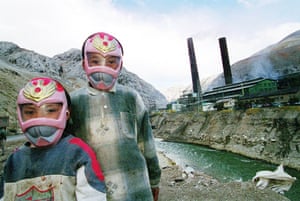
It’s a fairly common tactic in Peru to issue a significant or potentially controversial decision or resolution when you hope no one is paying attention. 24, 26 or 31 December, for example. The Environment Ministry (MINAM) recently adopted that ploy by releasing, just before the Easter week holiday, proposals to dramatically roll back certain air quality standards across the country.

The draft National Environmental Quality Standards for Air propose maintaining the maximum legal limits for nitrogen dioxide, carbon monoxide, hydrogen sulphide, lead and benzene, but doubling the limit for some particulate matter. Most startling, they propose increasing the limit of sulfur dioxide by more than 12 times.

MINAM effectively claims that Peru is the global leader in sulfur dioxide limits because it is the “only country in the world” which meets World Health Organisation (WHO) recommendations. That limit is 20 micrograms per cubic metre over a 24 hour averaging period, compared with 210 in Australia, 250 in Chile and Colombia, 288 in Mexico, 300 in Canada and 365 in Brazil, according to the ministry. Elsewhere in the world – although these are not acknowledged by MINAM – the limit is 150 in China, 125 in the EU, 131 in South Korea and 80 in India.

The current proposal is to raise Peru’s limit to 250. One justification is that “no clearly defined link exists” between sulfur dioxide and negative impacts on human health, MINAM claims, according to its interpretation of research by the WHO, the US’s Environmental Protection Agency and Health Canada, among others.

Further justifications are that no other country in the world has a limit as stringent as 20 and adopting it was a mistake out of touch with “national reality.” It isn’t being complied with, the ministry argues, and therefore undermines the public’s faith in government and the law.

“[The 20 limit] was adopted in a very short timeframe without a solid technical and economic argument and without considering sustainable development policy that involves taking acceptable risks to public health while at the same time introducing effective strategies to reduce environmental contamination,” MINAM states.

The ministry’s proposals have met with serious concern and criticism from Peru’s Congressional Commission on the Environment, Ecology and Andean, Amazonian and Afroperuvian Peoples, NGOs, and many others. Lima-based APRODEH and the Interamerican Association for Environmental Defense (AIDA) say that MINAM is ignoring scientific evidence of the “serious health harms” caused by both sulfur dioxide and particulate matter. These include lung problems and premature death – with children, the elderly and people with asthma being particularly vulnerable.

“There is overwhelming scientific evidence to conclude that sulfur dioxide pollution poses a serious health risk, particularly when the contamination reaches high levels over short periods of time, something the proposal does not take into account,” says AIDA’s co-director Anna Cederstav in a joint statement with APRODEH.

Both organisations argue that MINAM’s proposals violate the American Convention on Human Rights and other international treaties binding on Peru. In addition, the public consultation was “flawed”, they state, with too little time for discussion and the scientific basis for the proposals not made public.

That opinion is shared by the Congressional Commission on the Environment, which has written to Environment minister Elsa Galarza requesting a further 30 days for the public consultation process. The Commission is presided by Maria Elena Foronda, who has taken the lead in drawing public attention to the issue.

“In the Commission’s view any law that would reduce environmental quality standards requires a responsible and timely technical evaluation, as much by members of congress as civil society,” Foronda says. “It’s appropriate to point out that MINAM is trying to establish parameters that are weaker than those recommended by the WHO.”

Other NGOs like Red Muqui and the Sociedad Peruana de Derecho Ambiental (SPDA) have also issued critical statements. SPDA argues that the government is legally prohibited from weakening environmental standards, that MINAM failed to provide sufficient justification for its proposals, and that the WHO, contrary to the ministry’s interpretations of its research, has proved that sulfur dioxide negatively impacts human health.

According to Red Muqui, a collective of 29 organisations across Peru, the proposals are “regressive” and ignore WHO recommendations. MINAM failed to coordinate with the Health Ministry, they argue, and the timeframe for public discussion was too short.

“Life and health shouldn’t be dependent on economic interests,” Red Muqui states. “[The proposals] fail to consider that particulate matter is very fine and can easily penetrate respiratory tracts and blood, increasing the risk of morbidity and premature death following short- and long-term exposure.”

Former high-ranking MINAM personnel are critical too. Ex-Environment minister Manuel Pulgar-Vidal was quoted in El Comercio newspaper saying the proposals would reduce air quality. Mariano Castro, former vice-minister, told the Guardian the proposals are “wrong”, “very risky” for Peruvians’ health, and ignore the “scientific evidence in epidemiological and toxicological studies that show the serious dangers that sulfur dioxide poses for peoples’ health.”

So why propose raising the legal limits? According to AIDA, APRODEH and anyone else following the issue, the answer is an infamous poly-metal smelter in a town in Peru’s central Andes, La Oroya, which 10 years ago was named as one of the top 10 most polluted places on earth by the US-based Blacksmith Institute.

Formally called the Metallurgical Complex of La Oroya, the smelter has been the property of Doe Run Peru since 1997, and ultimately under the control of the US’s Renco Group. It closed in 2009 and partially re-opened in 2012. Now it is administered by liquidators – and Peru’s sulfur dioxide limits are reported to be scaring off potential investors.

This is despite the fact that La Oroya has been exempted from the national 20 limit. In recent years it was raised to 80 and then to 365 for a 14 year period until it is scheduled to revert to 80 again, according to APRODEH’s Christian Huaylinos. He told the Guardian that MINAM’s proposals are “completely connected” to the proposed Doe Run Peru sale.

“[In the long-term the limit] continues being 80, which is a very demanding standard that I imagine has discouraged possible bidders for Doe Run Peru, given that it would require serious investment in new technology,” Huaylinos says. “So that’s where the issue of relaxing the standards comes in. Now they would no longer have to adjust from 365 to 80, but 365 to 250.”

Tenders have been held for Doe Run Peru as recently as March this year, but no offers were reportedly received. “Now, given the lack of offers, MINAM has put forward a law to relax the limits, the aim of which is to facilitate the next tender round,” Huaylinos told the Guardian. “[This would seriously affect] the rights to health and clean environment of the people living in La Oroya.”

The connection between MINAM’s proposals and Doe Run Peru also seems obvious to AIDA’s Victor Quintanilla, who told the Guardian that government representatives have said publicly that modifying environmental standards is part of promoting the smelter’s sale and re-opening. Such representatives include president Pedro Pablo Kuczynski, congressman Moisés Guía Pianto, Environment minister Galarza, and Energy and Mines minister Gonzalo Tamayo.

On Friday Gestion newspaper stated that potential bidders for Doe Run Peru have been lobbying for changes to the sulfur dioxide limits – something that the Congressional Commission on the Environment has noted too. Pablo Peschiera, from DIRIGE, the liquidators, reportedly said that the next tenders will be held in July and MINAM’s proposals would save investors huge sums.

“Under the previous [current] standards an investment of US$788 million [in the smelter] had been foreseen, and even then there was no guarantee of meeting the 80 standard,” Peschiera was quoted as saying in Gestion. “There was a low probability of complying even after making that investment. Now [if MINAM’s proposals are approved], with the limit being 250, the amount needed to invest will be lower.”

Liliana Carhuaz, an Oroya resident and member of the Movimiento por la Salud de La Oroya (MOSAO), told the Guardian she rejects MINAM’s proposals and believes the sulfur dioxide limit should be 20. She said that local people didn’t agree with the suggested changes either, and she cited respiratory problems and lead poisoning as ongoing health impacts.

“After so many years of contamination in La Oroya [the ministry’s proposal] to increase the permitted levels is not just,” she says.

Last year, just before the end of the previous government, MINAM published a dossier on Doe Run Peru which included six reasons why air quality standards shouldn’t be weakened, although it acknowledged that the contamination in La Oroya was so severe that it would be impossible for the smelter to ever meet any standards, no matter how “flexible.” The dossier cited Health Ministry statistics from 2007 saying that during some hours the sulfur dioxide levels reached 28,300 and average daily emissions were over 2,000 – which MINAM alleged was one of the reasons why Doe Run Peru hadn’t yet been sold.

“It’s clear that with daily emissions and yearly averages such as these, La Oroya, if its copper circuit is working, wouldn’t even comply with the most flexible environmental standards in the world,” stated the dossier, dated July 2016.

In comments sent by AIDA and APRODEH to MINAM as part of the public consultation, they noted that the proposed 250 limit would permit severe short-term spikes in contamination. “With the new proposed daily average (250 micrograms per cubic metre), it would be possible to have every day a period of two hours of contamination at a level of 1,500 and another five hours of contamination at 500 without exceeding it,” the two organisations stated. “However, it is known that these levels of contamination are severely dangerous to human health.”

Mariano Castro believes that this is a key weakness of MINAM’s proposals: there are no limits for short periods of time – just one hour or three hours – which would prohibit severe peaks in contamination. In Colombia, he says, the limit for 24 hours is 250, as proposed for Peru, but crucially there is also a limit for three hours set at 750.

“Without this [750] limit on short-term peaks, you could get up to levels around 2,000 for several hours over a 24 hour period and never exceed the daily limit,” Castro told the Guardian. “The dangers to human health and the environment would be irreversible. Under no condition should an increase in the 24 hour limit be permitted if an appropriate limit for just one hour is not established, as in other countries.”

Fernando Serrano, a scientist at Saint Louis University in the US who has conducted research in La Oroya and testified before US Congress about it, agrees with Castro. “The proposed new air standards for sulfur dioxide don’t include a hourly standard and therefore don’t hold the smelter responsible for the hourly peaks that are far greater than anything that is acceptable,” he says. “The most effective way to protect people’s health and environmental quality is to reduce smelter emissions through technical measures and to enact and enforce air quality standards and other regulations that prevent health and environmental risks.”

Serrano describes the La Oroya smelter as for years “serving a toxic cocktail of metals” including lead, cadmium, arsenic and air pollutants like sulfur dioxide. “This mix of contaminants has gravely affected the health of the people of La Oroya and surrounding areas,” he told the Guardian. “The only time people enjoyed a cleaner and safer environment – low sulfur dioxide levels, decreasing blood lead levels – is when the smelter closed, which shows that it is the primary source of contamination.”

The appalling health impacts of the smelter on La Oroya’s inhabitants have been reported for many years, with the government concluding almost two decades ago that more than 99% of children living nearby suffered from lead poisoning. A series of legal actions have been taken against the Health Ministry in Peru, against the Peruvian state at the Inter-American Commission on Human Rights, and against Doe Run in the US.

Peru’s Congressional Commission on the Environment is scheduled to discuss MINAM’s proposals tomorrow, 2 May, and has requested Environment minister Galarza to attend.

MINAM did not respond to questions.

Source: Peru’s plans to cut air quality rules would smooth sale of top polluter | Environment | The Guardian

Posted in Air Quality, Latin America | Tagged , , , | Leave a comment

Smog becomes a political issue in South Korean election

A rare springtime election will send South Koreans to the polls early next month, but here in smog-bound Seoul they may be gasping all the way.

Spring is notorious for its poor air quality here. The combination of smog and the yellow dust that descends from Mongolia’s Gobi Desert every spring has produced pollution so thick that on the worst days — and there have been many of them — Seoul has looked like a city shrouded in a toxic gray blanket.

This has made air pollution a topical issue in the snap presidential election, to be held May 9.

“I will do everything in my power to make South Korea an environmentally clean country,” Moon Jae-in, the Democratic Party candidate and clear front-runner for the presidency, said this month. “People are angry over the government’s lack of action to tackle the almost-unbreathable air.”

Moon and his closest rival, centrist Ahn Cheol-soo, have both pledged to work with China — blamed by the government for much of South Korea’s air problems, although environmental activists point out that most of the pollution is homegrown. They have also vowed to stop any new coal-fired power plants from being built. Hong Joon-pyo of the conservative Liberty Korea Party has also promised to work with China and increase the number of environmentally friendly cars on the roads.

Seoul is joining Beijing and Delhi near the top of the list of Asian cities with certifiably unhealthy air. The South Korean capital now regularly records unhealthy levels of PM2.5 ultra-fine dust in the air — particles that are one-thirtieth the width of a human hair and can pick up lead and arsenic from the air and then embed themselves deep in a person’s lungs once inhaled.

In the first months of this year, Seoul has been recording twice the number of ultrafine dust warnings as last year, with authorities advising people to limit outdoor activities and sensitive groups to stay inside altogether to avoid breathing in the dangerous particles.

“It’s really frustrating because air pollution is not something I can fix as a citizen,” said Seoul resident Lee Eun-jung, the mother of two girls, ages 9 and 15.

“My eldest daughter goes to a middle school where they still have outdoor P.E. classes on days when the pollution is considered dangerous. It breaks my heart to imagine her working out on a day like that,” Lee said. “My youngest daughter has asthma and has been hospitalized several times for pneumonia.”

The U.S. Centers for Disease Control and Prevention has linked PM2.5 to a variety of illnesses, including cancer and heart disease, and low birth weight. A recent South Korean study suggested an association with Parkinson’s and other neurological diseases.

The Organization for Economic Cooperation and Development has predicted that 1,069 South Koreans per million will die prematurely in 2060 as a direct result of air pollution. South Korea is the only country in the “rich nations’ club” (a phrase often used to describe the OEDC) to exceed 1,000 deaths per million in the projections.

Local studies have put the economic damage caused by air pollution — largely because of lost production — at about $9 billion a year and have predicted this will double by 2060.

The tendency here has been to blame the pollution on neighboring China, where coal-fired power plants and huge factories are spewing gunk into the environment to be carried on winds over to the Korean Peninsula.

“China is the main culprit,” the environment ministry said in a report last month, saying that China causes 30 to 50 percent of the PM2.5 in South Korea on normal days, but 60 to 80 percent on the worst days. The central government has approached Beijing about working together to try to limit industrial pollution.

But the practice of pointing the finger at China overlooks the fact that the majority of South Korea’s pollution is homegrown, analysts and activists say.

Even if 30 to 50 percent of the ultrafine dust comes from China, that means 50 to 70 percent comes from South Korean sources, including exhaust from old diesel vehicles, “fugitive dust” from construction sites and tires hitting the road, and the illegal burning of waste.

“The South Korean government looks like it’s trying to avoid dealing with the situation,” said Son Min-woo, a climate campaigner at Greenpeace Korea. “They aren’t doing enough to reduce the pollution here.”

Greenpeace is lobbying the government to close down coal-fired power plants to reduce pollution.

About 40 percent of South Korea’s electricity comes from more than 50 coal-fired power plants, and the country has plans to build 20 new plants by 2021 despite being a signatory to the Paris climate change deal. It will, however, shut down 10 aging plants by 2025.

Other official efforts have had little effect. The Seoul metropolitan government has been ordering cars off the roads on alternate dates depending on their tags, but these restrictions apply only to government vehicles. Seoul also is doubling the number of street sweepers to pick up “fugitive dust” from the roads.

Lee, the mother of two daughters, is doing as much as she can to protect her family, installing three air purifiers at home and spending about $50 a month on masks for her family.

But she wants the South Korean government to do more.

“I know China is responsible for a large part of the bad air, but I hear that coal-fired power plants and aging industrial sites violating regulations are serious factors, too,” she said. “The South Korean government says it is cooperating with China to tackle this issue, but I don’t know if any meaningful results will come out from that cooperation.”

Bae Jeong-hwan, an economics professor at Chonnam National University, said a decade of effort by local and central governments had amounted to little.

“The government is neglecting its duties by not taking more action while peoples’ lives are at stake,” he said, saying the central government had been tinkering around the edges rather than tackling the crux of the problem.

For one, the government should bring the tax on diesel into line with that on gasoline, Bae said.

“The diesel price has been kept down to help South Korean industry, but diesel trucks can produce more than 140 times more exhaust than diesel cars,” he said. “Regulations need to be strengthened to make some difference in the air quality.”

Another, admittedly extreme option would be to impose a “smog tax” on products imported from China, Bae said. “When cooperation doesn’t work, stronger regulations or sanctions should be considered.”

In the meantime, many people here are concerned that the government is minimizing the problem by having a looser definition of dirty air than the international standard. The World Health Organization classifies 25 micrograms of PM2.5 per cubic meter in a day as unhealthy, but the South Korean government standard is double that.

“I don’t understand this,” said Lee Mi-ok, a 38-year-old mother of a 4-year-old boy who was born prematurely with weak lungs. “Do Koreans have lungs that are twice as strong as other nationalities? Why do we have to put up with this bad air? What is the purpose of the government if it cannot protect lives and health of the people?”

Source: Smog becomes a political issue in South Korean election – The Washington Post

Posted in Air Quality, Asia, Mongolia, South Korea | Tagged , , , , , | Leave a comment

Air pollution in India reducing solar power yield by 17-25%: Study 

India is making a big push for solar energy, with power capacity expected to double this year. But some of the gains, especially in north India, could be offset by a growing problem: air pollution.

A new study, the first of its kind in India and one of a handful globally, has found that dust and particulate matter (PM) may be reducing the energy yield of solar power systems in north India by 17-25 per cent annually.

Half this reduction comes from dust and particles deposited on the surface of solar panels and which forms a physical barrier to light entry, said Duke University professor Mike Bergin, who led the study. Researchers allowed panels to accumulate dust for a month. Most importantly, half the decline in energy yield came from ambient pollution–haze that reduces the amount of sunlight reaching the ground, a phenomenon known as solar dimming.”This study thus shows that improving air quality can lead to a big improvement in solar energy yield,” said Bergin. “Cleaning panels is not enough.”

Solar energy is the linchpin of the India’s renewable energy mission with a target of 100GW of solar power capacity by 2022. The Indian government offers many concessions and incentives to the developers.

Solar power plants depend on the availability of sunlight, or solar irradiance. Anything that obstructs sunlight from photovoltaic panels–whether cloudy skies or sand on the panels reduces potential energy generation. Some studies have looked at the impact of dust, especially in Middle Eastern countries.

A 2016 study from Baghdad, for instance, found an 18.74% decline in efficiency for solar modules left uncleaned for a month. Another 2014 paper from Colorado, USA found that 4.1% light transmission was lost for every gm2 of dust accumulated on the photovoltaic plate.

But air pollution has received less attention. In one rare study, researchers investigated the power output of ten photovoltaic systems in Singapore during a haze episode in 2013 due to forest fires in Indonesia. They found that poor air quality caused yield losses of 15-25% in a 10–week period.

Loss of irradiation in a single day peaked at nearly 50%, said Andre Nobre, lead author and head of operations at Cleantech Solar in Singapore. The study did not look at particulate deposits because frequent rain keeps solar panels clean in Singapore, he noted. “For a city like New Delhi, you have the added effect [of] soiling on the panels from the fact that it is a much drier and dirtier city.”

Bergin’s study is the first to quantify the combined impact of ambient particles and deposited matter. Bergin and his colleagues analysed deposits on solar panels at the IIT campus in Gandhinagar, and tracked energy yield before and after cleaning. They then estimated change in solar panel transmittance per unit mass deposited, and developed a model.

They found proportions of dust and pollution were roughly equal in north India. What fraction of dust was wind-blown and what was from human-activity was not analysed, noted Bergin, who previously looked at pollution’s effect on the Taj Mahal.

The solution for one part of the pollution problem is simple enough: frequent cleaning. Power generation jumped by on average of 50% after each cleaning, the study found.

However, companies cannot control cloud cover or smog, noted Ashish Khanna, the ED & CEO, Tata Power Solar, and instead must “anticipate plausible dips” in irradiation.

Air pollution is now a factor in business decisions, according to Nobre, whose company has solar projects across Asia including India. “Developers like ourselves will be extra cautious when signing power purchase agreements with clients with facilities located in highly polluted zones,” Nobre said. “Our returns are impacted by air pollution, which in turn end up increasing electricity tariffs we are able to offer. As the fleet of PV systems is drastically growing in India,there could be millions of dollars in revenue being lost.”
Posted in Air Quality, Asia, India, World News | Tagged , , , | Leave a comment

Deadly air pollution can get into the bloodstream, ‘smoking gun’ study suggests 

Tiny particles – like those produced in vast amounts by burning fossil fuels – can pass through the lungs into the bloodstream and then damage various different organs, according to a controversial new experiment.

While air pollution has been linked to heart disease and millions of premature deaths, it was previously not known whether it was possible for the smallest particles to pass from the lungs into the bloodstream.

The new research saw 14 healthy volunteers and 12 surgical patients inhale nanoparticles of gold.

Tests on their blood and urine picked up the nanoparticles after just 15 minutes and they were still present up to three months later.

The British Heart Foundation (BHF), which funded the study, said there was “no doubt that air pollution is a killer” but the results of the experiment helped show how the deed was done.

Several scientists praised the research, but one criticised the suggested link to air pollution and said it was “very risky” to give gold nanoparticles to humans.

A paper about the study in the journal ACS Nano by scientists from Edinburgh University and the Netherlands said: “Air pollution is a major public and environmental health issue contributing to up to seven million premature deaths worldwide each year.

However finding any tiny particles from air pollution in the human body has proved difficult, so the researchers used gold, which could be more easily detected.

“Healthy volunteers were exposed to nanoparticles by acute inhalation, followed by repeated sampling of blood and urine,” the paper said.

“Gold was detected in the blood and urine within 15 minutes to 24 hours after exposure, and was still present three months after exposure. Levels were greater following inhalation of five-nanometre particles compared to 30nm particles.

“Gold particles could be detected in surgical specimens of carotid artery disease from patients at risk of stroke.”

The discovery of nanoparticles in the bloodstream and their accumulation at inflamed areas within the body “provides a direct mechanism that can explain the link between environmental nanoparticles and cardiovascular disease”, the researchers added.

Professor Jeremy Pearson, BHF’s associate medical director, said the study added to the case for the Government to take steps to reduce air pollution.

“There is no doubt that air pollution is a killer, and this study brings us a step closer to solving the mystery of how air pollution damages our cardiovascular health,” he said.

“More research is needed to pin down the mechanism and consolidate the evidence, but these results emphasise that we must do more to stop people dying needlessly from heart disease caused by air pollution.

“Crucially, individual avoidance of polluted areas is not a solution to the problem. Government must put forward bold measures to make all areas safe and protect the population from harm.”

Source: Deadly air pollution can get into the bloodstream, ‘smoking gun’ study suggests | The Independent

Posted in Air Quality, Health Effects of Air Pollution, Medical Studies | Tagged , , , | Leave a comment

Air Pollution in Subway Systems May Be Much Worse Than We Realized

As anyone who has ridden the subway knows, the air down there is unpleasant. New research done in Canada shows that air pollution levels in Toronto’s subway system are ten times greater than those above ground. It’s a troubling realization for subway-goers, but there are ways to keep these underground systems clean.

A new study led by University of Toronto chemical engineer Greg Evans and published in Environmental Science and Technology shows that trains and platforms along the Toronto Transit Commission (TTC) have the highest levels of air pollution in any of Canada’s three subway systems—10 times higher than outside air. Pollution levels in Toronto’s subway were three times worse than the air quality in Montreal’s Metro, while Vancouver was rated the cleanest of the nation’s three subway systems.

To obtain these results, the researchers recruited university students and equipped them with portable instruments that measured tiny airborne particles smaller than 0.00025 centimeters, or 25 micrograms. Particulate matter this small is easily inhaled, and can cause breathing problems and damage to lung tissue.

Pollution in Toronto is typically around 10 micrograms per cubic meter of air, but it can hit 30 on a bad day. Along the TTC, however, levels reached as high as 100 micrograms of pollutants per cubic meter. That’s as bad as Beijing on a typical day. A follow-up analysis showed high concentrations of metals, which offer a clue to the source of the pollution: the wheels and brakes on the subway trains themselves.

“When you’re standing on the platform, you can sense the blast of air as the subway comes in,” explained Evans to Gizmodo. “That’s because the train is moving down the tunnel like a piston, pushing the air in front of it. Subways are primarily underground, so there’s nowhere for the particles to go. When the train comes into the station, it causes dust and particles to become airborne.” Evans thinks much of the particulate matter is coming from the metal wheels on the rails. Traces of barium were also found in the air samples, which are likely coming from the brakes themselves.

Evans says the pollution levels in Toronto’s subways are higher than he’d like them to be, but it’s not deterring him from riding the subway. That said, the US Department of State classifies a reading above 101 micrograms as being unhealthy for sensitive groups. Trouble is, the effects of intermittent exposure to these levels of air pollution aren’t entirely known. “We don’t really know the health risks of riding subways,” said Evans. “It’s an understudied area.”

Needless to say, this study should attract the attention of other subway system authorities around the world. To date, only a handful of subway systems have conducted similar studies, and those who have found comparable results. Evans pointed to studies done in Barcelona, Spain, and Seoul, South Korea, where pollution levels were similar to what was seen in Toronto. “I think [my counterparts in other cities] should definitely conduct similar studies if they haven’t already, and find out where their particular system stands,” said Evans.

Thankfully, there are ways to keep the air in subway systems clean. Evans proposed a vacuum-like system, where cleaners would periodically go through the tunnels. Another quick fix could be for train operators to hit the brakes prior to entering the station, allowing the train to coast in. This would prevent a buildup of brake residue close to the station. Finally, Evans says it would be a good idea to improve the ventilation systems within subways.

This new study adds to our knowledge of all the nasty things that await us in subway stations. Back in 2015, researchers found 15,152 life-forms along New York City’s 466 stations. Incredibly, half of of the DNA in these microorganisms matched nothing in the scientific literature.

Source: Air Pollution in Subway Systems May Be Much Worse Than We Realized

Posted in Air Quality, USA & Canada | Tagged , , , | Leave a comment


