Residential heating tops sources of PM2.5 in Danube region’s urban areas

The European Commission’s science and knowledge service, the Joint Research Centre (JRC) has evaluated sources of air pollutants in the Danube macro-region, a necessary step for the design of action plans to improve air quality. The related study showed residential heating contributed up to 35 percent of PM2.5 pollution in the main cities in the Danube macro-region, followed by agriculture (up to 32 percent), energy production and industry (up to 30 percent) and transport (up to 25 percent).

The authors focused on PM2.5 as it is considered to be closely related with the health impact of atmospheric pollution. Fine particulate matter (PM2.5) is an air pollutant consisting of tiny particles of up to 2.5 μm in diameter that reduce air visibility and poses health risk due to its ability to penetrate deep into the lungs and blood streams

The Danube macro-region encompasses one of Europe’s air pollution ‘hot spots.’ The geographical distribution differs among pollutants. PM₁₀ and PM2.5 present hot spots in the south-east of the Danube region and a hot spot located in southern Poland affects the areas next to the northern border of the Danube region. SO₂ is present in higher levels in the eastern area of the Danube region while NO₂ occurs in urban areas throughout the Danube basin.

The analysis was carried out to quantify the contribution made by sources to PM2.5 and the geographic areas where the pollution originates. For that purpose, the SHERPA (Screening for High Emission Reduction Potential on Air) tool developed by the JRC was used to model PM2.5 concentrations in the main cities in the Danube macro-region: Bratislava, Budapest, Bucharest, Munich, Prague, Sofia, Vienna and Zagreb. The information was then integrated with the outcome of a previous source apportionment study.

Though energy production/industry, agriculture, residential heating and transport are the main sources contributing PM2.5 pollution, the extent to which local emissions influence the concentration of pollutants varies. According to the present study, long-range transportation of pollution (coming from adjacent geographic areas) influences local concentrations in Sofia and Zagreb while in Munich and Vienna the city emissions have a considerable impact on local concentrations. Intermediate situations are observed in the other cities.

About one-quarter of the PM2.5 fraction in Sofia and Zagreb originates from beyond the EU-28 boundaries or is of natural origin. Thus, action across a broader area is required to abate concentrations in these cities. On the contrary, reductions in local emissions could lead to sizeable improvements in Munich and Vienna, with the main effort focused on transport, energy/industry and residential heating.

The outcome of this study suggests a better integration of sectorial policies covering energy, transportation, competitiveness and institutional capacity would be beneficial to the effectiveness of measures in this macro-region.

EU Strategy for the Danube Region

The EU Strategy for the Danube Region (EUSDR), launched in 2010, encompasses nine EU Member States: Germany, Austria, the Slovak Republic, the Czech Republic, Hungary, Slovenia, Croatia, Romania and Bulgaria, and five non-EU countries: Serbia, Bosnia and Herzegovina, Montenegro, the Republic of Moldova and Ukraine.

The EUSDR aims to promote the sustainable development of a macro-region that counts 115 million inhabitants by tackling key topics that require working across borders and national interests. The key issues identified are mobility, energy, water, biodiversity, socio-economic development, education, culture and safety.

The strategy is structured in four pillars: ‘Connecting the region,’ ‘Protecting the environment,’ ‘Building prosperity’ and ‘Strengthening the region,’ subdivided into 11 priority areas (PA). Environmental protection of natural resources such as biodiversity, and soil is allocated under the sixth thematic PA.

JRC’s support to the Danube strategy

The JRC provides scientific support to the EUSDR by supporting decision-makers and other stakeholders in identifying the policy needs and actions for the implementation of the strategy and by promoting cooperation across the scientific communities of the Danube region. The Scientific Support to the Danube Strategy initiative is subdivided into different flagship clusters and activities.

The Danube Air Nexus (DAN) is one of the EUSDR flagship projects coordinated by the JRC which aims to protect human health, ecosystems and climate from the impacts of .

Read more at: https://phys.org/news/2017-02-residential-tops-sources-pm25-danube.html#jCp

Source: Residential heating tops sources of PM2.5 in Danube region’s urban areas

Posted in Air Quality, Europe, Poland | Tagged , , , , , , , , , , , | Leave a comment

Kolkata set to beat Delhi in noxious city air 

This winter, Kolkata seems to be aiming hard for the crown for the most polluted Indian metro city, a dubious pole position currently held by New Delhi. Kolkata’s air pollution at the end of December was in the same category as that of Delhi at “very poor”, which the Central Pollution Control Board of India says may trigger “respiratory illness on prolonged exposure”. Environmentalists claim that Kolkata’s air pollution is actually worse than that being reflected in official data.

Even official data admits that people in Kolkata had to breathe highly toxic air during December 23 to 31. Air Quality Index (AQI), an indicator used globally to assess pollution status, of Kolkata was 346 during the period, while it was a shade higher (374) in Delhi. This is against a good air benchmark of 50 and a safety benchmark of 100.

The Kolkata pollution figures were from the automatic measurement station located within the Rabindra Bharati University complex in the central part of the city. The metropolis does have another station, but that is within the Victoria Memorial complex, right in the city’s green lung – so it is not considered representative. In contrast, Delhi has 10 air quality measurement stations.

During the period, air pollution spiked on December 25 and 31 in Kolkata, reaching a severe condition, considered the worst status possible; it can adversely affect healthy people and seriously impact those with existing diseases.

Actual pollution is higher

“Kolkata’s actual air pollution level is higher than what is reflected in government data, which can be vindicated if one compares official air quality index to that being released by the US consulate in the city every day,” environmentalist Subhas Datta, who has filed a number of public interest litigations against the city’s toxic air, told indiaclimatedialogue.net.

At 10 a.m. on January 28, the US consulate index was reading 224. Barely two kilometres away but in the middle of green lawns, the station at Victoria Memorial was reading 91 at the same time, while the station at Rabindra Bharati University gave a reading of 140.

Senior officials from the West Bengal Pollution Control Board, the agency that runs the two stations, accepted the difference but stated that the US consulate does not measure the air pollutants properly, a claim that has been rubbished by the US consulate. “We measure air pollution from US consulate office in many global cities including Indian cities using the same methodology and it’s a full-proof method,” a consulate official said, speaking on condition of anonymity.

Cause of difference

Experts state that the real cause of difference lies elsewhere. “Air pollution index is measured on the basis of dominant pollutant of the area. In Kolkata, the official calculation is based on PM10 measurement (fine particulate) as there is yet no system to measure PM2.5 (ultrafine particulate that causes most health damage by entering into the deepest crevices of lungs) in the state pollution control board-run automatic stations. However, driven by diesel combustion, Kolkata’s PM2.5 level is significantly high. It seems that US consulate data, calculated on basis of PM2.5 level, reflects that scenario,” explained Anumita Roy Choudhury, an air pollution expert of Centre for Science and Environment, a New Delhi-based non-profit.

Sometime ago, Samuel Kotis, deputy minister counsellor in the US embassy looking after environment and climate change, also highlighted Kolkata’s PM2.5 threat in a meeting. “Delhi, being the national capital, gets more international attention, but Kolkata is not far behind. The US embassy in Delhi and all four of our consulates, including the one in Kolkata, have air quality monitors where we regularly measure PM 2.5,” he said. “We found that the level of PM 2.5 in Kolkata was greater than that of Delhi on some days during last winter.”

Although the state pollution control board tends to underplay the PM2.5 factor, another global report also highlights its significantly high concentration in the city’s air. The report, Global Urban Ambient Air Pollution Database (update 2016), released by World Health Organization (WHO), clearly shows that among Indian metros, air toxicity is increasing most rapidly in Kolkata, including that of PM2.5. In Kolkata the annual average PM2.5 level increased to 61 micrograms per cubic metre in 2016 from 43 in 2014; it was worse across the Hooghly river in Howrah – 100 micrograms per cubic metre in 2016 from 47 in 2014. The national permissible limit is 40.

“To avoid the confusion, the state board should soon start to measure PM2.5 in its automatic monitoring stations. All the other major metros have the arrangement to measure PM2.5 pollution in their automatic stations,” stated Debdatta Basu, a scientist formerly with the Central Pollution Control Board (CPCB).

“We have already decided to set up a few automatic monitoring stations with the arrangement of PM2.5 monitoring,” Kalyan Rudra, chairman of the state pollution control board, told indiaclimatedialogue.net.

Night pollution is scary

If overall average pollution during end December had become very poor, the nights were turned into no less than a gas chamber. An analysis of the data released by CPCB found that during midnight to early morning in third and fourth weeks of December, the city’s air was hardly breathable with AQI level often reaching 500 — the farthest point in the scale — against the benchmark of 100. The average pollution index value from midnight to 4 a.m. during the period was 414, an almost 20% rise over the respective 24-hour value.

screen-shot-2017-02-06-at-14-49-28

According to experts, the pollution in winter nights escalates because the pollutants remain trapped close to surface — and human lungs — as the temperature falls. Green activists complain that almost unmonitored movement of thousand of trucks and other commercial vehicles within the city — mostly polluting and having a free run in absence of any pollution monitoring system — add to the rise in pollution at nights.

Even morning walkers are not safe — and advised not to venture out early morning — as the fine particulate level has remained around 4.5 times over highest permissible limit from 4 to 5 a.m. “People walk or run in early morning to burn calories while inhaling fresh air; however doing heightened physical activities in such poor air can actually backfire on health,” opined A. G. Ghoshal, a senior pulmonologist.

Cities across the world impose several restrictions on traffic and take other emergency measures when the pollution crosses threshold value. Recently London and in early December Paris imposed several emergency restrictions on traffic and outdoor activities when the pollution crossed threshold values. There was an attempt to do the same in Delhi in early November when the AQI consistently remained in the severe category.

Inaction in Kolkata

But there was no action in Kolkata regarding skyrocketing air pollution. “It’s a fact that the city, especially during winter, turns into a gas chamber during night and even state government and the pollution control board admitted the trend of pollution shoot-up during night hours at the hearing on city’s air pollution in National Green Tribunal. However, the data you are mentioning are extremely revealing and I will soon highlight the same in the tribunal,” Datta told indiaclimatedialogue.net.

He said about 50,000 trucks enter the city every night and there is virtually no system to check their pollution. “While Delhi has been showing indications of action, Kolkata is just sitting on the problem,” observed an environment expert conversant with the pollution dynamics of both cities. He declined to be named.

Situation will worsen

Environment experts say Kolkata’s air will become increasingly toxic unless the state government acts fast. “Kolkata is the diesel capital of the world. Though industrial and constructional pollution also contribute, the main reason behind the sharp increase of Kolkata’s key pollutants, both ultra-fine particulate and nitrogen oxides, is the burning of diesel in vehicles, particularly in close to 99% of commercial vehicles. State government should ensure that these vehicles should be converted to compressed natural gas (CNG) like other metro cities as soon as possible,” Roy Choudhury of CSE said.

But that may be still seven to eight years away. “Both central and state governments are responsible for the situation. Successive West Bengal governments have never pursued the matter with the Centre despite being aware that introduction of the CNG was the only way to curb diesel driven automobile pollution,” alleged Datta.

Incidentally the Jagadishpur-Haldia pipeline, which is supposed to bring CNG to the state and city, was among the five conduits GAIL India had planned to build in 2007 to supply CNG across the country. Apart from the Haldia line, all others have been completed. A GAIL official said the Union Cabinet had recently cleared the proposal for laying the pipe and work would start soon. “Once work starts, it is expected to take at least seven-eight years to complete the project,” the official said.

Source: Kolkata set to beat Delhi in noxious city air – India Climate Dialogue

Posted in Air Quality, Asia, India | Tagged , , , , | Leave a comment

100,000 may have died but there is still no justice over Indonesian air pollution 

It started with a mild cough. Muhanum Anggriawati was just 12 years old when the cough began, transforming within weeks into a violent hacking that brought up a yellowish-black liquid.

At the end of last year, her father told an Indonesian court how she had been taken into hospital, and treated with oxygen therapy, then with a defibrillator. Nothing, however, had worked. After a week on a breathing machine, she died in the hospital, her lungs still full of the foul mucus.

Anggriawati is believed to have been one of many victims of the haze, or air pollution, that regularly spreads across Indonesia because of the huge deforestation fires linked to palm oil and other agribusiness.

The Global Fire Emissions Database reports that in 2015, fires in Indonesia generated about 600m tonnes of greenhouse gases, which is roughly equivalent to Germany’s entire annual output.

The smoke contains dangerous chemicals such as carbon monoxide, ammonia and cyanide. A study by Harvard and Columbia universities revealed that the haze may have caused the premature deaths of more than 100,000 people in south-east Asia in 2015. The authors estimated that there were 91,000 deaths in Indonesia; 6,500 in Malaysia and 2,200 in Singapore.

Anggriawati’s father is one of a number of grieving parents in Riau who have taken the brave step of bringing a lawsuit against the police for terminating investigations against 15 companies linked to haze-causing burning activities in 2015. His suit is just one of many uphill legal struggles to seek accountability. But relief is limited. The governments of these countries have rejected the results of the study, citing inaccurate data. Indonesia reports just 24 deaths.

We visited Indonesia late last year. Lawyers and advocates bringing cases on behalf of the families and communities told us about the difficulty they face in meeting strict evidentiary requirements to establish where the burning is occurring, who is responsible, and the causal link between the burning and health problems in affected communities.

In one case, satellite images were not accepted as evidence. Judges and even witnesses may hesitate to impute causality or link the health impacts to the haze, even when there is scientific basis to support it. Lawyers and advocates also intimated that the lack of access to evidence, especially company information including maps that show plantation boundaries, makes it difficult to build a case even when the evidence of burning is present.

Even more worrying are the threats to people, including government agents, who are trying to investigate and document the fires. In September 2016, Indonesia’s environment ministry reported that a team of environmental investigators were taken hostage by up to 100 men, believed to have been hired by a palm oil firm.

These violent threats greatly diminish victims’ interest in documentation and litigation, as well as their hope for effective and peaceful legal redress. Placed against a backdrop of corruption in judicial and law enforcement systems, all these factors make potential litigation unappealing and burdensome for victims.

Legal accountability and access to justice are vital to this fight. While strong executive acts and voluntary company measures such as certification and zero-burning policies are helpful, it is even more important that those responsible are held to account.

To be fair, the governments concerned have taken some measures to increase legal accountability. The Transboundary Haze Pollution Act 2014 in Singapore creates both civil and criminal offences “for any entity to engage in conduct, or to condone conduct, causing or contributing to haze pollution in Singapore”.

Last year, Singapore’s National Environment Agency issued preventive measures notices to six Indonesian companies suspected of starting fires. And in June 2016, the Indonesian Ministry of Environment and Forestry said that it was planning to sue five companies over alleged forest fires the year before.

Communities and NGOs are also engaged in various efforts to promote increased accountability. Greenpeace has set up an interactive map showing company concessions and active fires to create more transparency on land tenure. Forest & Finance provides public data showing the role of finance in deforestation and aims to encourage the financial sector to adopt policies to prevent funding of this practice. NGOs are helping empower communities to document their experiences related to haze, including through the use of technology.

Groups are advocating for better laws in their respective jurisdictions. Communities and government officials are also working together to bring more lawsuits, and have been successful in a number of the cases that have already been brought. For example, the Indonesian supreme court in 2015 ordered palm oil company PT Kallista Alam to pay a record amount of $26m (£21m) in fines and reparations for its cut-and-burn practices in the Tripa peat swamp region.

But these efforts must be accompanied by heightened measures to remove barriers to legal accountability and ensure that in cases of abuse, communities are able turn to courts as powerful and effective instruments for remedy and justice. In all the countries concerned, there should be collective action to: increase the capacity of courts to handle environmental cases; address corruption in law enforcement and judicial systems; require greater transparency among companies; promote access to information; and ensure the personal security of investigators and seekers of justice.

Source: 100,000 may have died but there is still no justice over Indonesian air pollution | Global Development Professionals Network | The Guardian

Posted in Air Quality, Asia, Indonesia, Singapore | Tagged , , , , , | Leave a comment

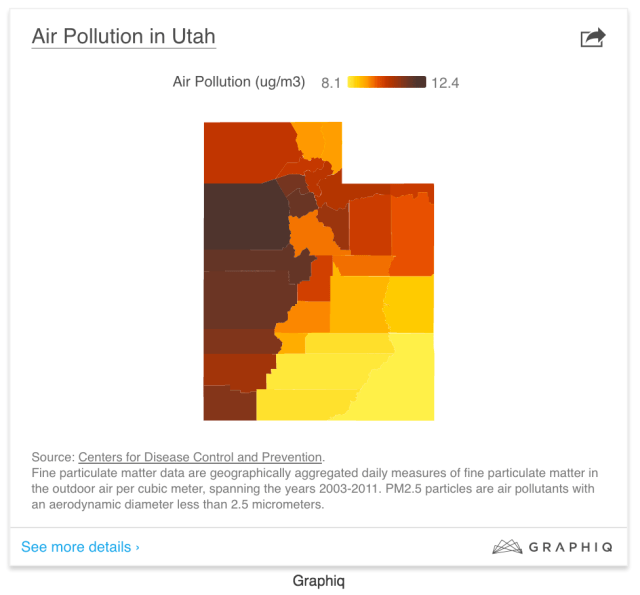
Utah lawmakers push for plan to improve poor air quality 

A bipartisan group of Utah lawmakers announced plans Thursday for a series of environmental proposals to fix the state’s poor air quality, which was so bad in the Salt Lake City area this week that some students were prevented from going outside for their school recesses.

The group of more than a dozen lawmakers told reporters that the state’s severe air pollution is hurting Utah residents and could damage the state’s economy amid warnings that businesses and people may try to avoid the state. The proposals include removing emission testing exemptions and boosting the use of solar thermal technology.

Rep. Patrice Arent, a Democrat, said the state has passed more clean air legislation during the last three sessions than ever, but that there is a lot more work to do.

The push is the latest in a multi-year effort to remedy the state’s bad air problem, which has put a strain on residents’ daily life and the state’s reputation as an outdoors mecca destination.

On Wednesday, University of Utah students bought all of a campus group’s collection of pollution masks, said Emerson Anderson, a coordinator for the Sustainable Campus Initiative Fund, a University of Utah grant program that distributed the masks.

Air quality issues are a major problem during the winter in Utah, which suffers from weather inversions that doctors warn can cause health problems, especially for pregnant women, people with asthma and the elderly.

screen-shot-2017-02-03-at-08-50-05

screen-shot-2017-02-03-at-08-51-18

The winter inversions are a phenomenon in northern Utah’s urban corridor fueled by weather and geography. Cold, stagnant air settles in the bowl-shaped mountain basins, trapping tailpipe and other emissions that have no way of escaping. It creates a brown, murky haze of air pollution that engulfs the metro area of Salt Lake City.

Provo, Logan and Brigham City were among the top five cities with the worst air quality in the nation on Thursday, according to the Environmental Protection Agency’s Air Quality Index.

Most Utah school districts follow the guidance issued by state health and environmental quality officials about when to keep kids inside, while allowing principals to make the final decisions on a daily basis.

The state’s recess guidelines calls for all students to stay inside when the air quality index reaches red, the worst designation.

When it is in the next category down, orange, the state recommends that schools keep students with respiratory conditions such as asthma inside but let others go out. Some schools, however, keep all children inside on yellow air days, the third rung on the air quality index.

The air quality in the Salt Lake City area has been in the yellow category or higher all this week, spiking up to red Tuesday afternoon. The air quality index was in the orange category Thursday.

Hundreds of schools in Salt Lake City and surrounding suburbs were advised this to keep their students inside during recess.

Most principals are checking online or on an smartphone app to track the air throughout the day, said Jeff Haney, spokesman for the Canyons School District.

“When the air is gunky, they pay attention,” Haney said. “We don’t want to have our kids get sick if they go run around outside.”

Source: Utah lawmakers push for plan to improve poor air quality :: WRAL.com

Posted in Air Quality, USA & Canada | Tagged , , , , | Leave a comment

Air quality on cruise ships ’20 times worse’ than in a busy city centre

Passengers on a cruise ship could be inhaling “60 times higher concentrations of harmful air pollutants ” than they would in natural air settings, Naturschutzbund Deutschland (NABU), a German environmental association, has warned.

The air quality on board a cruise ship just after it left Marseille, measured by a journalist for the French documentary television series Thalassa and analysed by NABU, revealed that at peak levels, the concentration of harmful ultra-fine particles was up to 200 times higher than it would be in natural fresh air surroundings and 20 times worse than in the busy city centres of some port cities, including Venice, Marseille, Hamburg and Barcelona, with heavy traffic.

“The longest recording was conducted for a time period of almost 50 minutes where an average of 60,000 particles per cubic centimeter of air were documented. As a comparison: a fresh sea breeze at that altitude should usually be at around 1,000 – 2,000 particles at maximum. So passengers inhaled 60 times higher concentrations of harmful air pollutants,” Daniel Rieger, a transport policy officer and researcher for NABU who analysed the data told Telegraph Travel.

Measurements were taken at various spots on the ship and for this particular sample, the sun deck and jogging lane on the top deck were found to be most affected by pollution. “But of course this can vary along with the wind and weather conditions. So potentially every part of the ship can be affected significantly,”  Mr Rieger said.

For this reason, the German Lung Association and the Pneumologists Association have warned passengers against staying on deck or inhaling ships’ exhaust gases as this could cause acute exacerbations of chronic obstructive pulmonary disease (COPD) if you suffer from lung diseases, Mr Rieger said.

“Moreover they warn that ultra-fine particles are very dangerous, lead to lung diseases, heart attacks, strokes and are also linked to diabetes and cause deterioration for asthma and COPD patients,” he added.

In addition to fine dust and soot from funnels on cruise ships, passengers are exposed to harmful substances such as nitrogen oxides and heavy metals emitted by the combustion of marine diesel fuel and heavy oil. Diesel exhaust has been classified to be just as carcinogenic as asbestos by the World Health Organisation in 2012, and exposure to it increases your risk of getting lung cancer.

“The passengers can only smell or see the particles before they get mixed up with the ambient air,” Mr Rieger told the German broadcaster Deutsche Welle (DW) following the recent air quality tests.

He warned that the latest results are most likely indicative of the poor air quality on nearly all cruise ships.

“They could have done the air tests on almost any cruise ship in the world while the results would have been the same. This is due to low quality fuels (mainly heavy fuel oil – HFO) and the fact that none of the ships has a particulate filter. And as a consequence air pollutant emissions are massive,” he told Telegraph Travel.

But Helge Grammerstorf, the German national director of the Cruise Lines International Association (CLIA) and a former ship captain and ship broker, denied the validity of the measurements, arguing that a more systematic test over a longer period of time is required rather than the recent selective sample of measurements taken.

“We don’t know these measurements. The claim is completely unsubstantiated,” he told Hamburger Abendblatt, a German daily newspaper.

CLIA Europe’s director of public affairs, Martyn Griffiths, agreed, saying: “It is very unfortunate that the actual data of those tests is not available as those small particles can be man-made or natural and for instance will include sea salt when tests are performed at sea.”

“When the actual content of particles is not specified, it is not possible to compare air quality to other cases on land which have very different circumstances and no analysis of their breakdown for comparison,” he added.

The major contributors to poor air quality on board cruise ships are “bad fuel quality and a lack of exhaust gas abatement systems”, Mr Rieger told Telegraph Travel.

It wouldn’t be difficult for cruise ships to help air quality and improvements could be made with “a switch to better fuel, ideally road diesel or liquid natural gas, as well as the compulsory installation of particulate filters and nitrogen catalysts,” he told Telegraph Travel.

But four out of five ships were found to not be equipped with any exhaust gas cleaning systems or only equipped with one that meets the lowest legal standard for northern Europe, which only reduces sulfur oxide emissions, DW reports.

screen-shot-2017-02-03-at-07-58-01

But according to Mr Griffiths, Europe already has 75 cruise ships equipped with emission reducing technologies, including 23 soot particle filters. “Worldwide this amounts to approximately one third of cruise ships. As these types of technologies continue to evolve and improve, we expect these to be fitted on more ships in the future,” he told Telegraph Travel.

“The cruise industry invested $1 billion in new technologies and cleaner fuels to reduce ship air emissions. Billions are being invested in the development of advanced liquefied natural gas (LNG)-fuelled cruise ships that will have lower emissions and higher energy efficiency,” he added.

Currently there are no nitrogen emission control areas  (NECA) in European waters, so vessels only need to comply with the regulations of the sulfur emission control areas (SECA) by using a lower sulphur content diesel and the older vessels are not so clean when it comes to emissions, Ralph Hardwick, a spokesperson from Clean Air London, told Telegraph Travel.

“But even within a sulphur emission control area, the sulphur content should not exceed 0.1 per cent; which is still 100 times the sulphur found in road diesel fuel. Unfortunately no official body is ensuring compliance of this regulation,” he added.

All cruise ships, however, are said to comply with the applicable air emission standards and “regularly go beyond current requirements”, according to Mr Griffiths.

“All ships, including cruise ships regularly undergo inspections by Port State Control of the port visited and inspections by their flag-state. Among the elements inspected are the emission levels of the engines and generators,” he told Telegraph Travel.

Although systems that reduce particle and nitrogen oxide emissions have been available on the market for years, cruise companies have been unwilling to install these mechanisms, which require more expensive types of fuel to operate, the NABU says.

Cruise lines “pay huge sums to improve entertainment and gastronomical services on board, but save as much as they can when it comes to environmental protection,” Leif Miller, NABU manager told DW.

screen-shot-2017-02-03-at-07-59-04

“The question is whether the industry deliberately looks the other way,” Dietmar Oellinger, NABU’s transport expert, told DW.

“We should ask how much more proof the industry needs before they finally take action,” he said.

NABU will be conducting air quality checks on other cruise ships in the future, Mr Rieger added, declining to go into any more detail.

The environmental group has previously measured the concentration of ultra-fine dust particles in the air around cruise ships in the harbours of Hamburg, Venice and the north-eastern German city of Rostock-Warnemünde, but was not allowed to take any measurements on board the cruise ships in those areas, DW reports.

Royal Caribbean, Norwegian Cruise Line, Carnival Cruises and Princess Cruises have yet to respond to Telegraph Travel’s request for a comment on whether cruise ships undergo regular on-board air quality checks, and what measures cruise lines have, or will be taking to improve and protect the air quality on board their ships.

A separate report last year by NABU claimed that European cruise ships are belching out 3,500 times more sulphur dioxide than land-based vehicles, thus contributing to a range of issues including climate change, air pollution and lung problems.

Last December, Princess Cruises, one of 10 brands owned by the world’s largest cruise holiday company, was ordered to pay a $40 million (£32 million) fine for illegally dumping thousands of gallons of oil and waste off the UK coast.

Prosecutors said the payment represents the largest penalty imposed on any firm for deliberate pollution by a ship at sea. Parent company Carnival has also agreed to submit 78 cruise ships across its brands to a five-year environmental compliance programme as part of the plea agreement.

Source: Air quality on cruise ships ’20 times worse’ than in a busy city centre

Posted in Air Quality, Europe, France, Italy, Spain, UK, World News | Tagged , , , | Leave a comment

Air pollution may lead to dementia in older women 

Tiny particles that pollute the air — the kind that come mainly from power plants and automobiles — may greatly increase the chance of dementia, including dementia caused by Alzheimer’s disease, according to USC-led research.

Scientists and engineers found that older women who live in places with fine particulate matter exceeding the U.S. Environmental Protection Agency’s standard are 81 percent more at risk for global cognitive decline and 92 percent more likely to develop dementia, including Alzheimer’s.

If their findings hold up in the general population, air pollution could be responsible for about 21 percent of dementia cases, according to the study.

“Microscopic particles generated by fossil fuels get into our body directly through the nose into the brain,” said University Professor Caleb Finch at the USC Leonard Davis School of Gerontology and co-senior author of the study. “Cells in the brain treat these particles as invaders and react with inflammatory responses, which over the course of time, appear to exacerbate and promote Alzheimer’s disease.

“Although the link between air pollution and Alzheimer’s disease is a new scientific frontier, we now have evidence that air pollution, like tobacco, is dangerous to the aging brain.”

The adverse effects were stronger in women who had the APOE4 gene, a genetic variation that increases the risk for Alzheimer’s.

“Our study — the first of its kind conducted in the U.S. — provides the inaugural scientific evidence of a critical Alzheimer’s risk gene possibly interacting with air particles to accelerate brain aging,” said Jiu-Chiuan Chen, co-senior author of the study and an associate professor of preventive medicine at the Keck School of Medicine of USC. “The experimental data showed that exposure of mice to air particles collected on the edge of USC damaged neurons in the hippocampus, the memory center that is vulnerable to both brain aging and Alzheimer’s disease.”

Their study, published Jan. 31 in the Nature journal Translational Psychiatry, adds to an emerging body of research from around the world that links air pollution to dementia. The offending pollutants — known as PM2.5 — are fine, inhalable particles with diameters 2.5 micrometers or smaller. A human hair is about 70 micrometers in diameter, making it 30 times larger than the largest PM2.5.

The research was a collaboration between USC Davis, the Keck School of Medicine and the USC Viterbi School of Engineering.

Combining human data and lab experiments

The researchers analyzed data of 3,647 65- to 79-year-old women from the Women’s Health Initiative Memory Study (WHIMS). These women lived across 48 states and did not have dementia when they enrolled.

The researchers adjusted for potential bias associated with geographic region, race or ethnic background, education, socioeconomic status, lifestyle and medical conditions.

Constantinos Sioutas, the Fred Champion Professor of Civil and Environmental Engineering at USC Viterbi, invented the technology to collect air particles for controlled exposure of mouse models.

USC scientists chronically exposed female mice carrying the APOE4 gene to nano-sized air pollution for 15 weeks. Compared to the control group, mice predisposed to Alzheimer’s disease accumulated as much as 60 percent more amyloid plaque, the toxic clusters of protein fragments that further the progression of Alzheimer’s.

“Our state-of-the-art aerosol technologies, called particle concentrators, essentially take the air of a typical urban area and convert it to the air of a freeway or a heavily polluted city like Beijing,” said Sioutas, co-author of the study. “We then use these samples to test exposure and assess adverse neuro-developmental or neuro-degenerative health effects.”

Worldwide, nearly 48 million people suffer from dementia, and there are 7.7 million new cases every year, according to the World Health Organization.

“Our study has global implications as pollution knows no borders,” said Finch, holder of the ARCO/William F. Kieschnick Chair in the Neurobiology of Aging.

USC researchers and others in this field said more research is needed to confirm a causal relationship and to understand how air pollution enters and harms the brain. Accurate pollution monitors are important for this task.

Less than one-third of all counties in the United States have ozone or particle pollution monitors, according to the American Lung Association. Ambient monitoring data from the EPA are critical for scientists conducting research on air pollution and public health, Chen said.

“We analyzed data of high PM2.5 levels using standards the EPA set in 2012,” Chen said. “We don’t know whether the lower PM2.5 levels of recent years have provided a safe margin for older Americans, especially those at risk for dementia.”

Six of the top 10 most polluted cities in the nation by PM2.5 are in California, including Los Angeles, Long Beach and Fresno, according to the American Lung Association.

Yet certain areas have seen cleaner air in recent decades. Reducing PM2.5 in the air we breathe coincides with fewer cases of dementia, the researchers pointed out, referencing the data of others.

The insidious effects of PM2.5

“Many studies have suggested that early life adversities may carry into later life and affect brain aging,” Chen said. “If this is true, then maybe long-term exposure to air pollution that starts a downward spiral of neurodegenerative change in the brain could begin much earlier and rev up in later life.”

In other studies, Chen and his colleagues linked long-term exposure to high PM2.5 levels to smaller gray and white matter volumes in important areas such as the frontal lobe, which carries out thinking, decision-making and planning.

For every 3.5 micrograms of PM2.5 per cubic meter of air, white matter (insulated nerve fibers that connect different brain regions) decreased by 6 cubic centimeters, according to one earlier study.

The new study in Translational Psychiatry examined only women and female mice. Future studies will include both sexes to evaluate generalizability to men as well as examine how PM2.5 interacts with cigarettes and other pollutants.

Finch and Chen in 2010 developed the AirPollBrain Network and have recruited 20 USC faculty into this new research area.

The air pollution study, the Women’s Health Initiative and WHIMS are collectively supported by the National Institute on Aging of the National Institutes of Health; the Southern California Environmental Health Sciences Center funded by the National Institute of Environmental Health Sciences; the National Heart, Lung, and Blood Institute; the U.S. Department of Health and Human Services; Wyeth Pharmaceuticals Inc.; St. Davids, PA, and the Wake Forest School of Medicine; and the Cure Alzheimer’s Fund.

The nationwide Women’s Health Initiative Memory Study is coordinated by the Wake Forest School of Medicine in North Carolina. The WHIMS was begun in 1996 to analyze how postmenopausal hormone treatment affects cognitive impairment and brain aging.

Source: Air pollution may lead to dementia in older women | USC News

Posted in Air Quality, Health Effects of Air Pollution, Medical Studies | Tagged , , , , | Leave a comment

Plan to reduce air pollution chokes in Mexico City: Study finds Saturday driving restrictions fail to improve air quality 

Decades ago Mexico City’s air pollution was so poor, birds would fall out of the sky — dead. Locals said living there was like smoking two packs of cigarettes a day, according to one report. In response, Mexico City took several steps to try to improve air quality including restricting driving one or two days during the weekdays. The program has had negligible results.

In 2008, the city added driving restrictions on Saturdays in hopes of moving the needle but according to new research by Lucas W. Davis, an associate professor at UC Berkeley’s Haas School of Business, extending the program one more day also isn’t working.

“Saturday driving restrictions are a flawed policy. It’s a big hassle for people and does not improve air quality,” says Davis, who is also the faculty director at the Energy Institute at Haas.

The study, “Saturday Driving Restrictions Fail to Improve Air Quality in Mexico City,” published in Scientific Reports, is the first to examine the effects of restricted driving on Saturdays. It compares pollution levels of eight major pollutants before and after the program went into effect. Having fewer motorists on the road on Saturdays led to close to zero impact. Proponents of the Saturday program had estimated vehicle emissions would be reduced by 15% or more.

Mexico City has the worst air quality in the Western Hemisphere with particulate levels that are three to four times higher than in New York, Los Angeles, São Paulo, or Buenos Aires, the paper states. Mexico City has tried many different approaches to improving air quality, including the city’s well known driving restrictions, which were first introduced in 1989.

The program works like this: restrictions are based on the last number of a vehicle’s license plate. For example, vehicles with license plates ending in “5” or “6” cannot be used on Mondays. The ban is in effect from 5:00 a.m. to 10:00 p.m. for both personal and commercial vehicles.

To determine the impact of Saturday restrictions, Davis analyzed hourly air pollution data from 29 monitoring stations around Mexico City from 2005 to 2012. He studied emission levels for carbon monoxide; nitric oxide; nitrogen dioxide; nitrogen oxide; ozone; large particulates; small particulates; and sulfur dioxide. None of these pollutants decreased as a result of Saturday driving restrictions.

Trying to figure out why pollution did not decrease, Davis next examined ridership data from Mexico City’s public transportation systems. From city buses, to light rail, to electric buses, he found no discernible increase in Saturday riders.

“People have found other ways to get around the driving restrictions,” says Davis. “Some purchase multiple cars, others take taxis or Uber.”

Davis argues that as Uber and other taxi-like services become increasingly available, driving restriction policies will continue to struggle to improve air quality. Instead, he suggests that Mexico City and other cities plagued by dangerous pollution need to require stricter vehicle emission tests.

“Test every car, test every year. If you have a car that’s polluting the air, you can’t drive it. Period,” says Davis.

Source: Plan to reduce air pollution chokes in Mexico City: Study finds Saturday driving restrictions fail to improve air quality — ScienceDaily

Posted in Latin America, Mexico | Tagged , , , , | Leave a comment

Poland to curb imports of low-quality coal to fight air pollution 

Poland plans to curb imports of unsorted coal to improve the material its citizens use to warm their homes during winter and improve air quality in heavily polluted cities, the energy ministry said late on Wednesday.

Cities such as fast-modernizing Warsaw, industrial Katowice and medieval Krakow are among the most polluted in Europe, mostly from airborne dust particles.

Poland produces most of its electricity from highly-polluting coal in outdated power plants, while Poles use low-quality material to fire stoves to warm their homes in winter.

The ruling Law and Justice (PiS) party promotes coal as the basic source of energy and has taken actions to boost demand for coal, which it has in excess, to help its troubled mining firms.

However, the energy ministry plans to implement number of regulations aimed at cutting pollution, including monitoring of the quality of solid fuel, which would hit Russian coal imports at a time of deteriorating relations with Poland’s former Soviet overlord.

“Importers will be forced to allow imports to Poland only of sorted coal. According to energy ministry data, until November 2016 Poland imported 7.2 million tonnes of coal. The biggest chunk, 4.61 million tonnes, came from Russian Federation,” the ministry said in a statement.

Sorted coal is a coal controlled for size, without small, pollution-creating particles.

Poland produced about 70 million tonnes of coal last year.

Source: Poland to curb imports of low-quality coal to fight air pollution | Reuters

Posted in Europe, Poland | Tagged , , | Leave a comment