Beijing’s latest air pollution episode is the longest this century 

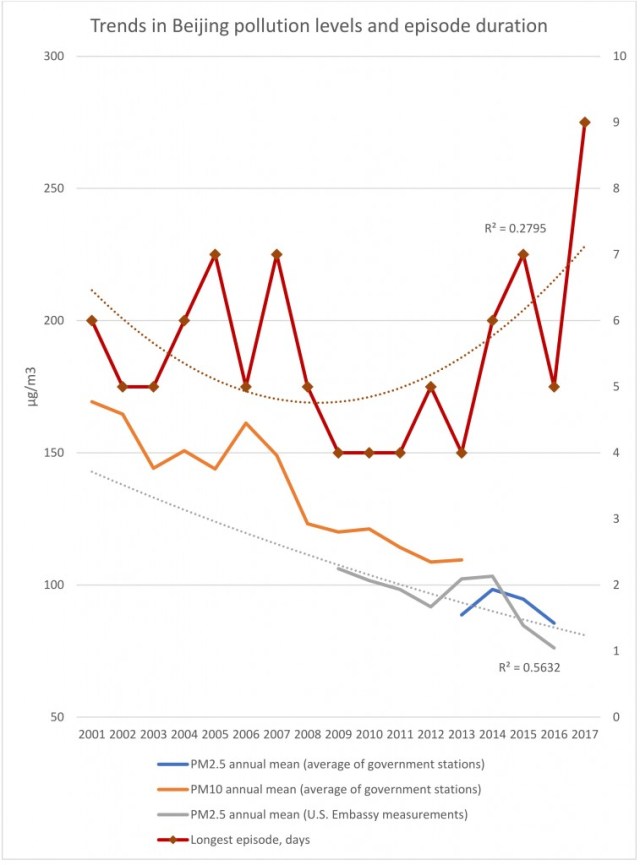
The thick smog that has blanketed Northern China over the first week of the new year is the longest heavy pollution episode seen in Beijing this century, according to an analysis of government data by Greenpeace East Asia.

This record episode follows a resurgence of heavy industry last year, which triggered the return of pollution to the capital after a period of steady improvement in air quality.

The analysis examined 16 years of official air pollution data in Beijing – beginning in 2001 – and found that for nine days straight between December 30 and January 7, concentrations of the particulate PM2.5 breached 200 on the Air Quality Index (AQI). At this level conditions are considered to be an emergency and too dangerous for outdoor exertion. Seven-day episodes occurred in 2015, 2007 and 2005.

While pollution levels remain dangerously high, Beijing has seen impressive and continuous improvements in average pollution levels over the past 16 years, as the government has implemented strong emissions standards, improved enforcement and set absolute targets for limiting coal consumption to clean up the problem.

But the new analysis suggests that the intense smog episodes that plague the city – most often in winter – are lasting for longer periods of time.

The episode ending on January 7 was even more prolonged than one earlier in December that triggered the first smog “red alert” for a year, and saw factory and power plant output cut back, schools shut down and an alternate-day system used to limit vehicles on the roads.

Neighbouring provincial capitals also experienced some of the longest smog episodes on record. In Tianjin the episode lasted six days, making it the city’s longest since 2001. Jinan, the capital of the industrial powerhouse Shandong, experienced seven days of heavy pollution, which is tied with a 2015 episode for the longest on record.

The smog periods frequently last longer in the rustbelt itself, but only get reported in the media if the pollution gets blown into Beijing by unfavorable wind patterns. The analysis found that in the capital of the steel province Hebei, the recent episode saw a full 11 consecutive days of heavy pollution, while the longest episode on record lasted 27 days.

More frequently occurring unfavorable weather conditions – sustained, slow winds from the south – form part of the explanation. However, these kinds of episodes would not be happening if Hebei and other industrial rustbelt provinces to the south of Beijing had tackled their massive industrial emissions with the same determination as Beijing has tackled its own emissions.

Satellite-based NO2 levels during the December red alert show that the region remained the largest hotspot of pollution emissions in the world – despite improvements in pollution controls and reductions in coal-burning in the previous years, and the emergency measures implemented during the red alert.

How the analysis was done

Since Ministry of Environmental Protection official daily air quality data is currently only available from the beginning of 2014, we relied on two earlier official data sources for the analysis. For 2013, hourly PM2.5 monitoring data was available in real time and was saved from ministry website. For 2001 to 2012, the Ministry of Environmental Protection Air Pollution Index data was used. The data is not online anymore but we downloaded it in early 2013.

In order to combine the data reported under the two different reporting systems, some analysis was needed. The old Air Pollution Index system, used until the beginning of 2013, used PM10 measurements, along with other key pollutants such as NO2 and ozone, to calculate the API, but lacked PM2.5 data. For all high pollution days API was determined by PM10, so the values could be converted directly back to daily average PM10 level.

To establish a relationship between the earlier API system PM10 readings and new PM2.5 readings, we used the U.S. Embassy PM2.5 measurement data which provides a continuous record over the transition from the old system to the new. We calculated the average ratio of MEP PM10 to Embassy PM2.5 during “heavy pollution” days over the 3.5-year period when the two records overlap (2009 to 2012), and the ratio of Embassy PM2.5 to MEP PM2.5 measurements during heavy pollution days over the four-year period from 2013 to 2016. This enabled the conversion of the PM10 values from 2001-2012 into corresponding PM2.5 levels and further into the new AQI.

For data since Jan 11, 2013, we used the daily AQI data published by the MEP. Again, PM2.5 was the main pollutant for essentially all high pollution days so we could convert the AQI reading to the corresponding PM2.5 reading.

Source: Beijing’s latest air pollution episode is the longest this century – Energydesk

Posted in Air Quality, Asia, China | Tagged , , , , | Leave a comment

UK military mask-maker aims for smog-hit northern China 

People in China’s smog-hit northern cities are buying an unprecedented number of air-pollution-blocking masks and a British-made product is becoming a hit among well-informed buyers.

UK military mask-maker aims for smog-hit northern China
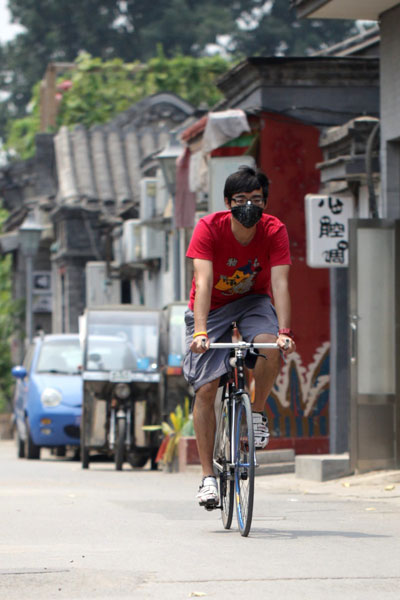
A cyclist wears a Respro® face mask. [China Daily]

A massive number of face masks are available in the nation, including basic surgical masks, industrial face masks and reusable masks. However, critics point out that not all of them are effective in blocking out harmful particles.

Respro®, a British-made brand, is among companies that are making a name for themselves in China because of their filter quality, functionality, style and originality.

The Respro® mask was first sold in China about 10 years ago, primarily targeting expatriates living in the country. However, the company’s sales rocketed in 2013 when the air quality index went well above 500 PM2.5 in some parts of the country.

Respro® recorded a 500 percent rise in revenue that year and has since enjoyed a steady growth in sales of around 10 percent a year.

Lukas Thibaut, a Brit who has been living in Beijing for more than four years, said he started using Respro® masks because they performed well in tests.

“I wanted a face mask that would be suitable for doing outdoor sports, so I ordered the ResproSportsta, which has extra-large valves to improve exhalation,” he said.

Occasionally, Thibaut also uses the white, industrial face masks, which can be easily found in most convenience stores and are much cheaper, but he finds them uncomfortable to wear.

“They also don’t look as cool as my Respro® Sportsta™,” he said.

Henry Cole, chief executive of Respro®, said the material in most Respro® masks was first produced by the UK defense establishment in the 1980s and was used to protect troops under the threat of nuclear and biological warfare.

Gary Fuller, senior lecturer in air quality measurement at King’s College London, told China Daily: “Tests conducted in Beijing in 2009 found that the high-quality masks that are used to protect people working in factories can also help to reduce exposure to ambient air pollution.”

Fan Chung, professor of respiratory medicine in Imperial College London, believes that the most effective masks available to reduce particle exposure are those that are labeled N95. They are able to filter 95 percent of airborne particles of greater than 0.3 micron, including the PM2.5 particles prevalent in the smog in China that are small enough to penetrate the lungs.

He said: “More expensive mask will have an exhaust valve to improve comfort while wearing the masks. Inexpensive cloth masks can be used but these are much less efficient in getting rid of small particles.”

Chung said the long-term solution to the problem of environmental pollution is to reduce and suppress the sources of pollution, but this will take time to achieve, even with the best efforts available at all levels.

Source: UK military mask-maker aims for smog-hit northern China – EUROPE – Chinadaily.com.cn

Posted in Air Quality | Tagged , , | Leave a comment

Polish cities offer free transport to fight smog

The Polish capital offered free public transport on Monday to encourage residents to leave their cars at home and stop contributing to the world’s worst smog.

The cities of Krakow and Kielce also announced similar incentives amid stifling pollution, reported Radio Poland.

Warsaw readings for a pollutant known as small particulate matter exceeded Polish environmental norms fivefold on Sunday, forcing the government to advise the city’s nearly two million residents to stay indoors, reported Bloomberg.

According to monitoring site AirVisual, Warsaw was the most polluted major city in the world on Monday. Poland’s systemic smog problem intensifies during cold spells, when in addition to its coal-based power industry, millions of households are heated by furnaces that are all too often fed by burning the cheapest available materials.

Prime Minister Beata Szydlo, herself a coal miner’s daughter, supports the use of the dirty fossil fuel because it ensures energy security and provides jobs.

The government is working on ways to reduce the smog, she said on her Twitter account on Monday, without giving details.

“The free transport initiative has a great educational value, but I doubt it will have any lasting impact,” Mr Piotr Siergiej, a spokesman for Polish Smog Alarm, a not-for-profit organisation, said by phone. “Household furnaces are responsible for 53 per cent of the emissions in Poland and I really don’t understand why we still don’t have any norms for them. It’s as if we weren’t really fighting the air pollution.”

AirVisual listed Warsaw’s air quality index at 231 on Monday, meaning worse smog than in the Indian city of Kolkata (224), Dhaka in Bangladesh (220) and Beijing (197).

Poland is the European Union’s biggest per capita polluter, with more than 80 per cent of its electricity generation coming from coal.

According to the World Health Organisation, Poland is home to 33 of 50 of the EU’s most polluted cities.

Source: Polish cities offer free transport to fight smog, Europe News & Top Stories – The Straits Times

Posted in Air Quality, Europe, Poland | Tagged , , , , | Leave a comment

Sydney air pollution alert issued as temperature heads to 38C 

High ozone levels trigger air quality alert with health department warning asthma sufferers to be prepared and limit exposure

An air pollution alert has been issued for Sydney residents due to a high level of ozone, already exceeding government standards for the entire year.

The NSW Office of Environment and Heritage put the air-quality forecast for Sydney’s metropolitan area on Tuesday as “poor”, denoting a score of 100-149 on the Air Quality Index (AQI). “Hazardous” is classified as 200 and above.

Ozone is an irritant secondary pollutant formed by chemical reactions between atmospheric gases and nitrogen oxides from car-vehicle exhausts on sunny days. The problem is exacerbated by lack of wind.

As temperatures increase, so does ozone production, meaning it forms more readily in summer and reaches its highest concentrations in the afternoon or early evening.

Matthew Riley, the director of climate and atmospheric science at OEH, said higher levels of ozone were not unusual in Sydney over December and January.

The national standards allowed for one day above the accepted ozone levels per year, to account for extreme events such as bushfires that can increase production, said Riley.

Ozone levels exceeded that level in Richmond and St Marys in western Sydney late on Monday afternoon and could do so again on Tuesday or Wednesday, due to high temperatures and weak winds.

As well as worsening existing respiratory conditions such as asthma, breathing in too much ozone could cause eye, nose, throat and lung irritation, as well as coughing and shortness of breath.

NSW Health advised sufferers to use their medication when necessary and, if symptoms worsened, to seek medical advice. The department’s Dr Ben Scalley said parents should limit the time children with asthma play outside.

“Ozone levels reach their peak around 7pm in the evening and tend to be lowest in the morning, so it’s best to plan outdoor play in the morning when the day is cooler,” he said.

The alert coincides with a period of sweltering summer weather for Sydney and its surrounding regions. Temperatures were forecast to hit 31C in central Sydney on Tuesday. Residents of the western suburbs were expected to see a high of 37C.

The Bureau of Meteorology forecast a high of 38C in the city on Wednesday, cooling on Thursday, then rising again to temperatures in the early 30s on Friday and Saturday.

Richmond and Penrith were both forecast to reach 40C on Wednesday and 42C on Friday. Inland NSW would bear the brunt of the hot weather, with a heatwave at severe or extreme levels past 45C on Wednesday, the weather bureau said.

The NSW Rural Fire Service has warned of a heightened risk of bushfires this week, and urged farmers to protect their properties by putting in firebreaks around paddocks and other assets.

Source: Sydney air pollution alert issued as temperature heads to 38C | Weather | The Guardian

Posted in Air Quality, Australia & Oceania | Tagged , , | Leave a comment

Heavy smog hits Poland

The State Environment Protection Inspectorate says that air pollution in Poland continues to be well above the allowed EU norms.

The situation has been worsening over the past days, with warnings issued in several regions of Poland not to stay outdoors if possible, while many towns and cities have introduced free transport to minimise the threat.

“What we are experiencing in Poland right now is the winter smog – sometimes called black or sulphuric smog. It is a result of emissions from transport, so traffic has a say in this phenomenon, but primarily it is caused by households – the municipal sector, homes where coal and wood and other waste material are burnt for heating,” dr. Krzysztof Badyda, from the Warsaw University of Technology, told Polish Radio

Source: Heavy smog hits Poland – Radio Poland :: News from Poland

Posted in Air Quality, Europe, Poland | Tagged , | Leave a comment

Living near major traffic linked to higher risk of dementia 

A study of over 6.5 million Ontario residents raises public health concerns about the impact of air pollution and noise. Credit: Public Health Ontario and the Institute for Clinical Evaluative Sciences

People who live close to high-traffic roadways face a higher risk of developing dementia than those who live further away, new research from Public Health Ontario (PHO) and the Institute for Clinical Evaluative Sciences (ICES) has found.

Led by PHO and ICES scientists, the study found that people who lived within 50 metres of high-traffic roads had a seven per cent higher likelihood of developing dementia compared to those who lived more than 300 meters away from busy roads.

Published in The Lancet, the researchers examined records of more than 6.5 million Ontario residents aged 20-85 to investigate the correlation between living close to major roads and dementia, Parkinson’s disease and multiple sclerosis.

Scientists identified 243,611 cases of dementia, 31,577 cases of Parkinson’s disease, and 9,247 cases of multiple sclerosis in Ontario between 2001 and 2012. In addition, they mapped individuals’ proximity to major roadways using the postal code of their residence. The findings indicate that living close to major roads increased the risk of developing dementia, but not Parkinson’s disease or multiple sclerosis, two other major neurological disorders.

“Little is known in current research about how to reduce the risk of dementia. Our findings show the closer you live to roads with heavy day-to-day traffic, the greater the risk of developing dementia. With our widespread exposure to traffic and the greater tendency for people to live in cities these days, this has serious public health implications,” says Dr. Hong Chen, environmental and occupational health scientist at PHO and an adjunct scientist at ICES. Dr. Chen is lead author on the paper titled Living Near Major Roads and the Incidence of Dementia, Parkinson’s Disease, and Multiple Sclerosis: A Population-based Cohort Study.

“Our study is the first in Canada to suggest that pollutants from heavy, day-to-day traffic are linked to dementia. We know from previous research that air pollutants can get into the blood stream and lead to inflammation, which is linked with cardiovascular disease and possibly other conditions such as diabetes. This study suggests air pollutants that can get into the brain via the blood stream can lead to neurological problems,” says Dr. Ray Copes, chief of environmental and occupational health at PHO and an author on the paper.

As urban centres become more densely populated and more congested with vehicles on major roads, Dr. Copes suggests the findings of this paper could be used to help inform municipal land use decisions as well as building design to take into account air pollution factors and the impact on residents.

This research was conducted in collaboration with scientists from the University of Toronto, Carleton University, Dalhousie University, Oregon State University, and Health Canada. The study was funded by Health Canada.

Key findings:

  • Using data held at ICES, the researchers examined records of more than 6.5 million Ontario residents, aged 20-85, and mapped them according to residential postal codes five years before the study started.
  • Between 2001 and 2012, 243,611 cases of dementia, 31,577 cases of Parkinson’s disease, and 9,247 cases of multiple sclerosis were identified in Ontario.
  • People who lived within 50 metres of high-traffic roads had a seven per cent higher likelihood of dementia than those who lived more 300 meters away from busy roads.
  • The increase in the risk of developing dementia went down to four per cent if people lived 50-100 metres from major traffic, and to two per cent if they lived within 101-200 metres. At over 200 metres, there was no elevated risk of dementia.
  • There was no correlation between major traffic proximity and Parkinson’s disease or multiple sclerosis.

Story Source:

Materials provided by Public Health Ontario. Note: Content may be edited for style and length.

Source: Living near major traffic linked to higher risk of dementia — ScienceDaily

Posted in Air Quality, Health Effects of Air Pollution, Medical Studies, USA & Canada | Tagged , , , , , | Leave a comment

Beijing creates anti-smog police to tackle air polluters

Force will patrol streets looking for rules violations including open-air barbecues, rubbish burning and dusty roads

Beijing will create an environmental police force aimed at tackling deadly smog, after the Chinese capital spent the first week of 2017 mostly shrouded in a thick haze of pollution.

The new law enforcement outfit will patrol the streets, eyes peeled for open-air barbecues, trash burning and dusty roads that violate regulations, the city’s acting mayor Cai Qi said at the weekend.

Beijing will also shut its last coal-fired power plant and reduce coal consumption by 30% this year, Cai said according to state media. Officials will shut 500 factories and 300,000 older vehicles will be taken off the road.

“There is still a long way to go to meet the expectation of the public,” he added, admitting he wakes up every morning and checks the air quality, along with the weather report.

The capital is frequently beset with toxic smog and levels of harmful air pollution in 2015 were more than eight times those recommended by the World Health Organization.

China declared a “war on pollution” in 2014, but has struggled to deliver the sweeping change many had hoped to see and government inspections routinely find pollutions flouting the law.

Last week, inspection teams from the environment ministry found some companies resuming operations despite a government ban, known as a “red alert”, aimed at curbing smog. More than 500 construction sites and businesses and 10,000 vehicles violated measures to reduce air pollution.

But Beijing’s new police squad may do little to help residents breathe easy.

Its focus on local, street-level sources of pollution ignores the steel factories and coal-fired power plants just outside the city limits in neighbouring Hebei province, or the more than 5m cars clogging the roads. Cars account for about 31% of the most harmful type of air pollution, according to China’s environmental ministry.

While officials are aware heavy industry and automobiles are the largest sources of pollution, the government has been reluctant to impose sweeping change for fear of economic repercussions and potential unrest from fired workers.

“The root cause of the region’s smog problems, from a long-term perspective, is an unclean industrial and energy mix, which requires big changes,” said Chen Jining, China’s environmental minister, adding that he “felt guilty” about the toxic haze.

Beijing education authorities did bow to public pressure last week, agreeing to install air purifiers in school classrooms after more than a year of campaigning by concerned parents.

A study earlier this year found acrid air is linked to at least one million deaths a year in China, and contributed to a third of all fatalities in major cities, on par with smoking. Another research paper said the smog had shortened life expectancies by five and a half years in parts of China.

Source: Beijing creates anti-smog police to tackle air polluters | World news | The Guardian

Posted in Air Quality, Asia, China | Tagged , , , | Leave a comment

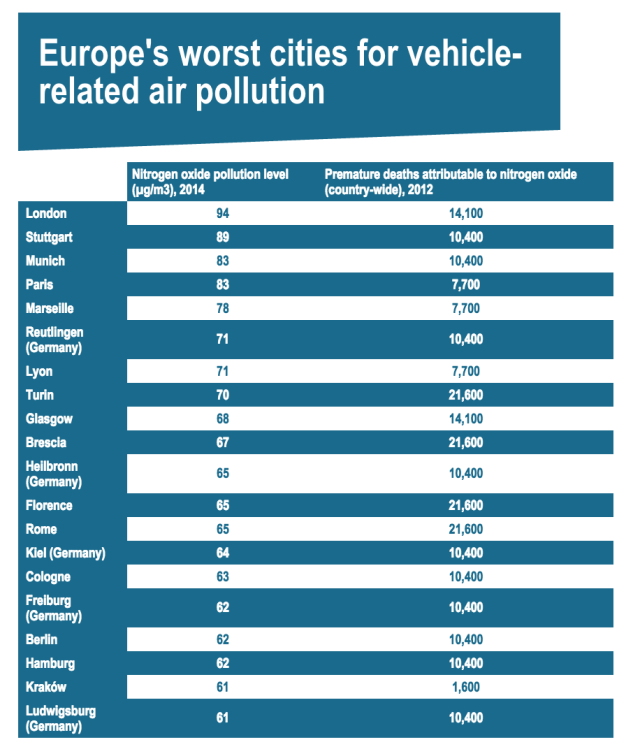
Brixton Road breaches annual air pollution limit in five days 

A south London road has breached its annual air pollution limit for 2017 in just five days.

Readings taken in Brixton Road found levels of nitrogen dioxide (NO2), linked to nearly 5,900 early deaths a year, repeatedly breached the EU limit.

King’s College London, which runs the air quality monitoring stations, said similar pollution problems are found along many of London’s main roads.

Oxford Street, Kings Road and the Strand are other pollution hotspots.

Under EU law the average hourly level of NO2, mostly caused by diesel vehicles, must not exceed 200 micrograms per cubic metre more than 18 times in a year.

In the first five days of 2017 Brixton Road had exceeded this annual limit on a further 19 occasions, according to the London Air Quality Network at King’s College London.

At one point NO2 levels were nearly double the legal limit.

Putney High Street, which was the first London road to exceed its legal limit last year, went on to exceed the hourly limit more than 1,100 times in 2016.

The news has come on the day Mayor of London Sadiq Khan announced 10 new low emission bus zones in the capital.

The new routes bring the total number of Low Emission Zones planned to 12, including previously announced zones in Putney High Street and Brixton.

The mayor has pledged to double funding to tackle air pollution to £875m over five years.


Dr Gary Fuller and Andrew Grieve, Kings College London

Studies in cities around the world have found more early deaths and visits to A&E in cities where nitrogen dioxide (NO2) is high.

In the UK it is estimated that the air pollution that we breathe causes an estimated 40,000 early deaths per year.

Legal limits were set in 1999 to protect our health, with a deadline to meet them by 2010. Now, in 2017, they have been breached in the first five days of the year.

In towns and cities, the main source of NO2 is diesel traffic. Concentrations are worst alongside busy roads enclosed by buildings; especially those with many buses, lorries and taxis.

These are the streets where we live and shop.

Since 2010, the situation has started to improve alongside some of London’s roads but, as yesterday’s result shows, there is still a long way to go to meet the 2010 limits.


But Caroline Russell, who represents the Green Party on the London Assembly, said the plans were “just not enough”.

“Too many people have had their lives shortened, their asthma and other respiratory problems worsened and their quality of life reduced as a result of weak mayoral policies and government inaction,” she said.

In April a committee of MPs called air pollution in the UK a “public health emergency”.

This week a study suggested as many as 11% of cases of dementia in people living near busy roads could be linked to air pollution.

Source: Brixton Road breaches annual air pollution limit in five days – BBC News

Posted in Air Quality, Europe, London, UK | Tagged , , , , , , , , | Leave a comment