The State Environment Protection Inspectorate says that air pollution in Poland continues to be well above the allowed EU norms.
The situation has been worsening over the past days, with warnings issued in several regions of Poland not to stay outdoors if possible, while many towns and cities have introduced free transport to minimise the threat.
“What we are experiencing in Poland right now is the winter smog – sometimes called black or sulphuric smog. It is a result of emissions from transport, so traffic has a say in this phenomenon, but primarily it is caused by households – the municipal sector, homes where coal and wood and other waste material are burnt for heating,” dr. Krzysztof Badyda, from the Warsaw University of Technology, told Polish Radio
A study of over 6.5 million Ontario residents raises public health concerns about the impact of air pollution and noise. Credit: Public Health Ontario and the Institute for Clinical Evaluative Sciences
People who live close to high-traffic roadways face a higher risk of developing dementia than those who live further away, new research from Public Health Ontario (PHO) and the Institute for Clinical Evaluative Sciences (ICES) has found.
Led by PHO and ICES scientists, the study found that people who lived within 50 metres of high-traffic roads had a seven per cent higher likelihood of developing dementia compared to those who lived more than 300 meters away from busy roads.
Published in The Lancet, the researchers examined records of more than 6.5 million Ontario residents aged 20-85 to investigate the correlation between living close to major roads and dementia, Parkinson’s disease and multiple sclerosis.
Scientists identified 243,611 cases of dementia, 31,577 cases of Parkinson’s disease, and 9,247 cases of multiple sclerosis in Ontario between 2001 and 2012. In addition, they mapped individuals’ proximity to major roadways using the postal code of their residence. The findings indicate that living close to major roads increased the risk of developing dementia, but not Parkinson’s disease or multiple sclerosis, two other major neurological disorders.
“Little is known in current research about how to reduce the risk of dementia. Our findings show the closer you live to roads with heavy day-to-day traffic, the greater the risk of developing dementia. With our widespread exposure to traffic and the greater tendency for people to live in cities these days, this has serious public health implications,” says Dr. Hong Chen, environmental and occupational health scientist at PHO and an adjunct scientist at ICES. Dr. Chen is lead author on the paper titled Living Near Major Roads and the Incidence of Dementia, Parkinson’s Disease, and Multiple Sclerosis: A Population-based Cohort Study.
“Our study is the first in Canada to suggest that pollutants from heavy, day-to-day traffic are linked to dementia. We know from previous research that air pollutants can get into the blood stream and lead to inflammation, which is linked with cardiovascular disease and possibly other conditions such as diabetes. This study suggests air pollutants that can get into the brain via the blood stream can lead to neurological problems,” says Dr. Ray Copes, chief of environmental and occupational health at PHO and an author on the paper.
As urban centres become more densely populated and more congested with vehicles on major roads, Dr. Copes suggests the findings of this paper could be used to help inform municipal land use decisions as well as building design to take into account air pollution factors and the impact on residents.
This research was conducted in collaboration with scientists from the University of Toronto, Carleton University, Dalhousie University, Oregon State University, and Health Canada. The study was funded by Health Canada.
Key findings:
Using data held at ICES, the researchers examined records of more than 6.5 million Ontario residents, aged 20-85, and mapped them according to residential postal codes five years before the study started.
Between 2001 and 2012, 243,611 cases of dementia, 31,577 cases of Parkinson’s disease, and 9,247 cases of multiple sclerosis were identified in Ontario.
People who lived within 50 metres of high-traffic roads had a seven per cent higher likelihood of dementia than those who lived more 300 meters away from busy roads.
The increase in the risk of developing dementia went down to four per cent if people lived 50-100 metres from major traffic, and to two per cent if they lived within 101-200 metres. At over 200 metres, there was no elevated risk of dementia.
There was no correlation between major traffic proximity and Parkinson’s disease or multiple sclerosis.
Story Source:
Materials provided by Public Health Ontario. Note: Content may be edited for style and length.
Force will patrol streets looking for rules violations including open-air barbecues, rubbish burning and dusty roads
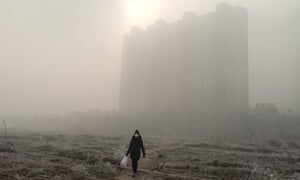
Beijing will create an environmental police force aimed at tackling deadly smog, after the Chinese capital spent the first week of 2017 mostly shrouded in a thick haze of pollution.
The new law enforcement outfit will patrol the streets, eyes peeled for open-air barbecues, trash burning and dusty roads that violate regulations, the city’s acting mayor Cai Qi said at the weekend.
Beijing will also shut its last coal-fired power plant and reduce coal consumption by 30% this year, Cai said according to state media. Officials will shut 500 factories and 300,000 older vehicles will be taken off the road.
“There is still a long way to go to meet the expectation of the public,” he added, admitting he wakes up every morning and checks the air quality, along with the weather report.
The capital is frequently beset with toxic smog and levels of harmful air pollution in 2015 were more than eight times those recommended by the World Health Organization.
China declared a “war on pollution” in 2014, but has struggled to deliver the sweeping change many had hoped to see and government inspections routinely find pollutions flouting the law.
Last week, inspection teams from the environment ministry found some companies resuming operations despite a government ban, known as a “red alert”, aimed at curbing smog. More than 500 construction sites and businesses and 10,000 vehicles violated measures to reduce air pollution.
But Beijing’s new police squad may do little to help residents breathe easy.
Its focus on local, street-level sources of pollution ignores the steel factories and coal-fired power plants just outside the city limits in neighbouring Hebei province, or the more than 5m cars clogging the roads. Cars account for about 31% of the most harmful type of air pollution, according to China’s environmental ministry.
While officials are aware heavy industry and automobiles are the largest sources of pollution, the government has been reluctant to impose sweeping change for fear of economic repercussions and potential unrest from fired workers.
“The root cause of the region’s smog problems, from a long-term perspective, is an unclean industrial and energy mix, which requires big changes,” said Chen Jining, China’s environmental minister, adding that he “felt guilty” about the toxic haze.
Beijing education authorities did bow to public pressure last week, agreeing to install air purifiers in school classrooms after more than a year of campaigning by concerned parents.
A study earlier this year found acrid air is linked to at least one million deaths a year in China, and contributed to a third of all fatalities in major cities, on par with smoking. Another research paper said the smog had shortened life expectancies by five and a half years in parts of China.
A south London road has breached its annual air pollution limit for 2017 in just five days.
Readings taken in Brixton Road found levels of nitrogen dioxide (NO2), linked to nearly 5,900 early deaths a year, repeatedly breached the EU limit.
King’s College London, which runs the air quality monitoring stations, said similar pollution problems are found along many of London’s main roads.
Oxford Street, Kings Road and the Strand are other pollution hotspots.
Under EU law the average hourly level of NO2, mostly caused by diesel vehicles, must not exceed 200 micrograms per cubic metre more than 18 times in a year.
In the first five days of 2017 Brixton Road had exceeded this annual limit on a further 19 occasions, according to the London Air Quality Network at King’s College London.
At one point NO2 levels were nearly double the legal limit.
Putney High Street, which was the first London road to exceed its legal limit last year, went on to exceed the hourly limit more than 1,100 times in 2016.
The news has come on the day Mayor of London Sadiq Khan announced 10 new low emission bus zones in the capital.
The new routes bring the total number of Low Emission Zones planned to 12, including previously announced zones in Putney High Street and Brixton.
The mayor has pledged to double funding to tackle air pollution to £875m over five years.
Dr Gary Fuller and Andrew Grieve, Kings College London
Studies in cities around the world have found more early deaths and visits to A&E in cities where nitrogen dioxide (NO2) is high.
In the UK it is estimated that the air pollution that we breathe causes an estimated 40,000 early deaths per year.
Legal limits were set in 1999 to protect our health, with a deadline to meet them by 2010. Now, in 2017, they have been breached in the first five days of the year.
In towns and cities, the main source of NO2 is diesel traffic. Concentrations are worst alongside busy roads enclosed by buildings; especially those with many buses, lorries and taxis.
These are the streets where we live and shop.
Since 2010, the situation has started to improve alongside some of London’s roads but, as yesterday’s result shows, there is still a long way to go to meet the 2010 limits.
But Caroline Russell, who represents the Green Party on the London Assembly, said the plans were “just not enough”.
“Too many people have had their lives shortened, their asthma and other respiratory problems worsened and their quality of life reduced as a result of weak mayoral policies and government inaction,” she said.
In April a committee of MPs called air pollution in the UK a “public health emergency”.
This week a study suggested as many as 11% of cases of dementia in people living near busy roads could be linked to air pollution.
Gusty winds behind a dry cold front have caused the cedar count to increase 25x over yesterday’s “high” concentration.
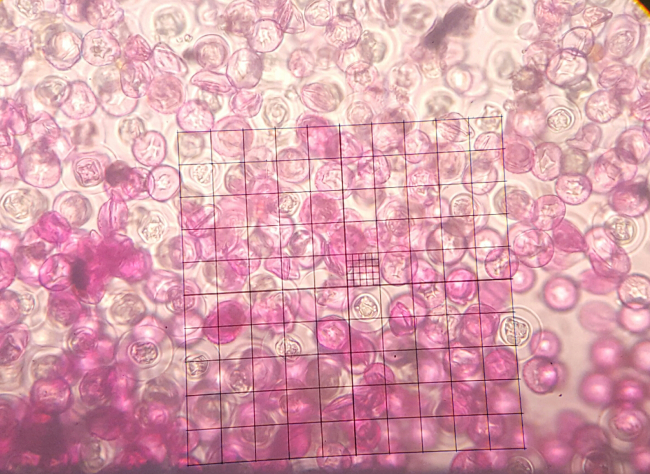
Cedar pollen crowds the measuring slide on Dec. 29, 2016 (Amber Brown/Allergy & Asthma Associates)
Allergy sufferers beware, strong winds from a dry cold front early this morning have kicked up cedar pollen. A lot of cedar pollen.
According to our pollen research professionals at Allergy & Asthma Associates, today’s cedar count of 21,952 grains per cubic meter is the second highest cedar count in recorded history.
Here’s where it ranks compared to other recent cedar pollen spikes:
The cedar allergy season typically ramps up in late December, and can last until March. Dry, windy weather often causes cedar pollen to jump, while rain can help lower the concentrations.
Cedar season usually starts in late December, but the season could be increasing in time and intensity this year.
Cedar is notorious for being one of Central Texans’ worst allergens, and the upcoming cedar season could possibly be “the worst we’ve ever seen,” according to a local allergist with more than 30 years of experience in the field.
Dr. Robert Cook with Central Texas Allergy & Asthma says this year’s cedar season has actually been two years in the making. Last year, Central Texas finally emerged from a half-decade drought, but trees were still recovering during the cedar season. Continued, steadier rain through this year had made trees green and encouraged a lot of growth, which is translating to more pollen production this winter.
Cedar season is typically the third week in December through the end of February, but this year, Dr. Cook says the season could be mid-December all the way through the first week of March. Male cedar trees — technically ashe junipers — produce pollen on the ends of their branches that turns brown and cone-like when they’re mature. One good cold snap will open the cones and let the yellow pollen be dispersed by the wind. On windy days, clouds of cedar pollen are a common sight in this area.
During the height of cedar season, it’s normal to see 5,000-10,000 cedar grains per cubic meter of air. Dr. Cook believes numbers this year will be on the high side, possibly in the low 10,000s. It is possible for numbers to go as high as 60,000, but that would be very rare.
This year could be especially bad for newcomers to Central Texas. Often, people who have only been in this area from 1-6 years don’t see cedar effects. But on a bad year like this one, Dr. Cook says it’s possible that more people who would be prone to the allergen could develop full allergies to cedar. About 30 percent of all people suffer from pollen allergies, and of that number, Dr. Cook says a majority are specifically allergic to cedar.
If we get a rainy winter with multiple hard freezes, it could change the current outlook. Unfortunately, the Climate Prediction Center is still predicting a warmer, drier than normal winter this year.
Dr. Cook suggests nasal sprays and over-the-counter antihistamines if you start reacting to cedar for the first time this year. Be wary of eye drops: some “redness relievers” can actually aggravate your allergies. Allergy drops and shots are better options for next year, so that you can build up an immunity to cedar. Dr. Cook says not to look for any allergy tablets that are made just for cedar sufferers, because the allergen is not widespread enough in the U.S. to warrant production.
Cedar season comes right on the heels of red berry juniper, which usually spikes in late November. Southwest winds over the next two weeks could make red berry juniper numbers worse, as the trees that create the pollen are farther south, toward Kerrville. Red berry juniper is technically a cousin of cedar, so some allergy sufferers could already be seeing effects with only a one to two week break before the cedar season begins.
The iconic Connaught Place area in the Indian capital, Delhi, will be a no-vehicle zone for three months beginning February, officials say.
All traffic including buses and cars will be banned from the office and shopping district as part of the government’s plans to tackle air pollution and congestion in the city.
Park and ride cycle services will be offered to visitors to the area.
Tens of thousands of people visit Connaught Place every day.
The area is part of colonial-era Delhi, often called Lutyens Delhi after the British architect Sir Edwin Lutyens, who designed many of the government buildings and graceful bungalows that are now occupied by senior officials.
It is also one of India’s most famous commercial and shopping districts, but often remains gridlocked because of rising traffic.
Officials say the three-month-long “pedestrianisation” of the area will test “traffic circulation, the experience of pedestrians and shop owners, management of reclaimed parking lots and traffic load” in the area.
People will be able to reach the area either by metro or by using park and ride bicycles and battery operated vehicles from surrounding areas during the trial.
Stricter EU emissions testing for large vehicles means modern diesel cars produce 10 times more NOx per litre of fuel
Modern diesel cars produce 10 times more toxic air pollution than heavy trucks and buses, new European data has revealed.
The stark difference in emissions of nitrogen oxides (NOx) is due to the much stricter testing applied to large vehicles in the EU, according to the researchers behind a new report. They say the same strict measures must be applied to cars.
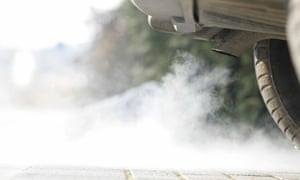
NOx pollution is responsible for tens of thousands of early deaths across Europe, with the UK suffering a particularly high toll. Much of the pollution is produced by diesel cars, which on the road emit about six times more than allowed in the official lab-based tests. Following the Volkswagen “dieselgate” scandal, the car tests are due to be toughened, but campaigners say the reforms do not go far enough.
It found that heavy-duty vehicles tested in Germany and Finland emitted about 210mg NOx per kilometre driven, less than half the 500mg/km pumped out by modern diesel cars that meet the highest “Euro 6” standard. However, the buses and trucks have larger engines and burn more diesel per kilometre, meaning that cars produce 10 times more NOx per litre of fuel.
The ICCT analysis showed that manufacturers were able to ensure that heavy duty vehicles kept below pollution limits when on the road, but that emissions from cars soar once in the real world.
Official EU tests for cars are currently limited to laboratory measurements of prototype vehicles. “In contrast, for measurement of NOx emissions from trucks and buses, mobile testing devices became mandatory in 2013. As a consequence, randomly selected vehicles can be tested under real-world driving conditions,” said Peter Mock, managing director of ICCT in Europe.
Changes to the car testing regime in the EU are due to start in September, with mobile devices, called portable emissions measurement systems (PEMS), attached to vehicles as they drive on real roads.
But Mock warned: “Manufacturers will still be allowed to carefully select special prototype cars for emissions testing. Instead, it would be much better to measure the emissions of ordinary mass-production vehicles, obtained from customers who have had been driving them in an ordinary way.”
Such a system is used in the US where the dieselgate scandal first emerged. It will also be put forward for discussion by the European commission on 17 January in Brussels, but the ICCT said it faces resistance from some vehicle manufacturers and EU member states.
In December, the European commission started legal action against the UK and six other EU states for failing to act against car emissions cheating in the wake of the dieselgate scandal. But later the same month, a draft European parliament inquiry found the European commission itself guilty of maladministration for failing to act quickly enough on evidence that defeat devices were being used to game emissions tests.
Evidence that some diesel cars emitted up to four times more NOx pollution than a bus was revealed in 2015. Catherine Bearder, a Liberal Democrat MEP and a lead negotiator on the EU’s air quality law, said “It is disgraceful that car manufacturers have failed to reduce deadly emissions when the technology to do so is affordable and readily available. The dramatic reduction in NOx emissions from heavier vehicles is a result of far stricter EU tests, in place since 2011, that reflect real-world driving conditions. If buses and trucks can comply with these limits, there’s no reason cars can’t as well.”
Pollution Masks since 1993 - The 'Original' and still the best - Made in the UK - respro.com
THE AIR WE BREATHE
The Respro® Bulletin Board is designed to keep you up to date with current views and issues relating to Air Pollution and its health implications in our daily lives.













 Respro® Masks are reusable