Air pollution increases risk of future disease in children

Many studies have shown that, in children, ambient air pollution can lead to allergic sensitization, respiratory problems, and ultra-structural and cellular changes to their lungs and airways. Due to their higher intake of contaminants and greater lung surface area relative to their body weight, children are more susceptible to the damaging effects of pollution compared to adults. 

A study led by the University of California, Davis has now found children exposed to high levels of air pollution also have elevated markers of inflammation (such as interleukin 6), and lower cardiac autonomic regulation, which impacts how fast the heart beats and how hard it pumps.

The scientists examined blood samples from over 100 children aged 9-11 in the Sacramento area of California where significant levels of pollutants were recorded by the Environmental Protection Agency (EPA). The analysis revealed that 27 children who were exposed to particulate matter carried by wildfire smoke had markers of systemic inflammation and lower cardiac autonomic regulation.

“By examining daily and monthly levels of particulate matter in relation to children’s inflammation and autonomic physiology, this study further demonstrates the immediate consequences of exposure to air pollution, which may increase risk of future disease,” said study lead author Anna Parenteau, a doctoral student in Psychology at UC Davis. 

“As climate change continues to impact children and families, it is paramount to understand the impact of environmental contaminants such as air pollution on children’s physiology.”

According to Parenteau and her colleagues, children exposed to pollutants released during wildfires are likely to develop long-term health conditions, including asthma, decreased lung function, and a host of neurodevelopmental problems such as attention deficit hyperactivity disorder (ADHD), autism, memory issues, and deficits in school performance.

Continued developmental research on environmental contaminants is necessary to sound the alarm about the hazardous effects of air pollution and inform policy changes that could promote long-term population health.

The study is published in the journal New Directions for Child and Adolescent Development.

Air pollution increases risk of future disease in children • Earth.com
Posted in Air Quality, Allergies, Health Effects of Air Pollution, Medical Studies | Tagged , , | Leave a comment

Exposure to air pollutants released during wildfires has ill effects among children

New research linking air pollution data from federal monitors in the Sacramento area of California, including during significant fires, is showing ill effects of pollution exposure among children, a new University of California, Davis, study suggests.

Blood samples show that children have elevated markers of inflammation, such as interleukin 6, if they were exposed to higher air pollution. Further, higher air pollution was linked to lower cardiac autonomic regulation in children, which impacts how fast the heart beats and how hard it pumps, according to the study.

In the study, published Aug. 3 date in the journal New Directions for Child and Adolescent Research, researchers looked at blood samples from more than 100 healthy children ages 9-11 in the Sacramento area where pollutants near their homes were recorded by the Environmental Protection Agency. The study was authored by Anna M. Parenteau, a doctoral student, and Camelia E. Hostinar, associate professor, both from the UC Davis Department of Psychology. The work took place at UC Davis.

These findings are important because exposure to pollutants released during wildfires has been related to numerous negative health outcomes in children, who have smaller bodies and organ systems than adults, including asthma and decreased lung function, as well as neurodevelopmental outcomes like attention deficit hyperactivity disorder, autism, and deficits in school performance and memory, researchers said.

Looked at particulates

Researchers looked at fine particulate matter data from the EPA (PM2.5) -; or the fine particles that can penetrate lungs and pass into the bloodstream -; finding the children’s blood contained markers of systemic inflammation. Additionally, PM2.5, which refers to particulate matter measuring 2.5 micrometers or smaller by the EPA, was linked to lower cardiac autonomic regulation assessed using an electrocardiogram. Specifically, researchers used data files maintained by the EPA, which have daily air quality summary information from each outdoor monitor in the country.

In total, 27 of the children studied had inflammation markers in their blood recorded during significant fires when their neighborhoods recorded significant levels of PM2.5 in the air. These times when fires were burning included during the Mendocino Complex Fire in 2018, which was active about 100 miles from the lab where blood was drawn. The findings were similar to those found in an earlier study, in which the blood of young primates was collected by UC Davis researchers after significant wildfires.

“By examining daily and monthly levels of particulate matter in relation to children’s inflammation and autonomic physiology, this study further demonstrates the immediate consequences of exposure to air pollution, which may increase risk of future disease,” Parenteau said. Furthermore, Parenteau added: “As climate change continues to impact children and families, it is paramount to understand the impact of environmental contaminants such as air pollution on children’s physiology.”

Previous studies with children have shown significant associations between ambient air pollution and allergic sensitization, respiratory symptoms, and ultra-structural and cellular changes to their lungs and airways, researchers said.

Researchers have found children may be especially susceptible to the effects of air pollution, given that, compared to adults, they have a higher intake of contaminants and greater lung surface area relative to their body weight.

Continued developmental research on environmental contaminants can sound the alarm about the effects of air pollution and inform policy changes that could promote long-term population health, researchers concluded.

Source:University of California – DavisJournal reference:Parenteau, A.M., et al. (2022) Associations of air pollution with peripheral inflammation and cardiac autonomic physiology in children. New Directions for Child and Adolescent Development. doi.org/10.1002/cad.20474.

Exposure to air pollutants released during wildfires has ill effects among children
Posted in Air Quality, Health Effects of Air Pollution, USA, USA & Canada | Tagged , , , , , , , | Leave a comment

How Air Pollution Can Lead To Certain Cancers

It might seem like the plot of a horror film or a true crime podcast, but in everyday air there is a mix of microscopic acids, metals, chemicals, and other eerie ingredients that sound like the ingredients of a deadly cocktail (via American Lung Association). Made up of tiny bits of liquid and solid matter, particle pollution is a massive environmental problem that poses a threat to health and has been linked to certain types of cancers. From dirt and soil to emissions from motor vehicles, power plants, and forest fires, the air we breathe is filled with dangerous micro-particles that can’t be seen with the naked eye, but can be extremely toxic to our health.

Particle pollution is pollution created by particle pollutants, which are also called particulate matter or PM for short, according to the California Air Resources Board. These particle pollutants cause particle pollution — try saying that three times fast! Unfortunately, this tongue twister comes with a necessity to become informed about the particles in the air we breathe that can lead to life-threatening health conditions. Particulate matter is defined as particles 10 micrometers (a marker known as PM10) or smaller in diameter. Even smaller than particle pollutants are fine particles, which measure 2.5 micrometers (PM2.5) or smaller in diameter. While PM10 particles can enter the average human nose and throat and travel to the lungs, PM2.5 particles can dig themselves even deeper into lungs. This is important to know for both lung and overall health.

Particle pollution and lung cancer

Of all forms of cancer, lung cancer is the top killer in the United States according to the American Lung Association, and it’s not just due to cigarettes — air pollution is also a culprit. Our bodies have natural defense systems to sneeze or cough out particles and foreign bodies that are dangerous to our health, but the smaller the particles, the less likely it is that our bodies can get rid of them. Instead, they become lodged in our lungs and may even enter our bloodstreams. In particular, exposure to and inhalation of fine particles has been linked to higher rates of mortality in lung cancer (via United States Environmental Protection Agency). The effects of fine particles on lung cancer and mortality have been linked to many types of particle pollutants, but especially those from coal combustion, wood smoke, and other known carcinogens.

The Centers for Disease Control and Prevention (CDC) reports that up to 20% of lung cancers present in people who don’t smoke cigarettes or use tobacco products. When it comes to identifying lung cancer, symptoms can vary from person to person. Some people generally feel unwell or fatigued without symptoms indicating an issue in the lungs, while others may experience chest pain, wheezing, or a persistent cough that becomes worse or includes blood. Since lung cancer can metastasize to other parts of the body, it’s critical that you see your doctor if you experience any symptoms.

Protect against particle pollution

Since particle matter can’t be seen by the naked eye but can be so harmful to our health, it’s important to know how you can protect yourself. For particle pollutants from wildfires, dust, fumes, and other air pollution, wearing a respirator mask can protect you from dangerous particulate matter, including PM from home renovation projects (via The New York Times). Effective respirator masks to protect against particle pollutants include disposable N95 masks labeled 3M-8210 and 3M-8511. Investing in an air purifier can help you protect the air quality in your home to filter particle pollutants from indoor air. A 2021 study published in Heliyon determined that air purifiers with High-Efficiency Particulate Air (HEPA) filters are effective in removing approximately 99.97% of particulate matter larger than 0.3 micrometers.

To reduce the particulate matter that you create, there are several steps you can take to make the environment and air quality better for everyone around you. The South Carolina Department of Health and Environmental Control recommends avoiding open burning of debris and household trash by instead utilizing compost and recycling options available in your local area. The average person’s biggest contribution to particle pollution is usually through driving, which creates air pollution and particulate matter from vehicular emissions. Don’t idle your car, keep your tires properly inflated so your car runs efficiently, and use cruise control on the highway. When possible, carpool with friends or colleagues, and take advantage of alternative transportation methods like biking or walking.

How Air Pollution Can Lead To Certain Cancers

Posted in Air Quality | Tagged , , | Leave a comment

Air pollution likely to be causing dementia, say UK science advisers

Air pollution likely to be causing dementia, say UK science advisersWe know that air pollution is bad for our lungs and heart, but now advisers to the UK government say it can also be linked to dementia and cognitive decline in older people

Air pollution is likely to be contributing to dementia and a declining mental ability in older people around the world, science advisers to the UK government have said for the first time.

The opinion from the authoritative Committee on the Medical Effects of Air Pollutants (COMEAP) adds significant weight to a growing number of studies linking dirty air to cognitive decline.

In a report published today, the group said that after reviewing nearly 70 studies it had concluded the evidence now suggested an association between exposure to air pollutants and “an acceleration of the decline in cognitive function often associated with ageing, and with the risk of developing dementia.” To date, air pollution has largely only been firmly linked to physical health impacts on the lungs, heart and other organs.

Frank Kelly at Imperial College London, who started working on the report three years ago, says the amount of research suggesting a link to mental decline had “snowballed” in recent years. “Dementia is one of the greatest, if not the greatest, global challenge for health and social care in the 21st century,” he says.

The committee said that it couldn’t put a number on how many older people had seen a mental decline linked to air pollution, largely due to a scarcity of investigative studies that might provide causal evidence. However, Kelly says that a 2018 study of people in London indicated roughly 60,000 of the 209,600 new cases of dementia in the UK each year could be due to poor air quality.

The report identifies three main mechanisms for how air pollution could be accelerating mental declines. Chief among these is the damage done to blood vessels by tiny particulate matter, which can affect blood supply to the brain: dementia can result from a reduction in blood supply to brain cells. There are a number of human, as well as animal, studies showing the effect pollution can have on blood vessels.

More tentative explanations include the brain’s immunological system being activated by exposure to pollution and the very smallest particles directly reaching the brain via the nasal passage and the nerve cells that give our sense of smell, the olfactory bulb. The evidence for these other two mechanisms is slimmer, and the committee has much higher confidence in the blood vessel one, says Kelly.

“Thanks to an immense amount of work in the last several years, we can say with confidence this link exists,” says Brian Castellani at Durham University, who was not involved in the report. It shows exposure to dirty air in early life can have significant later-life impacts on brain health, he says.

Stefan Reis at the UK Centre for Ecology and Hydrology says: “The findings of COMEAP are not surprising, but add further weight to the understanding that air pollution health impacts are much wider and likely more profoundly affecting public health beyond the traditionally known immediate effects.”

Air pollution likely to be causing dementia, say UK science advisers | New Scientist

Posted in Air Quality, Health Effects of Air Pollution, Medical Studies | Tagged , , , | Leave a comment

Wood heating pollutes the air in mountain areas more than previously assumed

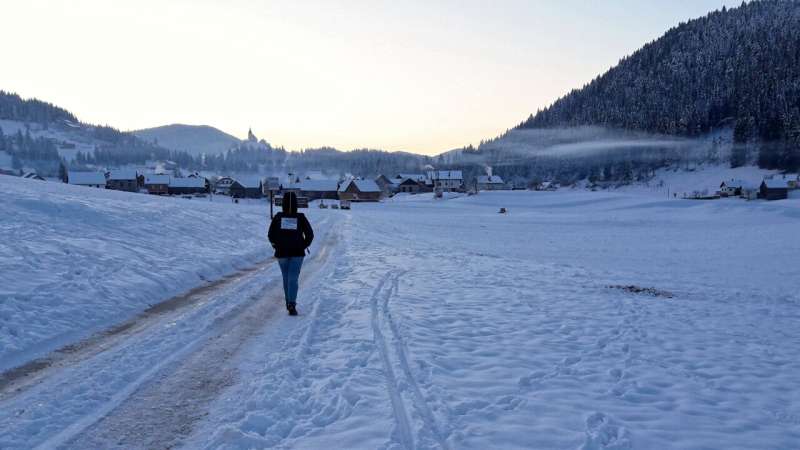
Mobile measurements—during the run in the village of Retje, Dinaric Alps, Slovenia. Credit: Kristina Glojek, University of Nova Gorica

Around 30 million people in Europe live in mountain valleys. A large part of this population is more affected by air pollution than previously assumed. This is the conclusion of a Slovenian-German research team from measurements in the Northern Dinaric Alps. Due to temperature inversions in winter, pollutants are trapped in the valleys to such an extent that soot and fine dust could reach alarming levels even in small villages, as they otherwise occur mainly in the centers of congested metropolises, write researchers from the Universities of Ljubljana, Molise and Nova Gorica and the Leibniz Institute for Tropospheric Research (TROPOS) in Atmospheric Chemistry and Physics (ACP). With mobile measurements using an instrumented backpack by TROPOS, it had become possible to examine the pollutant distribution in more detail.

Wood combustion is responsible for more than half of the small particulate matter (PM2.5) in Europe, which is dangerous to health. According to the European Environment Agency (EEA), wood combustion is now the largest source of this pollutant. The promotion of wood as a “carbon dioxide-neutral” fuel, the rising costs of fossil fuels and several financial crises have led to significantly increasing use of wood as an alternative source. People are more likely to burn wood for household heating in small heating systems.

Air quality studies have so far mostly focused on cities. However, in the EU, the UK and the four EFTA countries Iceland, Liechtenstein, Norway and Switzerland, over a quarter of the population live in rural areas. To study the impact of wood burning on the air quality in such villages, the researchers took a closer look at a karst hollow in Slovenia. The hollow in the municipality of Loški Potok around the village of Retje is representative of many mountainous and hilly rural areas in Central and South-Eastern Europe with wood heating systems. The study area is located in a shallow karst depression with a topography that favors the formation of temperature inversions and cold air pools typical in many valleys and relief depressions in winter. In addition to two fixed measuring stations at the bottom of the hollow in the village and on a hill, mobile measurements with instruments aboard a backpack, in particular, provided crucial details on the distribution of air pollutants in space. With this backpack, the team walked the six-kilometer route through the valley three times a day in December 2017 and January 2018 —in the morning, at midday and in the evening. In 107 measurement tours, 642 kilometers were covered on foot.

In addition to particulate matter, the team also examined one of its components: black carbon—colloquially also simply called “soot”.. Black cabon is produced by incomplete combustion of carbon-containing materials such as fossil fuels or wood. Among other things, carcinogenic substances adhere to the tiny soot particles. Black carbon is, therefore, considered a highly problematic component of particulate matter in terms of health. While the fixed measuring stations provided hourly concentrations of black carbon (eBC) of 1 to 40 micrograms per cubic meter and particulate matter concentrations (PM10) of 10 to 205 micrograms per cubic meter, the mobile measurements provided black carbon and PM2.5, but with levels more representative of the actual concentrations many people in the hollow were exposed to. These high levels of pollutants can be attributed to one effect that frequently occurs in the mountains in winter which proved to be particularly problematic: in the morning, the sun warms the upper parts of the relief depression faster than the lower parts—due to the morning fog that forms in the relief depression sheltered from the wind and prevents warming near the ground. The resulting temperature inversion acts like a lid on a pot: the exhaust gases and particles cannot escape upwards and concentrate at the bottom. In this study, several temperature inversion events occurred, during which the pedestrian level pollutant concentrations of soot (eBC) reached an average of 4.5 micrograms per cubic meter and of fine particulate matter (PM2.5) 48 micrograms per cubic meter, which is comparable to the centers of large metropolises where there is heavy traffic. These values are much larger than the European Union’s annual limit (20 micrograms per cubic meter) and the World Health Organisation’s (WHO) recommendations for the daily limit (15 micrograms per cubic meter). As measured by the EU Air Quality Index for fine particulate matter (PM10 and PM2.5), air quality was very poor during such temperature inversions. Overall, air quality was only moderate during the entire study period (December and January).

“During temperature inversions, pollutant levels in the hollow were highest in the early evening, reaching up to 22 micrograms per cubic meter for black carbon and 560 micrograms per cubic meter for particulate matter. This is the result of domestic wood burning, which increases when people come home after work, and the stable air layer at the bottom of the hollow. However, with some wind, both black carbon and particulate matter levels in the basin dropped to less than 1 and 12 micrograms per cubic meter, respectively, which is about four times lower than during a temperature inversion and in line with European regional background levels,” reports Dr. Kristina Glojek who studied for her Ph.D. at the University of Ljubljana. During morning and afternoon temperature inversions, in the village of Retje, people living on the lower part of the south-facing slopes were most exposed to the high concentrations of particulate matter, while in the early evening hours, when the inversion is limited to the bottom of the hollow, people there breathe in the highest levels of pollutants.

Such weather conditions are typical for hilly and mountainous regions. During the study, temperature inversions occurred on more than 70 percent of all winter nights and mornings. “These very stable conditions prevent effective mixing of the air in the relief depression, which leads to increased pollutant levels. Therefore, during temperature inversions, particulate matter concentrations in the sink rise to levels comparable to those in larger European city centers and above the EU daily limit value (PM10 = 50 micrograms per cubic meter) as well as above the annual limit value and the WHO daily guideline values (PM2.5 = 20 and 15 micrograms per cubic meter, respectively),” emphasizes Prof. Mira Pöhlker from TROPOS.

From the researchers’ point of view, the example of the small relief depression in Slovenia points to a problem that is not limited to this region alone: “The pollutant concentrations measured during the temperature inversions in the rather sparsely populated small relief hollow are worrying, as similar conditions can be expected in numerous hilly and mountainous regions throughout Europe, where about 20 percent of the total population live, 30 percent of whom live in rural relief hollows comparable to the Retje site,” emphasizes Prof. Griša Močnik from the University of Nova Gorica.

In the view of the Slovenian-German research team, the results of this study highlight the importance of high-resolution measurements of air quality also in rural areas to monitor and aim to reduce the residential wood-burning pollution and its consequent health effects, especially in mountainous areas with limited atmospheric self-purification capacity. Therefore, they specifically propose:

1. to study pilot sites at smaller spatial scales that could help decision-makers to take effective action at the local level;

2. raising public awareness of the problem of air pollution from wood burning, including knowledge of the negative effects on health, energy efficiency, the economic costs of ineffective burning, the optimal use and regular maintenance of heating appliances, and the use of quality fuels (e.g. dry wood);

3. informing residents when weather conditions cause pollutants to concentrate in the valley and burning wood is not recommended;

4. identifying local major polluters as they may be the main cause of deterioration of local air quality;

5. to encourage retrofitting of existing stoves, centralizing combustion in district heating systems, improving energy retrofitting of buildings, and changing fuel if there is a better alternative are possible options to reduce pollution from wood burning.

It is also important to strongly involve the local population in the measures to reduce pollution emissions. Furthermore, everyone should be aware that there is not one universal solution to this complex problem. Rather, measures are needed at several levels, taking into account geographical and cultural specificities.

Wood heating pollutes the air in mountain areas more than previously assumed

Posted in Air Quality, Europe | Tagged , , , , , , , , , , | Leave a comment

Air pollution gets worse during winter at airports

Air pollution kills approximately 7 million people every year worldwide. According to researchers from McGill University, airports are hotspots for airborne pollutants that are detrimental to human health and the Earth’s climate. Studying air pollution at three major Canadian airports the researchers found that airports situated in colder climates accumulated more pollutants like PM2.5 in the fall and winter, compared to airports in milder climates. The smallest and the coldest airport with the least number of flights and passengers had the highest PM2.5 concentration.  

“Meteorological factors such as the cold temperature and snowfall concentrate pollutants and alter their distribution. Targeted reduction of PM2.5 emissions is recommended, especially for cold climate regions where we observe higher concentrations of pollutants,” says Professor Parisa Ariya of the Departments of Chemistry and Atmospheric and Oceanic Sciences. 

During the COVID-19 lockdown, the researchers found that concentrations of PM2.5 and other particles in residential areas close to one airport decreased to such an extent that it conformed to the recommended workplace health threshold. Before the lockdown it exceeded this threshold. “The drop in the concentration of pollutants due to COVID-19 reveals how much pollution is generated at airports during normal activities. It also shows how much pollution workers and residents of the area are exposed to, especially during cold seasons,” says Professor Ariya.  

The research was published in Environmental Science and Pollution Research. 

Air pollution gets worse during winter at airports
Posted in Air Quality | Tagged , , , , | Leave a comment

Placental inflammation could explain link between air pollution and pregnancy complications, NIH-funded study in mice suggests

The increase in pregnancy complications linked to air pollution exposure could result from the pollutants’ direct effects on the placenta, suggests a study in mice funded by the National Institutes of Health. Placentas of mice exposed to a mixture of common urban air pollutants before and during pregnancy were inflamed and had a loss of blood vessel cells. The study authors say the findings could provide insight into how air pollution might affect pregnancies and lead to strategies for preventing pregnancy complications.

The study was conducted by Sherin U. Devaskar, M.D., the David Geffen School of Medicine at UCLA, and colleagues. It appears in Scientific Reports. Funding was provided by NIH’s Eunice Kennedy Shriver National Institute of Child Health and Human Development.

Background

Previous studies have found that exposure to air pollution during pregnancy is associated with preterm birth, gestational diabetes, and preeclampsia, a blood pressure disorder.

In the current study, researchers exposed female mice to a mix of air pollutants found in urban areas beginning two months before conception and throughout pregnancy. Using various cellular and molecular techniques, they analyzed the animals’ placental cells.

Results

Compared to placentas of mice exposed only to saline solution, placentas of mice exposed to air pollutants had fewer blood vessel cells. Maternal immune cells also attacked the pollutants accumulated in the placenta cells nearest the uterus, resulting in inflammation and damage to the blood vessel cells.

Significance

A maternal immune attack on the cells of the placenta could disrupt the supply of oxygen and nutrients to the fetus, potentially resulting in pregnancy complications, such as preterm labor or preeclampsia.

“The cellular changes we have observed could provide the missing link between exposure to air pollutants and adverse pregnancy outcomes, thereby helping to focus development on preventive strategies for at-risk pregnancies,” Dr. Devaskar said.

Reference

Tosevska, A, et al.  Integrated analysis of an in vivo model of intra‑nasal exposure to instilled air pollutants reveals cell‑type specific responses in the placenta. Scientific Reports. 2022. 10.1038/s41598-022-12340-z

Science Update: Placental inflammation could explain link between air pollution and pregnancy complications, NIH-funded study in mice suggests | NICHD – Eunice Kennedy Shriver National Institute of Child Health and Human Development
Posted in Air Quality, Health Effects of Air Pollution, Medical Studies | Tagged , , | Leave a comment

Car tyres produce vastly more particle pollution than exhausts, tests show

Almost 2,000 times more particle pollution is produced by tyre wear than is pumped out of the exhausts of modern cars, tests have shown.

The tyre particles pollute air, water and soil and contain a wide range of toxic organic compounds, including known carcinogens, the analysts say, suggesting tyre pollution could rapidly become a major issue for regulators.

Air pollution causes millions of early deaths a year globally. The requirement for better filters has meant particle emissions from tailpipes in developed countries are now much lower in new cars, with those in Europe far below the legal limit. However, the increasing weight of cars means more particles are being thrown off by tyres as they wear on the road.

The tests also revealed that tyres produce more than 1tn ultrafine particles for each kilometre driven, meaning particles smaller than 23 nanometres. These are also emitted from exhausts and are of special concern to health, as their size means they can enter organs via the bloodstream. Particles below 23nm are hard to measure and are not currently regulated in either the EU or US.

“Tyres are rapidly eclipsing the tailpipe as a major source of emissions from vehicles,” said Nick Molden, at Emissions Analytics, the leading independent emissions testing company that did the research. “Tailpipes are now so clean for pollutants that, if you were starting out afresh, you wouldn’t even bother regulating them.”

Molden said an initial estimate of tyre particle emissions prompted the new work. “We came to a bewildering amount of material being released into the environment – 300,000 tonnes of tyre rubber in the UK and US, just from cars and vans every year.”

There are currently no regulations on the wear rate of tyres and little regulation on the chemicals they contain. Emissions Analytics has now determined the chemicals present in 250 different types of tyres, which are usually made from synthetic rubber, derived from crude oil. “There are hundreds and hundreds of chemicals, many of which are carcinogenic,” Molden said. “When you multiply it by the total wear rates, you get to some very staggering figures as to what’s being released.”

The wear rate of different tyre brands varied substantially and the toxic chemical content varied even more, he said, showing low-cost changes were feasible to cut their environmental impact.

“You could do a lot by eliminating the most toxic tyres,” he said. “It’s not about stopping people driving, or having to invent completely different new tyres. If you could eliminate the worst half, and maybe bring them in line with the best in class, you can make a massive difference. But at the moment, there’s no regulatory tool, there’s no surveillance.”

The tests of tyre wear were done on 14 different brands using a Mercedes C-Class driven normally on the road, with some tested over their full lifetime. High-precision scales measured the weight lost by the tyres and a sampling system that collects particles behind the tyres while driving assessed the mass, number and size of particles, down to 6nm. The real-world exhaust emissions were measured across four petrol SUVs, the most popular new cars today, using models from 2019 and 2020.

Used tyres produced 36 milligrams of particles each kilometre, 1,850 times higher than the 0.02 mg/km average from the exhausts. A very aggressive – though legal – driving style sent particle emissions soaring, to 5,760 mg/km.

Far more small particles are produced by the tyres than large ones. This means that while the vast majority of the particles by number are small enough to become airborne and contribute to air pollution, these represent only 11% of the particles by weight. Nonetheless, tyres still produce hundreds of times more airborne particles by weight than the exhausts.

The average weight of all cars has been increasing. But there has been particular debate over whether battery electric vehicles (BEVs), which are heavier than conventional cars and can have greater wheel torque, may lead to more tyre particles being produced. Molden said it would depend on driving style, with gentle EV drivers producing fewer particles than fossil-fuelled cars driven badly, though on average he expected slightly higher tyre particles from BEVs.

Dr James Tate, at the University of Leeds’ Institute for Transport Studies in the UK, said the tyre test results were credible. “But it is very important to note that BEVs are becoming lighter very fast,” he said. “By 2024-25 we expect BEVs and [fossil-fuelled] city cars will have comparable weights. Only high-end, large BEVs with high capacity batteries will weigh more.”

Dr James Tate, at the University of Leeds’ Institute for Transport Studies in the UK, said the tyre test results were credible. “But it is very important to note that BEVs are becoming lighter very fast,” he said. “By 2024-25 we expect BEVs and [fossil-fuelled] city cars will have comparable weights. Only high-end, large BEVs with high capacity batteries will weigh more.”

“The US is more advanced in their thinking about [the impacts of tyre particles],” said Molden. “The European Union is behind the curve. Overall, it’s early days, but this could be a big issue.”

Car tyres produce vastly more particle pollution than exhausts, tests show | Pollution | The Guardian

Posted in Air Quality | Tagged , , , | Leave a comment