Campaigners criticise UK government’s response to air pollution warning

Campaigners have attacked the government for rejecting calls by MPs for greater action on air pollution, as severe pollution episodes were predicted for parts of the UK this week.

MPs warned in April that dangerously high pollution in British cities was a “public health emergency”, and told ministers to take further measures, including more clean air zones and a diesel scrappage scheme.

In its formal response on Tuesday, officials claimed that the government was already spending heavily on cleaner transport and that it plans to consult on a framework for clean air zones later this year.

“We will introduce new, tougher targets which will drive down air pollution from all sources, reducing transboundary pollution and significantly reducing the number of premature deaths across the EU caused by poor air quality,” said the response.

The MPs had wanted all cities to be able to charge polluting vehicles instead of just the five which government is planning to allow. But officials responded: “Local authorities can take action as and when necessary to improve air quality and we encourage them to do so.”

“[The government] has established the UK as a global leader in ultra low-emission vehicles. We are one of the largest and fastest growing markets in Europe and last year around one in five battery electric cars sold in the UK was built in the UK”.

It also flatly rejected the idea of a diesel scrappage scheme: “We have considered the use of scrappage schemes … and have concluded that this may not be an appropriate and proportionate response.”

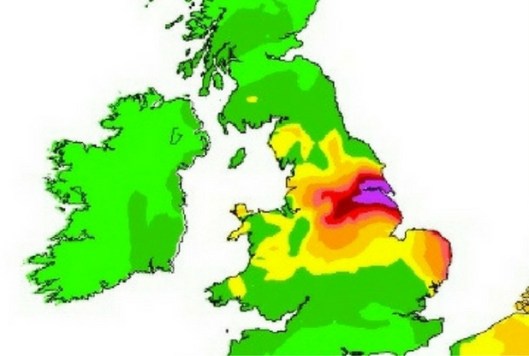
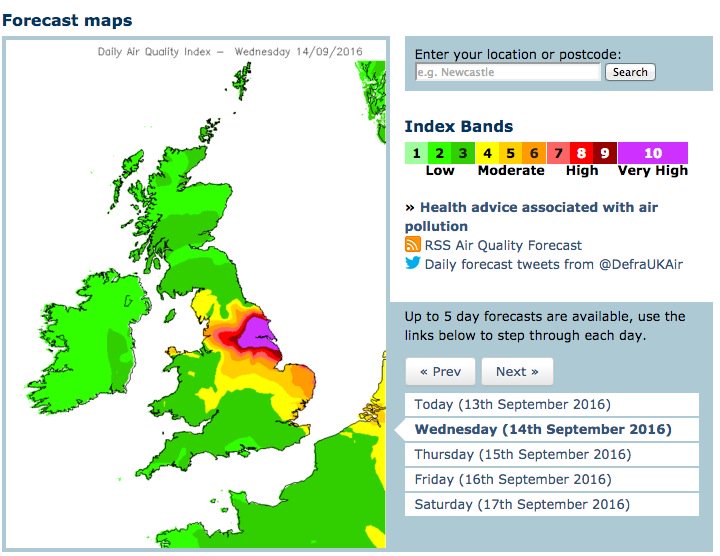
The publication came as the environment department warned of “very high” air pollution – the worst on the scale – in and around Hull on Wednesday, and “high” pollution across much of northern England. The health advice for very high episodes is for the entire population to reduce physical exercise outdoors, and for asthma sufferers and other vulnerable groups to avoid any exertion.

Health and environment groups reacted angrily to the government response, saying plans to reduce UK pollution were “inadequate” and “in disarray”.

“Despite the mounting evidence of the dangers people face having to breathe our illegally dirty air, the government is refusing to take the bold action needed to cut the 40,000 early deaths from air pollution each year in the UK,” said a spokeswoman for Friends of the Earth.

Bridget Fox, transport campaigner at Campaign for Better Transport, said: “It’s clear that the government’s rhetoric on tackling lethal and illegal levels of air pollution is still not matched by action.”

In mid-October, judges at the high court will consider a legal challenge against the government’s pollution action plan by the environmental law firm, ClientEarth, which last year won a victory in the supreme court against the government on its failure to meet EU air quality limits.

But David Cameron’s former energy and environment adviser said continuing legal action was unhelpful. In an article on the Green Alliance thinktank’s blog, Stephen Heidari-Robinson said that: “[court action] focuses on compliance with EU standards for just one pollutant, rather than addressing the problem holistically to save lives”.

“Worse, it encourages the belief that Brexit can simply sweep away the problem (it can’t). Second, it sets up a zero sum game – ban cars, save lives – when, to solve the problem with the consent of the population, we need to improve air quality and maintain mobility. And, third, it scares the hell out of officials who might end up in court and diverts their attention towards feeding the legal document monster.”

In a statement ClientEarth chief executive, James Thornton, said court action was a last, but necessary, resort. “It is necessary … particularly when tens of thousands of lives are at risk because an intransigent government persistently fails to comply with the law, which is where we find ourselves on air pollution in the UK.

“What sort of democracy would we be living in if we as citizens have to comply with the laws put in place by government, but ministers can ignore them when they feel like it? Many autocrats enjoy such an ability to ignore the law. But since Magna Carta, we have committed to live under the rule of law, government and citizen alike.”

Source: Campaigners criticise UK government’s response to air pollution warning | Environment | The Guardian

Posted in Air Quality, Europe, UK | Tagged , , | Leave a comment

Traffic solutions must also address air pollution: experts 

Countries seeking solutions to paralyzing traffic jams, like the Philippines, must also curb air pollution, which can slow economic growth, experts said Tuesday.

Air-pollution-related diseases cost the global economy $225 billion in lost labor income in 2013 according to a World Bank study released this year. Seven million people die prematurely every year from diseases linked to dirty air, the World Health Organization said.

Experts at an Asia Development Bank (ADB) forum on transportation said addressing air pollution would require sustainable traffic systems, a shift to clean energy and proper waste management.

“We have to encourage cities to develop in a more compact, multiple use in a manner that lessens dependence on motorizations in the first place, so people can go about day to day needs without having to rely on vehicles,” said Clean Air Asia board member Elisea Gozun.

Governments should have the political will to plan to clean the air in the long term, said Jorge Kogan, senior adviser at the Development Bank of Latin America.

“In the end, despite small group of intellectuals like banks, NGOs— the general public is not very interested in air quality. Politicians they choose are doing very little,” he said.

Source: Traffic solutions must also address air pollution: experts | ABS-CBN News

Posted in Air Quality, Asia | Tagged , | Leave a comment

The polluting effect of wear and tear in brakes and tyres 

One in six MOT failures is due to brake or tyre problems. These wear as we drive, as does the surface of roads. Most of the wear material ends up as dust at the kerb or gets washed into drains but some wear-particles are small enough to be inhaled, and contribute to our air pollution. These particles are rich in transition metals which add to the toxicity of our urban air.

Increasing amounts of wear-particles have been found in new research from King’s College London. Scientists tracked air pollution alongside 65 roads for ten years. The researchers found some roads where the air pollution benefits from improvements in diesel exhausts were outweighed by increases in particles that come from the wear of tyres, brakes and the road. This was mainly on outer London roads that had increasing numbers of heavy good vehicles.

Accessories such as electric windows and air conditioning mean that new cars can be heavier than the ones that they replace . This means more brake and tyre wear. Brake systems on cars, vans and lorries have also changed. Since Jaguar’s 1953 Le Mons victory disc brakes have been gradually replacing drum systems, but open discs emit more inhalable air pollution than drum brakes, where the wear-particles are mostly sealed in.

There are no policies to control these emissions. Stopping from 30mph emits around twice the amount of brake particles compared with stopping from 20mph, so lower urban speed limits could help, as could reducing traffic volumes – especially by better management of goods moved by road.

Source: The polluting effect of wear and tear in brakes and tyres | Environment | The Guardian

Posted in Air Quality, London, UK | Tagged , , | Leave a comment

Air pollution a risk factor for diabetes, say researchers

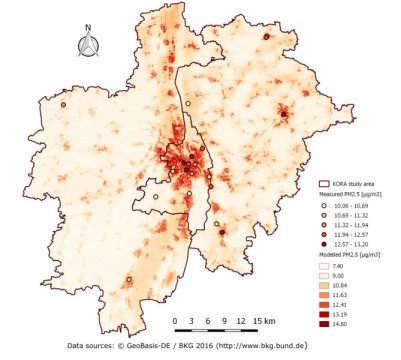
Modelled PM 2.5 concentration in the Augsburg area. Credit: Helmholtz Zentrum München using data of GeoBasis-DE / BKG 2016

Exposure to air pollution at the place of residence increases the risk of developing insulin resistance as a pre-diabetic state of type 2 diabetes. Scientists of Helmholtz Zentrum München, in collaboration with colleagues of the German Center for Diabetes Research (DZD), reported these results in the journalDiabetes.

“Whether the disease becomes manifest and when this occurs is not only due to lifestyle or genetic factors, but also due to traffic-related air pollution,” said Professor Annette Peters, director of the Institute of Epidemiology II at Helmholtz Zentrum München and head of the research area of epidemiology of the DZD.

For the current study, she and her colleagues in collaboration with German Diabetes Center Düsseldorf and the German Heart Centre analyzed the data of nearly 3,000 participants of the KORA study who live in the city of Augsburg and two adjacent rural counties. All individuals were interviewed and physically examined. Furthermore, the researchers took fasting blood samples, in which they determined various markers for insulin resistance and inflammation. In addition, leptin was examined as adipokine which has been suggested to be associated with insulin resistance. Non-diabetic individuals underwent an oral glucose tolerance test to detect whether their glucose metabolism was impaired.

The researchers compared these data with the concentrations of air pollutants at the place of residence of the participants, which they estimated using predictive models based on repeated measurements at 20 sites (for particle measurements) and at 40 sites (for nitrogen dioxide measurements) in the city and in the rural counties.

“The results revealed that people who already have an impaired glucose metabolism, so-called pre-diabetic individuals, are particularly vulnerable to the effects of air pollution,” said Dr. Kathrin Wolf, lead author of the study. “In these individuals, the association between increases in their blood marker levels and increases in air pollutant concentrations is particularly significant! Thus, over the long term — especially for people with impaired glucose metabolism — air pollution is a risk factor for type 2 diabetes.”

Dirtier than the WHO allows

The authors are also concerned that the concentrations of air pollutants, though below EU threshold values, are still above the proposed guidelines of the World Health Organization (WHO). As a consequence, they demand changes in government policy: “Lowering the threshold for acceptable air pollution levels would be a prudent step,” said Dr. Alexandra Schneider, who was also involved in the study. “We are all exposed to air pollution. An individual reduction by moving away from highly polluted areas is rarely an option.” Moreover, the association between increased exposure to air pollution and respiratory and cardiovascular diseases has now been clearly established.

Next, the scientists want to investigate the influence of ultrafine particles. “Diabetes will be a main focus of our research, also in this context. A precise knowledge of the risk factors is crucial for counteracting the increasing incidence of diabetes,” said Peters, looking to the future.


Story Source:

The above post is reprinted from materials provided by Helmholtz Zentrum Muenchen – German Research Centre for Environmental Health. Note: Content may be edited for style and length.

Source: Air pollution a risk factor for diabetes, say researchers — ScienceDaily

Posted in Air Quality, Health Effects of Air Pollution | Tagged , , , , , , | Leave a comment

World Bank: Air pollution deaths cost world $5tn a year

Premature deaths as a result of air pollution are costing the global economy trillions of dollars every year.

A new study from the World Bank found air pollution to be the “deadliest” form of pollution and the fourth leading risk factor for premature deaths worldwide.

It put a “welfare cost” – an approach used to evaluate the costs and benefits of environmental regulations in a given country context – from both indoor and outdoor air pollution and found it to be more than $5 trillion (£3.8tn) in 2013.

That’s the size of the GDP of India, Canada and Mexico combined.

China lost nearly 10% of its GDP, India 7.69% and Sri Lanka and Cambodia roughly 8% in 2013 – the latest year for which global data is available.

Rich countries are also losing billions of dollars, with dirty air found to cost the UK $7.6 billion (£5.7bn) annually, the US $45 billion (£33.7bn) and Germany $18 billion (£13.5bn).

Without including the costs of treating illnesses linked to pollution, the bank calculated premature deaths alone cost the global economy around $225 billion (£169bn) in lost work days.

It also found air pollution now kills 5.5 million – or one in 10 – people a year prematurely worldwide.

In 2013, around 87% of the world’s population lived in areas that exceeded the World Health Organisation’s air quality guidelines.

Laura Tuck, Vice President for Sustainable Development at the World Bank said: “Air pollution is a challenge that threatens basic human welfare, damages natural and physical capital and constrains economic growth.

“We hope this study will translate the cost of premature deaths into an economic language that resonates with policymakers so that more resources will be devoted to improving air quality. By supporting healthier cities and investments in cleaner sources of energy, we can reduce dangerous emissions, slow climate change and most importantly save lives.”

Source: Energy Live News – Energy Made Easy – World Bank: Air pollution deaths cost world $5tn a year

Posted in Air Quality | Tagged , | Leave a comment

Study Predicts Increased Air Pollution Levels from CO Wildfires 

New research says more than 80 million residents of Western states will be subject to increased health risks from wildfire pollution in future decades. (Pixabay)

DENVER – As Western states continue to struggle with an increasing number of large-scale wildfires and longer fire seasons, a new joint Yale-Harvard study predicts 82 million people will be exposed to higher levels of air pollution in coming decades.

Report co-author Jia Coco Liu, a postdoctoral fellow at Johns Hopkins Bloomberg School of Public Health, said a changing climate is bringing hotter and drier conditions to the West, a perfect combination for wildfires – and increased health risks from the smoke.

“So, in the future, we estimated that there will be more air pollution episodes from wildfires,” she said, “so there will be more fine particulates from wildfires that can potentially impact your health.”

Liu said fine particulate matter in wildfire smoke is about 1/20th the diameter of human hair and can lead to respiratory and heart disease when absorbed by lung tissue. Researchers studied data from wildfire pollution in more than 500 Western counties from 2004 to 2009, and made projections for a future six-year period ending in 2051.

The study forecasts that 20 currently smoke-free counties will experience at least one major wildfire event by 2050, and Liu said Western counties already exposed to pollution are likely to see the length of “smoke waves” or consecutive days of pollution increase, by an average of 15 days.

“So, anyone really in the western U.S. could potentially be affected,” she said, “so you have to be aware of the potential impact of wildfire smoke to protect your health and your family.”

Liu said she hopes the results will help public-health officials prepare for higher air-pollution levels and give fire managers additional information as they face future blazes.

The report is online at link.springer.com.

Source: Study Predicts Increased Air Pollution Levels from CO Wildfires / Public News Service

Posted in Air Quality, Health Effects of Air Pollution | Tagged , , , , | Leave a comment

Success! London’s Air Pollution Levels are Dropping, Thanks to Smart Policies 

London’s infamous smoggy roads have been tackled by policy makers hoping to decrease air pollution in the city. Now, 10 years of data show that they’re on the right track.

Scientists at King’s College London analyzed a wealth of data to determine exactly how air pollution has been changing in London. Their report was published in the journal Environmental Pollution.

The study looked at levels of various pollutants from years 2005 to 2014 along 65 roads. Data shows that even though overall air pollution was down, there was a lot of variability among different roads.

Nitrogen dioxide (NO2) showed a double-digit percentage increases from 2005 to 2009 before it began to decrease at about 5 percent per year for the remaining years studied. The decrease was attributed to retrofitting new exhaust technology on older buses, Science Daily reports.

Fine particulate matter, the much maligned PM2.5, saw the most dramatic decrease after 2010 at an average of 28 percent per year. Black carbon also saw double-digit decreases during those years.

Preliminary pollutant particle’s response to the policies is promising. However, NO2 levels are still above the recommended amount and there was no measurable change in levels of PM10.

“It is great that evidence shows that policies are starting to have an impact, but we need to expand on these to reduce the health burden from breathing polluted air,” said Gary Fulller, a senior lecturer in Air Quality Measurement at King’s College London. “Achieving the EU Limit Value for nitrogen dioxide by 2030 is likely to remain a challenge for many major roads in London.”

Fuller added that to ensure that the amount of vehicles on London’s road do not affect the decrease in pollution, tighter management of HGVs is needed. He also noted the importance of tackling the effect of particulate matter, from non-exhaust traffic emissions.

The study notes that new policies can be put in place to continue the positive trends observed in this study and address current areas that need improvement.

Source: Success! London’s Air Pollution Levels are Dropping, Thanks to Smart Policies : News : Nature World News

Posted in Air Quality, Europe, London, UK | Tagged , , , , , , , | Leave a comment

Toxic air pollution particles found in human brains 

Detection of ‘abundant’ magnetite particles raises concerns because of suggested links to Alzheimer’s disease

Toxic nanoparticles from air pollution have been discovered in human brains in “abundant” quantities, a newly published study reveals.

The detection of the particles, in brain tissue from 37 people, raises concerns because recent research has suggested links between these magnetite particles and Alzheimer’s disease, while air pollution has been shown to significantly increase the risk of the disease. However, the new work is still a long way from proving that the air pollution particles cause or exacerbate Alzheimer’s.

“This is a discovery finding, and now what should start is a whole new examination of this as a potentially very important environmental risk factor for Alzheimer’s disease,” said Prof Barbara Maher, at Lancaster University, who led the new research. “Now there is a reason to go on and do the epidemiology and the toxicity testing, because these particles are so prolific and people are exposed to them.”

Air pollution is a global health crisis that kills more people than malaria and HIV/Aids combined and it has long been linked to lung and heart disease and strokes. But research is uncovering new impacts on health, including degenerative brain diseases such as Alzheimer’s, mental illness and reduced intelligence.

The new work, published in the Proceedings of the National Academy of Sciences, examined brain tissue from 37 people in Manchester, in the UK, and Mexico, aged between three and 92.

It found abundant particles of magnetite, an iron oxide. “You are talking about millions of magnetite particles per gram of freeze-dried brain tissue – it is extraordinary,” said Maher.

“Magnetite in the brain is not something you want to have because it is particularly toxic there,” she said, explaining that the substance can create reactive oxygen species called free radicals. “Oxidative cell damage is one of the hallmark features of Alzheimer’s disease, and this is why the presence of magnetite is so potentially significant, because it is so bioreactive.”

Abnormal accumulation of brain metals is a key feature of Alzheimer’s disease and a recent study showed that magnetite was directly associated with the damage seen in Alzheimer’s brains. Magnetite particles are known to form biologically in human brains, but these are small and crystal-shaped, unlike the larger, spherical particles that dominated the samples in the new study.

“Many of the magnetite particles we have found in the brain are very distinctive,” said Maher. “They are very rounded nanospheres, because they were formed as molten droplets of material from combustion sources, such as car exhausts, industrial processes and power stations, anywhere you are burning fuel.”

“They are abundant,” she said. “For every one of [the crystal shaped particles] we saw about 100 of the pollution particles. The thing about magnetite is it is everywhere.” An analysis of roadside air in Lancaster found 200m magnetite particles per cubic metre.

Furthermore, said Maher: “We also observed other metal-bearing particles in the brain, such as platinum, cobalt and nickel. Things like platinum are very unlikely to come from a source within the brain. It is a bit of an indicator of a [vehicle] catalytic converter source.”

Other scientists told the Guardian the new work provided strong evidence that most of the magnetite in the brain samples come from air pollution but that the link to Alzheimer’s disease remained speculative.

“This is a very intriguing finding and it raises a lot of important questions,” saidProf Jon Dobson, at the University of Florida and not part of the research team. But he said further investigation was needed: “One thing that puzzles me is that the [particle] concentrations are somewhat higher than those previously reported for the human brain. Further studies [are needed] to determine whether this due to regional variations within the brain, the fact that these samples are from subjects who lived in industrial areas, or whether it is possibly due to [lab] contamination.” The researchers said they had gone to great lengths to avoid contamination.

Air pollution was linked to a significant increase in the risk of Alzheimer’s disease by a major study published in 2015, while other research showed brain damage related to Alzheimer’s disease in children and young adults exposed to air pollution. Air pollution has also been linked to dementia in older men and women.

“We have not demonstrated a causal link between these particles and Alzheimer’s disease but when you consider that magnetite has been found in higher concentrations in Alzheimer’s brains and you know that magnetite is pernicious in its effect on the brain, then having a direct [air pollution] source of magnetite right up your olfactory bulb and into your frontal cortex is not a great idea,” said Maher.

Prof David Allsop, an Alzheimer’s disease expert at Lancaster University and part of the research team, said: “There is no blood-brain barrier with nasal delivery. Once nanoparticles directly enter olfactory areas of the brain through the nose, they can spread to other areas of the brain, including hippocampus and cerebral cortex – regions affected in Alzheimer’s disease.” He said it was worth noting that an impaired sense of smell is an early indicator of Alzheimer’s disease.

“Knowledge is power,” Maher said. “So if there’s at least a possibility that exposure to traffic pollution is having even worse health impacts than were previously known, then take the steps you can to reduce your dose as far as you can.”

“What this is pointing towards perhaps is there needs to be a major shift in policy and an attempt to reduce the particulate matter burden on human health.” Maher said. “The more you realise the impact this is having, the more urgent and important it is to reduce the concentrations in the atmosphere.”

Dr Clare Walton, research communications manager at the Alzheimer’s Society, said: “This study offers convincing evidence that magnetite from air pollution can get into the brain, but it doesn’t tell us what effect this has on brain health or conditions such as Alzheimer’s disease. Further work in this area is important, but until we have more information people should not be unduly worried. There are more practical ways to lower your chances of developing dementia such as regular exercise, eating a healthy diet and avoiding smoking.”

Source: Toxic air pollution particles found in human brains | Society | The Guardian

Posted in Air Quality, Health Effects of Air Pollution, Medical Studies | Tagged , , , | Leave a comment