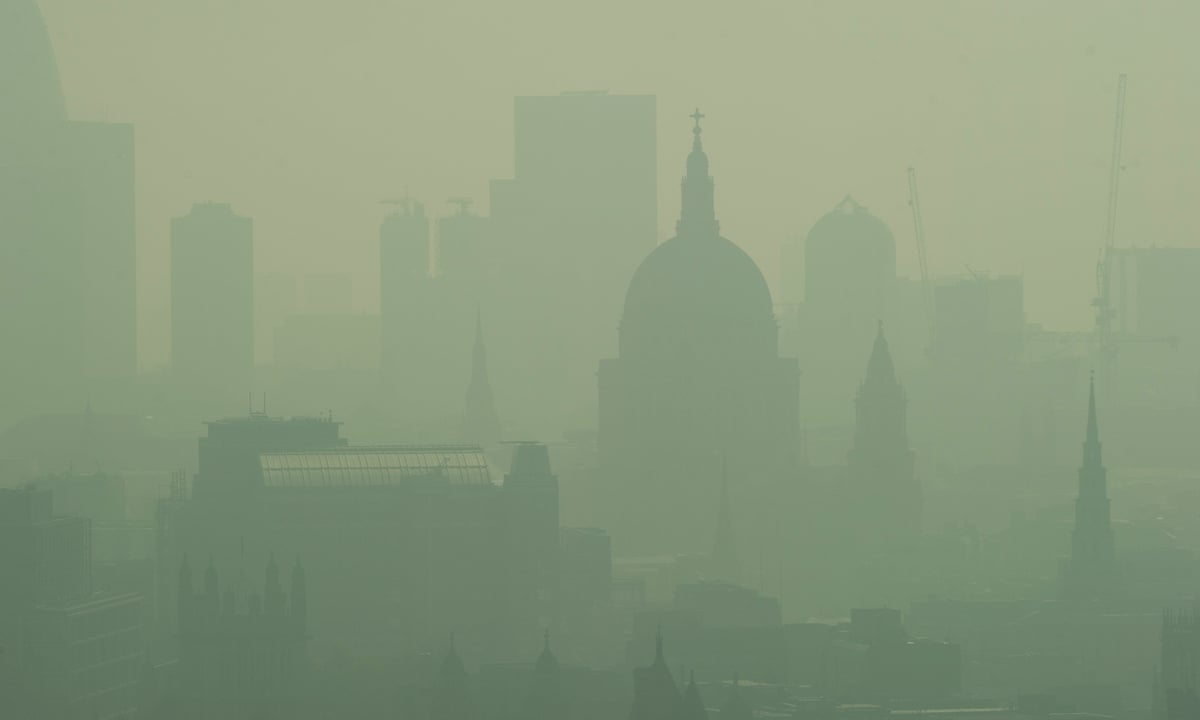
Air pollution at this level for 10 more years will put a generation at risk 

The courts must be involved: the quality of air our children breathe is too important to be decided in secret by ministers and the motor trade

When I was eight years old, I used to hold my breath when I walked to school. My route was along a busy road, and I had been told that lead in petrol hurt children’s brains. I stopped worrying as the years went by and there was a successful campaign to ban it. But now I sometimes find myself coughing as I wait on my bike behind a London bus and its fumes catch in my throat.

The science is clear: nitrogen dioxide from road traffic is seriously bad for our health – particularly for children and elderly people, because it can inflame our lungs and lower our resistance to respiratory infections such as bronchitis. So much so that 23,500 people in the UK are expected to die prematurely every year because of this air pollution. Imagine if knife crime or terrorism were killing people in these numbers – it would be described as a national crisis.

In the old days we could at least see the smog. But this is an invisible killer, hidden from sight and sheltered from political controversy.

Great swaths of the UK have nitrogen dioxide levels that are considered unsafe for human health. One of the main culprits is emissions from diesel vehicles. As we now know from the Volkswagen scandal, the emissions from diesel vehicles are often much higher than predicted in lab tests.

Public disquiet about all this is, at last, beginning to stir. There is concern about the impact a third runway at Heathrow would have on already shockingly bad air pollution levels in the capital. The House of Commons environment committee recently said Heathrow should not be allowed to expand unless the government can demonstrate that air quality is within legal limits.

What has not been talked about much is the role of the courts in forcing the government to take action. As a barrister specialising in environmental law, I regularly see the tension between the courts and governments of different colours over environmental issues. In 2007 I watched with interest as the high court told the then Labour government that its public consultation on nuclear power was seriously flawed. Now inaction over air pollution means it is the turn of the current Conservative government to face sanction.

Last year the supreme court reached its judgment in a long-running legal challenge by the campaign group ClientEarth over UK breaches of European air pollution law. Britain is not alone in breaching EU law: a number of other member states are in a similar position.

Here, the supreme court has ordered the government to produce a plan to reduce nitrogen dioxide levels to safe levels in as short a timescale as possible. It gave the government six months to do so, and allowed ClientEarth to return to court in the event it is not satisfied with the response. Forcing the government to act in this way was an unusual move because courts usually accept Whitehall’s word that it will take steps to meet its legal obligations. In doing so, the court said it had been influenced by the seriousness of the legal breach and the way air pollution had continued to worsen over the last four years, during which time the litigation has been running.

The courts recognise that reducing air pollution will not be easy. In the ClientEarth case, the high court judge referred to the “heavy burden of expenditure” on taxpayers and individuals “which would require difficult political choices to be made”.

The government published its revised air pollution plans in the runup to Christmas. Given the legal backdrop, it may not be entirely coincidental that shortly before the plans were published the decision on a third runway at Heathrow was delayed to enable a further look at air pollution and other environmental concerns.

Judicial pressure appears to be having a direct effect on the government. At the court hearing in April 2015 the government told the supreme court that parts of London, the West Midlands and West Yorkshire would still be at illegal limits in 2030. Under the plan produced in December, the timescales for compliance have shortened. The West Midlands and Yorkshire are expected to be in compliance with legal levels in 2020, London in 2025.

That is not good enough for ClientEarth, which accuses the government of still putting short-term political priorities ahead of public health and people’s lives. The revised plan soft-pedals on pollution by private motorists while the government appears intent on watering down EU legal limits for vehicle emissions.

The stage is set for a fascinating tussle between law and politics. The British court will have to roll up its sleeves and decide whether this government is doing what it can to make our air as safe as possible. No matter how tough the political choices, EU law has consistently made clear that financial and political difficulties are no defence for countries that fail to comply with their legal obligations. The European court has said it is up to national courts to call their governments to account for air pollution failures.

I hope the courts closely scrutinise the government’s plan. Ten more years of dangerous air pollution in the capital puts a whole generation of children at risk. Judicial review can assist in identifying the political choices made on our behalf in the plan, to better inform public debate about the difficult decisions ahead.

Securing the proper boundary between the role of unelected judges in determining legality, and elected government in determining policy and priorities, is never easy. The supreme court will be fully aware of the sensitivities involved, but equally the court is clearly determined not to allow the government to duck its legal duties to citizens. The quality of the air our children breathe is too important to be decided behind closed doors by the government and vehicle manufacturers.

Source: Air pollution at this level for 10 more years will put a generation at risk | Justine Thornton | Opinion | The Guardian

Posted in Air Quality, Europe, Health Effects of Air Pollution, London, UK | Tagged , , , , , | Leave a comment

Mumbai’s air swings between ‘poor’ and ‘severe’ 

Mumbai’s air quality differs in different pockets because of variable topography, wind movement and factors such as vehicular density, industries, biomass burning, bakeries, construction, garbage dump sites

On Sunday, Mumbaikars woke up to poor air quality. At 10 a.m., the National Air Quality Index (AQI) recorded pollution levels as high as 249, falling in the range of ‘very unhealthy’ air. By 3 p.m., the air quality had improved to ‘unhealthy’.

With many fluctuations in data, Mumbai’s air quality differs in different pockets because of variable topography, wind movement and factors such as vehicular density, industries, biomass burning, bakeries, construction, garbage dump sites, pointed out Rakesh Kumar, scientist and head, Mumbai Zonal Center, National Environmental Engineering Research Institute (NEERI).

The New Year began with a spot of good news for the residents of Chembur, commonly referred to as the ‘gas chamber’ of Mumbai. Despite, heavy industrial activity and power generation in the eastern suburb, it saw a spell of clean air thanks to calm winds, which did not carry emissions from the industrial locations, according to an analysis by Gufran Beig, scientist and project director at System of Air Quality and Weather Forecasting And Research (SAFAR), Pune – an initiative of the Indian Institute of Tropical Meteorology (Ministry of Earth Sciences).

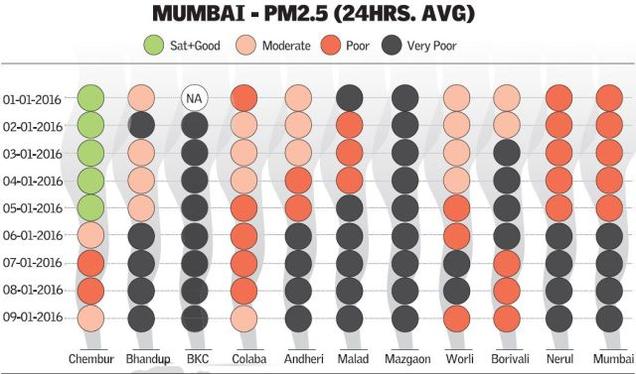
As per SAFAR’s study, air quality at Chembur was ‘satisfactory’ or ‘good’ in the first five days of this year. Bhandup, Bandra Kurla Complex (BKC), Malad, Mazgaon, Andheri and Borivali reeled under ‘very poor’ to ‘poor’ pollution levels.

“Industrial pollution is at a point source or localised. Since the wind became calm and there was moisture in the air, the emissions from industries became stagnant and could not be dispersed over the nearby areas. Chembur can be generally clean, but for the dispersion of pollutants,” Dr Beig told The Hindu on Sunday.

Despite a lot of traffic and proximity to Churchgate and CST stations, Colaba has relatively cleaner air owing to a good green cover, Dr Beig said.

Andheri and Borivali, accessed by the arterial eight-lane Western Express Highway, have high levels of pollution. Mazgaon, which houses industrial estates of small of medium scale, had the worst air quality, falling in the range of ‘very poor’ every day till January 9.

“The transport sector is the biggest contributor to Mumbai’s air pollution, followed by industrial pollution, wind-blown dust and lastly bio-fuel emissions. Mumbai has heavy air which catches the emissions. Dust from unpaved roads gets aggravated due to heavy traffic. In the slum areas, such as Dharavi, Mankhurd, Deonar, air pollution is high due to the burning of bio-fuels such as coal and wood for cooking. The situation is better than in Delhi as a lot of people in Mumbai slums are connected to LPG. Over 70 per cent of the people in Dharavi have LPG but the slum itself is so huge and spread over such a vast area that even the lesser percentage using bio-fuels makes for high levels of pollution,” Dr Beig said.

The government’s AQI considers eight pollutants: PM10 (particulate matter up to 10 micrometers in size, result of dust); PM2.5 (particulate matter up to 2.5 micrometers in size, result of vehicle emissions, coal burning); NO2 (nitrogen dioxide, result of vehicle emissions and power plants); SO2 (sulphur dioxide, result of burning of coal, industrial and vehicle emissions); CO (carbon monoxide, result of vehicles run on diesel, gasoline); O3 (ozone, a layer of gas shields us UV rays, but harmful if present in lower atmosphere); NH3 (ammonia, emitted in agricultural processes) and Pb (lead, can be released into soil, air and water through soil erosion, volcanic eruptions, sea spray and bushfires).

In Mumbai, PM2.5 and PM10 remain the dominant pollutants, with PM2.5 being more harmful of the two, as it can get directly deposited to the bloodstream through inhalation. Vehicular pollution is the main cause of PM2.5, whereas PM10 results from dust. Areas with dug up or unpaved roads and construction projects see a high concentration of PM10.

Experts say it would be wrong to see the problem in terms of largest contributors to air pollution. “What has an impact is the air pollution at the ground level and our exposure to it. We can say that it is vehicle, construction activities, re-suspension or road dust, biomass/garbage burning, as large sources. In smaller pockets, bakeries, crematoria also create local hotspots,” Dr. Kumar said.

Toxicity matters

It is not just the quantity of pollutants, but also their characteristic which affect the air. However, AQI does not reflect this and the data fall short of the complete truth. In terms of PM2.5, for instance, the “toxicity” of the particulate matter is very important.

“The current air quality data tells you the amount of particulate matter in the air but not the chemical character of that matter, such as whether it has sulphate, nitrate or carbon. Bio-fuels emit black carbon which is the deadliest pollutant. It results from burning of coal or wood at low temperatures, as in cooking, releasing a high amount of carbon. Industrial burning of coal, on the other hand, is a high combustion activity. Low combustion increases the toxicity of the air even though the PM2.5 level may be low. For example, if the PM2.5 level is 25, but it is composed of carbon, it is more harmful than a PM2.5 level of 100 with low carbon component. Advance research in this area is under way,” Dr Beig said.

More parameters

In addition to the eight pollutants considered by AQI, SAFAR tracks other parameters, such as NOx (a generic term for mono-nitrogen oxides NO and NO₂); Methane (CH4) (a greenhouse gas); benzene (pollutant often released from oil refineries and traffic), toluene (component of petrol), xylene (used in blending petrol) and mercury (produced by coal-fired power plants, other industrial processes).

Dr. Kumar of NEERI raised concerns over increasing levels of NOx in some pockets of the city. An irritant gas NOx results from diesel-powered trucks and passenger cars.

Mumbai is blessed with the sea and the sea breeze can help dilute and disperse pollution. “Land and sea breeze help during the 24-hour period to dilute the air. However, there are areas of Mumbai which do not get enough wind and therefore dilution is limited,” Dr. Kumar said.

Winter woes

Seasonal changes affect the air quality of Mumbai, winter being the most polluting time, followed by summer, while monsoon is the least polluted.

“In winter there is an ‘inversion layer’ – layer of the atmosphere in which there is temperature inversion preventing the air below it from rising, thus trapping pollutants. This layer, which is up to two km away from the lower atmosphere, comes down to up to one km in winter, preventing the diffusion of pollution. It is like a cover. In Delhi it comes down to as low as 100 metres,” Dr. Beig said.

Health problems are seen when someone is exposed to pollutants consistently for a period of 24 hours. Children and old people are at a greater risk. At ‘very poor’ levels of air quality, respiratory problems are aggravated and asthmatics can get seasonal attacks.

Solutions

Paving the roads to allow for absorption of water instead of completely sealing them with cement can reduce PM10. Signal synchronisation can help lower vehicle emissions, suggested Dr. Beig. “If you know the amount of time the signal stays red, you can turn off the engine of your vehicle. In case of jams, crawling traffic, the vehicle engine keeps running and congestion goes up.” Last June, SAFAR started a mobile application, which gave the air quality forecast for the next three days.

“A major cause of air pollution is congestion for which a poor pedestrian system and encroachments on roads are responsible. Public transport has become expensive and not available at most locations. Mumbai needs to very quickly augment public transport through cross-financing by way of charging fees for every kilometre travelled by private vehicles. Clean air fund as a concept was given to the government a few years back to improve public transport,” Dr. Kumar said.

Source: Mumbai’s air swings between ‘poor’ and ‘severe’ – The Hindu

Posted in Air Quality, Asia, India | Tagged , , , , | Leave a comment

Drivers May Pay for Next Step in Fight Against Air Pollution

Some U.S. drivers may soon see a new expense at the gas pump: the cost of taking the global-warming fight on the road.

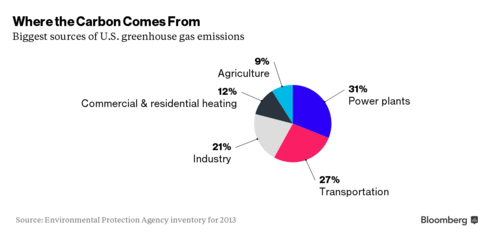
New York and four other states are exploring ways to put a price on the air pollution spewing from cars, trucks, trains and other vehicles — the source of more than a third of greenhouse-gas emissions in the northeastern U.S.

The result may eventually be new taxes, tolls or a pollution-trading system that could raise $3 billion a year or more for mass transit, electric-vehicle rebates and other projects, supporters say. With the Paris climate deal in the rear-view mirror and governments moving alreadyto put a price on industrial emissions, especially from power plants, regulators are starting to focus on tailpipe pollution.

“Transportation is one of the largest sources of carbon dioxide emissions in the nation and innovative strategies are needed to reduce these emissions,” Lori Severino, a spokeswoman for New York state’s Department of Environmental Conservation, said in an e-mail. She stressed that discussions “are just beginning” and there’s no preference for specific policies.

The states may follow the lead of California, which last year extended its pollution-trading system to cover fuel distributors and refineries. The impact would ripple far beyond the direct targets, however, affecting drivers at the pump, oil companies worried about gasoline sales and automakers that may see demand shift toward more efficient vehicles.

In their Nov. 24 letter, released on the eve of international climate talks in Paris, the five states vowed to “achieve substantial reductions in transportation sector emissions and provide net economic benefits.” Besides New York, the effort includes Connecticut, Delaware, Rhode Island and Vermont, along with Washington, D.C.

Market-Based Policies

The group pledged to study “market-based policies” to cut transportation emissions; they’re expected to resume talks early this year, according to Vicki Arroyo of the Georgetown Climate Center in Washington, which is organizing the review.

Options under discussion include gas taxes, tolls or fees based on miles driven or vehicle efficiency. Also likely to be discussed: a cap and trade system, in which regulators set a limit on total pollution and let individual companies buy and sell permits covering their output. That theoretically encourages participants to find cost-effective ways to clean up the air.

New York and eight other states already run a trading system for power-plant emissions in the northeast, the Regional Greenhouse Gas Initiative. California has a similar market and expanded it last January to include transport fuels.

Oil Companies

The oil industry resisted the move in California and would likely do the same in the Northeast, said Andre Templeman, managing director at Houston-based carbon consultant Alpha Inception.

“Transportation could be a huge expansion” for U.S. pollution markets, he said. “The oil companies would probably not take this lying down. That’s a fight they’d pour a lot of energy into.”

California’s emissions market added about 10 cents to the cost of a gallon of gasoline, according to the California Air Resources Board, which oversees the cap-and-trade system. The impact on drivers was largely offset by the plunge in oil prices, said Templeman.

Greenhouse-Gas Cuts

In the northeast, some combination of taxes, tolls or trading may raise $3 billion annually over 15 years to support electric-vehicle sales, expand freight rail and mass transit and take other pollution-cutting steps, according to a Georgetown Climate Centerreport released with the November letter. Such efforts are a necessity if states are to make the deep greenhouse-gas cuts they’ve promised by mid-century. Transportation accounts for 35 percent of carbon emissions in the Northeast and Mid-Atlantic, the single largest source, according to the report.

Other states are watching the talks, said Arroyo, the center’s executive director. The attraction is both financial and environmental: States have seen gas-tax revenue shrivel as people drive less and use more efficient cars; they’ve also seen the power-plant cap-and-trade market generate more than $1 billion by auctioning permits to polluters.

“They come to the table interested in models that do something about transportation emissions while still bringing in revenue,” Arroyo said.

The Georgetown report predicted that additional costs for gasoline in the northeast would be more than covered by savings from reductions in fuel consumption and traffic congestion, as well as consumer rebates funded by emissions payments. Benefits to businesses and consumers would reach $72.5 billion over 15 years, the Climate Center projected.

Adding transportation to the trading mix would seem a logical extension of the power-plant market, said Deron Lovaas, a senior policy adviser at the Natural Resources Defense Council in New York.

“There’s already a robust system set up for stationary sources and that could be expanded to include other sources,” Lovaas said in a telephone interview. “What the Northeastern states have announced could be building toward that.”

Source: Drivers May Pay for Next Step in Fight Against Air Pollution – Bloomberg Business

Posted in Air Quality, USA & Canada | Tagged , , , , , , , , | Leave a comment

Coughing much? Hong Kong suffers bigger rise in poisonous ozone pollution than industrial Guangdong 

But environmental campaigners say pollution cannot be solely blamed on mainland sources

Hong Kong has seen a bigger rise in poisonous ozone pollution than industrial Guangdong – but pollutants from the mainland are not solely to blame, environmental campaigners say.

Environmentalists from Clean Air Network have urged the government to take tougher action on air pollutants through transport planning measures.

Campaigners looked at the data on ozone levels from the Guangdong-Hong Kong-Macau air quality monitoring database. Ozone levels recorded at the 13 monitoring stations in Guangdong province saw a 6.1 per cent increase between 2010 and 2014, compared to the 9.2 per cent increase recorded at the three Hong Kong stations, set up in Tsuen Wan, Tap Mun and Tung Chung.

When data from local general air quality monitoring stations was studied, excluding three included in a regional monitoring scheme, the rise in the level of ozone was even greater, at 17.1 per cent.

Between 2006 and 2014, local stations recorded a 27.2 per cent rise in ozone, in contrast to 19.5 per cent in the neighbouring province.

The Environmental Protection Department said more easterly prevailing winds from the mainland explained greater air pollution in eastern parts of the city, but Clean Air Network said local factors still played a role.

Kwun Tong in Kowloon East experienced a drop in the number of hours defined as having experienced serious pollution between 1992 and 2014 despite its largely northeasterly winds.

“The high level of ozone is not solely a regional issue. We can target ozone pollution both locally and regionally,” said Kwong Sum-yin, chief executive officer of the group.

Hong Kong and Guangdong have set up joint emissions reduction targets, which include four pollutants, two of which are the main sources of ozone production. But the group urged authorities to include targets on ozone.

Locally, Kwong said the rise in the number of vehicles on the roads over the past decade had contributed to the deteriorating air pollution in the city. Between 2005 and 2014, the number of trips by vehicles through the three cross-harbour tunnels daily increased from 228,000 to more than 250,000. Meanwhile, nitrogen dioxide, one of the key air pollutants measured at four roadside stations, increased steadily until 2013.

Kwong said people in Hong Kong were still exposed to significant health risks from air pollution.

According to the Hedley index, an indicator developed by the University of Hong Kong’s public health school to show the public health costs and risks from pollution, as many as 2,196 people died prematurely last year due to air pollution. The cost to the public purse of such health problems amounted to HK$27 billion.

“Although there was a slight improvement in air quality, the health of people could not be guaranteed,” she said.

Source: Coughing much? Hong Kong suffers bigger rise in poisonous ozone pollution than industrial Guangdong | South China Morning Post

Posted in Air Quality, Asia, China | Tagged , , , , | Leave a comment

Diesel fumes ‘biggest health catastrophe since Black Death’ as London exceeds yearly air pollution levels 

london-pollution-v2

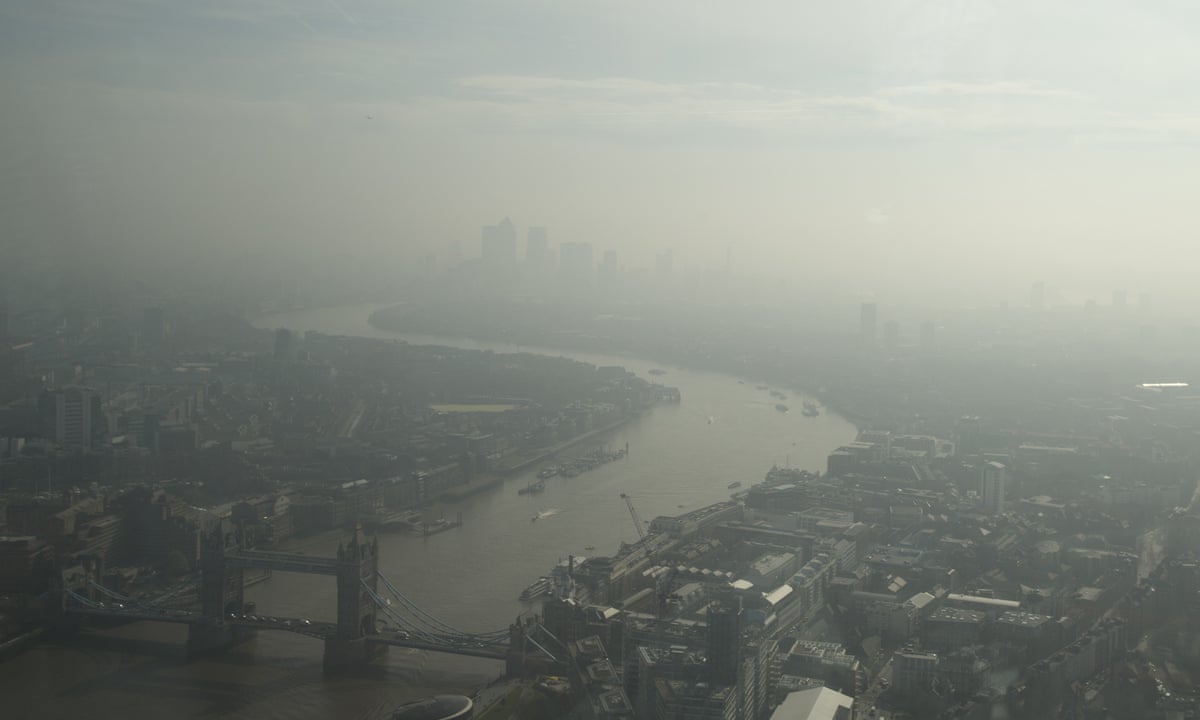
Air pollution obscures the view of the London eye in central London on April 9, 2015 Getty

Diesel exhaust fumes are causing the biggest health catastrophe since the Black Death, a campaign group has claimed, as new figures show air pollution limits for the whole year have been breached in just eight days in London.

European Union limits demand that maximum hourly nitrogen dioxide (NO2) concentrations are not exceeded for more than 18 hours a year – yet Putney High Street, in west London, had recorded its 19th hour breaching the limits during Friday morning’s rush hour, the London Air Quality Network said.

Oxford Street, where legal limits for the toxic gas for the whole of 2015 were breached in just two days, has almost certainly broken the limit again but the monitoring equipment is currently being repaired. Campaigners say that the Government must do more to tackle air pollution which has been linked to respiratory and heart problems.

Simon Birkett, founder and director of campaign group Clean Air in London, said it was breathtaking that toxic air pollution in the capital had breached the legal limit for the whole calendar year within the first few days of 2016. Mr Birkett also called on all the candidates in the mayoral elections to pledge to ban diesel exhausts from the most polluted areas by 2020.

He said: “Worse, several air pollution monitors have been vying for the dubious honour of recording the first officially monitored breach of the nitrogen dioxide (NO2) legal limit in the world in 2016.”

He added that Oxford Street would have been first if it had not been offline, and warned that scientists said London would tend to have the highest nitrogen dioxide concentrations in the world because of its diesel pollution.

“This shocking start to the 60th anniversary year of the world’s first Clean Air Act in 1956 illustrates the scale of Boris’ [Johnson’s] failure to reduce diesel fumes, which are the main source of NO2 at street level, and protect hundreds of thousands of people on our busiest shopping streets.

“Put simply, diesel exhaust is the biggest public health catastrophe since the Black Death”.

Alan Andrews, lawyer for ClientEarth, which announced last month it would take the Government back to court over air quality, said: “Its failure to deal with illegal levels of air pollution, which causes thousands of early deaths in London every year, is a scandal.”

Source: Diesel fumes ‘biggest health catastrophe since Black Death’ as London exceeds yearly air pollution levels – in eight days | Home News | News | The Independent

Posted in Air Quality, Europe, London, UK | Tagged , , , , , , | Leave a comment

London takes just one week to breach annual air pollution limits 

Parts of the capital have already breached EU hourly limits for nitrogen dioxide pollution which causes thousands of premature deaths each year

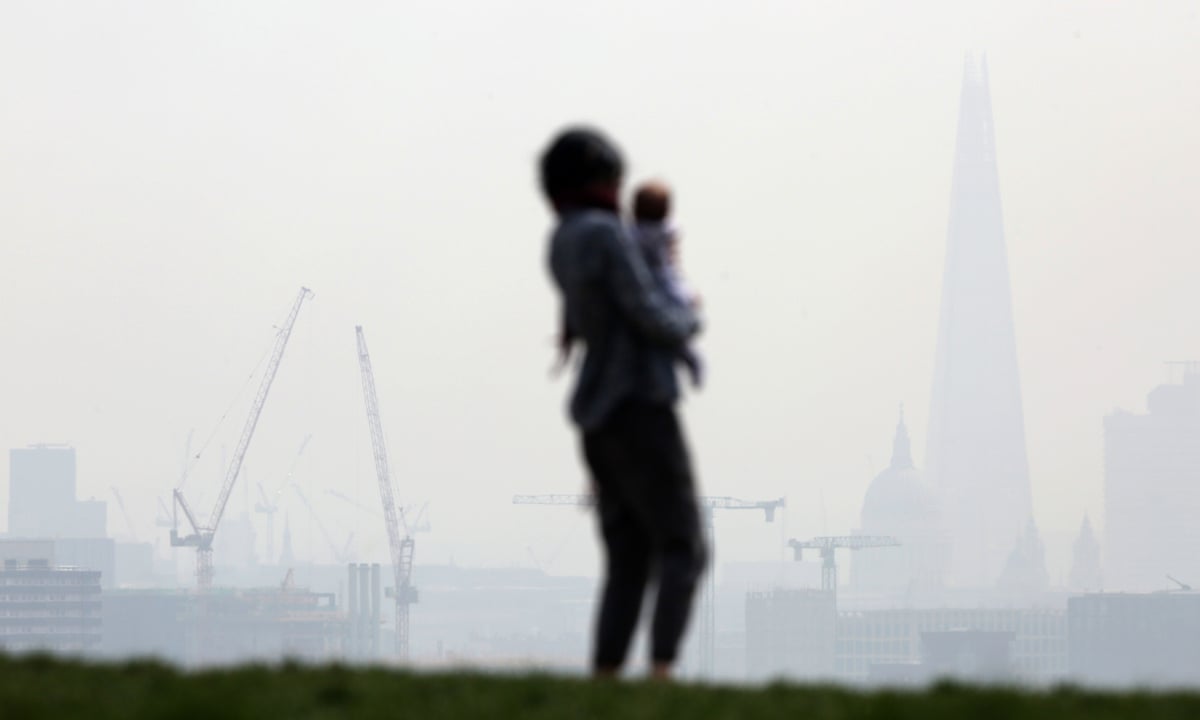
Putney High Street in London breached annual limits for nitrogen dioxide early on 8 January. Photograph: Peter Macdiarmid/Getty Images

London has already breached annual pollution limits just one week into 2016, and only weeks after the government published its plans to clean up the UK’s air.

At 7am on Friday, Putney High Street in West London breached annual limits for nitrogen dioxide (NO2), a toxic gas produced by diesel vehicles that has been linked to respiratory and heart problems.

Under EU rules, sites are only allowed to breach hourly limits of 200 micrograms of NO2 per cubic meter of air 18 times in a year, but this morning Putney broke that limit for the 19th time. Chelsea and Kensington is expected to do the same later today.

Oxford Street has almost certainly also broken the limit already, having breached the hourly level a thousand times last year, but the monitoring station has malfunctioned.

Campaigners said it was “breathtaking” the breach had come so early, though Oxford Street breached the annual limit in two days in 2015.

Nationally, a roadside near the South Wales town of Swffryd appears to be the only other place to have broken the hourly limit, though it is still far from having breached the annual limit. Other sites recording high readings so far this year include ones in Aberdeen, Belfast, Exeter, Glasgow and Stoke-on-Trent, and several other roads in London.

The UK has been in breach of EU NO2 pollution limits for five years now and last spring was ordered by the supreme court to publish an action plan on how to tackle the major health crisis, following a challenge by environmental law group ClientEarth.

The resulting government plan was published in December, but London, Birmingham, Leeds, Liverpool, Cardiff and Edinburgh and other major cities will still be in breach of NO2 limits for at least another five years, despite the new measures. Private passenger cars are exempt from the plan.

Attention on the harm caused to human health by NO2 came to the fore last year when it was revealed that VW had cheated NO2 emissions tests in the US, with the scandal affecting 1.2m diesel cars in the UK. Next week, VW UK bosses will be quizzed by MPs on the Environment, Food and Rural Affairs committee on diesel pollution and what they are doing to make cleaner cars.

Screen Shot 2016-01-08 at 14.23.51 Screen Shot 2016-01-08 at 14.24.07 Screen Shot 2016-01-08 at 14.28.45

Andrew Grieve, an air quality analyst at King’s College London, which measures London’s air pollution levels, said the early breach in the capital was not extraordinary looking at data from previous years.

“It’s just [that] central London, and London as a whole, have a really huge problem with NO2. Breaching so early in the year really just illustrates how big a problem it is,” he told the Guardian. He added that there were lots of similar roads to those that breached limits earlier but did not have monitors on them.

Campaigners and politicians blamed the government for the breach.

Alan Andrews, a lawyer for ClientEarth, said: “This is exactly why we are taking the government back to court [over the plan it published in December]. Its failure to deal with illegal levels of air pollution, which causes thousands of early deaths in London every year, is a scandal.”

Air quality readings for nitrogen dioxide (red line) in London (Putney High Street) in January 2016. The hourly limit is 200 micrograms of NO2 per cubic meter. Photograph: London Air Quality Network

Simon Birkett, founder and director of Clean Air in London, said: “It is breathtaking that toxic air pollution in London has breached the legal limit for a whole year within a few days.”

Labour MEP, Seb Dance, said the government should ‘put up or shut up’: “Receiving this dubious accolade has become a depressing annual event for London. NOx [which includes NO2] kills thousands of Londoners every year, but the government shows no inclination to take proper action.

“Tory ministers say the right things, but in reality they have lobbied hard against ambitious new EU air quality targets and have let car manufacturers off the hook after the VW scandal. It’s time for the UK government to put up or shut up.”

Jenny Jones, a London Assembly Green Party member, said the breach demonstrated failures by the mayor of London and national government.

A spokesman for the mayor of London’s office said: “The mayor is leading the most ambitious and comprehensive package of measures in the world to improve London’s air quality. His recent £10m bus retrofit programme has led to a sustained reduction in NO2 concentrations on Putney High Street.”

A report commissioned by mayor Boris Johnson last year found that nearly 9,500 people die prematurely each year because of the capital’s dirty air. A ultra low emissions zone is due to begin in 2020 in London to help tackle the problem.

Across the UK, particulate pollution – distinct from NO2 – is blamed by Public Health England for about 30,000 premature deaths a year.

That estimate was expected to double to 60,000 annual deaths last year to take into account the additional impact of NO2. However, the government committee working on the science concluded in December that so far it has proved too hard to separate deaths from particulates known as PM2.5s and those from NO2.

Despite the difficulty of distinguishing between the two, it said that “it would be sensible to regard NO2 as causing some of the health impact found to be associated with it in epidemiological studies.”

Source: London takes just one week to breach annual air pollution limits | Environment | The Guardian

Posted in Air Quality, Europe, London, UK | Tagged , , , , , , , , , | Leave a comment

Beijing imposed $28 million in pollution fines last year 

Beijing’s environmental watchdog levied fines totalling about 183 million yuan ($27.76 million) for violations of pollution laws in the Chinese capital last year, the state news agency Xinhua said on Friday.

The agency did not offer a comparative full-year figure, but state media reported last year that the 100 million yuan Beijing collected in pollution fines in the first nine months of 2015 was almost twice the amount as the same period during 2014.

The ruling Communist Party has only in recent years begun to acknowledge the damage that decades of growth-at-all-costs economic development have done to China‘s skies, rivers and soil.

It is now trying to equip its environmental inspection offices with greater powers and more resources to tackle persistent polluters and local governments that protect them.

An amended air pollution law, passed by the legislature in August, grants the state new powers to punish offenders and create a legal framework to cap coal consumption, the Asian giant’s biggest source of smog.

Xinhua said the fines included 44 million yuan in nearly 2,000 cases involving air pollution, which has become a hot-button issue in the Chinese capital and other cities frequently engulfed in hazardous smog that worsens during winter.

The authorities imposed fines of 72 million yuan for 181 infringements relating to water and other areas, the news agency quoted the Beijing Municipal Environmental Protection Bureau as saying.

Beijing has put nearly 20,000 pollution sources in key industries under “strict supervision”, the bureau said without elaborating.

Beijing’s average density of PM2.5 – airborne particulate matter under 2.5 microns in diameter that can penetrate deep into the lungs – from Nov. 15 to Dec. 31 rose 75.9 percent year-on-year, despite improvement in air quality throughout 2015, Xinhua said, quoting official monitoring. ($1 = 6.5926 yuan)

Source: Beijing imposed $28 million in pollution fines last year – Xinhua | Reuters

Posted in Air Quality, Asia, China | Tagged , , , | Leave a comment

Bergen restricts driving to ease air pollution

The New Year got off to a smoggy start in Norway’s West Coast city of Bergen. It’s best known for lots of rain and wind, but the stillness of cold winter days this week set off air pollution alarms that prompted officials to restrict driving into downtown.

Only cars with license plates ending with an even number were allowed to pass the toll plazas into central Bergen on Wednesday, since its date was an even number as well (January 6). On Thursday, the 7th, odd-numbered cars would be allowed to pass, and on other odd-numbered days when restrictions were in place.

Cars containing three or more people can drive all days, but city officials were keen to dramatically reduce the number of cars on the road to cut emissions. “Residents’ health must come first,” Julie Andersland, the city government leader in charge of climate and environmental issues, stated in a press release. “High levels of air pollution for several days in a row are dangerous for both adults and children. We’re not taking any chances with people’s health.”

Bergen is a city surrounded by hills, and emissions can easily get trapped in the city basin when there’s no wind or breeze. There were other exceptions to the driving restrictions: All electric and hybrid cars were allowed on the road as were motorists heading for medical appointments, drivers with handicapped authorization and those driving cars used for work were also allowed into town, even if they had odd-numbered plates on the even-numbered day.

All other drivers of private cars faced fines of up to NOK 1,500 if caught violating the restrictions, which are eased between 10pm and 6am.

Source: Bergen restricts driving to ease air pollution

Posted in Air Quality, Europe | Tagged , , , | Leave a comment