Pollutionwatch: How to make our cities safer

April’s Supreme Court ruling, impending EU fines and increasing evidence of health harm are ratcheting up the pressure on the UK government to meet legal limits and World Health Organisation guidelines for nitrogen dioxide

Reducing traffic by rationalising deliveries, support for public transport and improving space for cycling and walking would decrease pollution and create healthier cities to live and work but our cities would still need movement of goods, services and people.

The UK has only a handful of Europe’s over 200 low emission zones where older vehicles are banned. However, to be successful these schemes rely on newer vehicles producing less pollution than old ones. So far this has not been the case for nitrogen oxides from diesel vehicles. The newest Euro VI standard lorries and buses appear to produce less pollution but new diesel cars still emit four to seven times the test limits when driven in our cities.

Petrol cars emit far less pollution than diesel so reserving city centres for the newest lorries and buses along with petrol cars could help, but what about current owners of diesel cars and older heavy vehicles? The government and the London Mayor have funded pollution control upgrades for around 2,000 buses. Another solution could be California-style scrappage schemes, which pay owners to scrap highly polluting vehicles especially if the old vehicle and its low pollution replacement are used in pollution hotspots.

Improving city centre heating systems, better insulation, low pollution gas boilers or, as the Close the Door campaign suggests, simply shutting shop doors in winter would help too.

via Pollutionwatch: How to make our cities safer | Environment | The Guardian.

Posted in Air Quality, Europe, London, UK | Tagged , , , , , , | Leave a comment

Timaru experiences high air pollution again

Timaru is failing at keeping its high air pollution days down to a minimum with the tally for the year to date being 10.

Environment Canterbury (ECan) reports Timaru had a PM10 concentration of 53 on Monday. By this time last year, Timaru had experienced 12 days where the reading was more than the health guideline of 50.

In a bid to keep high pollution days to a minimum ECan has put in place a policy of smokefree woodburners with no visible smoke.

The aim is to reduce the number of pollution days to one by next year.

The three main sources of PM10 are home heating, industry and vehicles, from the combustion of fuels such as wood, coal, petrol and diesel.

On a typical winter day in Timaru, an estimated 88 per cent of emissions come from home heating and in Washdyke 7 per cent.

via Timaru experiences high air pollution again | Stuff.co.nz.

Posted in Air Quality, Australia & Oceania | Tagged , , , , , | Leave a comment

British Medical Journal article warns of UK air pollution

An article has recently appeared in the British Medical Journal warning of the dangers to public health in the UK caused by air pollutants.

In 2011 a report from the House of Commons Environmental Audit Committee suggested that the costs to society from poor air quality were on a par with those from smoking and obesity.  Air pollution has fallen sharply over the last 25 years, in particular nitrogen oxide levels have dropped by two thirds and particulates have halved.  However, whilst the pollution levels have fallen, the medical profession is now better able to quantify the damage caused.

Studies in the United States were able to calculate the increased risk to the population at various levels of concentration of pollutants.  Translated for the UK population this was seen as having an effect on mortality equivalent to 29,000 deaths at typical ages of death in the UK.

The UK has met all European targets on particulates but has not been able to sufficiently reduce levels of nitrogen dioxide and the European Commission has launched an action against the UK.  Meanwhile, the UK Supreme Court has ruled that the UK should draw up a plan by 31 December to cut nitrogen dioxide levels.

The main reason for UK non-compliance is diesel. Diesel engines emit more particulates and nitrogen oxides (NOx) than petrol engines, despite a succession of EU standards designed to clean them up. Particulates are reduced by filters that are fitted to newer vehicles approved under the Euro 5 regulations, but official tests used to measure NOx seriously underestimated the amount the newer vehicles would produce.

Real world NOx emissions from Euro 5 compliant cars approved since 2009 now exceed those on cars approved under Euro 1 regulations in 1992 and “are in the region of five times the limit value” the European Commission has admitted.  “This has a major impact on concentrations of NO2, ozone, and secondary particles across Europe.”

The UK has encouraged the use of diesel cars through a favourable tax regime based on carbon dioxide emissions, with the result that in 2011 diesels outsold petrol cars in the UK for the first time. The rapid growth of diesel cars with high NOx emissions was thus the result both of mistaken environmental incentives and the failure of the EU testing regime.

The article in the BMJ suggests that the long term answer is cleaner vehicles, such as electric, hybrid, or hydrogen powered. The Euro 6 regulations that came into force last September are tougher but tests to ensure vehicles meet them won’t be introduced until 2017.

The introduction of low emission zones is seen as having worthwhile short term effects such as in London since 2008 where heavy vehicles that do not meet emission standards either have to clean up or pay £100 or £200 a day, depending on size, to enter the zone.  Cars are not currently included but will be when the ultra-low emission zone is introduced in 2020. However, the new zone will cover a much smaller area (the congestion charge area), risking displacing polluting vehicles on to neighbouring streets.

Transport for London claims that when all parts of the plan are implemented, NOx emissions in the zone should fall by up to 51 per cent.  Other cities have been reluctant to follow, and there is no national framework. Germany has 50-60 low emission zones, the UK only one, plus three more limited efforts in Oxford, Norwich, and Brighton.

via British Medical Journal article warns of UK air pollution : Tyrepress.

Posted in Air Quality, Europe, Health Effects of Air Pollution, London, UK | Tagged , , , , , , , , , , , , | Leave a comment

Air pollution below EPA standards linked with higher death rates

A new study by researchers at Harvard T.H. Chan School of Public Health found that death rates among people over 65 are higher in zip codes with more fine particulate air pollution (PM2.5) than in those with lower levels of PM2.5. It is the first study to examine the effect of soot particles in the air in the entire population of a region, including rural areas. The harmful effects from the particles were observed even in areas where concentrations were less than a third of the current standard set by the Environmental Protection Agency (EPA).

“Most of the country is either meeting the EPA standards now, or is expected to meet them in a few years as new power plant controls kick in,” said senior author Joel Schwartz, professor of environmental epidemiology. “This study shows that it is not enough. We need to go after coal plants that still aren’t using scrubbers to clean their emissions, as well as other sources of particles like traffic and wood smoke.”

The study appears online June 3, 2015 in Environmental Health Perspectives.

Previous studies have linked both short- and long-term exposure to PM2.5 with increased mortality, through mechanisms such as heart disorders, increased blood pressure, and reduced lung function.

The researchers used satellite data to determine particle levels and temperatures in every zip code in New England. This allowed them to examine the effects of PM2.5 on locations far from monitoring stations, and to look at the effects of short-term exposures and annual average exposures simultaneously. They analyzed health data from everyone covered by Medicare in New England – 2.4 million people – between 2003 and 2008 and followed them each year until they died.

They found that both short- and long-term PM2.5 exposure was significantly associated with higher death rates, even when restricted to zip codes and times with annual exposures below EPA standards. Short-term (two-day) exposure led to a 2.14% increase in mortality per 10 μg/m3 increase in PM2.5 concentration, and long-term (one-year) exposure led to a 7.52% increase in mortality for each 10 µg/m3 increase.

“Particulate air pollution is like lead pollution, there is no evidence of a safe threshold even at levels far below current standards, including in the rural areas we investigated,” said Schwartz. “We need to focus on strategies that lower exposure everywhere and all the time, and not just in locations or on days with high particulate levels.”

via Air pollution below EPA standards linked with higher death rates | News | Harvard T.H. Chan School of Public Health.

Posted in Air Quality, Health Effects of Air Pollution, USA & Canada | Tagged , , , , , , | 1 Comment

Joggers told to avoid certain London City streets due to air pollution

The City of London have issued a new alert system to warn joggers to exercising in areas where air levels are unsafe.

Due to potentially toxic levels of air pollution in several areas around the city, joggers are being warned to avoid several main intersections when pollution levels are high. The streets to be avoided include:

Bank Junction

Bishopsgate into Gracechurch Street

Upper into Lower Thames Street

Farringdon Street into New Bridge Street.

Jon Averns, Public Protection Director at the City of London Corporation, said the routes did not have to be avoided every day, but central London was vulnerable to summer smog air pollution, and people should take precautions over the next few months.

This type of smog can cause high pollution episodes, which are bad for everyone, but particularly dangerous for people with existing respiratory, heart or lung problems. During very bad pollution episodes, even a normally fit and healthy person can experience issues. Strenuous exercise means deeper breathing and more particles inhaled into the lungs, so we are calling on Londoners to plan their travel routes and avoid jogging through pollution hot spots.

– JON AVERNS, PUBLIC PROTECTION DIRECTOR, CITY OF LONDON CORPORATION

The City of London has launched a free phone app to alert people of potentially harmful levels of pollution – as they change and increase throughout the summer.

The app – ‘City Air’ – alerts users to periods of high pollution, and shows levels of all currently measured types of pollution – nitrogen dioxide, small particiles, PM10 and PM2.5 and ozone – across the capital.

It also generates the best routes in order to avoid toxic levels of air pollution – for joggers, pedestrians, cyclists and drivers. Ruth Calderwood, Environmental Policy Officer at City of London Corporation said it was vital that Londoners could act to to protect themselves from the invisible threat posed by toxic air.
Modern day pollution is invisible, but the ground-breaking augmented reality 3D view of air pollution across London really helps users see their city in a new way. We want to alert Londoners to the problem areas so they can take action themselves, and manage their own behaviour – even if it’s just to go jogging in the evening rather than the morning, or avoid more polluted areas.

via Joggers told to avoid certain London City streets due to air pollution | London – ITV News.

Posted in Air Quality, Europe, Health Effects of Air Pollution, London, Running, Sports, UK | Tagged , , , , , , , , , , | Leave a comment

California air quality rules to tighten after cancer risk estimate triples

Factories and oil refineries in southern California face a new crackdown on their emissions of air toxins, after experts in the state reported that breathing in pollution carries almost three times the risk of causing cancer than was previously thought, especially for children and babies.

Air quality regulators covering almost 11,000 square miles that are inhabited by almost 17 million people, including residents of Los Angeles, have approved new rules designed to help protect the public from poisons such as arsenic, benzene and heavy metals in industrial emissions.

The move follows a report from state officials that estimated that the cancer risk from toxic air contaminants to be nearly three times as high as previously thought, the Los Angeles Times reported.

Southern California business groups have objected to the prospect of tighter controls. The Los Angeles County Business Federation warned officials to “avoid unnecessarily alarming the public”.

Depending on their levels of toxic emissions, industrial concerns could be required to take measures ranging from further reducing pollutants pumped into the air to warning nearby residents of the health risks of the emissions.

The new rules were agreed on Friday by the South Coast Air Quality Management District (SCAQMD) governing board, the air pollution control agency for a region which is inhabited by half of the population of California and is the second-most populated urban area in the US. It is also “one of the smoggiest”, according to the regulator’s website.

The SCAQMD covers stationary sources of air pollution, such as power stations, oil refineries and manufacturers, which with households produce 25% of the area’s ozone-forming pollution. The other 75% comes from mobile polluters such as road vehicles, trains and planes. Emissions standards for mobile sources of pollution are covered by state and federal bodies, the SCAQMD said.

Air pollution in southern California has been falling for decades because of increased regulation, but now regulators want to go further.

Officials are responding to scientific studies over the last decade that show young children and infants to be more sensitive to toxic air pollutants than previously thought. Past estimates were based on adults. Inhaling industrial pollutants early in childhood could significantly raise the risk of developing cancer later in life, experts have found, according to the LA Times report.

More than 30 other districts in California are making changes based on the new state-issued health risk guidelines, but the region covered by the SCAQMD suffers from very high levels of pollution.

Last year, Los Angeles had 94 “smog days”, when pollutants in the air exceeded federal standards – up from 88 in 2013, according to regulators. In the 1970s, the number was regularly above 200.

Residents of southern California contend with the highest cancer risk from air pollution in the state, according to regulators.

The current rules for the region cover about 400 industrial facilities. Around 90 will be affected by the new rules. Regulators intend to measure emissions of the facilities to which they issue operating permits and notify those which need to issue warnings, hold public meetings and cut emissions.

via California air quality rules to tighten after cancer risk estimate triples | Environment | The Guardian.

Posted in Air Quality, USA & Canada | Tagged , , , , , , | Leave a comment

New air quality rating raises concerns

When the air quality in Santa Cruz County was given an “F” by the American Lung Association earlier in the year, people took notice. After all, residents were use to an “A” based on the Santa Cruz Mountains’ barrier to Silicon Valley’s pollution and the Bay’s clean winds.

The ALA had been receiving air standards results from a site in Santa Cruz, not from the San Lorenzo Valley. After air quality monitors were installed in Scotts Valley and in the San Lorenzo Valley at the Middle School a few years ago, a major inconsistency between the two areas became evident.

While the Scotts Valley station showed excellent air quality results, the monitor at the SLVMS showed high levels of fine particulate matter particles that are inhalable during the winter months.

Smoke from fireplaces and wood stoves cause the high levels of particulate matter, while the Valley’s unique geography and wintertime inversion keep the smoke from escaping. The Monterey Bay Unified Air Pollution Control District recorded 20 to 40 violations per year for the area in the first three winters they monitored. When the particulate matter is above Federal Ambient Air Quality Standards, residents with certain health issues can be affected.

The District monitors air quality in Santa Cruz, Monterey, and San Benito Counties, which have never gone over the standards in 15 years of monitoring. Last winter, which was the fourth year of monitoring in the Valley, was warmer than usual and fewer violations were noted.

Some SLV residents took the winter results to the American Lung Association, who changed the rating for the County to an “F.” Bob Nunes, an air planner for the District, disagreed with the decision.

“I don’t think the rating is representative of the County in general. What’s happening in the San Lorenzo Valley is due to a microclimate and it’s a very small area compared to the rest of the County. I don’t think it’s appropriate to characterize the entire county with an F,” he said.

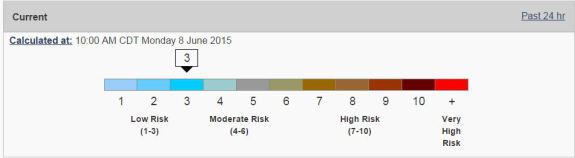
To learn about the air quality where you live, Nunes advises checking out http://mbuapcd.org/ and clicking on “Air Quality” where you will find a suite of measurements.

By clicking next on “Current” you can locate local stations in the “Good” range for ozone at this time of year. Ozone measures the pollution from cars, which gets worse as the season warms. The SLV Middle School stands now at “Good” for particulate matter.

In an attempt to increase air quality standards, Fifth District Supervisor Bruce McPherson and his staff analyst, Robin Musitelli, enlisted the help of residents to brainstorm ideas. Known as the Woodsmoke Stakeholders, the group is working on initiatives concerning requirements for woodstoves and fireplaces in new constructions, the “Don’t Damper Down” campaign, citations/classes for dirty burning, and others.

At last Monday’s meeting, Musitelli reports that ideas included restricting the resale of old wood stoves, forming a joint program with the County and the Valley Women’s Club to produce a coloring book for kids showing how they can stop air pollution, and buyer/owner conditions of escrow to change-out old wood burning stoves to clean burning heating, like pellet stoves.

Nunes reminds citizens of another form of air pollution — residential stack burns. As of May 1, 2015, the California Department of Forestry and Fire Protection (CAL FIRE) requires a burn permit for any outdoor open burning in State Responsibility Areas (SRA). SRAs are generally the unincorporated, rural, grass, brush and timber covered lands, like the San Lorenzo Valley. Contact CAL FIRE for permits and other fire control information at http://www.santacruzcountyfire.com/ or call 831-335-5353 in Felton.

via New air quality rating raises concerns – Golden State Newspapers: Press Banner.

Posted in Air Quality, USA & Canada | Tagged , , , , , , | Leave a comment

World Environment Day: Air pollution jumps to number 5 spot among top killers, says report

Needless delays in executing projects have led to the worsening of air quality across several cities in the country and a new draft audit inspection report shows that the purpose of setting up continuous real time air quality monitoring stations by the Central Pollution Control Board (CPCB) has been defeated.

Air pollution has jumped to the number five spot among the top killers, according to India specific data released by the Global Burden of Disease, which stated that it had caused over six lakh deaths in 2010. While another Environment Day will be observed on June 5, experts have raised issues whether adequate awareness had been created and measures taken to protect nature.

Twelve years ago, the Supreme Court (SC) had identified 16 cities where air pollution was high and respirable particulate matter had exceeded permissible limits. The court had directed the respective state governments to prepare an action plan to control air pollution in those cities but a draft audit inspection report has shown that the aim to set up continuous real time air quality monitoring stations had been defeated.

While the office of the principal director of the Audit Scientific Department, New Delhi, sent the draft inspection report to the Central Pollution Control Board (CPCB) in February, it has shown that data had not been updated regarding continuous real time air quality monitoring at 16 locations in the country.

Moreover, a project, Indian Cities Air Quality Information System, that was to set up a robust database management system in 2011 and executed by Pune-based Centre for Development of Advanced Computing C-DAC was delayed by over four years.

The CPCB plays a key role in controlling pollution and in 2003, the board had agreed to set up continuous air quality monitoring stations at 16 cities. The audit conducted in February showed that CPCB was not receiving data on real-time basis. In Maharashtra, there are three sites – Mumbai, Pune and Solapur. In Pune, the station has been discontinued due to local issues, while in Solapur, it is not online. Real-time data is also not online in Kolkata, Jodhpur and Patna, while in Bangalore connectivity issues pose a problem. The only cities where current real time data is available are Kanpur, Varanasi, Ahmedabad and Agra.

Pune-based civic activist Vihar Durve, who had obtained a copy of the 49-page draft inspection report through the Right to Information (RTI) Act and subsequently sent it to the Ministry for Environment, Forest and Climate Change, chief ministers of various states, the National Green Tribunal and others, told The Indian Express that there had been numerous delays in several projects.

The audit on accounts of CPCB for the period 2013-14 was conducted from January 1 to February 18. According to the report, there has also been a delay in the completion of Indian Cities Air Quality Information System. The project was sanctioned on March 29, 2010, with C-DAC being expected to complete it by 2011. The first installment of Rs 94 lakh was released by the Ministry of Environment and Forests in April 2010 and second installment of Rs 12 lakh in March 2012.

This would have been a robust data-based management system designed to handle and retrieve large volume of data related to air quality. It is provided with a web-based interface to upload, manage and access data. The audit team observed that the project was to be completed by March 31, 2011, but the MoU between CPCB and C-DAC was executed in October 2010 and the first installment of Rs 79 lakh was released in May 2011.

There was a delay in release of funds (from the date of release by Ministry of Environment and Forests) by 13 months. It was only on January 1, that the acceptance report on the project was issued, stating that it was completed and software was acceptable. The report shows that CPCB was not monitoring the progress of the project on a regular basis.

While CPCB officials were not available for comments, Akshara Kaginalkar, head of Computational Earth Science (CES) group, C-DAC, told The Indian Express that UrbAirIndia – a decision support system for Indian urban air quality management – had been rolled out this year. UrbAirIndia is an integrated web-based GIS-enabled system and can be used to assess air pollution impacts from present and future development for a sustainable future, she said.

via World Environment Day: Air pollution jumps to number 5 spot among top killers, says report | The Indian Express | Page 99.

Posted in Air Quality, Asia, India | Tagged , , , , , , , , , , , , , , | Leave a comment