Slovak air quality among worst in Europe

SLOVAKIA belongs among the countries with the biggest air pollution in Europe, data from the European Union’s statistics office, Eurostat, shows.

The World Health Organization estimates that polluted air kills over 6,300 people here annually. The situation is worse only in Poland and Bulgaria.

According to the latest air pollution measurements in Slovakia within the international project Clean Air, the pollution is the biggest in underground garages of shopping malls. This issue can be solved by technical solutions, though.

The Clean Air, presented on June 3, is the result of measurements of the Centre for Sustainable Alternatives (CEPTA).

“We’ve found both hell and heaven in Slovakia as concerns air quality,” said CEPTA head Daniel Lešinský, adding that the cleanest air is in the Tatra mountains. Worst for peoples’ health are fine particles of dust.

Air pollution causes health complications and contributes to early deaths. Miroslav Šuta, an expert on ecological and health risks, explained for the TASR newswire that dust particles in the air reduce life spans by an average of 8.6 months in the whole of European Union, and by as much as 10 months in Slovakia.

The Environment Ministry claims the findings are distorted.

via Slovak air quality among worst in Europe – Politics & society – spectator.sme.sk.

Posted in Air Quality, Europe | Tagged , , , , | Leave a comment

London’s toxic air ‘has already caused over 1,300 premature deaths this year’

More than 1,300 Londoners have already died prematurely due to toxic air so far this year, campaigners warned today.

The shocking death toll includes over 60 estimated fatalities linked to “killer” pollution in Barnet, Croydon and Bromley, and more than 50 in Ealing, Enfield and Havering.

In Wandsworth, Lambeth, Brent, Bexley, Greenwich, Lewisham, Hillingdon, Redbridge and Waltham Forest it was at least 40.

Shadow environment minister Barry Gardiner said: “So far this year 1,337 people have already died as result of air pollution yet the mayor’s proposals will not bring this down to safe levels until 2030.

“We need a new national framework of low and ultra-low emissions zones within which London must roll out the electrification of buses and the highest vehicle standards for all new fleet vehicles within four years. We need decisive action now to protect our children not vague promises for 15 years down the line.”

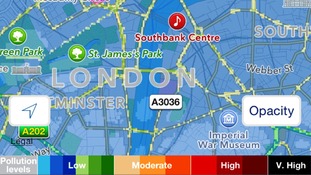
The figures, published by campaign group Clean Air in London on its CleanAir in Cities app, highlight the power of technology to shed light on the impact of air pollution, and put pressure on City Hall, the Government, businesses and individuals to take action to tackle it.

Scientists have put the death toll in the UK linked to particulate pollution, heavily blamed on diesel engines, at around 29,000 a year, including around 3,400 in London.

But this does not take account of the lethal effects of nitrogen dioxide, with many blackspots from this pollutant in the capital.

Clean Air in London has estimated that 7,500 people a year in the capital are dying early due to NO2 and particulate pollution, and around 55,000 across the UK.

London has dozens of the country’s worst pollution blackspots.

City Hall has stressed that Mayor of London Boris Johnson has delivered “some of the most ambitious and comprehensive measures in the world to help improve air quality,” including taking the most polluting buses and taxis off the road, and a proposed ultra low emission zone by 2020.

“This work has helped halve the number of Londoners living in areas above nitrogen dioxide limits, brought nitrogen oxide emissions down by 20 per cent and emissions of particulate matter down by 15 per cent,” it added.

“Notwithstanding this progress, the Mayor recognises more needs to be done which is why he has recently confirmed proposals for the world’s first Ultra Low Emission Zone.”

But MPs will debate London’s filthy air in the Commons next week amid growing concerns over its deadly impact.

Lord Deben, chairman of Britain’s committee on climate change, has emphasised that air quality could be significantly improved in the capital if already available technologies were used to clean up transport and other sectors.

Matthew Pencharz, the mayor’s senior adviser on energy and the environment, said: “The Ultra Low Emission Zone confirmed by the mayor will halve emissions of Nitrogen Oxide, will mean 80 per cent of central London meets legal limits for air pollution, and builds on the most comprehensive and ambitious package of measures to tackle air pollution anywhere in the world, which are being implemented right here, right now.

“The mayor set out last year how we could ensure all London meets legal limits by 2020 – but only with support from Government and Europe‎.’

via London’s toxic air ‘has already caused over 1,300 premature deaths this year’ – London – News – London Evening Standard.

Posted in Air Quality, Europe, London, UK | Tagged , , , , , , , , , , , , , , , , , , , , , , , , | Leave a comment

Particulate Air Pollution Linked To Increase In Mortality Rate, Even At Low Concentrations

Despite a decrease in particulate air pollution across the country, a new study suggests that short-term exposure to any amount of this pollution leads to a shorter life expectancy. Publishing their findings in this month’s issue of Environmental Health Perspectives, researchers at Harvard T.H. Chan School of Public Health found a correlation between higher death rates and greater exposure to particulate matter in people 65 and older. Most concerning, though, is that the damaging effects to life expectancy were observed in areas where this form of pollution was below one-third of its current standards for regulation set by the Environmental Protection Agency (EPA).

This study proves to be the first of its kind, examining rates of particulate matter and its effects on the population in all zip codes of New England, including rural areas. Particulate pollution refers to small particles found in the air, usually in the form of solid or liquid droplets. The particulate matter specifically being studied was PM2.5, or particles less than 2.5 micrometers in diameter. These particles are so small, they can only be seen through an electron microscope, and usually come from different types of combustion, burning of various materials and some industrial processes.

Using satellite data, researchers were able to monitor particle levels as well as temperature in each zip code of the New England area. By examining the effects of PM2.5 on each location from monitoring stations, researchers were able to discover the effects of short-term exposure and the average annual exposure simultaneously. They then cross referenced this information with health records of the 2.4 million New England residents covered by Medicare from 2003 to 2008, and followed their health until they died.

What researchers ultimately found is cause for alarm. Both long-term, and short-term exposure to PM2.5 was significantly linked to higher death rates, even in areas where annual exposure was below EPA standards. Short-term exposure, defined as two days of exposure, was found to lead to a 2.14 percent increase in death rate per 10 µg/m3 increase in PM2.5 concentration, and long-term exposure defined as one year led to a 7.52 percent increase in death rate per 10 µg/m3 increase. Causes of death for these individuals are most frequently associated with heart disorders, increases in blood pressure, and reduced lung function.

“Most of the country is either meeting the EPA standards now, or is expected to meet them in a few years as new power plant controls kick in,” noted professor of environmental epidemiology, Joel Schwartz, in a recent press release. “This study shows that is not enough. We need to go after coal plants that still aren’t using scrubbers to clean their emissions, as well as other sources of particles like traffic and wood smoke.”

Schwartz also noted that exposure to any amount of particulate air pollution is potentially damaging. “Particulate air pollution is like lead pollution: There is no evidence of a safe threshold even at levels far below current standards, including in the rural areas we investigated,” he said. “We need to focus on strategies that lower exposure everywhere and all the time, and not just in locations or on days with high particulate levels.”

This study proves to be but one of many warning us of the harmful effects of particulate air pollution. In another study conducted by researchers at NYU, particulate matter exposure was also linked to an increase risk of stroke by its narrowing effects on the arteries. As this is just the tip of the iceberg, it may be time to reexamine the standards of regulating this form of pollution.

via Particulate Air Pollution Linked To Increase In Mortality Rate, Even At Low Concentrations.

Posted in Air Quality, Health Effects of Air Pollution, Medical Studies, USA & Canada | Tagged , , , , , , , | Leave a comment

Diesel legislation wars set to drag on

The European Union’s newly agreed diesel emissions test plan is a groundbreaking one, as for the first time it seeks to take regulatory testing of vehicles out of the laboratory and on to real roads. It’s a move that looks set to be acrimoniously resisted by Europe’s carmakers, who fear that their engines won’t pass current and upcoming legislation if the testing is done under anything other than artificial lab conditions.

Theoretically, manufacturers have to keep to within an 80mg per km of nitrogen oxide (NoX) emissions, agreed back in 2007. Under lab testing, they can do this but recent pollution spikes in major European cities have raised concerns that the real-world figures will be much worse. Nitrogen-oxides are hugely harmful to health, causing respiratory disease and killing thousands every year, especially those who live and work in city centres.

Biggest emitters

Such alarming instances have caused several key European cities, including Paris, Berlin and London, to speak of diesel car bans, as diesel engines are the biggest emitters of NoX. Thus far, those proposals have been about banning older vehicles, which don’t meet the current EuroVI emissions regulations, but by moving the goalposts of the official tests, the EU has the carmakers spooked.

So far, only an agreement to conduct real-world testing has been forged and no actual numbers have been decided on for emissions limits or conducting of the testing. Erik Jonnaert, secretary general of the European carmaker’s alliance, the ACEA, said: “We call on the commission to urgently deliver a complete proposal for Real Driving Emissions (RDE) by June or July at the latest for a positive decision in the regulatory committee.

“We need to make more progress on clarifying all testing conditions to ensure a robust RDE regulation could commence from September 2017. Automobile manufacturers remain concerned about the piecemeal approach the commission is taking in preparing this proposal. This is not smart regulation. We need clarity in advance so that we can plan the development and design of vehicles in line with the new requirements.”

François Cuenot, air pollution officer at environmental pressure group Transport & Environment, said: “T&E is delighted that the commission and member states have taken this important step to tackle air pollution from diesel. Europe now needs to fully enforce the new rules from 2017 to bring an end to dirty diesels.

“The organisation said that the 80mg of nitrogen oxide per km limit agreed for diesel cars in 2007 should be met in full. Member states throughout Europe exceed nitrogen dioxide limits exacerbating asthma in vulnerable people and shortening life expectancy in polluted places.

“Member states are relying on the promise of effective real-driving emissions tests to reduce emissions in the future and avoid potential fines for failing to meeting air pollution rules.”

via Diesel legislation wars set to drag on.

Posted in Air Quality, Europe, France, Germany, London, UK | Tagged , , , , , , , , , , | Leave a comment

Calls grow for full fossil fuel reckoning

From the International Monetary Fund to doctors, voices calling out the fossil fuel industry over its health costs are becoming louder – and more numerous. But a lot depends on the definition of “cost.”

Six major European energy companies have called on policymakers to put global carbon pricing on the agenda at United Nations climate talks in Bonn this week. They describe this as the most effective way of encouraging greener investments.

But as a growing movement shows, putting a price on fossil fuels could also provide a solution to the increasingly visible problem of their costs falling to taxpayers.

According to a working paper by the International Monetary Fund entitled How Large are Global Energy Subsidies?, governments spend far more than previously thought on propping up the fossil fuel industry. The lion’s share of “subsidies” are paid out in the form of external costs relating to health and environmental damage.

In 2013, “post-tax subsides” – or external costs relating to the environmental and social impacts of fossil fuels – amounted to some $4.9 trillion (4.4 trillion euros), or 6.5 percent of global gross domestic product. This is more than all global spending on healthcare. And, that figure is projected to rise to $5.3 trillion dollars in 2015.

The authors found that the biggest externalized costs related to exposure to air polluted with particulate matter, sulfur dioxide and nitrogen oxides by the burning of fossil fuels. These health damages amounted to around $2.2 trillion in 2013 – with the highest share going to coal-fired power, which was responsible for $1.9 trillion.

The IMF researchers also factored traffic congestion, accidents and road damage into their calculations.

Immediate impacts

Around the world, researchers and campaigners are putting increasing emphasis on the social impacts of fossil fuels.

“When we think about climate change, we usually think about distant impacts – in far-away places, and perhaps 20 or 30 years down the line,” Jonathan Buonocore, of the Harvard T.H. Chan School of Public Health, told DW. “Focusing on the co-benefits for health shows that policies to reduce carbon dioxide emissions have a much more immediate impact.”

Buonocore is one of the authors of a recent paper published in “Nature Climate Change,” which found proposed legislation to cut emissions from coal-fired power plants in the United States could save 3,500 lives a year.

The study evaluated three possible options for new regulation of power plants, which have yet to be finalized under President Barack Obama’s Clean Power Plan. The researchers said the best of these outcomes could also avert more than 1,000 heart attacks and hospitalizations from air pollution-related illness each year.

Doctors speak out

The medical profession is also speaking out on the issue. This April, the International Federation of Medical Students’ Associations called on charities to divest from the fossil fuel industry, saying that “continued investment in the fossil fuel industry violates health workers’ obligations to do no harm.”

The British Medical Association committed to divesting from the sector in July last year. And last week, Auckland University announced – as part of the run-up to UN climate talks later this year – how medical professionals and students are calling for the New Zealand government not stop ignoring health benefits when calculating the costs of climate action.

The Ontario Clean Air Alliance says much credit for the province’s phase-out of coal, which was completed last year, is due to the Ontario Medical Association’s damning assessments of the health impacts of air pollution, which it estimated to cost Ontario $1 billion per year.

“The myth that coal was a source of ‘cheap power’ was destroyed by the most credible possible source – your doctor,” the Alliance said in a report.

Hidden costs

Keiran Clarke of the International Institute for Sustainable Development says that drawing attention to the social costs of what can appear to be a cheap option for power generation, such as coal, can have a bigger impact on policy than focusing on environmental damage.

“I think that governments are quite rational about this,” he told DW. He cited the example of China, where he says the government may not be highly motivated to prevent climate change – but is turning toward renewable power over coal to combat the ongoing problem of air pollution.

The IMF paper found that the majority of indirect energy subsidies for fossil fuels came in the form of domestic spending. It recommended that countries “move ahead with subsidy reform unilaterally and in their own interests.”

“Our estimates indicate that removing post-tax energy subsidies could reduce premature deaths from local air pollution by more than 50 percent on average,” the report said.

Subsidy reform

In Germany, renewables now cover more than a quarter of electricity use. But according to the German Environment Agency’s latest calculations, its continuing dependence on coal cost the country $23 billion in 2014.Cutting these subsidies would steer investment towards environmentally friendly technologies, by removing the artificial price advantage of fossil fuels. At the same time, the paper suggests, money saved could be used to cut labor taxes, invest in public infrastructure and education, and reduce poverty.

If these costs were taken into consideration, then the price of electricity produced using coal would more than double the current cost of 90 cents per kilowatt-hour, and no longer be competitive compared to electricity from wind and solar.

Subsidy reform could also reduce global CO2 emissions by more than 20 percent, according to the IMF. The analysis concluded this would be “very significant and would represent a major step towards the decarbonization ultimately needed to stabilize the global climate system.”

via Calls grow for full fossil fuel reckoning | Environment | DW.DE | 02.06.2015.

Posted in Air Quality, Europe | Tagged , , , , , , | Leave a comment

Respro® Masks FAQ: What % of your mask (Sportsta™) protects against PM 2.5

SPORTSTAThe filter material in the Sportsta™ mask is subject to testing which gives 99% filtration of particulates smaller than PM2.5 (2.5 microns); in fact almost ten times smaller, 0.3 microns. An important point with respect to masks is how well they fit. If they fit poorly then the air will just pass through the gap where it doesn’t fit, that’s why we have three sizes.

As a general rule of thumb, mask sizing is as follows:

5′ Heavy Build – 5’6′ Average Build = Medium

5’6″ Heavy Build – 6′ Average Build = Large

6′ Heavy Build – 6’+ Average Build = X-Large

For us to confirm your size please send the following information to customerservices@respro.com

MASK user:

Height:

Weight:

Neck size:

Hat size:

Height:

(most people know their height)

Weight:

(most people know their weight)

Neck Size:

Using piece of cotton or string, measure the circumference around the neck. Use a ruler to determine the length of string. This is the neck circumference. Easier still check your shirt size.

Head size (AKA Hat Size):

Using piece of cotton or string, measure the circumference around the head. Use a ruler to determine the length of string. This is the head or hat size circumference.

For more Frequently Asked Questions go to respro.com/pg/faqs

Posted in Air Quality | Tagged | Leave a comment

Environmental advocates’ coalition sues LTO for air pollution in Metro Manila

The Coalition of Clean Air Advocates of the Philippines (CCAAP) — a multisectoral oraganization made up of environmental advocates and transport groups — is suing the Land Transportation Office (LTO) for the air pollution in Metro Manila.

“On Monday, June 1, the CCAAP filed a complaint for graft in the Office of the Ombudsman against LTO chief Alfonso Tan and LTO management information division officer in charge Rector Antiga because they failed to implement the Philippine Clean Air Act of 1999 and stop corruption in the motor vehicle emission testing process where even ‘no-shows’ were  issued a certificate of emission compliance (CEC),” reports Jaymee T. Gamil in Philippine Daily Inquirer.

The report explained that “Antiga was included in the lawsuit because his office, which was in charge of receiving all the emission tests results, allegedly did not double-check whether these were valid or had been falsified.”

In their 11-page complaint, the CCAAP urged the Ombudsman to place the respondents on preventive suspension.

In a press statement, CCAAP chair Dr. Leo Olarte said, “Massive graft and corruption in the motor vehicle emission testing process, [which is] under the control and supervision of the LTO, is a major reason why the air we all breathe is polluted.”

via Environmental advocates’ coalition sues LTO for air pollution in Metro Manila.

Posted in Air Quality, Asia, Philippines | Tagged , , , , | 2 Comments

Large chunk of the river Seine’s Right Bank to be cut off to cars in Paris

After reclaiming Left Bank from motorists, Paris’ Socialist mayor Anne Hidalgo says chunk of highway along river Seine’s Right Bank will be pedestianised by the summer of 2016

Anne Hidalgo, Paris’ Socialist mayor, has unveiled plans to cut off a large chunk of the river Seine’s Right Bank to cars by next year, in the latest move to pedestrianise the heart of the French capital.

After reclaiming much of the Left Bank from cars despite outcry from motorists’ groups, Ms Hidalgo on Wednesday pledged to take similar steps on the opposite side of the river by the summer of 2016.
“This is an urban, almost philosophical project, which consists of seeing the city in another way than through the use of cars,” she said, citing as examples the French cities of Lyon and Bordeaux, whose riverbanks have been successfully reclaimed for pedestrians.

Paris has suffered dangerous pollution levels, with one recent survey briefly placing it above Shanghai in terms of harmful particles.
Ms Hidalgo wants to free up the Georges Pompidou highway, part of a Unesco World Heritage Site, on the North side as part of a wider push to drive automobiles from the capital.

“Yes, we are going to reduce yet further car traffic in Paris,” she said. “It is an ecological and public health challenge”.

Ms Hidalgo said the 2,700 cars that drive down the Left Bank per hour in peak periods will make way for gardens, strollers, boule pitches, children’s play areas and “floating markets on barges”.

As a result the vehicles that pass along the highway each hour at peak times will be moved elsewhere and their place will be taken by riverside gardens, games areas and people out for a stroll.

The car bank will start after the annual Paris Plage festival in 2016.

Precisely how much of the riverbank highway will be closed will be decided during a period of public consultation.

Paris town hall cited two options – either pedestrianising a stretch from the Pont de Sully and Châtelet or a much longer chunk between Tuileries Tunnel and Port de L’Arsenal, next to the Place de la Bastille.

Paris authorities insisted that driving time to cross the capital on the left bank only increased by two minutes when parts were shut to traffic.

However, pro-driver group 40 Million Motorists, which opposes the scheme and has set up an online petition, said the plan will double the time to cover the same distance.

via Large chunk of the river Seine’s Right Bank to be cut off to cars in Paris – Telegraph.

Posted in Air Quality, Europe, France | Tagged , , , | Leave a comment