Study links childhood exposure to air pollution and self-harm in later life

A study of over 1.4 million Danes has revealed a link between higher levels of exposure to two common pollutants during childhood and an increased risk of self-harm in later life.

The collaboration between academics at The University of Manchester and Aarhus University in Denmark is published today (16/09/2021) in a special issue on suicide prevention of the journal Preventive Medicine.

The team investigated if long–term residential exposure to particulate matter (PM2.5) with an aerodynamic diameter of less than 2.5µm and nitrogen dioxide (NO2) during childhood was linked to later self-harm risk.

The interlinked Danish national registers provided a uniquely powerful data source for researchers; the study including over 1.4 million people born in Denmark between 1979 and 2006.

The team were able to track each person’s place of residence from their birth to their tenth birthday, as well as the length of time that they resided at each address.

The information was linked to measurements of the outdoor levels of PM2.5 and NO2 in the local neighbourhood over time.

Ambient outdoor air pollution consists of a complex mixture of gasses, particulate matters and inorganic and organic compounds. PM2.5 and NO2 are among the pollutants with the strongest adverse impact on physical health.

The gasses are emitted from a range of sources including car exhausts, power generation, shipping and domestic heating.

Lead author Dr Pearl Mok, Research Fellow at The University of Manchester said: “This is the first population-based longitudinal study to reveal that long-term exposure to two common pollutants: PM2.5 and NO2, during childhood, is associated with subsequently elevated self-harm risks.

“Our findings add to the growing evidence-base indicating that higher levels of air pollution exposure are linked with poor mental health outcomes.

“Although air pollution is widespread,  it is a modifiable risk factor and we therefore hope  our study’s findings will inform policymakers who are devising strategies to combat this problem.”

The team controlled for some of the factors known to influence self-harm risk including history of mental illness in cohort members’ parents and socioeconomic position, information that is available from the Danish registers.

And they showed that exposure to 19 μg/m3 or above of PM2.5 on average per day from birth to 10th birthday was associated with a 48% higher risk of subsequent self-harm compared with a mean daily exposure of less than 13 μg/m3.

And for every 5 μg/m3 increase in exposure to PM2.5 on average per day during childhood, they found the risk of subsequent self-harm rose by 42%.

“This is the first population-based longitudinal study to reveal that long-term exposure to two common pollutants: PM2.5 and NO2, during childhood, is associated with subsequently elevated self-harm risks. Our findings add to the growing evidence-base indicating that higher levels of air pollution exposure are linked with poor mental health outcomes Dr Pearl Mok „

Similarly, exposure to 25 μg/m3 or above of NO2 on average per day from birth to 10th birthday was associated with a 50% higher risk of subsequent self-harm compared with a mean daily exposure of less than 10 μg/m3.

And for every 10 μg/m3 increase in exposure to NO2 on average per day during childhood, the risk of subsequent self-harm rose by 21%.

Professor Roger Webb from The University of Manchester, a co-author on the study said: “A growing body of evidence in recent years has indicated that exposure to air pollution is also associated with adverse mental health outcomes.

“Children living in neighbourhoods with higher levels of air pollution have been reported to have increased risks of developing a range of psychiatric disorders including schizophrenia, depression, and attention-deficit hyperactivity disorder (ADHD).

“Though the mechanisms linking air pollution and development and exacerbation of mental disorders or its associated distress have not yet been explained, it has been well-established that it can cause inflammation and oxidative stress.

“This study is the first to provide valuable evidence on the association between childhood exposure to air pollution and subsequently elevated self-harm risk.

“However, further research is needed to investigate to what degree our findings can be generalised to other countries, especially lower- and middle-income countries where levels of ambient air pollution are far higher than they are in Denmark.”

Study was funded by The European Research Council.

“Exposure to ambient air pollution during childhood and subsequent risk of self-harm: a national cohort study” is published in Preventive Medicine.

Study links childhood exposure to air pollution and self-harm in later life
Posted in Air Quality, Europe, Health Effects of Air Pollution, Medical Studies | Tagged , , , , | 1 Comment

Research: Air pollution from forest fires is linked to over 33.000 deaths worldwide each year

The deaths associated with smoke and air pollution from forest fires are estimated to be almost as high as the number of heat-related deaths worldwide each year, according to a new international scientific research with Greek contribution. At least 33.500 deaths a year worldwide can be attributed to air pollution from forest fires.

The study estimates that even short-term exposure of humans to tiny particles (PM2,5 or up to 2,5 millionths of a meter) that enter the lungs and bloodstream increases the risk of dying from lung disease, cardiovascular and other causes. . Particles from forest fires are usually smaller and more toxic than those from urban fires.

Researchers led by Yuming Guo of the School of Public Health and Preventive Medicine at Australia’s Melbourne University alone analyzed data from 65,5 million deaths in 749 million deaths in the medical journal The Lancet Planetary Health. countries. Correlating these data with data on the levels of PM43 particle concentrations due to fires, they concluded that 2.5% of deaths from any cause internationally, 0,62% of cardiovascular deaths and 0,55% of deaths associated with lung disease, can be associated each year with the direct effects of microparticles from fires. By comparison, heat-related deaths are estimated to account for 0,64% of all deaths worldwide.

Guatemala was found to have the highest rate of annual fire-related deaths from fires (3,04%), followed by Thailand (2,32%), Paraguay (2,09%), Mexico (1,72 , 1,61%) and Peru (0,33%). In Greece the corresponding percentage was estimated at 0,26%, just like in Canada, while in the USA at 0,09% and in Britain only XNUMX%.

“Smoke pollution from fires can spread up to 1.000 km away and the risk of fires is projected to increase as climate change worsens,” Guo said. He estimated that children and the elderly are the most vulnerable to the effects of fires on health.

From the Greek side, professors Klea Katsougianni and Evangelia Samoli of the Laboratory of Hygiene, Epidemiology and Medical Statistics of the Medical School of the University of Athens participated in the study.

Research: Air pollution from forest fires is linked to over 33.000 deaths worldwide each year | ATHENS 9,84
Posted in Air Quality | Leave a comment

Air pollution exposure during pregnancy has long-term impact on children’s health, development

Particulate matter (PM) is a major component of air pollution that is increasingly associated with long-term consequences for the health and development of children. In a study recently published in Nature’s Environmental Health and Preventive Medicine, Natalie Johnson, Ph.D., associate professor at the Texas A&M University School of Public Health, and her co-authors synthesized the findings of previous studies, reviews and meta-analyses on the adverse health effects of the two smallest types of particulate matter (PM): Fine (particles with an aerodynamic diameter less than 2.5 μm) and ultrafine (particles with an aerodynamic diameter less than 1 μm). Both types of PM can be inhaled deep into the lung. Ultrafine particles have recently been shown to cross into circulation and even cross the placental barrier, directly reaching the developing fetus.

A range of adverse health outcomes associated with fine PM exposure was reported in the studies and reviews of human data, including low birth weight, asthma and other chronic respiratory conditions, cognitive and behavioral issues, obesity and diabetes. Research on the effects of prenatal ultrafine PM exposure has not been as extensive, but a growing body of evidence shows similarities with the effects associated with fine PM exposure. Studies and reviews of data obtained from animal models supported the findings from the human studies.

In addition, some of the studies examined the possible ways that PM could cause the observed adverse health effects. The two broad mechanisms documented in the literature are direct (ultrafine PM crosses the placenta and enters fetal circulation) and indirect (PM causes interactions that result in oxidative stress, inflammation, epigenetic changes and endocrine disruption).

The researchers also reviewed possible treatments and policies that might minimize or even undo the harms associated with prenatal PM exposure. Green spaces such as parks and other areas with trees and foliage provide a range of benefits for the communities that have them, including lower exposure to PM. Nutritional interventions, including maternal dietary changes and antioxidant and vitamin supplementation, can provide protective effects that are also associated with better health outcomes for children with prenatal air pollution exposure.

“It is important to review the body of literature on such an important and common environmental exposure. This helps in policy development and intervention strategies. The timing of exposure, like during pregnancy, is becoming recognized as an important window of susceptibility. So, protecting the most vulnerable can have a huge public health impact,” Johnson said.

Air pollution exposure during pregnancy has long-term impact on children’s health, development
Posted in Air Quality, Health Effects of Air Pollution | Tagged , , , , | 1 Comment

Balkan countries and Poland rank highest in lung cancer risk for ages 50 to 69, attributable to air pollution

Five European countries rank highest for lung cancer risk among those aged 50 to 69 years attributable to air pollution, according to research presented in today’s Presidential Symposium Plenary Session at the IASLC 2021 World Conference on Lung Cancer.

Although tobacco smoke is clearly a major cause of lung cancer, a recent analysis determined that worldwide, air pollution accounts for 14% of lung cancers, according to data reported by Christine Berg.

The causal evidence of a link between air pollution and lung cancer has been building for decades, but the risk varies widely in different regions of the world, depending on the age of the population, the amount of tobacco smoking over time, and the amount of air pollution in the country.

Berg and co-researcher Dr. Joan Schiller, an adjunct professor at the University of Virginia and a Board Member of the Lung Cancer Research Foundation, sought to better understand the worldwide variability in air pollution attributable to lung cancer. Berg conducted a review of the literature on the burden of indoor and outdoor air pollution. She assessed the burden of lung cancer by country from air pollution by querying The Global Burden of Disease Compare publicly accessible database. Lung cancer mortality was chosen as the endpoint in an age-standardized population of 100,000. Because the incidence of lung cancer increases with age, two age groups were selected: Ages 50-69, and 70 and older. Both genders were combined in the analysis. Berg ranked the top 15 countries in each age group and compared changes in relative country ranking by age group.

According to her analysis, Serbia (36.88 per 100,000), Montenegro (34.61 per 100,000), North Macedonia (30.67 per 100,000), Bosnia/Herzegovina (30.64 per 100,000), and Poland (27.97 per 100,000) ranked highest for risk of lung cancer attributable to air pollution among ages 50-69.

Among the 70 and older group, China (98.55 per 100,000), Mongolia (71.11 per 100,000), North Korea (63.45 per 100,000), Laos (62.07 per 100,000), and Montenegro (61.80 per 100,000) ranked highest.

“For comparison, in the United States the number of lung cancer deaths per 100,000 attributed to air pollution in ages 50 to 69 is 3.91 and is 13.62 for 70 and older,” Berg said. The Balkans, Poland, Turkey, China, and some southeast Asian countries have the highest attributable risks. Serbia had the highest number of attributable deaths in the 50-69 age group, whereas China had the highest in the 70 and older age group.

“Patterns of cigarette smoking and amounts of pollution from fossil fuel energy sources are most likely the primary drivers of the variability in risk attributable to lung cancer,” said Berg. “As the tobacco epidemic is addressed, we also need to address other preventable causes of lung cancer.”

Balkan countries and Poland rank highest in lung cancer risk for ages 50 to 69, attributable to air pollution
Posted in Air Quality, Europe, Health Effects of Air Pollution, Poland | Tagged , , , , , , , , , , , , | Leave a comment

More than 47,000 Brazilians hospitalised by exposure to wildfire air pollution every year

Last year the number of wildfires in Brazil increased 12.7 percent to a decade-high. Now the largest and most comprehensive study to date of the health effects of wildfires in Brazil reveals the serious health consequences of this burning, linking exposure to wildfire pollutants to increased hospitalisation.

There have been 260 major fires detected in the Amazon this year, burning more than 105,000 hectares (260,000 acres) — an area roughly the size of Los Angeles, California.

More than 75 per cent of these fires blazed in the Brazilian Amazon, in areas where trees have been cut to make way for agriculture, despite a June 27 ban on unauthorized outdoor fires by the Brazilian government.

Professor Yuming Guo and Dr Shanshan Li, from the Monash University School of Public and Preventive Health in Melbourne, Australia, led an international study into the health effects of these wildfires. The results are published today in The Lancet Planetary Health.

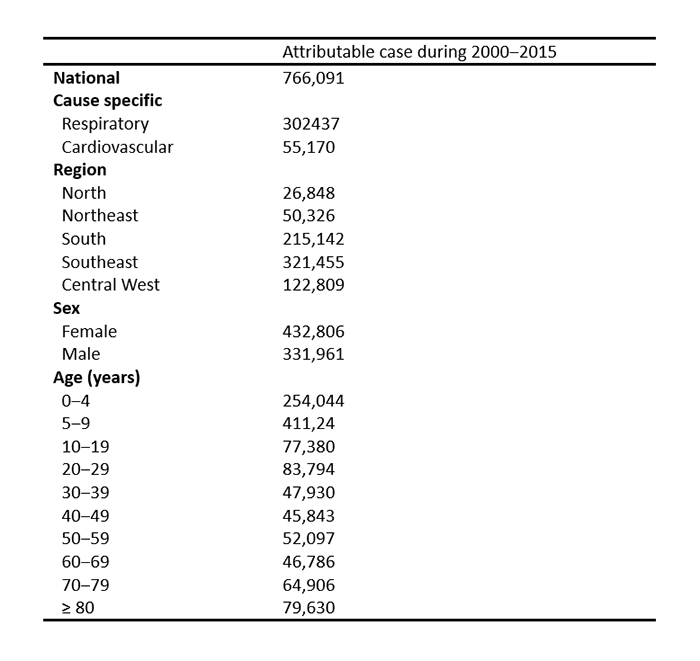
The study found between January 1, 2000 and December 31, 2015, a 10 ug/m3 increase in wildfire-related fine particles (PM2.5) in the air was associated with an increase in overall hospitalisations of 0.53 per cent directly related to exposure to wildfire pollutants. This corresponds to 35 cases per 100,000 residents annually, which is over 48,000 Brazilians every year hospitalised by wildfire pollution, mainly in the cities in the north, south and central-west regions. The north east regions of the country had the lowest rates.

The study found that overall hospitalisations were “particularly high in children aged four years or younger, in children aged five to nine years and in people aged 80 years and older”.

The study looked at more than 143 million hospitalisations from 1,814 municipalities covering almost 80 per cent of the Brazilian population for the 16 years of the study to the end of 2015, comparing this data to daily wildfire related PM2.5 levels in the air in each of these municipalities. Even short-term exposure to PM2.5, the small particulate matter within wildfire smoke, can trigger asthma, heart attack, stroke, a decrease in lung function, hospitalisation and premature death.

“This data reveals significant health impacts of wildfires, at a time before the 2019 fires across Brazil captured global attention followed by an equally intense fire period last year,” Professor Guo said.

There have been increased fires across Brazil since the 1990s, largely due to deforestation and forest degradation from human activities such as mining, logging and farming. While fire activities generally occur during the dry season in August to November, the duration of the dry season is lengthening, according to previous studies.

While most wildfires occur in remote areas of Brazil, “toxic smoke from these wildfires in the Amazon region can rise as high as 2,000 to 2,500 km up into the atmosphere and travel great distances, threatening people thousands of miles away,” Professor Guo said.

Number of hospital admissions associated with wildfire-related PM2·5 across 1,814 Brazilian municipalities by region, sex, and age, 2000–15.

DOI: https://doi.org/10.1016/S2542-5196(21)00173-X

Link: http://www.thelancet.com/journals/lanplh/article/S2542-5196(21)00173-X

More than 47,000 Brazilians hospitalised by exposure to wildfire air pollution every year – Medicine, Nursing and Health Sciences
Posted in Air Quality, Health Effects of Air Pollution, Latin America | Tagged , , , , , , | Leave a comment

Air pollution has a more devastating effect on life expectancy than smoking and war

Smoke covers Athens centre, due to fires burning at the foot of Mount Parnes, 30 kilometres north of Athens.

Air pollution is a bigger killer than HIV/AIDS, tuberculosis and malaria combined, according to a recent report from the Air Quality Life Index (AQLI).

Particulate pollution has a more devastating impact on life expectancy than smoking or even war, the scientists say.

It is cutting short the lives of billions of people, with the average global citizen losing 2.2 years of their life to today’s air pollution levels. If nothing changes then that will add up to 17 billion years of life lost around the world.

The problem is being made worse by the climate crisis, with high temperatures leading to wildfires that increase air pollution. This creates a dangerous cycle, the researchers say. Fossil fuel burning – in particular coal – is feeding the problem.

Air pollution is the greatest external threat to human health on the planet.

“Air pollution is the greatest external threat to human health on the planet,” says Professor Micheal Greenstone, one of the scientists who created the AQLI, “and that is not widely recognised, or not recognised with the force and vigour that one might expect.”

Though the scientists say that lockdowns have proven we can reduce pollution and a different future is possible, it all depends on whether governments choose to act.

Mums for Lungs

In the UK, air pollution is thought to be responsible for up to 36,000 deaths every year and some studies say it could be higher. Ruth is one person who has seen the impact of this firsthand.

“My son first started having breathing difficulties in the heatwave of 2018,” she says.

“If you remember that one, it was around 34 degrees (Celsius), some days cooler, for about two and a half months in London and the air quality was really bad.”

Ruth says that by November, her son had seven asthma attacks and they were on their third visit to the hospital. It was then that a paediatric respiratory specialist told her air pollution could be part of the problem. He said that they should avoid walking along busy streets, main roads and next to traffic.

“If you haven’t experienced the impact, people might not be as concerned about it,” she explains. Unlike plastic pollution, where images of a beach covered in waste paint a direct picture of the consequences, the effects on our respiratory health aren’t so visually clear.

“I think because we can’t see air pollution that maybe makes it slightly harder to communicate.”

“It’s very much an issue that is also outside of London and that kind of that surprised me as well when I was first looking into it.”

Though she lives in London, after looking at air quality maps Ruth says she found that levels of PM2.5 and PM10 were high in towns and cities across the UK. It’s not something that can easily be escaped.

Is air pollution the only issue?

It isn’t just air pollution threatening our health but a whole host of other impacts of climate change that could be putting our lungs in danger – many of which we are surprisingly unaware of.

As we emerge from the effects of COVID-19, climate change could be the next biggest threat to our respiratory health according to a new report from the Economist Intelligence Unit (EIU).

The EIU identified five major ways that climate change is damaging our respiratory health:

Higher temperatures can increase ozone levels and how often and how severe respiratory infections can be.

Heatwaves: With every degree of Celsius in temperature increase, it is thought that the risk of premature death for respiratory patients is six times that of the general population.

The amount of pollen in the air: Rising temperatures and carbon dioxide levels are increasing pollen load by expanding the area where plants can grow and extending their season.

How allergic we are to pollen: As well as increasing the amount of pollen in the air, storms can cause pollen grains to burst, allowing them to get deeper into our lungs and cause health issues.

Extreme weather events: Dust storms carry pollen, viruses and fungal spores, particulates from wildfires can travel up to 1,000km and thunderstorms cause pollen levels to rise and lead to asthma epidemics.

Tom Delahoyde is the managing director of Chiesi UK who commissioned the report and he says it was done on behalf of patients suffering the health consequences of climate change, “right here, right now”.

Climate change is disproportionately affecting the economically disadvantaged and those with underlying health conditions, such as asthma or chronic obstructive pulmonary disease (COPD) are most at risk.

“One of the key findings in this report is that respiratory health issues are actually exacerbated by the climate crisis, which is putting vulnerable people at risk, and actually worsening inequality within our society,” he says.

“Heatwave related issues particularly impact the elderly, so the 65 and above age groups, but also infants, where children’s lungs are still developing, can be impacted by this.”

What can be done to prevent this health crisis?

Ruth is a member of Mums for Lungs, a group campaigning for everyone to have clean air as soon as possible.

They want to see elected officials tackle the problem of air pollution through actions such as expanding the Ultra Low Emission Zone (ULEZ) in London, commitment to WHO clean air guidelines as part of the Environment Bill and a reduction in car ownership.

“I think there’s a sense of urgency about it as well because children grow up quickly,” she adds.

“When there are targets being set, you know, we want to get all diesel cars off the road by 2030, I think ‘that’s 10 years’. My son is going to be 15, nearly fully grown and then what difference is that going to make to him? Nothing.

“We want to make a difference to this generation that’s growing up.” Policymakers really need to prioritise respiratory health in the fight against climate change.

A lack of action is a problem around the world, not just in Europe. A recent analysis from the Clean Air Fund found that 20 per cent more global aid goes to fossil fuel projects than it does to tackling the air pollution they cause.

Delahoyde says tackling the impacts of the climate crisis on respiratory health has to be a joint effort between policymakers, businesses and health professionals.

“Policymakers really need to prioritise respiratory health in the fight against climate change and companies need to take meaningful, measurable and independently verified actions,” he concludes.

“Only then can we encourage and track progress towards a greener, healthier society.”

Air pollution has a more devastating effect on life expectancy than smoking and war | Euronews
Posted in Air Quality, Health Effects of Air Pollution | Tagged , , , , , , , , , | 1 Comment

Covid: Pollution increases risk of Covid hospitalisation, study finds

Living in areas of high air pollution increases the risk of hospitalisation with Covid-19 a new study has found.

Imperial College London researchers also found evidence people living in polluted areas may have an increased risk of catching the disease.

The review is the most “comprehensive overview” of studies on air pollution and coronavirus, researchers said.

Sadiq Khan said: “We cannot turn a blind eye to the clear evidence showing the dangers of toxic air pollution.”

The London mayor, who commissioned the study, said: “This new review led by Imperial researchers makes it crystal clear that tackling air pollution is a vital part of building our resilience to Covid-19, and other infections like it.

“The decisions we make now to tackle air pollution are truly a matter of life and death,” Mr Khan added.

Long-term exposure to air pollution increases susceptibility to worse outcomes from Covid, the report found.

But researchers found particulate matter – large airborne particles – did not appear to play any important part in transporting Covid-19, as had been suggested by some earlier studies.

In addition, inconsistent results were found for studies of long-term exposure to air pollution and the number of Covid cases.

Scientists said that as the pandemic is less than two years old further research will be necessary “to strengthen these emerging findings”.

The report comes ahead of the planned expansion of London’s Ultra Low Emission Zone next month.

A recent study by City Hall found 98% of schools are in areas with toxic air quality, compared with 24% outside the capital.

Excessive levels of air pollution can stunt lung growth and worsen chronic diseases.

via Covid: Pollution increases risk of Covid hospitalisation, study finds – BBC News

Posted in Air Quality, Europe, Health Effects of Air Pollution, London, Medical Studies, UK | Tagged , , , , , , | 1 Comment

Forest fires linked to tens of thousands of avoidable deaths

Setting fire to forest and agricultural land in Southeast Asia to prepare it for cultivation or grazing contributes to an estimated 59,000 premature deaths a year, say scientists.

Their analysis reveals that the greatest health impact from the burning, which releases tiny particles into the air which can get into people’s lungs, is felt by some of the poorest communities in the region, in northern Laos and western Myanmar.

In a paper published today in the journal GeoHealth, researchers from Leeds and University of Augsburg in Germany call for measures to curb agricultural and forest burning. They say preventing agricultural and forest fires should be regarded as a “public health priority.”

Dr. Carly Reddington, AIA Research Fellow in the School of Earth and Environment at Leeds, and the study’s lead author, said, “Our investigation quantifies the contribution of an often overlooked source of poor air quality and demonstrates that actions to reduce fire may offer considerable, yet largely unrecognized options for rapid improvements in air quality.

“We found that across Southeast Asia, the amount of air pollution produced by these fires is comparable to that from industry, transport, and power generation.”

Burning releases harmful pollutants

Across Southeast Asia—an area including Myanmar, Thailand, Cambodia, Laos, Vietnam and south east China—farmers burn forest as a way of clearing land for cultivation or to graze animals, often in the pre-monsoon period, usually in February to April.

During this period, the weather patterns over a large part of the region can result in a temperature inversion, a meteorological phenomenon that prevents smoke and emissions from the fires dispersing, particularly at night or during the early mornings.

The fires generate a range of harmful pollutants, including fine particulate matter known as PM2.5—tiny particles that measure 2.5 microns (where a micron is one millionth of a meter or less). According to the World Health Organization (WHO), the particles are a risk factor in cardiovascular and respiratory diseases and cancer.

The researchers used measurements of air pollution along with computer models to measure the impact of the fires on air quality and the prevalence of disease.

Modeling impact of burning

In all the datasets analyzed, the researchers found the greatest pollution emissions from the burning was coming from the northern region of Laos, Cambodia, Thailand, eastern and western Myanmar, and southern Bangladesh, and with lower levels of emissions in central Myanmar, Thailand, north Vietnam, and south eastern China.

The researchers modeled what improvements would be seen in air quality if the burning was stopped.

The concentration of PM2.5—the fine particulates—would fall by between 40% and 70% in those areas experiencing the greatest emissions.

WHO has an interim annual target for maximum levels of PM2.5, which is 25 micrograms per cubic meter.

Burning ‘degrades air quality’

If the practice of burning could be stopped, the researchers argue that the number of people exposed to levels greater than the WHO interim target would drop by 64% in Thailand, 100% in Myanmar, in Laos by 92% and Cambodia by 44%.

Using epidemiological modeling, the scientists calculated the reduction in PM2.5 could reduce premature deaths caused by exposure to air pollution. In Southeast Asia, deaths would fall by 12%, ranging from 5% in Vietnam to 28% in Laos and 3% in southeastern China. In total an estimated 59,000 premature deaths could be prevented each year.

They also mapped poverty data against PM2.5 concentrations and found that poorer, rural populations in Laos, Cambodia and Myanmar were exposed to higher levels of fine particle pollution.

Dr. Reddington said, “This study is the first detailed assessment of the effects of forest and vegetation fires on air quality and human health in Southeast Asia. “

The study shows that air pollution from vegetation and forest fires seriously degrades air quality in Southeast Asia and that by preventing these fires, exposure to harmful air pollutants could be substantially reduced and many premature deaths could be avoided.

“Furthermore, it shows that the poorer populations of Southeast Asia are being disproportionally exposed to the air pollution from these fires.”

New efforts are now needed to reduce forest fires in the region.

Dr. Reddington added, “A complete ban on the use of fire may not be practical for many local farmers who don’t have any alternative. Pollution emissions are dominated by burning of forests, so there needs to be increased effort to reduce fires associated with deforestation.

“Reducing deforestation reduces emissions of carbon dioxide and is a crucial element of efforts to slow global climate change. Our work demonstrates that reducing deforestation and associated fires would also lead to cleaner air and improved public health.

“These local and regional benefits may provide a powerful incentive to reduce deforestation. Increased support for community-protected forests and other protected areas, where forest clearance fires are less prevalent, are an important way to reduce fires.”

The paper, Air pollution from forest and vegetation fires in Southeast Asia disproportionately impacts the poor, is published in GeoHealth.

Forest fires linked to tens of thousands of avoidable deaths
Posted in Air Quality, Asia, China, Health Effects of Air Pollution, Thailand, Vietnam | Tagged , , , , , , , , , , , , , , , , | 1 Comment