Rising air pollution led to 41,090 deaths in Punjab in 2019: Report

The report, which was released on Saturday, stated that 1.67 million Indians died due to air pollution in 2019 as per the Global Burden of Disease Study 2019 on health and economic impact of air pollution in the states of India.

Punjab reported as many as 41,090 deaths attributable to air pollution, which is 18.8% of the total fatalities, in 2019, revealed the Down to Earth and Centre for Science and Environment’s annual report titled “State of India’s Environment 2021”.

The report, which was released on Saturday, stated that 1.67 million Indians died due to air pollution in 2019 as per the Global Burden of Disease Study 2019 on health and economic impact of air pollution in the states of India. Half of these deaths were in just five states including Uttar Pradesh, Maharashtra, Bihar, West Bengal and Rajasthan.

In Punjab, 1,148 million US dollars (1.49% state GDP) economic loss was ascribed to air pollution. “As many as 34,119 deaths (19% of total deaths) were attributable to air pollution range in Haryana in the year while the state pegged 1,566 million US dollars economic loss due to air pollution,” the report said.

The report mentioned that two Punjab industrial clusters, including Jalandhar and Batala, were among 33 of the 88 clusters of the country where air quality evaluated in 2009 had worsened by 2018. In 2009, the Central Pollution Control Board (CPCB) developed the Comprehensive Environmental Pollution Index (CEPI) to identify problematic industrial areas in the country. In the 2009 CEPI study, a total of 88 industrial clusters were identified as polluted industrial areas (PIAS) by CPCB and state PPCB.”

Rising air pollution led to 41,090 deaths in Punjab in 2019: Report | Hindustan Times
Posted in Air Quality, Asia, Health Effects of Air Pollution, India | Tagged , , , | Leave a comment

Air quality dips to unhealthy levels in many parts of Taiwan

Poor air quality was recorded in multiple locations across Taiwan on Thursday, as stagnant winds limited the dispersal of domestic air pollutants, according to the Environmental Protection Administration (EPA).

In an air quality report on Thursday, the EPA said its index reached a “red” level alert at locations in Taipei and New Taipei cities as of 4:00 p.m., indicating “unhealthy” levels of air pollution.

In parts of Keelung, Hsinchu, Miaoli, Taichung, Changhua, Yunlin and Pingtung, the index was on “orange” alert, signaling unhealthy air quality for sensitive groups, the EPA said.

The poor air quality was caused by both vehicle emissions and industrial pollution, while stagnant winds prevented the pollutants from being dispersed, it said.

Meanwhile, the air quality was good in Yilan, Hualien and Taitung on the east coast, and moderate on the outlying islands of Penghu, Matsu and Kinmen, the EPA said.

Looking ahead, the EPA said it expects conditions in northern and central Taiwan to worsen overnight, adding that the generally weak winds forecast for Friday will do little to improve the situation.

With the strengthening of northeasterly winds on Saturday and Sunday, air quality levels are expected to improve in the north and central regions, but will remain poor in the south, the agency said.

Air quality dips to unhealthy levels in many parts of Taiwan – Focus Taiwan
Posted in Air Quality | Tagged , | Leave a comment

Air pollution kills thousands in megacities despite lockdowns

– Air pollution is the largest environmental risk to human health globally.

– Tens of thousands of people died from related deaths last year, despite an economic slow down caused by coronavirus.

– In the five most-populated cities air pollution caused about 160,000 deaths and economic losses totaling about $85 billion.

Air pollution caused tens of thousands of deaths in the world’s five most populous cities last year despite coronavirus lockdowns, researchers said, urging governments to ditch fossil fuels and invest in a green recovery.

Environmental campaign group Greenpeace Southeast Asia and air quality technology company IQAir measured pollution levels across 28 cities – chosen according to where data was available and with a geographical spread.

In the five most-populated cities – Delhi, Mexico City, Sao Paulo, Shanghai and Tokyo – air pollution caused about 160,000 deaths and economic losses totalling about $85 billion.

“A few months of lockdown hasn’t really dented that long-term average of air pollution that people have been exposed to,” said Aidan Farrow, an air pollution scientist at Greenpeace Research Laboratories at Britain’s University of Exeter.

“It is a little shocking to see how much upheaval there has been – and we still have work to do to improve air pollution,” he told the Thomson Reuters Foundation.

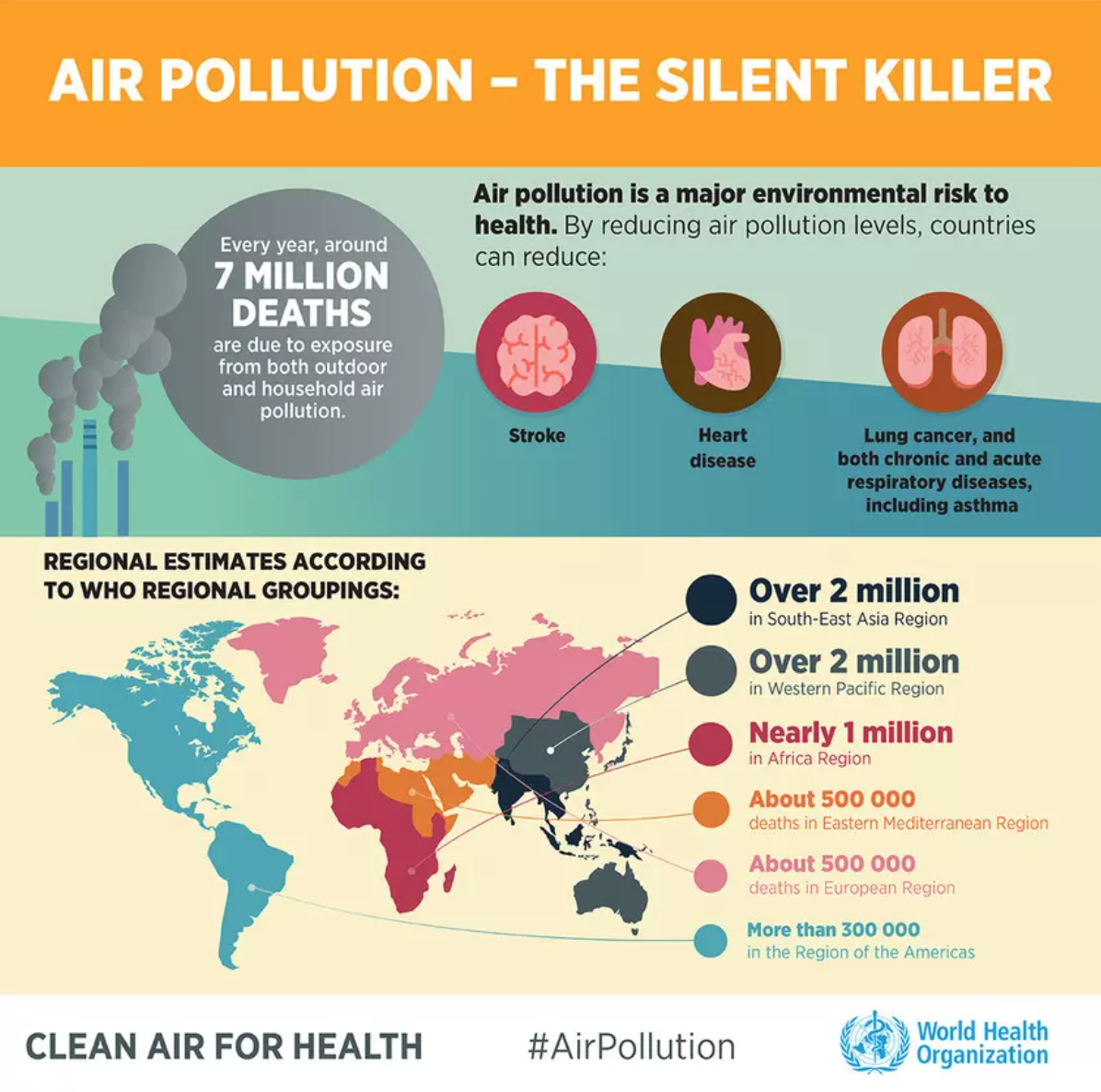
Air pollution is the single largest environmental risk to human health globally, and kills an estimated 7 million people every year, according to the World Health Organization (WHO).

The WHO says nine out of 10 people breathe polluted air, which is linked to strokes, lung cancer and heart disease – and now equals the effects of smoking tobacco, health experts say.

The problem affects more cities in Asia than anywhere else in the world. Major causes include vehicle emissions, coal power plants, construction, festival fireworks, forest clearing, and burning of crops, firewood and waste.

Delhi had the highest death toll among the five biggest cities, with some 54,000 deaths – or one per 500 people – due to high levels of tiny pollution particles, known as PM2.5, which can cause lung and heart diseases, the study said.

Japan’s capital Tokyo suffered the highest financial cost with approximately 40,000 deaths and economic losses of $43 billion, it added.

Lockdowns to stem the spread of the new coronavirus in major cities have forced millions to work from home, while slowing economies have slashed carbon dioxide emissions.

“We have seen changes in road traffic, aviation as well … but the major (air pollution) sources have continued to operate largely as before,” Farrow said,

“The problem is vast and needs a big, multi-industry effort to address it,” he added, calling for more investment in cleaner technologies, renewable energy and electrified public transport.

via Air pollution kills thousands in megacities despite lockdowns | World Economic Forum

Posted in Africa, Air Quality, Asia, China, Health Effects of Air Pollution, India, Japan, Latin America, Medical Studies, Mexico, World News | Tagged , , , , , , , , , , , , , , , , , , , | Leave a comment

Early exposure to air pollution puts children at higher risk of disease in adulthood

First of its kind study reveals evidence that early exposure to dirty air alters genes in a way that could lead to adult heart disease, among other ailments.

Exposure to air pollution has been linked to various diseases in adults. However, no study has investigated the impact on children.

To understand the multifaceted impacts, scientists at Stanford University have investigated air pollution’s effects at the single-cell level in a cohort of school-aged children (6–8 years; n = 221). While simultaneously focusing on both the cardiovascular and immune systems in children, the study reveals that air pollution puts children at higher risk of disease in adulthood.

The study uncovered that early exposure to dirty air alters genes in a way that could lead to adult heart disease, among other ailments. The study provides early clues for clinical intervention before actual disease presentation and could change the way medical experts and parents think about the air children breathe.

Study lead author Mary Prunicki, director of air pollution and health research at Stanford’s Sean N. Parker Center for Allergy & Asthma Research, said, “I think this is compelling enough for a pediatrician to say that we have evidence air pollution causes changes in the immune and cardiovascular system associated not only with asthma and respiratory diseases, as has been shown before. It looks like even brief air pollution exposure can actually change the regulation and expression of children’s genes and perhaps alter blood pressure, potentially laying the foundation for increased risk of disease later in life.”

For the study, scientists used a combination of continuous daily pollutant concentrations measured at central air monitoring stations in Fresno, daily concentrations from periodic spatial sampling, and meteorological and geophysical data. This data is then used to estimate average air pollution exposures for one day, one week, and 1, 3, 6, and 12 months before each participant visit. 

When scientists combined this data with health and demographics questionnaires, blood pressure readings, and blood samples, it showed warning signs.

Using a form of mass spectrometry, scientists analyzed immune system cells. This approach allowed more sensitive measurements of up to 40 cell markers simultaneously, providing a more in-depth analysis of pollution exposure impacts than previously possible.

Among their findings: Exposure to fine particulate known as PM2.5, carbon monoxide, and ozone over time is linked to increased methylation, an alteration of DNA molecules that can change their activity without changing their sequence. This change in gene expression may be passed down to future generations.

Air pollution exposure contributes to increment in monocytes, white blood cells that play a key role in the buildup of plaques in arteries. What’s more, it could predispose children to heart disease in adulthood. Although, future studies are needed to verify the long-term implications.

Study senior author Kari Nadeau, director of the Parker Center, said, “This is everyone’s problem. Nearly half of Americans and the vast majority of people worldwide live in places with unhealthy air. Understanding and mitigating the impacts could save a lot of lives.”

Early exposure to air pollution puts children at higher risk of disease in adulthood – Tech Explorist
Posted in Air Quality, Health Effects of Air Pollution, Medical Studies | Tagged , , , , , | Leave a comment

How outdoor pollution affects indoor air quality

MINUTE-BY-MINUTE OUTDOOR AND INDOOR AIR PARTICULATE MATTER MEASUREMENTS DURING AN AUGUST 2018 WILDFIRE EVENT.

Wildfire and firework smoke more impactful than inversions

Just when you thought you could head indoors to be safe from the air pollution that plagues the Salt Lake Valley, new research shows that elevated air pollution events, like horror movie villains, claw their way into indoor spaces. The research, conducted in conjunction with the Utah Division of Facilities Construction and Management, is published in Science of the Total Environment.

In a long-term study in a Salt Lake-area building, researchers found that the amount of air pollution that comes indoors depends on the type of outdoor pollution. Wildfires, fireworks and wintertime inversions all affect indoor air to different degrees, says Daniel Mendoza, a research assistant professor in the Department of Atmospheric Sciences and visiting assistant professor in the Department of City & Metropolitan Planning. The study is unique, Mendoza says, combining a long-term indoor air quality monitoring project with paired outdoor measurements and research-grade instruments.

“We all know about the inversions,” Mendoza says. “We all know how large of a problem wildfires are. But do we really know what happens when we’re inside?”

The setup

Mendoza, who also holds appointments as an adjunct assistant professor in the Pulmonary Division at the School of Medicine and as a senior scientist at the NEXUS Institute, and his colleagues set up their air monitoring equipment at the Unified State Laboratories in Taylorsville, Utah. They placed three sensors to measure airborne concentrations of particulate matter: One on the roof to measure outdoor air, one in the air handling room–where the outdoor air comes in–and one in an office. The building uses a 100% outside air filtration system; this is not typical for most commercial buildings, which usually use some amount of recirculated air.

The sensors stayed in place from April 2018 to May 2019, just over a year. In the Salt Lake Valley, a year’s air quality events include fireworks-laden holidays on Independence Day and Pioneer Day (July 24), smoke from wildfires throughout the West that settles in the bowl-like valley and wintertime inversions in which the whole valley’s emissions are trapped in a pool of cold air. Through it all, the team’s sensors kept watch. Amid the expected events, however, a private fireworks show took place on Aug. 17, 2018, within five miles of the study building, providing an unexpected research opportunity. More on that later.

Minute-by-minute outdoor and indoor air particulate matter measurements during a December 2018 inversion.

During a wintertime inversion event in December, as the Air Quality Index outdoors reached orange and red levels, the indoor air quality reached yellow levels and stayed there until the inversion cleared. In all, the pollution levels inside were about 30% of what they were outside.

That’s not surprising, Mendoza says. During inversions, only around 20% of the air pollution is what’s called primary pollution – the particulate matter that comes directly from combustion exhaust. The rest is secondary–formed as gases undergo chemical reactions under specific meteorological conditions and combine to form solid particulates. As soon as the air comes indoors, those meteorological conditions change.

“That changes the chemical environment for these particles and they actually dissociate,” Mendoza says. “That’s what we’re suspecting is happening when these particles come into the building and that’s why we don’t observe them.”

Wildfires
Minute-by-minute outdoor and indoor air particulate matter measurements during an August 2018 wildfire event.

In late August 2018, when three active wildfires were burning in California, indoor air pollution rose to about 78% of outside pollution levels.

“For nearly 48 hours,” the researchers wrote, “indoor air quality reached levels considered problematic for health compromised populations and nearly reached levels considered unsafe for all populations.”

It’s important to note, though, that thanks to the building’s air handling system, the air is still safer inside than outside.

The reason for the higher infiltration of particulate matter, Mendoza says, is that smoke particles are stable and don’t break down in different temperature and humidity conditions.

“We see those particles travel straight through the system,” Mendoza says, “because there’s no specific filtration that blocks out these particles. Smoke particles can also be smaller in size; that’s why they’re so dangerous for us.”

Fireworks


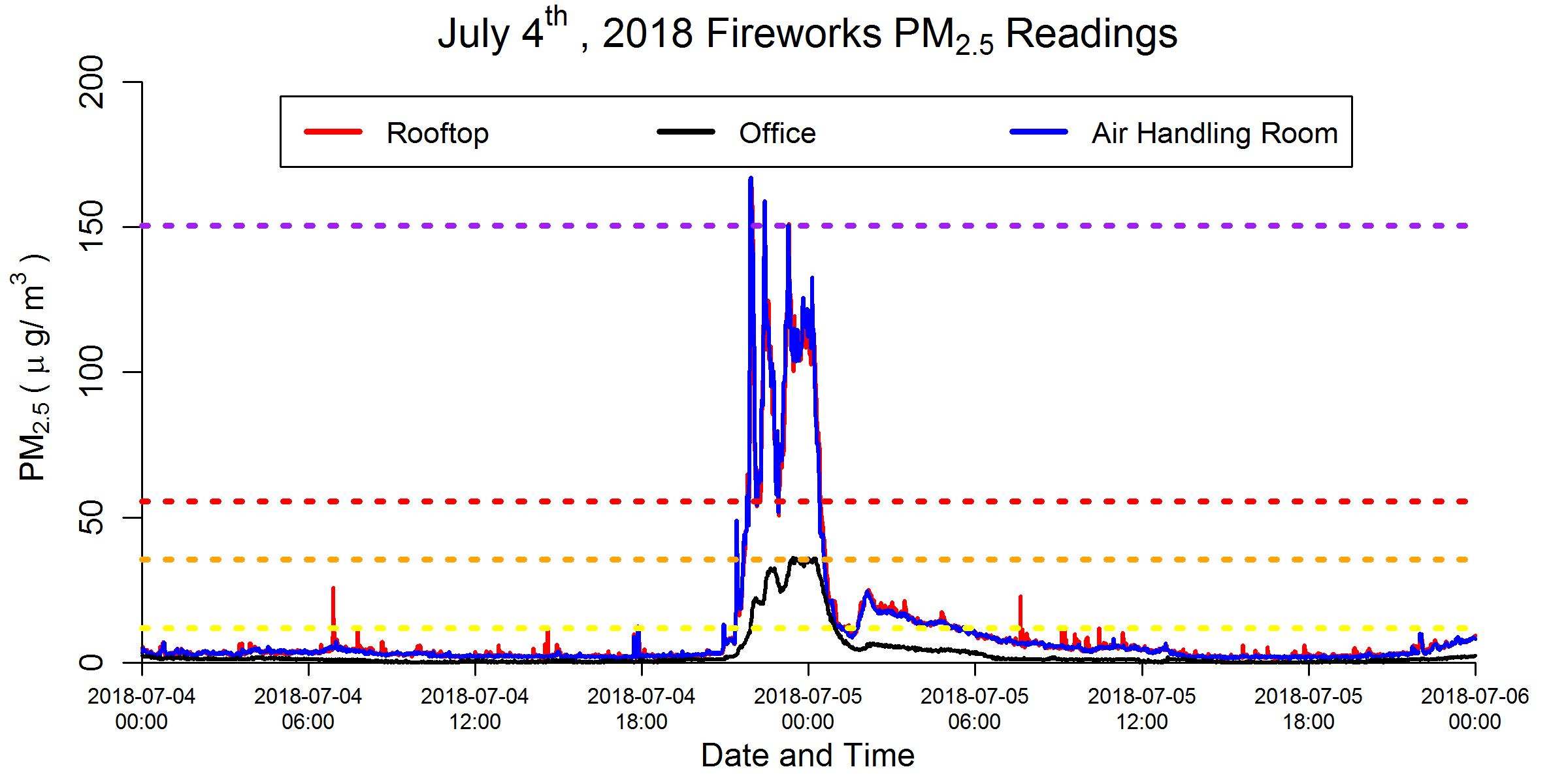
Minute-by-minute outdoor and indoor air particulate matter measurements during the 2018 Independence Day holiday.

Utah has two major fireworks holidays: July 4 and July 24 (Pioneer Day). But the researchers happened to catch a signal from a private fireworks event just a few weeks before the wildfire smoke event, providing an opportunity to see how fireworks shows, both large and small, affected indoor air quality.

The smoke from fireworks is somewhere between inversion pollution and wildfires. It contains primary smoke particles as well as the gases that can combine to produce secondary particulates, which can come from the chemicals used to produce fireworks’ bright colors.

On the night of July 4, 2018, air quality sharply deteriorated once fireworks shows began and stayed in the red range, with spikes into the purple “very unhealthy” range, for about three hours. Indoor air quality reached orange levels, registering about 30% of the outdoor air pollution.

“It was only after 8 a.m. on July 5 that indoor air quality returned to pre-fireworks levels,” the researchers write.

Minute-by-minute outdoor and indoor air particulate matter measurements during a private fireworks event.

The private fireworks show on August 17 lasted only 30 minutes, and although the scope was much smaller, the smoke was still enough to raise the indoor air quality index to orange for several minutes.

“Even a ‘small’ fireworks show did have a marked impact on indoor air quality,” Mendoza says. That matters to people with respiratory challenges who can see large-scale, poor air quality events like inversions and fireworks holidays coming–but who might find private fireworks shows an unpleasant surprise.

The commercial building that the researchers studied is a somewhat controlled environment. Learning about indoor air quality in homes will be a greater challenge. “You have kids coming in with mud or with dirt on their feet, you have vacuuming and cooking. So that’s going to be our next step.” As many people are spending more time at home due to the COVID-19 pandemic, the research will hopefully help understand what actions people can take to improve their indoor air quality.

“There is a lot of opportunity to reduce the pollutants that reach occupants in buildings, both commercial and residential,” says Sarah Boll, assistant director of the Utah Division of Facilities Construction and Management. “To me, that is the great part of this work–with more research it can point the way to protecting people indoors.”

###

Find the full study here.

How outdoor pollution affects indoor air quality | EurekAlert! Science News

Posted in Air Quality, USA, USA & Canada | Tagged , , , , , , , , | Leave a comment

Long-term exposure to low levels of air pollution increases risk of heart and lung disease

Exposure to what is considered low levels of air pollution over a long period of time can increase the risk of heart attack, stroke, atrial fibrillation and pneumonia among people ages 65 and older, according to new research published today in the American Heart Association’s flagship journal Circulation.

Air pollution can cause harm to the cardiovascular and respiratory systems due to its effect on inflammation in the heart and throughout the body. Newer studies on the impact of air pollution on health are focused on understanding the potential harm caused by long-term exposure and are researching the effects of multiple air pollutants simultaneously. Research on air pollution is critical to informing recommendations for national environmental and health guidelines.

“People should be conscious of the air quality in the region where they live to avoid harmful exposure over long periods of time, if possible,” said Mahdieh Danesh Yazdi, Pharm.D., M.P.H., Ph.D., a post-doctoral research fellow at the Harvard T.H. Chan School of Public Health and lead author of the study. “Since our study found harmful effects at levels below current U.S. standards, air pollution should be considered as a risk factor for cardiovascular and respiratory disease by clinicians, and policy makers should reconsider current standards for air pollutants.”

Researchers examined hospitalization records for more than 63 million Medicare enrollees in the contiguous Unites States from 2000 to 2016 to assess how long-term exposure to air pollution impacts hospital admissions for specific cardiovascular and respiratory issues. The study measured three components of air pollution: fine particulate matter (PM2.5), nitrogen dioxide (NO2) and ozone (O3). Using hundreds of predictors, including meteorological values, satellite measurements and land use to estimate daily levels of pollutants, researchers calculated the study participants’ exposure to the pollutants based upon their residential zip code. Additional analysis included the impact of the average yearly amounts of each of the pollutants on hospitalization rates for non-fatal heart attacks, ischemic strokes, atrial fibrillation and flutter, and pneumonia.

Statistical analyses found thousands of hospital admissions were attributable to air pollution per year. Specifically:

The risks for heart attacks, strokes, atrial fibrillation and flutter, and pneumonia were associated with long-term exposure to particulate matter.

Data also showed there were surges in hospital admissions for all of the health outcomes studied with each additional unit of increase in particulate matter. Specifically, stroke rates increased by 2,536 for each additional ug/m3 (micrograms per cubic meter of air) increase in fine particulate matter each year.

There was an increased risk of stroke and atrial fibrillation associated with long-term exposure to nitrogen dioxide.

Pneumonia was the only health outcome in the study that seemed impacted by long-term exposure to ozone; however, researchers note there are currently no national guidelines denoting safe or unsafe long-term ozone levels.

“When we restricted our analyses to individuals who were only exposed to lower concentrations of air pollution, we still found increased risk of hospital admissions with all of the studied outcomes, even at concentration levels below current national standards,” added Danesh Yazdi. “More than half of the study population is exposed to low levels of these pollutants, according to U.S. benchmarks, therefore, the long-term health impact of these pollutants should be a serious concern for all, including policymakers, clinicians and patients.”

The researchers further stratified the analyses to calculate the cardiovascular and respiratory risks associated with each of the pollutants among patient subgroups including gender, race or ethnicity, age and socioeconomic factors, detailed in the study.

The causality in the study could only be interpreted and not proven definitively due to the limitations of the data available, which may have not included other known CVD risk factors. In addition, coding errors can occur in the Medicare database, which would impact the analyses.

Long-term exposure to low levels of air pollution increases risk of heart and lung disease | EurekAlert! Science News
Posted in Air Quality, Health Effects of Air Pollution, Medical Studies | Tagged , , , , , | Leave a comment

PM2.5 air pollution claims 160,000 lives in five cities

Delhi, Mexico and São Paulo are the cities with the highest death tolls, new research finds

Fine particulate air pollution (PM2.5) was responsible for approximately 160,000 deaths in the world’s five largest cities in 2020.

Exposure to PM2.5 is considered the most important environmental risk factor for deaths globally and was attributed to 4.2 million premature deaths in 2015.

New research by Greenpeace Southeast Asia and the air quality technology company IQAir, suggests Delhi saw an estimated 54,000 deaths due to PM2.5 air pollution last year, or one death per 500 people.

Mexico, São Paulo, Shanghai and Tokyo followed India’s capital in the list of cities with the highest number of air pollution-triggered deaths.

The report also estimates that more than $5 billion (£3.6bn) was the economic cost of PM2.5 in 14 cities.

Of the included cities, the highest estimated total financial cost from air pollution was recorded in Tokyo, which suffered approximately 40,000 avoidable deaths and an economic loss of $43 billion (£31bn).

Avinash Chanchal, Climate Campaigner at Greenpeace India, said: “When governments choose coal, oil and gas over clean energy, it’s our health that pays the price.

“Air pollution from burning fossil fuels increases our likelihood of dying from cancer or stroke, suffering asthma attacks and of experiencing severe Covid-19.”

PM2.5 air pollution claims 160,000 lives in five cities – Energy Live News
Posted in Air Quality, Asia, China, India, Japan, Latin America, Mexico, World News | Tagged , , , , , , , , , , , | Leave a comment

Air pollution significantly raises risk of infertility, study finds

Exposure to air pollution significantly increases the risk of infertility, according to the first study to examine the danger to the general population.

The analysis of 18,000 couples in China found that those living with moderately higher levels of small-particle pollution had a 20% greater risk of infertility, defined as not becoming pregnant within a year of trying.

The study design did not enable the scientists to determine how air pollution might damage fertility, but pollution particles are known to cause inflammation in the body, which could damage egg and sperm production, the scientists said. Another recent study of 600 women attending a US infertility clinic found that increased exposure to air pollution was associated with a lower number of maturing eggs in the ovaries.

Infertility affects many millions of couples around the world but relatively little research has been done on the impact of air pollution. However, dirty air is already known to increase the risk of other aspects of reproduction, including premature birth and low birth weight. Common levels of nitrogen dioxide are as bad as smoking in raising the risk of miscarriage and pollution particles have been found on the foetal side of placentas.

Qin Li, at the Centre for Reproductive Medicine at Peking University Third hospital in China, who led the infertility research, said prospective parents should be concerned about air pollution. “Numerous studies have noted that air pollution is associated with lots of adverse pregnancy events,” he told the Guardian.

“Approximately 30% of infertile couples have unexplained infertility,” Li and colleagues wrote, noting that age, weight and smoking were well-known factors. “[Our study] indicates that small-particle pollution could be an unignorable risk factor for infertility.”

Previous studies have produced mixed results but were based on groups of people that excluded infertile couples or were conducted in infertility clinics, Li said: “Our study samples were recruited from the general population, so our findings may be more generalisable.”

“The size of the effects they observe seem pretty high, which would be concerning if borne out in future studies as well, particularly in low pollution environments,” said Tom Clemens, at the University of Edinburgh, UK. The pollution levels in China are relatively high, he said, but harmful effects have been reported on reproduction at much lower levels. “So clearly poor air quality impacts the reproductive system in general,” he said.

Prof Mireille Toledano at Imperial College London, UK, said new research on this important topic was very welcome as there were not many previous studies. She said lower levels of air pollution might affect infertility, but that more research was needed.

The research, published in the journal Environment International, was based on data from interviews and questionnaires from 18,571 couples who were part of the large China Fertility Survey of Married Women. In China, women are required to register with the authorities before attempting to become pregnant, enabling the researchers to request information from all women who were aiming to conceive.

The researchers found that women exposed to small particle pollution that was 10 micrograms per cubic metre higher over a year had a 20% greater risk of infertility. The average pollution level for the Chinese couples was 57µg/m3. In London, UK, the average is about 13µg/m3.

The results also showed that the proportion of women not becoming pregnant after 12 months of trying rose from 15% to 26% when comparing the quarter exposed to the lowest pollution with the quarter suffering the highest. The researchers took account of other factors including age, weight, income, smoking, alcohol drinking, and exercise levels.

Previous studies of dirty air and fertility have used data on sperm quality, perhaps because this is easier to obtain, with a 2017 review concluding air pollution has a “negative impact”.

“While there are certainly steps that individuals can take to reduce exposure, such as air filtration systems in high pollution locations and avoiding exposure to high traffic, they are unlikely to result in substantially different long-term exposures,” he said. “They are also not realistic for many people because of socio-economic constraints, including work patterns and transport opportunities.”

Air pollution significantly raises risk of infertility, study finds | Air pollution | The Guardian
Posted in Air Quality | Tagged , , , | Leave a comment