Man saved from deportation after pollution plea in French legal ‘first’

Court says man would face ‘worsening of his respiratory pathology due to air pollution’ in country of origin

A Bangladeshi man with asthma has avoided deportation from France after his lawyer argued that he risked a severe deterioration in his condition, and possibly premature death, due to the dangerous levels of pollution in his homeland.

In a ruling believed to be the first of its kind in France, the appeals court in Bordeaux overturned an expulsion order against the 40-year-old man because he would face “a worsening of his respiratory pathology due to air pollution” in his country of origin.

“To my knowledge, this is the first time a French court has applied the environment as one of its criteria in such a case,” the unnamed man’s lawyer, Ludovic Rivière, said. “It decided my client’s life would be endangered by the air quality in Bangladesh.”

Yale and Columbia universities’ Environmental Performance Index ranks Bangladesh 179th in the world for air quality in 2020, while the concentration of fine particles in the air is six times the World Health Organization’s recommended maximum. Air pollution, both ambient and household, was an extremely high risk factor in the 572,600 deaths in Bangladesh that were caused by noncommunicable disease in 2018, according to WHO figures.

The court took into consideration the fact that the drugs the man is receiving in France are not available in Bangladesh, and that the Bangladeshi health system can only provide the night-time ventilation equipment he needs for his sleep apnoea in hospital.

It also heard evidence that the man’s father had died of an asthma attack at the age of 54, Rivière said, and that since arriving in France and beginning treatment, his respiratory capacity had increased from 58% in 2013 to 70% in 2018.

“For all these reasons, the court decided that sending my client back to his country would mean putting him at real risk of death,” the lawyer said. “Respiratory failure as a result of an asthma attack would be almost inevitable.”

The man arrived in France in 2011 after fleeing persecution in his home country. He settled in Toulouse, found work as a waiter, and in 2015 was given a temporary residence permit as a foreign national requiring medical treatment.

In 2017, however, doctors advising the French immigration authorities recommended that his condition “could be adequately treated in Bangladesh”, and two years later the local Haute-Garonne prefecture issued an expulsion order.

A lower court in Toulouse overturned the deportation order in June last year, purely on the grounds that the relevant drugs were not in fact available in the man’s home country. The Bordeaux court went even further in rejecting the prefecture’s appeal, saying that the environmental criterion must also be taken into account.

Dr Gary Fuller, an air pollution scientist at Imperial College London, said this was the first case he was aware of in which the environment had been cited by a court in an extradition hearing. “The court has effectively declared that the environment – air pollution – meant it was unsafe to send this man back,” he said.

Fuller said the case fed into a steadily growing broader agenda about the right to a healthy environment. “There’s a UN rapporteur on this issue, and people around the world – particularly in countries with less developed environmental and health laws – who are developing thinking about declaring a right to a healthy environment.”

Many countries set standards for air and water quality, for example, but “stop short of actually saying you have a right to be protected from environmental harm”, Fuller said. The recent case of Ella Kissi-Debrah, the nine-year-old London girl who died in February 2013, could be seen as part of the same process, he said.

A London coroner made legal history last month by ruling that air pollution was a cause of Ella’s death, with acute respiratory failure and severe asthma. Court cases were being brought in other countries in Europe, Fuller said, as part of a growing trend around the world to seek institutional accountability for unhealthy environments.

Man saved from deportation after pollution plea in French legal ‘first’ | France | The Guardian
Posted in Air Quality | Tagged , , | Leave a comment

Bad air quality in the Netherlands makes thousands of people want to move

Tens of thousands of Dutch people want to move due to air pollution, according to Longfonds, a non-profit organization specialized in improving lung health and helping people with lung disease. They state that 12 percent of lung patients want to move due to bad air quality.

“That is really worrisome”, says director of Longfonds, Michael Rutgers. “We’re talking here about tens of thousands of people that suffer so much due to air pollution that they want to move. This is unacceptable.”

55-year-old Desirée Brouwer who has asthma is one of those people. She lives in Capelle aan den Ijssel “directly under the smoke of Rotterdam”. In an interview with Longfonds she describes what her day looks like “When I walk out of the door in the morning, I notice that the air is really dirty.”

Due to the unclean air which causes her extreme difficulty breathing and fatigue, she has expressed the wish to relocate. “We tried to move to Sweden and now we would like to go to Gelderland but it is not financially possible. We’re literally stuck in our home.”

A quarter of the 1.2 million people with some form of lung disease in the Netherlands are negatively affected by poor air quality every week. The most common culprits named by lung patients are wood-burning stoves, road traffic, barbecues and fire pits.

“Exposure to particulate matter, nitrogen dioxide and ozone causes and worsens lung cancer, asthma, COPD and cardiovascular disease, among other things”, statd Longfonds. The organization claims that one in five Dutch children develop asthma due to high nitrogen dioxide levels, awarding the Netherlands an unwanted first place in Europe in that respect.

Longfonds is working together with a range of Dutch municipalities to improve air quality. In January 2020, state secretary, Stientje van Veldhoven together with 36 municipalities and nine provinces signed the Schone Lucht Akkoord. Currently, 56 municipalities and 11 provinces are part of the deal. “Only together can we work for cleaner air for our children”, says Rutgers.

The deal is a promise to consistently improve air quality with the goal to achieve a 50 percent health gain from 2016 to 2030. “This means that people live longer, healthier and with better quality”, said Minister Veldhoven when she placed her signature last year.

Bad air quality in the Netherlands makes thousands of people want to move | NL Times
Posted in Air Quality | Tagged , | Leave a comment

Wasatch Front’s inversion season starting to set up

It may be clear now in Salt Lake City, but could get worse

The air quality conditions along the Wasatch Front Wednesday are good, with values of fine-particulate pollution well below the federal threshold set by the U.S. Environmental Protection Agency.

So why does the forecast from the Utah Department of Environmental Quality over the next three days describe conditions as moderate?

The contradiction is part of the agency’s efforts to be proactive, sort of a shot over the bow to urge residents to reduce emissions from homes and vehicles before conditions get worse.

“We are very proactive in our forecasting,” said Bo Call, monitoring section manager for the department’s Division of Air Quality. “Historically we have seen that pollution levels can double from day to day.”

Regulators hosted an air quality briefing Wednesday as part of one way to get the word out about the Wasatch Front inversion season, which typically is at its worst in January and the first part of February.

The state’s periodic struggle with air pollution is a critical challenge the division and residents face after a stagnant weather system settles in and traps emissions in the valley like a lid.

“All the pollution we create can’t escape or go anywhere,” Call said.

The manager likened action now to filling a bathtub.

Instead of turning on the water full blast, any action people can take to slow the flow of pollutants and try to reduce it to a drip will keep that bathtub from overflowing.

For the last couple years, the inversion season in Utah has been mild and regulators are hoping to keep it that way.

While weather forecasts dwindle in accuracy the farther out they go, Call said it looks to be that the Wasatch Front might get lucky this year if a series of small storms keep the air stirred up and flush out pollutants.

Fine-particulate pollution is linked to a variety of harmful health effects, including increased incidences of stroke and respiratory ailments, and in some studies excess pollution is blamed for early onset of dementia and decreased mental acuity.

The Wasatch Front, which for many years was designated by the EPA as out of attainment for the federal standard of 35 micrograms of PM2.5 per cubic meter, recently was reclassified as in attainment after meeting the rolling three year average for the pollutant.

While the state’s metropolitan areas did have episodic spikes in fine-particulate pollution, Call said it hasn’t been enough to put the state back on EPA’s list of noncomplying regions.

Call said the most effective way to fight pollution is for motorists to seek the cleaner burning Tier 3 fuel sold at a variety of gas stations and, if they have a choice, get behind the wheel of the newest car at their disposal.

The website tier3gas.org/locations provides information to motorists on where to buy the fuel.

Coupled with a newer model car, using Tier 3 fuel can result in a reduction in emissions by as much as 80%, according Call. While Utah regulators have not yet been able to quantify how much of an impact use of the fuel has made so far, Call anticipates significant reductions over time.

“The benefits are potentially huge.”

Wasatch Front’s inversion season starting to set up – Deseret News
Posted in Air Quality, USA, USA & Canada | Tagged , , , | Leave a comment

Exposure to air pollution in South Asia linked to pregnancy loss, study finds

Pregnant women in South Asia who have been exposed to air pollution face an increased risk of pregnancy loss, miscarriage, and stillbirth, according to a new study.

Researchers found that an estimated 349,681 pregnancy losses each year across India, Bangladesh and Pakistan were associated with bad air quality.

Published in the Lancet Planetary Health journal on Wednesday, the study suggests that if these countries met India’s air quality standard, it could have prevented 7% of the annual pregnancy losses.

Dirty air has previously been linked to increased miscarriages, premature births and low birth weights among infants, as a result of the effects of pollution on the mother. Other research has found that pollution can breach a mother’s placenta and potentially reach fetuses in the womb.

But the study is believed to be the first of its kind to quantify the effect of ambient pollution on pregnancy loss in South Asia — one of the most polluted regions on Earth — and the authors say their findings are important for improving public and maternal health, particularly in low income countries.

“South Asia has the highest burden of pregnancy loss globally and is one of the most PM2.5 polluted regions in the world. Our findings suggest that poor air quality could be responsible for a considerable burden of pregnancy loss in the region, providing further justification for urgent action to tackle dangerous levels of pollution,” said lead author of the study, Dr. Tao Xue, who is assistant professor at Peking University, China.

PM2.5 is tiny particulate pollution that can move deep into the lungs when inhaled and enter the bloodstream. The particles, made up of dust, dirt, soot or smoke, originate from construction sites, unpaved roads, fields, smokestacks or fires, and can contain different chemicals. But most particles are a mix of pollutants from power plant, industrial and vehicle emissions.

Exposure to such particles has been linked to lung and heart disorders and can impair cognitive and immune functions.

Researchers focused on these tiny pollution particles. They found between 2000 and 2016, 7.1% of pregnancy losses in South Asia were attributable to the mothers being exposed to air pollution that exceeded India’s current air quality standard of 40 micrograms per cubic meter of air.

For air pollution above the World Health Organization’s air quality guidelines, which recommends the safer 10 micrograms per cubic meter of air, exposure may have contributed to 29% of pregnancy losses, the study found.

Expectant mothers from rural areas or those who were older were at greater risk than young mothers from urban areas, the study found. And pregnancy loss associated with air pollution was more common in the Northern plains region in India and Pakistan.

To reach their findings, researchers looked at data from household surveys on health from 1998 to 2016 and estimated exposure to pollution during pregnancy with the help of satellites. They then created a model that examined how exposure to pollution increased a woman’s risk of pregnancy loss, taking into account maternal age, temperature and humidity, seasonal variation, and long-term trends in pregnancy loss.

The study included 34,197 women who had lost a pregnancy, including 27,480 miscarriages and 6,717 stillbirths. Of the pregnancy losses, 77% were from India, 12% from Pakistan, and 11% from Bangladesh.

The authors say worse air quality can increase the burden of pregnancy loss in low and middle-income countries, so improving pollution levels could reduce miscarriages and stillbirths and lead to knock-on improvements in gender equality.

“We know losing a pregnancy can have knock-on mental, physical and economic effects on women, including increased risk of postnatal depressive disorders, infant mortality during subsequent pregnancy, and increase the costs related to pregnancy, such as loss of labour,” said co-author Dr. Tianjia Guan, from the Chinese Academy of Medical Sciences and Peking Union Medical College.

The study cautions that more research is needed to establish causality between pollution and pregnancy loss as they said the survey data is subject to recall bias. The researchers were also not able to distinguish between natural pregnancy loss and abortions. They also note that there was under reporting of natural pregnancy losses because of stigma or ignoring very early miscarriages.

Dirty air is a major environmental health risk. The WHO says that 4.2 million people die every year due to strokes, heart disease, lung cancer, acute and chronic respiratory diseases linked to ambient — or outdoor — air pollution.

Exposure to air pollution in South Asia linked to pregnancy loss, study finds – CNN

Posted in Air Quality, Asia, Health Effects of Air Pollution, India, Medical Studies | Tagged , , , , , , , | Leave a comment

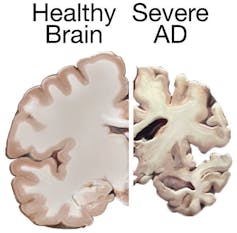
Air pollution may contribute to Alzheimer’s and dementia risk – here’s what we’re learning from brain scans

Illustration showing how a brain with Alzheimer's disease shrinks.
The brain atrophies with Alzheimer’s disease. National Institute On Aging

Alzheimer’s disease is the most common cause of dementia. It slowly destroys memory, thinking and behaviors, and eventually the ability to carry out daily tasks.

As scientists search for a cure, we have been learning more about the genetic and environmental factors that can increase a person’s risks of developing late-onset Alzheimer’s disease and related dementias.

In particular, my colleagues and I in preventive medicine, neurology and gerontology have been looking at the role of outdoor air pollution.

Our early research in 2017 became the first study in the U.S. using both human and animal data to show that brain aging processes worsened by air pollution may increase dementia risk. Our latest studies show how older women who lived in locations with high levels of PM2.5 – the fine particulate matter produced by vehicles and power plants – suffered memory loss and Alzheimer’s-like brain shrinkage not seen in women living with cleaner air.

Together these findings suggest a way to avoid one risk factor for Alzheimer’s disease – reduce human exposure to PM2.5. Unfortunately, that’s easier said than done.

Silent risk for dementia

PM2.5, also known as soot, consists of microscopic particles of chemicals, car exhaust, smoke, dust and other pollutants suspended in the air. An estimated one in six Americans lives in counties with unhealthy levels of particle pollution.

We have been investigating whether PM2.5 may accelerate the brain’s aging processes at the preclinical stage – the “silent” phase of the disease before any symptoms of Alzheimer’s disease and related dementias appear.

In the first U.S.-based nationwide study to link PM2.5 exposure and cognitive impairment, published in 2017, we found older women were almost twice as likely to develop clinically significant cognitive impairment if they had lived in places with outdoor PM2.5 levels exceeding the U.S. Environmental Protection Agency’s standard than if they hadn’t. Because we worked with the Women’s Health Initiative Memory Study, which followed the participants closely, we were able to account for other dementia risk factors, such as smoking, lack of exercise and hormone therapy.

In a new study, we wanted to see how the brains of older people were changing if they had experienced different levels of PM2.5 in the years before Alzheimer’s symptoms began.

We followed the progress of 712 women with an average age of 78 who did not have dementia at the start of the study and who underwent MRI brain scans five years apart. By combining EPA monitoring data and air quality simulations, we were able to estimate the everyday outdoor PM2.5 level around where the participants lived before their first MRI scan.

We found older women were more likely to have brain shrinkage similar to what is observed in patients with Alzheimer’s disease. When we compared the brain scans of older women from locations with high levels of PM2.5 to those with low levels, we found dementia risk increased by 24% over the five years.

Perhaps more alarming is that these Alzheimer’s-like brain changes were present in older women with no memory problems. The shrinkage in their brains was greater if they lived in locations with higher levels of outdoor PM2.5, even when those levels were within the current EPA standard.

Researchers in Spain recently examined brain MRI scans of healthy individuals at risk for Alzheimer’s disease and also found associations between air pollution exposure and reduced volume and thickness in specific brain areas known to be affected in Alzheimer’s disease.

Pollution and brain shrinkage

We also looked at episodic memory, which involves memories of specific events and is affected early by Alzheimer’s disease. If episodic memory decline was associated with living in locations with increasing PM2.5, could we see any evidence that such specific cognitive decline came as a consequence of the Alzheimer’s-like brain shrinkage?

Data from the Women’s Health Initiative Memory Study and past MRIs allowed us to look for changes across time for nearly 1,000 women. We found that as outdoor PM2.5 increased in locations where these older women lived, episodic memory declined. Approximately 10%-20% of the greater memory decline could be explained by Alzheimer’s-like brain shrinkage.

Because the silent phase of dementia is thought to start decades before the manifestation of symptoms, findings from our recent studies raise concerns that air pollution exposures during mid to early life may be equally or even more important than late-life exposure.

Genes also appear to play a role. Our research has shown that a critical Alzheimer’s risk gene, APOE4, interacts with air particles to accelerate brain aging. We found the environmental risk raised by long-term PM2.5 exposure was two to three times higher among older women with two copies of the APOE4 gene than among women without the gene.

Other researchers have subsequently investigated the possible interplay of that gene and environment. A Swedish study in 2019 did not find strong evidence for gene and environment interaction. But a 2020 study using data collected from elderly residents of two New York City neighborhoods found an association between long-term air pollution exposure and cognitive decline, with steeper rates of decline found in APOE4 carriers.

An avoidable risk

In the U.S., the Clean Air Act requires the Environmental Protection Agency to develop air quality standards that provide an adequate margin of safety to protect sensitive populations, such as children and the elderly.

The U.S. government had an opportunity to strengthen those standards in 2020, a move that EPA scientists explained could prevent thousands of premature deaths from health risks such as heart disease. Scientists advocated tougher standards, citing other health problems linked to PM2.5. However, EPA Administrator Andrew Wheeler declined, announcing on Dec. 7 that the standards would remain unchanged.

Air pollution may contribute to Alzheimer’s and dementia risk – here’s what we’re learning from brain scans
Posted in Air Quality, Health Effects of Air Pollution, Medical Studies | Tagged , , , , | Leave a comment

What Is Cedar Fever?

Cedar fever season is upon us, and at a time when having a fever – or even catching a slight cold – is concerning, it’s more important than ever to understand the symptoms and source of this common Central Texas allergy.

For starters, cedar fever isn’t a flu or a virus – it’s an allergic reaction to the pollen released by mountain cedar trees. In Texas, the predominant species of mountain cedar is the Ashe juniper.

“Cedar fever is the worst west of I-35, where you have primarily juniper mixed in with oaks and some other species,” said Jonathan Motsinger, the Central Texas Operations department head for the Texas A&M Forest Service. “And because all of those junipers are producing pollen at the same time, you’re going to get a higher concentration of pollen in the air.”

This is one of the primary factors contributing to cedar fever – the sheer quantity and density of Ashe junipers in Central Texas. According to Robert Edmonson, a biologist for the Texas A&M Forest Service, the pollen from Ashe junipers isn’t particularly allergenic or harmful – it’s just so concentrated that, even if you aren’t generally susceptible to allergies, it could still affect you.

“There’s just so much pollen in the air, it absolutely overwhelms the immune system,” Edmonson said. “It’s like trying to breathe in a dust storm.”

Cedar Or Juniper, The Response Is The Same

Since pollen is wind disseminated, cedar fever can affect individuals far removed from areas with a high-concentration of juniper trees. And the source isn’t limited to Ashe junipers. In more eastern parts of the state, there are also eastern red cedars that pollinate around the same time — between December and January — and can induce a similar response from people’s auto-immune systems.

Besides the sheer quantity of pollen released, cedar fever is mostly problematic because of when that pollen is released. Most trees pollinate in the spring, when we’re expecting to have allergies. Ragweed pollen and mold spores can contribute to allergies in the fall, but very few plants pollinate during the winter. Cedar trees are the exception — they are triggered by colder weather — and in Texas, their favorite time to release pollen is right after a cold front.

“Following a cold front, the air dries out, we get some wind, and the pressure is different,” Edmonson said. “Under those conditions, every single pollen cone on a juniper tree will open at one time, and it looks like the trees are on fire. It looks like there’s smoke coming off of them.”

While this creates for some fascinating imagery, it can also lead to some serious misery. And for people new to the Central Texas region, or unfamiliar with cedar fever as a whole, it can lead to genuine confusion since the pollination period of mountain cedar trees is also in the middle of flu season.

It’s not uncommon for people experiencing cedar fever to mistake their symptoms as a cold or the seasonal flu, especially given the variety of symptoms triggered by cedar fever. According to Healthline, these may include fatigue, sore throat, runny nose, partial loss of smell and – believe it or not – some people actually do run a fever.

This year could be particularly problematic, since many symptoms align with disease caused by the novel coronavirus. But there are a few tell-tale signs to look out for. First of all, cedar pollen will rarely cause your body temperature to surpass 101.5. If your fever exceeds that temperature, then pollen likely isn’t the cause.

There are also a few symptoms of cedar fever that aren’t linked to COVID-19, like itchy, watery eyes, blocked nasal passages and sneezing. But there is one “dead giveaway” that, according to Edmonson, should always clear things up. “If your mucus is running clear,” he said, “then it’s an allergy. If it’s got color, then it’s probably a cold or the flu.”

You can treat cedar fever by taking allergy medications and antihistamines, but you should consult with your physician or health care professional before taking new medications.

You can also try and anticipate the pollen by tuning in to your local news station, many of which will give you the pollen count and can predict when it’s going to be particularly bad. On those days, it’s smart to keep windows and doors closed, to limit the amount of time you spend outdoors, and to change air conditioning filters in your car and in your home.

Removing cedar trees from your property isn’t recommended primarily because the pollen is airborne and — since they often wait to release their pollen until it’s cold, dry and windy — that pollen can blow for miles. It’s also important to note that only male juniper trees release pollen.

“The male trees have pollen cones, and the female trees have berry-like cones, which are very inconspicuous, but that’s what’s pollenated from the male trees,” Motsinger said.

What Is Cedar Fever? – Texas A&M Today

Posted in Air Quality | Tagged , , , , | Leave a comment

Scientists Discover How Aerosols From Pollution, Desert Storms, and Forest Fires Can Intensify Thunderstorms

Researchers identify a mechanism by which small particles in the atmosphere can generate more frequent thunderstorms.

Observations of Earth’s atmosphere show that thunderstorms are often stronger in the presence of high concentrations of aerosols — airborne particles too small to see with the naked eye.

For instance, lightning flashes are more frequent along shipping routes, where freighters emit particulates into the air, compared to the surrounding ocean. And the most intense thunderstorms in the tropics brew up over land, where aerosols are elevated by both natural sources and human activities.

While scientists have observed a link between aerosols and thunderstorms for decades, the reason for this association is not well-understood.

Now MIT scientists have discovered a new mechanism by which aerosols may intensify thunderstorms in tropical regions. Using idealized simulations of cloud dynamics, the researchers found that high concentrations of aerosols can enhance thunderstorm activity by increasing the humidity in the air surrounding clouds.

This new mechanism between aerosols and clouds, which the team has dubbed the “humidity-entrainment” mechanism, could be incorporated into weather and climate models to help predict how a region’s thunderstorm activity might vary with changing aerosol levels.

“It’s possible that, by cleaning up pollution, places might experience fewer storms,” says Tim Cronin, assistant professor of atmospheric science at MIT. “Overall, this provides a way that humans may have a footprint on the climate that we haven’t really appreciated much in the past.”

Cronin and his co-author Tristan Abbott, a graduate student in MIT’s Department of Earth, Atmospheric and Planetary Sciences, published their results on January 1, 2021, in the journal Science.

Clouds in a box

An aerosol is any collection of fine particles that is suspended in air. Aerosols are generated by anthropogenic processes, such as the burning of biomass, and combustion in ships, factories, and car tailpipes, as well as from natural phenomena such as volcanic eruptions, sea spray, and dust storms. In the atmosphere, aerosols can act as seeds for cloud formation. The suspended particles serve as airborne surfaces on which surrounding water vapor can condense to form individual droplets that hang together as a cloud. The droplets within the cloud can collide and merge to form bigger droplets that eventually fall out as rain.

But when aerosols are highly concentrated, the many tiny particles form equally tiny cloud droplets that don’t easily merge. Exactly how these aerosol-laden clouds generate thunderstorms is an open question, although scientists have proposed several possibilities, which Cronin and Abbott decided to test in high-resolution simulations of clouds.

For their simulations, they used an idealized model, which simulates the dynamics of clouds in a volume representing Earth’s atmosphere over a 128-kilometer-wide square of tropical ocean. The box is divided into a grid, and scientists can observe how parameters like relative humidity change in individual grid cells as they tune certain conditions in the model.

In their case, the team ran simulations of clouds and represented the effects of increased aerosol concentrations by increasing the concentration of water droplets in clouds. They then suppressed the processes thought to drive two previously proposed mechanisms, to see if thunderstorms still increased when they turned up aerosol concentrations.

When these processes were shut off, the simulation still generated more intense thunderstorms with higher aerosol concentrations.

“That told us these two previously proposed ideas weren’t what were producing changes in convection in our simulations,” Abbott says.

In other words, some other mechanism must be at work.

Driving storms

The team dug through the literature on cloud dynamics and found previous work that pointed to a relationship between cloud temperature and the humidity of the surrounding air. These studies showed that as clouds rise they mix with the clear air around them, evaporating some of their moisture and as a result cooling the clouds themselves.

If the surrounding air is dry, it can soak up more of a cloud’s moisture and bring down its internal temperature, such that the cloud, laden with cold air, is slower to rise through the atmosphere. On the other hand, if the surrounding air is relatively humid, the cloud will be warmer as it evaporates and will rise more quickly, generating an updraft that could spin up into a thunderstorm.

Cronin and Abbott wondered whether this mechanism might be at play in aerosols’ effect on thunderstorms. If a cloud contains many aerosol particles that suppress rain, it might be able to evaporate more water to the its surroundings. In turn, this could increase the humidity of the surrounding air, providing a more favorable environment for the formation of thunderstorms. This chain of events, therefore, could explain aerosols’ link to thunderstorm activity.

They put their idea to the test using the same simulation of cloud dynamics, this time noting the temperature and relative humidity of each grid cell in and around clouds as they increased the aerosol concentration in the simulation. The concentrations they set ranged from low-aerosol conditions similar to remote regions over the ocean, to high-aerosol environments similar to relatively polluted air near urban areas. 

They found that low-lying clouds with high aerosol concentrations were less likely to rain out. Instead, these clouds evaporated water to their surroundings, creating a humid layer of air that made it easier for air to rise quickly through the atmosphere as strong, storm-brewing updrafts.

“After you’ve established this humid layer relatively low in the atmosphere, you have a bubble of warm and moist air that can act as a seed for a thunderstorm,” Abbott says. “That bubble will have an easier time ascending to altitudes of 10 to15 kilometers, which is the depth clouds need to grow to to act as thunderstorms.”

This “humidity-entrainment” mechanism, in which aerosol-laden clouds mix with and change the humidity of the surrounding air, seems to be at least one explanation for how aerosols drive thunderstorm formation, particularly in tropical regions where the air in general is relatively humid.

“We’ve provided a new mechanism that should give you a reason to predict stronger thunderstorms in parts of the world with lots of aerosols,” Abbott says.

Reference: “Aerosol invigoration of atmospheric convection through increases in humidity” by Tristan H. Abbott and Timothy W. Cronin, 1 January 2021, Science.

DOI: 10.1126/science.abc5181

Scientists Discover How Aerosols From Pollution, Desert Storms, and Forest Fires Can Intensify Thunderstorms

Posted in Air Quality | Tagged , , | Leave a comment

Microscopic metal particles in air pollution linked to brain disease

While huge efforts are taken to prevent deaths and illness from Covid, air pollution is a menace that is impacting almost everyone

In a playground in Manchester, next to a busy road, Dr Barbara Maher captures air samples to bring back to her lab at Lancaster University. In a thimble full of air she records hundreds of thousands of microscopic particles, some rich in iron.

In a playground in Manchester, next to a busy road, Dr Barbara Maher captures air samples to bring back to her lab at Lancaster University. In a thimble full of air she records hundreds of thousands of microscopic particles, some rich in iron.

Others are pieces of soot from traffic fumes, but up to one-fifth are metal. There is growing evidence that these often strongly magnetic particles can worm into our brains and set in motion what looks worryingly like the early stages of Alzheimer’s and Parkinson’s disease.

On another day Maher looks down a special microscope at slivers of human brain. Inside cells she observes clumps of bright metal particles, rich in iron and aluminium, sometimes titanium too. “The cytotoxicity of those metals is well known,” she explains, meaning they are poisonous to our cells.

Close by these metal clumps she and her medical colleagues detected damage in brain stem tissue and misfolded proteins, hallmarks of diseases such as Alzheimer’s. Maher believes these particles originated from pollution.

The postmortem brain tissue in the study is from 186 individuals who lived in Mexico City. Metal-bearing nanoparticles are abundant in the air of Mexico City, with more than half containing iron, lead or zinc.

Maher found metal nanoparticles in almost all samples of the brainstem she examined, including young adults. Where these particles were there tended to be damage to neurons, she says, “even in individuals as young as 11 months of age.”

The same quantities were not in people from a cleaner Mexican city. In ongoing work Maher is finding such metal-rich particles in the brains of people who had lived in Manchester, though fewer of them.

Crucially, most of the particles in the brain measure just 20 to 30 nanometres across. Red blood cells are giants in comparison, spanning eight microns (0.008 mm) or 400 times the size of the nanoparticles.

Concerning

Being so small turns out to be significant – and concerning.

“We know that these particles can access the brain by routes you wouldn’t ordinarily think of,” says Dr Deborah Cory-Slechta, environmental scientist at the University of Rochester medical centre in New York. “When you breathe it in, that air pollution hits the top of your nose and the ultrafine particles are taken up and transported directly into the brain.”

Another route, she says, is down the trigeminal nerve, the largest nerve in our head, which sends signals for facial expressions and chewing. This allows the particles to bypass the blood brain barrier, a moat of cells blocking toxins from crossing into our brains from the body.

Cory-Slechta is troubled by pile-ups of iron particles, which seem to accumulate in the brain with age, but more so in the diseased brain.

“There’s always excess iron in the brain for all the neurodegenerative diseases I’ve looked at so far.”

She believes that for many people, exposure to metal pollutants begins in the womb, and continues throughout their life.

She also blames air pollution. Iron is “frequently found at unusually high concentrations in ultrafine air pollution, though often with other metals such as copper and zinc” .

Normally iron is chaperoned around the body by proteins, and so tightly controlled. Unlike a metal such as gold, iron is reactive and can strip electrons from our proteins. This can lead to “oxidative stress” in our brains, says Cory-Slechta.

“It is not really clear that the brain has a way to get rid of iron if there’s too much,” she adds.

Blood samples

A study in Nature Communications this year from China found nanoparticles in blood samples and also in fluid from the lungs of people living in polluted areas.

Looking in brain cells, Maher saw metal-containing nanoparticles sitting within damaged mitochondria, the “power stations” that generate energy in our cells. “To see clusters of iron-rich particles sitting inside these structures is not normal. We find them associated with titanium and aluminium, and these metals definitely should not be in the brain.”

Maher suspects that inhaled metal particles eventually overwhelm the brain’s protective mechanisms, so cells die, which triggers inflammation. However, it is not proven that metal particles we breathe injure our brains and lead to brain disease such as Alzheimer’s.

“The concept of particulate matter accumulating in the brain and driving the pathology is a neat concept,” says Dr Matthew Campbell, neuroscientist at Trinity College Dublin. But he is unconvinced that the evidence is strong enough to show that particles are causing brain conditions such as Alzheimer’s. “What you see may not be the cause of the disease,” he says, regarding the postmortem brain tissue.

A scientific journal editor suggested to Maher that one way to prove the link between pollution and brain disease is to expose primates to pollution and monitor their brains, something Maher does not want to do.

Campbell agrees that such evidence is needed. He would “want to see multiple animal species being exposed to particulate matter and driving the pathology that mimics or is like Alzheimer’s disease.”

Maher is convinced that there is enough evidence for policy-makers to consider actions. It is known that living close to major roads is linked to higher risk of dementia. “

Seeing all these particles directly associated with neurological damage, even in very young people, is strongly suggestive that we need to be doing something to reduce their abundance in the air that we are breathing,” she says.

Balance problems

Early signs of damage are seen in young, highly exposed people, including behavioural issues, cognitive impairment and balance problems, says Maher, and intervening in elderly people is already too late.

For Campbell it makes sense to reduce particulate matter pollution anyway, including for cardiovascular health. “Nobody wants to be breathing in particulate matter.”

Corey-Slechta has been studying the effect of ultrafine pollution in her lab in upstate New York. She takes in outside air and extracts the smallest particles. The ultrafine pollution is then pumped into the cages of mice, so that she can see effects from inhaling these particles.

When she looks at the brains of young mice “I’m finding increased levels of two proteins that are very characteristic of Alzheimer’s disease, beta-amyloid and tau.”

She has lots of questions, such as what happens if the mice are exposed early in life, and then repeatedly during life, which she hopes to answer.

While enormous efforts are rightly taken to prevent deaths and illness from Covid-19, air pollution is an unseen menace that is impacting almost everyone and probably causing harm to brain health.

Earlier this year Maher and researchers in Trinity College Dublin linked open-fire use in Ireland with poorer test scores in fluency and recall. The link was stronger among women, which the scientists blamed on them breathing in more fire particles by spending more time at home than men, on average.

Particles

PM2.5 is a category of pollution with particles above 2.5 microns in diameter – larger than the ultrafine metal particles.

In November a study in Lancet Planet Health showed that living in areas with higher levels of PM2.5 was significantly linked to an increased risk of hospital admission for Parkinson’s, Alzheimer’s and related dementias. The US study showed that there was no safe level where PM2.5 pollution causes no harm.

PM2.5 is monitored and regulated. The smallest more numerous particles are not. Further, the only metal regulated in air for now is lead. Yet there is a strong case to track and regulate metals such as iron in the air, says Cory-Slechta.

These metal-rich particles often spew out from cars, trucks and buses, but have no odour and cannot be seen.

“Metals come from brake wear, engine exhaust and engine wear,” says Maher. “Aluminium and iron are also very common in smokestack emissions from burning coal.”

She says studies show that urban air pollution is especially harmful, possibly due to metal nanoparticles.

The highest concentrations waft along our busiest roads, especially where cars are braking and accelerating. Maher predicts that electric cars will generate fewer metal particles, not just by having no exhaust fumes but because they use regenerative braking, rather than friction. Which is good news.

Scientists say adults should try to reduce exposure to metal nanoparticles by not walking or cycling along busy roads.

Or driving on them, says Maher. “Anything you can do to reduce the amount of times you are exposed in this way is a good thing, especially pregnant women or young children whose brains are still developing.”

Microscopic metal particles in air pollution linked to brain disease

Posted in Air Quality, Health Effects of Air Pollution, Medical Studies, World News | Tagged , , , | Leave a comment


