Wildfires causing ‘unprecedented levels’ of air pollution 

The North Bay wildfires are causing “unprecedented levels” of air pollution throughout the Bay Area, regional air quality officials said today.

The Bay Area Air Quality Management District earlier today issued a smoke advisory because of the wildfires, which have burned tens of thousands of acres in Napa and Sonoma Counties, and this afternoon issued a health advisory and Spare the Air alert.

Air district officials recommend that residents impacted by heavy smoke, particularly in Napa and Sonoma counties, take shelter in buildings with filtered air or move to areas less impacted by the pollution.

“Due to active wildfires and changing wind patterns, air quality could be impacted for many days to come,” air district officials said in a statement.

They encourage residents who see or smell smoke in the area to avoid outdoor activity or exercise. Parents and school administrators should check air quality readings before allowing children to practice outdoor sports, according to the air district.

Real-time air quality readings can be found here.

People who are indoors should set their air conditioning to re-circulate to avoid bringing outside air into buildings. Air district officials also asked that people avoid any activities like wood burning, lawn mowing, leaf blowing, driving or barbecuing that can add to the air pollution.

Children, the elderly and people with respiratory conditions are the most sensitive to the pollution and should take extra precautions, according to the air district.

Source: Air district: Wildfires causing ‘unprecedented levels’ of air pollution | News | Almanac Online |

Posted in Air Quality, USA & Canada | Tagged , , , | Leave a comment

‘Sooty birds’ reveal hidden US air pollution 

Soot trapped in the feathers of songbirds over the past 100 years is causing scientists to revise their records of air pollution.

US researchers measured the black carbon found on 1,300 larks, woodpeckers and sparrows over the past century.

They’ve produced the most complete picture to date of historic air quality over industrial parts of the US.

The study also boosts our understanding of historic climate change.

Smokey cities

Black carbon, a major component of soot, is created through the incomplete burning of fossil fuels such as coal.

The dirty air generated as a result became a major problem as industrialisation expanded across Europe and the US at the end of the 19th century.

Cities were soon coated in sooty air thanks to the unregulated burning of coal in homes and factories.

While the huge impact of black carbon on the health of people living in urban centres has been recognised for decades, it is only in recent years that scientists have understood the role it plays climate change.

When it is suspended in the air, the substance absorbs sunlight and increases warming in the atmosphere.

When it hits the ground it increases melting of snow and ice, and has been linked to the loss of ice in the Arctic region.

US researchers have struggled to find accurate records of the amount of black carbon that was emitted in the manufacturing belt of the US, around Chicago, Detroit and Pittsburgh at the end of the 19th century.

This new study takes an unusual approach to working out the scale of soot coming from this part of the US over the last 100 years.

The scientists trawled through natural history collections in museums in the region and measured evidence of black carbon, trapped in the feathers and wings of songbirds as they flew through the smoky air.

The researchers were able to accurately estimate the amount of soot on each bird by photographing them and measuring the amount of light reflected off them.

“We went into natural history collections and saw that birds from 100 years ago that were soiled, they were covered in soot,” co-author Shane DuBay, from the Field Museum and the University of Chicago, told BBC News.

“We saw that birds from the present were cleaner and we knew that at some point through time the birds cleaned up – when we did our first pass of analysis using reflectance we were like wow, we have some incredible precision.”

Their analysis of over 1,000 birds shows that black carbon levels peaked in the first decade of the 1900s and that the air at the turn of the century was worse than previously thought.

The study showed that during the great depression in the US, the use of coal fell. It boomed again during World War Two but began a long term decline straight after as new fuels like gas were used to heat homes and less polluting forms of coal were burned.

While the study has improved the timeline of air pollution across the industrial part of the US, it also indicates that current emissions inventories underestimate atmospheric levels of black carbon in the early industrial age.

“The big finding and implication of our study is that we are recovering relative concentrations of atmospheric black carbon that are higher than previously estimated from other methods,” said Shane DuBay.

“It helps constrain and inform how we understand the relative role of black carbon in past climate and by understanding that we can more accurately model future climate scenarios.”

Having refined this novel approach the authors believe that it can be adapted for use in other parts of the world with a strong industrial heritage.

“We are very excited about the prospects of expanding the project into the UK which has a longer history of industry and also a longer history of natural history collecting,” said co-author Carl Fuldner from the University of Chicago.

“Some of the resources in the UK go back much farther in time, so the results we could find in a comparative study would be very exciting.”

The study has been published in the journal Proceedings of the National Academy of Sciences (PNAS).

Source: ‘Sooty birds’ reveal hidden US air pollution – BBC News

Posted in Air Quality, USA & Canada | Tagged , , | Leave a comment

Air pollution exposure on home-to-school routes reduces the growth of working memory 

Findings of an ISGlobal study underscore the importance of establishing school routes along less polluted streets

A new study has demonstrated that exposure to air pollution on the way to school can have damaging effects on children’s cognitive development. The study found an association between a reduction in working memory and exposure to fine particulate matter (PM2.5) and black carbon during the walking commute to and from school.

A study led by the Barcelona Institute for Global Health (ISGlobal), an institute supported by the “la Caixa” Banking Foundation, has demonstrated that exposure to air pollution on the way to school can have damaging effects on children’s cognitive development. The study, published recently in Environmental Pollution, found an association between a reduction in working memory and exposure to fine particulate matter (PM2.5) and black carbon during the walking commute to and from school.

The study was carried out in the framework of the BREATHE project. Previous research in the same project found that exposure to traffic-related pollutants in schools was associated with slower cognitive development. The aim of the team undertaking the new study was to assess the impact of exposure to air pollution during the walking commute to school. The findings of an earlier study had shown that 20% of a child’s daily dose of black carbon — a pollutant directly related to traffic — is inhaled during urban commutes.

“The results of earlier toxicological and experimental studies have shown that these short exposures to very high concentrations of pollutants can have a disproportionately high impact on health” explains Mar Álvarez-Pedrerol, ISGlobal researcher and first author of the study. “The detrimental effects may be particularly marked in children because of their smaller lung capacity and higher respiratory rate,” she adds.

The study was carried out in Barcelona and enrolled over 1,200 children aged from 7 to 10, from 39 schools, all of whom walked to school on a daily basis. The children’s working memory and attention capacity was assessed several times during the 12-month study. Their exposure to air pollution over the same period was calculated on the basis of estimated levels on the shortest walking route to their school.

Statistical analysis of the findings revealed that exposure to PM2.5 and black carbon was associated with a reduction in the growth of working memory: an interquartile range increase in PM 2.5 and black carbon levels was associated with a decline of 4.6% and 3.9%, respectively, in expected annual growth of working memory. No significant associations were found with exposure to NO2 and none of the pollutants studied were observed to have any effect on attention capacity. In this study, boys were much more sensitive than girls to the effects of both PM2.5 and black carbon.

“Above all, we do not want to create the impression that walking to school is bad for children’s health because the opposite is true: walking or cycling to school, which builds physical activity into the child’s daily routine, has health benefits that far outweigh any negative impact of air pollution” explains Jordi Sunyer, head of ISGlobal’s Child Health Programme and co-author of the study.

“The fact that children who walk to school may be more exposed to pollution does not mean that children who commute by car or on public transport are not also exposed to high levels. His colleague Mar Álvarez-Pedrerol goes on to explain “The solution is the same for everyone: reduce the use of private vehicles for the school run and create less polluted and safer home-to-school routes.”

This is the first time that a team of scientists has studied the potential impact on cognitive development of exposure to air pollution in children who walk to school.

Source: Air pollution exposure on home-to-school routes reduces the growth of working memory: Findings of an ISGlobal study underscore the importance of establishing school routes along less polluted streets — ScienceDaily

Posted in Air Quality, Health Effects of Air Pollution, Medical Studies | Tagged , , , , | Leave a comment

ALS Study Links Long-term Air Pollution with Development of the Disease

Long-term exposure to air pollution increases the risk of a person developing amyotrophic lateral sclerosis, a Dutch study shows.

The study, “Long-Term Air Pollution Exposure and Amyotrophic Lateral Sclerosis in Netherlands: A Population-based Case–control Study,” appeared in the journal Environmental Health Perspectives.

Scientists say it’s likely that 90 to 95 percent of ALS cases stem from the interaction of genetic and environmental factors. Smoking is a well-known risk factor for ALS. But there has been a shortage of information on other factors that may help trigger the disease.

Researchers have linked long-term exposure to air pollution to cardiovascular and respiratory diseases. More recently, they have linked the pollution to neurodegenerative diseases such as Parkinson’s and Alzheimer’s. But little information has been available about pollution’s association with ALS.

Based on toxicological and animal studies, researchers have hypothesized that very small airborne particles may cross or disrupt the blood-brain barrier. This may cause chronic brain inflammation, oxidative stress, and abnormalities in the brain’s white matter, collectively contributing to ALS, they have speculated. Oxidative stress is an imbalance between the body’s production of free radicals, which can damage tissue,  and its ability to counteract their harmful effects.

Scientists have found higher concentrations of fine air particles in the brains of people living in big population centers than in those living in less polluted areas.

The Dutch researchers decided to see if there were a link between long-term exposure to air pollution and people’s susceptibility to ALS.

Leaders of the research effort were Leonard H. van den Berg, a full professor of Neurology & Neurosurgery at the University Medical Center Utrecht, and Roel C.H. Vermeulen, an associate professor of Molecular Epidemiology and Risk Assessment at Utrech University’s Institute for Risk Assessment Sciences.

The team did a seven-year population-based study from January 2006 to January 2013 that involved 917 ALS patients and 2,662 controls. They used models from the European Study of Cohorts for Air Pollution Effects (ESCAPE) project to determine annual mean air pollution levels, starting in 1992.

They discovered that people exposed to the highest levels of nitrogen oxides and to fine particles in the air were at significantly higher risk of developing ALS than others. Fine particles are more likely to penetrate into the lungs and other organs.

All these air pollutants are traffic-related and therefore more concentrated in urban areas.

The nitrogen oxide and fine particulate results remained significant even after researchers accounted for the degree of urbanization where patients lived.

Researchers said the results gibed with previous studies showing that being exposed to hazardous air aromatic solvents increases the risk of someone developing ALS. They also found an elevated risk of ALS among truck and bus drivers, and machine workers and operators, underscoring a reported association between ALS and diesel exhaust.

Overall, the Dutch study provided “evidence for the association between long-term exposure to traffic-related air pollution and increased susceptibility to ALS,” the researchers wrote. “Our findings further support the necessity for regulatory public health interventions to combat air pollution levels and provide additional insight into the potential pathophysiology of ALS.”

Future studies should aim to replicate these findings in other populations, the team said.

Source: ALS Study Links Long-term Air Pollution with Development of the Disease

Posted in Air Quality, Health Effects of Air Pollution, Medical Studies | Tagged , , , , | Leave a comment

Government ‘failed to clean up air’ 

New figures show the UK government failed to reduce illegal levels of air pollution in the 18 months after a court ordered it to clean up the air.

At the end of 2016, the UK still had the same number of zones with illegal air pollution as in 2015.

That’s despite being under a Supreme Court order at the time to bring down nitrogen dioxide emissions – mainly from transport – as soon as possible.

The government said it had put in place a £3bn plan to improve air quality.

Ministers have been forced to increase their ambition on pollution by a succession of court defeats to an environmental campaign group, ClientEarth.

Its chief executive James Thornton said: “These statistics show how ministers are failing to protect people from air pollution, which is blighting the lives of thousands of people across the country.

“We’re deeply saddened to see how little progress was made last year and we will keep up the pressure to tackle this public health crisis, so that all of us – particularly young children – are protected from harmful pollution.”

In July, the government produced its second air pollution plan ordered by the court.

But in the plan, most of the responsibility was passed to local councils. And they say they’re not being adequately funded to make improvements in air quality like improving public transport or re-engineering the streets.

A government spokesman said: “We will end the sale of new diesel and petrol cars by 2040, and next year we will publish a comprehensive Clean Air Strategy which will set out further steps to tackle air pollution.

“We now have an opportunity to deliver a Green Brexit and improve environmental standards as we leave the EU.”

Source: Government ‘failed to clean up air’ – BBC News

Posted in Air Quality, Europe, UK | Tagged , | Leave a comment

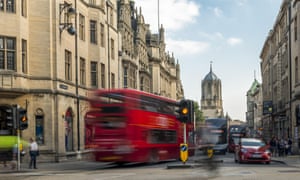
Revealed: every Londoner breathing dangerous levels of toxic air particle

Every area of the capital breaches global standards for PM2.5 pollution particles, with most areas exceeding levels by at least 50%

The scale of London’s air pollution crisis was laid bare on Wednesday, with new figures showing that every person in the capital is breathing air that exceeds global guidelines for one of the most dangerous toxic particles.

The research, based on the latest updated London Atmospheric Emissions Inventory, shows that every area in the capital exceeds World Health Organisation (WHO) limits for a damaging type of particle known as PM2.5.

It also found that 7.9 million Londoners – nearly 95% of the capital’s population – live in areas that exceed the limit by 50% or more. In central London the average annual levels are almost double the WHO limit of 10 µg/m3.

The findings, described as “sickening” by London mayor Sadiq Khan, have serious health implications – especially for children – with both short and long-term exposure to these particulates increasing the likelihood of respiratory and cardiovascular diseases. Health experts say that youngsters exposed to these toxic pollutants are more likely to grow up with reduced lung function and develop asthma.

Khan said: “It’s sickening to know that not a single area of London meets World Health Organisation health standards, but even worse than that, nearly 95% of the capital is exceeding these guidelines by at least 50%.”

London is widely recognised as the worst area for air pollution in the UK, although there is growing evidence that dangerously polluted air is damaging people’s health in towns and cities across the country.

Khan added: “We should be ashamed that our young people – the next generation of Londoners – are being exposed to these tiny particles of toxic dust that are seriously damaging their lungs and shortening their life expectancy. I understand this is really difficult for Londoners, but that’s why I felt it was so important that I made this information public so people really understand the scale of the challenge we face in London.”

Levels of PM2.5 across London

The mayor’s office said around half of PM2.5 in London is from sources outside the city. However, the main sources of PM2.5 emissions in London are from tyre and brake wear, construction and wood burning.

Last week Khan unveiled plans to limit the use of wood burning stoves in the capital from 2025 and tighten up regulations to make sure all new stoves from 2022 are as clean as possible.

He has also set out a range of plans to tackle pollution from diesel cars in the capital. The first stage, the new T-Charge, which will charge older, more polluting vehicles entering central London, starts later this month.

Clean air campaigners have welcomed Khan’s plans, which include the introduction of a low emission zone in 2019, but have called on the mayor to take more urgent, immediate action in light of the scale of the crisis.

The mayor was due to release the latest findings on Wednesday morning as he signed London up to the Breathe Life coalition organised by WHO, UN Environment and Clean Climate and Clean Air Coalition, at a special conference at City Hall.

The initiative aims to connect similar world cities, combine expertise, share best practice and work together to improve air quality.

Tedros Adhanom Ghebreyesus, WHO director-general, welcomed London’s support and Khan’s measures aimed at tackling air pollution.

“To ensure good health, every person must be able to breathe clean air no matter where they live. London’s plan to clean up their air means millions of people will be able to walk to work and walk their children to school without worrying about whether the air is going to make them sick. More cities around the world must also follow suit.”

Erik Solheim, head of UN Environment, said: “This is great news for Londoners. This support for the Breathe Life campaign and Sadiq Khan’s leadership means that millions of people can cease being hostage to toxic fumes. It sets an example of positive action that we hope cities around the world will follow.”

Paul Morozzo, clean air campaigner at Greenpeace said: “London air isn’t safe to breathe. Every person in London is affected by this crisis – old or young, healthy or ill. The air you breathe in London is putting your health at risk now and in the future, whether you realise it or not.

“Restricting diesel will make a big difference to both PM and nitrogen oxide air pollution in London, which is why the Mayor has no choice but to get tough on cleaning up our roads.”

Source: https://www.theguardian.com/environment/2017/oct/04/revealed-every-londoner-breathing-dangerous-levels-of-toxic-air-particle

Posted in Air Quality, Europe, London, UK | Tagged , , , , , , | Leave a comment

Developing an air quality plan for the Thames 

This summer, the Port of London Authority announced new research to develop an air quality strategy for the Thames. The project, part of the Thames Vision programme, will look into shore-side power, emissions monitoring and creating the first port-wide air inventory for the river.

The River Thames is central to London’s identity and development as a capital city, contributing every day in trade, jobs, tourism and transportation. Since 2015, the Port of London Authority (PLA) has been working with stakeholders to develop the Thames Vision programme, which lays out a 20-year view of the river’s future at the heart of a growing city.

The latest announcement, made in June, saw PLA teaming up with the Mayor of London and Transport for London (TfL) to develop an air quality strategy aimed at increasing the green credentials of the river’s traffic.

The project involves three separate research streams: a look into the implementation of shore-side power, which allows ships to turn off their engines and plug into an electrical grid while at berth; comparable journey emissions monitoring; and a first-of-its-kind air inventory for the Thames.

“This research is on an unprecedented scale for the UK,” said PLA chief executive Robin Mortimer. “Individually the techniques are tried and tested, but we are bringing them together to create a detailed picture of vessel emissions on the Thames. This will give us the data we need to develop the first air quality strategy for the river.”

The first air inventory for the Thames

The PLA is tasked with ensuring navigational safety along the 95 miles of the tidal Thames, as well as protecting its unique marine environment.

The new air quality plan is being developed in collaboration with operators Cory Riverside Energy, Thames Shipping and MBNA Thames Clippers, as well as energy management firm Schneider Electric and environmental consultant Aether.

The first research project looked into the possibility to develop shore-side power at specific sites along the river.

Shore-side electricity (SSE), also known as “cold-ironing”, allows ships to turn off their engines and plug into an electrical grid while at berth. Currently only deployed in around 10 ports worldwide, it has the potential to reduce pollutants by about 90% and greenhouse gas emissions by 50%, according to research by the European Commission.

Renewable energy consultant Ecofys found that SSE offers the potential to mitigate 800,000t of CO2 emissions if all seagoing and inland ships in European harbours would use SSE by 2020, but the total CO2 emission reduction depends on how the electricity used is produced onshore. Furthermore, all of the noise produced by a ship would also be eliminated by using a shore connection system, and the technology is fully compliant with MARPOL 6 regulations.

To investigate this, PLA partnered with Schneider Electric, which currently has over 30 shore power installations worldwide, including in ports in California and the new Kalibaru Container Terminal in Jakarta.

“Shore-side electricity allows ships to turn off their engines and plug into an electrical grid while at berth.”

This is not the first time SSE was considered for London. Campaigners opposing the proposed Enderby Wharf cruise terminal in Greenwich argued that on-shore power could help prevent pollution from cruise ships that would otherwise run their engines 24 hours a day in a densely populated area. The idea was since repeatedly dismissed by Greenwich Council as expensive and impractical.

The second project focuses on comparable journey emissions monitoring, which will gather data on regular river-borne journeys of both passengers and cargo and contrast it with the number of vehicles used and routes needed to make the same journey through London’s road network.

According to partner company Aether, the inventory will be based on previous work undertaken in the Netherlands, including at Europe’s largest port in Rotterdam, which uses real-time ship and boat movements to build up a complex emissions profile.

“This will allow the development of a realistic baseline for London river traffic emissions, the exploration of mitigation options and will feed into the London Atmospheric Emissions Inventory,” Aether said in a May press release.

At the moment, there is no available data to evaluate the emissions from inland vessels and their impact on London’s worsening air quality problem.

Research by the Institute for Public Policy Research (IPPR) found that London is breaking legal and World Health Organization (WHO) limits for NO2, and WHO limits for particulate matter. Most air pollution in London is caused by road transport, of which diesel vehicles are the most polluting.

The three research projects are due to be completed in the early autumn and the full strategy is expected to be published before the end of the year.

Conservation of the river in years to come

The air quality announcement comes six months after the PLA introduced the UK’s first port charges discount for cleaner cargo ships at the start of this year, a move much celebrated across the industry. The discount is available for ships that exceed international emissions standards set by the International Maritime Organization (IMO) in a scoring scheme run by the World Ports Climate Initiative.

According to the PLA, the discount is “suitably high that significant improvements need to be made in order to achieve it”, and bears similarities with similar initiatives taken at other European ports.

More recently, the UK Government’s Department for Transport committed £6m towards funding trials of innovative energy saving devices, such as new propellers, rotor sails and on-board waste heat recovery, in an attempt to achieve a “zero-emissions sector”.

The new measures come as climate change poses further challenges to protecting the Thames, including the high-priority flood risk areas throughout the Thames Estuary. The Environment Agency warned that there will need to be continuing investment in both hard and soft flood defences along the estuary in the years to come.

“The strategy sets out to improve water quality, reduce litter, protect and enhance biodiversity.”

It also comes at a time when the capital is growing in population, traffic and demand, with increased pressures on every transport network, including the river. Looking towards 2025, the PLA hopes to improve navigational access to the Port of London, double the number of people travelling by river up to 20 million commuter and tourist trips every year, and make more efficient use of piers and river space.

On the environmental and conservation side, the strategy sets out to improve water quality, reduce litter, protect and enhance biodiversity and “encourage the uptake of new and green technologies to reduce the port’s environmental impact”.

Currently, 92% of the PLA’s area is covered by environmental designations, but at the same time, up to 300t of rubbish is recovered from the Thames each year, with the amount of plastic bottles growing year on year.

Some of these issues, including pollution threats to the fish living in river waters, will be tackled by the Thames Tideway Tunnel, a 25km sewer tunnel that is hoped to protect the river from further pollution. According to its strategy, PLA hopes to build and bring the tunnel into operation by 2021.

“We anticipate more trade, more passenger journeys, more sport and recreation and more people wanting to enjoy the improved environment along the tidal river,” Mortimer said. “Our ambition is for this growth to be sustainable in the widest sense.”

Source: Developing an air quality plan for the Thames – Ship Technology

Posted in Air Quality, Europe, London, UK | Tagged , , , | Leave a comment

Gurgaon India’s most polluted city on Sunday

Gurgaon was the most polluted city in the country on Sunday, with its Air Quality Index (AQI) touching the 274 mark (considered ‘poor’). In contrast, Delhi’s AQI was a ‘moderate’ 196.

PM2.5 levels were reported between 112.78 to 118.90 micrograms per cubic metre (g/m³) in Gurgaon on Sunday, while it was between 99.08 to 109.76 g/m³ on Saturday.

According to Haryana State Pollution Control Board (HSPCB) officials, a decline in wind speed and the burning of crackers during Dussehra celebrations led to an increase in the air pollution levels. “As the wind speed is declining, it is difficult for the dust particles to disperse, and they remain trapped in the lower atmosphere. It leads to a rise in the level of particulate matter. Also, firecrackers and effigy burning on Dussehra also had an impact,” said a senior HSPCB official.

Experts blamed effigy burning on Dussehra, coupled with stubble burning by farmers, for the increase. “Despite Sunday being a non-working day, the city reported the highest levels of air pollution in the country. It is evident that vehicular pollution is not the only source of air pollution in the city. It is clearly a result of Dussehra celebrations. Also, stubble burning is a major contributing factor,” said Niranjan Raje, former member of Environment Pollution Control Authority (EPCA).

Activists, on the other hand, held the non-compliance of construction norms responsible. “Despite tall claims, the authorities have failed to implement NGT’s directions at construction sites, both private and public. There is massive air pollution in front of the MCG office itself due to construction activities,” said Vivek Kamboj, a city-based environmentalist.

Source: Gurgaon India’s most polluted city on Sunday | Gurgaon News – Times of India

Posted in Air Quality, Asia, India | Tagged , , , , | Leave a comment