People of color exposed to more pollution from cars, trucks, power plants over 10 years

A new nationwide study finds that the U.S. made little progress from 2000 to 2010 in reducing relative disparities between people of color and whites in exposure to harmful air pollution emitted by cars, trucks and other combustion sources.

The groundbreaking study led by University of Washington researchers estimated exposure to outdoor concentrations of a transportation-related pollutant — nitrogen dioxide (NO2) — in both 2000 and 2010, based on neighborhoods where people live. It found disparities in NO2 exposure were larger by race and ethnicity than by income, age or education, and that those inequities persisted across the decade.

While absolute differences in exposure to the air pollutant dropped noticeably during that time period for all populations, the relative difference — or the gap between pollution levels to which white people and people of color were exposed — narrowed only a little.

The study will be published Sept. 14 Environmental Health Perspectives. The researchers developed a first-of-its-kind model that combines satellite and regulatory measurements with land use data to predict pollution at a neighborhood level throughout the United States.

The positive news is that across the U.S., average exposure to NO2 for all races and income levels dropped from 2000 to 2010. Measured in parts per billion (ppb), estimated average annual NO2 exposure decreased from 17.6 to 10.7 ppb for nonwhite populations, and from 12.6 to 7.8 ppb for white populations.

Yet people of color were consistently exposed to more air pollution than their white non-Hispanic counterparts during the decade. Considering relative differences, nonwhites experienced 40 percent higher exposures than whites in 2000; in 2010, that gap shrunk only slightly, to 37 percent. Furthermore, in 2000, concentrations of NO2 in neighborhoods with the highest proportion of nonwhite residents were 2.5 times higher than in neighborhoods with the lowest proportion of nonwhite residents. In 2010, that value increased slightly, to 2.7 times higher.

The study concludes that if people of color had breathed the lower NO2 levels experienced by whites in 2010, it would have prevented an estimated 5,000 premature deaths from heart disease among the nonwhite group.

“The finding that shocks us is that when it comes to how much NO2 a person breathes, it’s still race that matters,” said senior author Julian Marshall, UW professor of civil and environmental engineering.

“At any income level — low to medium to high — there’s a persistent gap by race, which is completely indefensible. It says a lot about how segregated neighborhoods still are and how things are segregated,” Marshall said.

NO2 comes from sources such as vehicle exhaust, power plants and off-road equipment and is one of six important “criteria air pollutants” monitored by the Environmental Protection Agency. It has been linked to asthma symptoms, increased susceptibility to respiratory problems and heart disease.

The research team, which began their work at the University of Minnesota, previously analyzed NO2 concentrations for the year 2006 by race, income and other demographic factors identified in the U.S. Census. The team’s air pollution model, which combines existing EPA air quality monitoring and satellite data with detailed land use information, allows them to accurately predict pollution concentrations across the country at the U.S. Census block level — information previously unavailable at that scale.

In this first longitudinal study of its kind, researchers wanted to examine how much progress was made in addressing inequities in NO2 exposure over a decade. They compared environmental injustice metrics in 2000 and 2010 on a national basis and by region, state, county and urban areas.

On the whole, researchers said, policies to reduce NO2 air pollution are working. But the finding that exposure differences are larger by race and ethnicity than by income, age or education was equally true in 2010 as in 2000.

“Everyone benefited from clean air regulations and less pollution; that’s the good news,” said lead author and UW civil and environmental engineering doctoral student Lara Clark. “But the fact that there is a pervasive gap in exposure to NO2 by race — and that the relative gap was more or less preserved over a decade — is the bad news.”

The UW study did not explore the underlying reasons for that gap, but its findings are consistent with previous research. Both racial minorities and low-income households are disproportionately likely to live near a major road where transportation-related pollution is typically highest. U.S. cities, in general, also tend to be more segregated by race and ethnicity than by income.

The UW team did conclude that the narrowing of the racial gap in NO2 exposures was driven more by improving air quality than by demographic changes over the 10-year period.

“That suggests that air pollution is coming down faster than cities are becoming less segregated,” Marshall said.

Next steps for the research team include looking at how changes in demographics, industry and urban form at the city level affect NO2 exposure, and developing similar models for other EPA criteria air pollutants.

Source: People of color exposed to more pollution from cars, trucks, power plants over 10 years | EurekAlert! Science News

Posted in Air Quality, Health Effects of Air Pollution, USA & Canada | Tagged , , , , | Leave a comment

Air quality study to be run at east London’s ‘most-polluted’ schools 

Tests will be carried out at 50 primary schools in London’s “worst-polluted” areas as part of a new plan to protect children from toxic air.

The £250,000 scheme, paid for by the Mayor of London’s Air Quality Fund, will test air quality in a bid to prevent pupils being exposed to pollution at school.

Sybourn Primary School in Walthamstow and Oakdale Junior School in South Woodford are among the schools where where air quality will be measured.

Engineering consultant WSP, which has been commissioned to carry out the study, will also be tasked with examining ways to improve air quality in areas around schools.

Mayor of London, Sadiq Khan, said: “It is shameful that children across London are breathing in toxic air simply by going to and from school and I am determined to do everything in my power to safeguard their health.

“These air quality audits are a big step towards helping some of the most polluted schools in London identify effective solutions to protect pupils from toxic fumes but, of course, this is only part of the solution.

“We are making great strides in London but I can’t do this alone. The government must match my ambition in tackling the biggest public health emergency of a generation.”

The study is due to be completed by the end of the year and a final report is scheduled for publication March 2018.

Recommendations in the report could include measures such as moving school entrances away from busy roads and the introduction of “no engine idling” schemes.

The move to test air quality at Sybourne Primary School was praised by Jennette Arnold, London Assembly Member for Hackney, Islington and Waltham Forest.

She said: “There is a lot of evidence showing that air quality can have a long-term detrimental impact on the health of our children.

“It’s great to see that the Mayor is taking genuine steps to tackle the impact of toxic air on children in Waltham Forest, and I hope this audit is just the start.”

Source: Air quality study to be run at east London’s ‘most-polluted’ schools

Posted in Air Quality, Europe, London, UK | Tagged , , , , | Leave a comment

REVIEW: Temples of the Holy City of Varanasi! Shiva & Kali worship, Buddha sermon at Sarnath, Respro® Ultralight™ mask review. 

Namaste from the holy city of Varanasi!

India is large and diverse, with terrain ranging from snowy mountains to southern backwaters. Yukiro and I only got to see a fraction of it on our trip through Rajasthan and the Golden Triangle.

However, we absolutely had to make a detour to Varanasi, also known as Kashi or Benares — the famous spiritual destination on the River Ganges.

India was stress-free for us, since we were travelling with Janu Private Tours, one of the most trusted tour companiesJanu and his team can arrange customized itineraries for any part of the country, tailored to your specific interests. They connected us with their outstanding partner, Experience Varanasi Tours, for this portion of our journey.

Even for experienced travellers like ourselves, Varanasi is an intense destination. Picture tuk-tuks weaving through bumpy roads with horns blaring, inches from the beggars and holy cows in the streets. There’s dirt, noise, difficult sights — and it’s incredible, what a city of adventure! 

I was “all in” and wanted to experience the more challenging aspects of India. However, I was concerned I’d feel nauseous from the various smells and pollutants: dung, rotting fruits, garbage, fumes from the traffic…

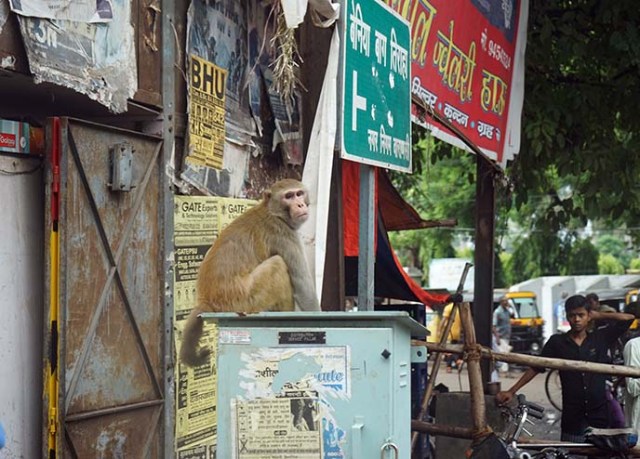
Anyone who travels with me knows I’m very sensitive to smoke, pollen and other air debris. I didn’t want to wind up ill and unable to see the colorful city life (such as random monkeys!).

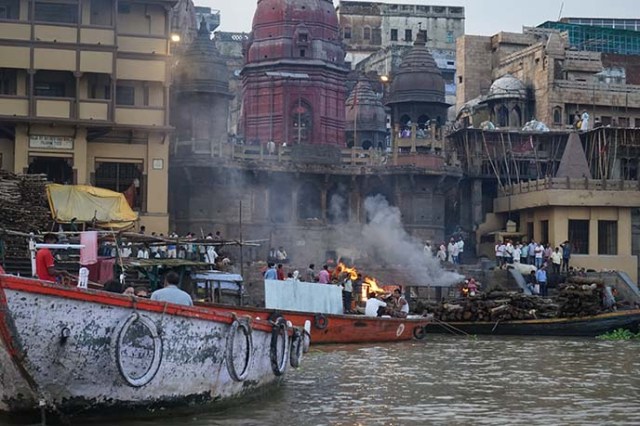
For example, I was keen to see the cremation pyres on the banks of the Ganga (which I’ll show you in the next post). However, the image shows how thick the smoke can be.

To make sure we were prepared for anything, Yukiro and I got original Respro® masks! Made in the United Kingdom, these masks are equipped with professional-grade technology to filter out pollution. (Plus, they have a cyber-Goth-Industrial look!)

Respro® offers many types of pollution masks, geared to specific needs such as allergies, urban cycling, industrial filtration. Their FAQ section has info on the differences and how to choose the right size (you can also email them, as their customer service is terrific).

The team suggested The Ultralight™ Mask for our India travels. This mask is made from lightweight, air-permeable mesh material and has two POWA™ elite exhalation valves: ideal for facial ventilation in hot, humid climates.

Plus, the design is fashion-fab: Mad Max meets The Walking Dead apocalyptic chic! It’s an essential item for desert festivals such as Burning Man and Wasteland Weekend, for both the look and the functionality.

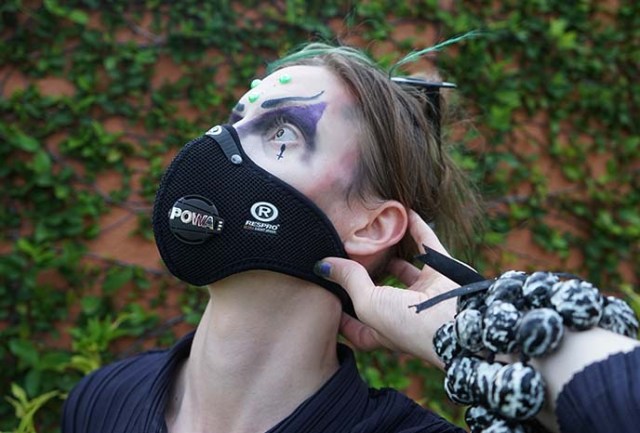
The Respro® mask attaches in the back with Velcro, and has a changeable Hepa-Type™ PM2.5 filter (the white portion inside). These Cinqro™ Urban filters have activated charcoal cloth plus a particle filter layer to protect you from exhaust pollution.

Here’s a close-up of The Ultralight™ Mask. The black shell, made of of breathable 4-way stretch fabric, is easy to wash. It has a malleable nylon nose clip for a secure fit around the bridge.

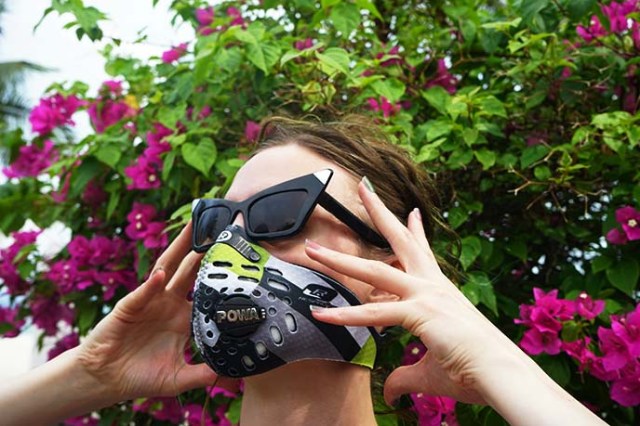
But what if the mask doesn’t match your outfit of the day? Respro® has dozens of skins in various colors and patterns, letting you refresh your look!

I always change around my hair color and clothes, and this Petal Mixed Neoprene outer-shell was a perfect match.

Cube Pattern 1 was a stylish choice for this green monster. It’s easy to switch over the skins over the filter and valve.

I’m very glad I got a Respro® mask for my travels. If you’re in a high-particulate area, run or cycle in urban areas, or have medical condition such as asthma or allergies… these pro masks are a lifesaver. (And the ninja warrior style is A+!)

Source: Temples of the Holy City of Varanasi! Shiva & Kali worship, Buddha sermon at Sarnath, Respro® Ultralight mask review. | La Carmina Blog – Alternative Fashion, Travel, Subcultures

Posted in Air Quality, Respro® Mask Reviews, Respro® Products | Tagged , , | Leave a comment

Air pollution changes what bugs colonise our airways

Could the effects of air pollution be mediated by the mix of bugs in our airways? It seems that exposure to pollutants correlates with differences in the species of bacteria living in our respiratory tracts. This may be a hidden link between pollution and disease.

Numerous studies have shown that air pollution raises our risk of certain conditions, such as heart disease and stroke. Even in the UK, which has relatively clean air, pollution is blamed for up to 50,000 premature deaths a year.

Why this link exists, however, is unclear. To look into one possible cause, Jacopo Mariani and his colleagues at the University of Milan, Italy, took nasal swabs from 40 people living in and around Milan to investigate whether pollution affected the types of bacteria that colonise our airways.

Just like the gut, our airways contain a community of microbes, most of which are harmless. In fact, some probably offer us benefits. The team used genetic sequencing to identify the bacteria present, and compared these types with levels of air pollution recorded by nearby monitoring stations.

Higher levels of particulates in the air from three days before sampling correlated with a lower diversity of bacteria in the nasal swabs. This could be a bad thing, says Mariani, because decreased diversity might affect the functions that bacteria provide to the host.

For instance, the concentration of Actinobacteria, the dominant group in a healthy microbiome, was lower in volunteers exposed to higher levels of pollution. The part that these bacteria play in the body is not yet clear, but they are known to produce compounds with antimicrobial and anti-inflammatory properties.

Another group of bacteria that can cause harmful respiratory infections, Moraxella, was typically found in greater concentrations in people exposed to higher pollution levels.

Not to be sniffed at

This study is the first to look at how air pollution levels relate to types of respiratory microbe in healthy people, says Mariani, who presented the work this week at the European Respiratory Society International Congress in Milan. “We want to assess how this modification could impact on human health status and how it could be responsible for respiratory disease,” he says.

Analysing changes in bacteria in the airways might give us an early indicator of problems before disease develops, he adds.

Lidwien Smit at Utrecht University in the Netherlands says this is an area that deserves more attention. “You’re inhaling stuff that might cause inflammatory responses in your airways, so it’s extremely likely that the airway microbiome is a sort of mediator between pollution and respiratory effects… but this area of research is still in its infancy.”

Source: Air pollution changes what bugs colonise our airways | New Scientist

Posted in Air Quality, Health Effects of Air Pollution | Tagged , , | Leave a comment

Air Quality-Life Index: Indians Would Live Four Years More if WHO Standards Are Met 

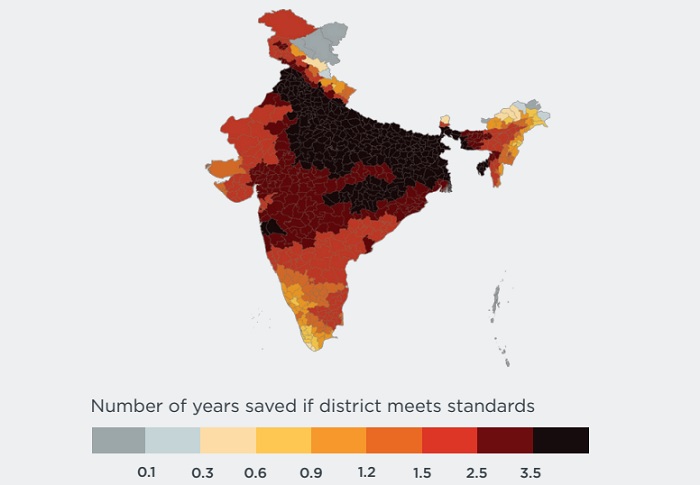
If the air quality is improved in India as per the World Health Organization’s air standards, Indians would gain four years on average or “a combined more than 4.7 billion life years”, according to the Air Quality-Life Index (AQLI). The AQLI tool has been developed by the Energy Policy Institute at The University of Chicago (EPIC). “If the country reduced pollution to comply with its national standards, its people could live more than 1 year longer on average, or a combined more than 1.6 billion life years,” the study read.

The study also said that some of the biggest gains would be seen in Delhi and some cities. About the capital city, the study said that Delhiites could live nine years longer if it met WHO standards. For two consecutive years – 2014 and 2015 – Delhi has ranked in the list of most populated cities in the world. “Six years longer if it met the country’s own national standards,” it said.

“The people of Kolkata and Mumbai could live roughly 3.5 years longer if the country met WHO standards,” it read.

Source: AIR QUALITY-LIFE INDEX (AQLI)

The other cities with a potential considerable improvement in the average life expectancy if WHO norms are followed include (7.6 years), Agra (8.1 years), Patna (6.9 years), Bareilly (7.8 years) and Kanpur (7.2 years).

About India’s air pollution, Director of EPIC Michael Greenstone said, “High levels of air pollution are a part of people’s lives in India, just as they were in the U.S., England, Japan and other countries in the past. The last several decades have seen tremendous progress in many of these countries, but this progress did not happen by accident—it was the result of policy choices. As India navigates the dual and conflicting goals for economic growth and environmental quality, the AQLI provides a tool to make the benefits of policies to reduce air pollution concrete.”

EPIC said that it is already working with the government several state pollution control boards to implement “India’s first emissions trading program for particulate pollution”.

The study also listed some of the most polluted cities in India. NCT of Delhi (15.5 million population) tops the list in Particulate Matter Pollution with 98 micrograms per cubic metre (µg/m3). Ordered as per population, the other top cities are North 24 Parganas (Kolkata) with 45 micrograms per cubic metre of PM level, Mumbai Suburban with 44 micrograms per cubic metre of PM, Pune and South 24 Parganas (Kolkata) with 46, 42 PM level, respectively.

Source: Air Quality-Life Index: Indians Would Live Four Years More if WHO Standards Are Met – India.com

Posted in Air Quality, Asia, India | Tagged , , , , , , , | Leave a comment

Colombia Air Pollution Costs Bogotá up to $1 Billion USD Per Year, Says Study

Air pollution cost Bogotá nearly $1 billion USD in 2014 in the form of premature deaths, heart disease, cancer, respiratory illness, and other complications, according to a recent study from researchers at Colombia’s Universidad La Salle.

While transportation — particularly the many exhaust-belching buses in the capital — are the most obvious cause of pollution, the study shows that general industry and business, as well as dust, erosion, and forrest fires, also contribute greatly to the problem.

Jorge Eduardo Pachón, head of the Universidad La Salle research group known as CLIMA (Centro Lasallista de Investigación y Modelación Ambiental), noted that the findings look at the result airborne impurities as well as gases, including carbon dioxide and ozone.

The investigators included these and other factors into their model design for air quality, which in addition to gauging citywide contamination levels also measures the severity of the problem in the different zones of the capital. The southwest of Bogotá, covering the neighborhoods of Bosa and Fontibón, is the hardest-hit area, according to Bogotá-based governmental agency IDEAM. (Instituto de Hidrología, Meteorología y Estudios Ambientales).

“Air contamination is a huge risk for humans,” said Pachón. “It is different than water contamination because we get to choose to not drink it, but we have to breathe the air around us all the time. Many times we breathe air with elements that can be dangerous — not only for us but for the ecosystem, too.”

The full study was released this week at a conference for public health and air quality in the southwestern Colombian city of Cali. In addition to Pachón and his team, the Fourth Air Quality and Public Health Colombian and International Conference (CASAP), which took place from September 6-8, featured presentations and research from area experts from the Universidad de Los Andes, Universidad Nacional de Colombia, and Universidad Pontificia Bolivariana.

“These kind of results are important and they are just a bit of the whole investigation that we presented in Cali,” said Victor Marulanda, a member of CLIMA. “Hopefully this will make people aware of the issues of poor air, and we will keep on studying to find solutions and better options.”

Pachón, who is also a professor of engineering at La Salle, explained that there are two different ways to measure contamination in the air depending on the size of the particles, including dust, ashes, concrete, pollen, and even metallic elements. Those with a diameter of 10 micrometers or less are referred to as PM10, while the smaller problematic particles for humans are called PM2.5 “These particles have an aerodynamic diameter of 2.5 micrometers or less — which means they are a hundred times smaller than a human hair,” said Pachón.

To generate their economic estimates, CLIMA used official information about air particles and gas emissions from the Bogotá Air Quality Monitoring Network (RMCAB), which is operated by Bogotá’s Environmental District Secretary. This data, along with CLIMA’s research, showed that January and February were the most contaminated months in 2014.

To better analyze the air contamination in Bogotá and help public officials understand the extent of the issue, CLIMA is working to develop low-cost instruments to measure air quality and strengthen measurement models in Colombia.

According to World Health Organization numbers from 2016, Bogotá is one of the most polluted cities in Latin America, after Santiago de Chile, San Salvador and Ciudad de México. In Colombia, Medellín and Bogotá, where air quality can be monitored by the public in real time, are the most affected cities. In March of this year, Medellín had to declare red alert for almost weeks for the high levels of particles in the air.

Source: Finance Colombia Air Pollution Costs Bogotá up to $1 Billion USD Per Year, Says Study

Posted in Air Quality, Colombia, Latin America | Tagged , , | Leave a comment

Britain flouting duty to protect citizens from toxic air pollution 

Exclusive: Special rapporteur’s mission finds government has violated obligation to protect people’s lives and health

The UK government is “flouting” its duty to protect the lives and health of its citizens from illegal and dangerous levels of air pollution, according to the UN’s special rapporteur on human rights related to toxic waste.

Baskut Tuncak issued his warning after a fact-finding mission to the UK in January at the invitation of the government in a report that has been shared exclusively with the Guardian before it is presented to the UN human rights council this week.

“Air pollution continues to plague the UK,” he said. “I am alarmed that despite repeated judicial instruction, the UK government continues to flout its duty to ensure adequate air quality and protect the rights to life and health of its citizens. It has violated its obligations.”

Such harsh international criticism will be embarrassing for the government, whose air pollution plans have already been ruled illegally poor twice. The latest plan forced by the courts was released in July but condemned as “woefully inadequate” by city leaders and “inexcusable” by doctors.

Air pollution causes an estimated 40,000 early deaths every year in Britain and was declared a “public health emergency” by MPs in 2016. Air pollution is worst overall in London, but many other places have illegal levels of nitrogen dioxide emitted by diesel vehicles, such as Leeds, Birmingham, Bournemouth and Northampton. Ipswich has higher levels of particulate matter than London.

London breached its nominal annual air pollution limits five days into 2017 at Brixton Road in south London. Other known pollution hotspots in the capital include Putney High Street in west London, Oxford Street, Kings Road in Chelsea and the Strand.

Vulnerable groups were worst affected by air pollution, he said: “Children, older persons and people with pre-existing health conditions are at grave risk of mortality, morbidity and disability, with magnified risks among the poor and minorities.”

A government spokeswoman said Brexit represented an opportunity to improve the UK’s air quality standards. “EU policies, from the common agricultural policy to vehicle emissions tests, have damaged the environment. Our £3bn air quality plan will address the dirty air caused by the EU’s failed testing regime, and in ending the sale of new diesel and petrol cars by 2040, the UK is more ambitious than most EU member states including Germany.

“We now have an opportunity to deliver a green Brexit, ensuring the UK is a global leader in environmental protection,” she said.

Anna Heslop, at ClientEarth, the lawyers who have twice defeated the government on air quality standards, said: “This damning report with regard to air pollution is unsurprising but no less shocking for that. The UK has illegal levels of air pollution and successive governments have fought us in the courts rather than tackling it effectively.

“We are glad the report says the government must listen to the experts, including its own, and develop a national network of clean air zones to keep the worst polluting vehicles out of the most polluted areas of our towns and cities. This should happen as soon as possible.”

A new, wide-ranging ClientEarth report argues the government’s claim that all EU environmental laws will be retained after Brexit is misleading. It also criticises the government over other aspects of environmental policy “loopholes” in fracking regulation; the loss of environmental staff due to austerity which has resulted in “serious governance gaps”; and the risks to environmental safety posed by Brexit.

All the UK’s environmental regulators have suffered due to budget cuts, he found: “The decreasing financial, technical and human resources due to austerity have created serious governance gaps.” The Department for Environment, Food and Rural Affairs (Defra) has lost a third of its staff compared with 2007.

Another consequence of austerity was Defra’s ending in March of capital grants to local councils for cleaning up contaminated land sites, which the UN report said posed “potentially serious health risks”.

Tuncak warned that unless the UK’s future green standards equalled those of the European Union, “the UK could risk becoming a haven for ‘dirty’ industries and a dumping ground for products failing to meet EU regulations”.

The committee warned in January that Brexit could result in key environmental protections being left as ineffective “zombie legislation”. Creagh said the UN report highlighted the “government’s lack of clarity about the future of environmental issues after Brexit and how they will stop the UK from becoming a dumping ground for dirty industries and a haven for bad practice”.

Tuncak’s report also asks the UK government to “reconsider national plans to increase reliance on nuclear energy, considering that long-term storage of nuclear waste is uncertain and poses significant risks to the population”. He criticised the UK’s cuts to legal aid and protection from legal costs which make it “extremely challenging” for victims of environmental harm to seek redress in the courts.

Source: Britain flouting duty to protect citizens from toxic air pollution – UN | Environment | The Guardian

Posted in Air Quality, Europe, London, UK | Tagged , , , , , , , , | Leave a comment

Dutch court orders government to step up fight against air pollution

A Dutch court on Thursday ordered the government to take immediate action to limit air pollution, as emissions in various parts of the country were in breach of European rules.

The case was brought by environmental activists, and the ruling marked their second victory in a legal campaign against what they consider the government’s wilful failure to act on pollution and climate change.

“Limits on the emissions of particulate matter and nitrogen dioxide are still being violated, although they should have been restricted to the permitted levels long ago”, the District Court in The Hague said. “This the responsibility of the state.”

Caretaker Deputy Environment Minister Sharon Dijksma said the government would speed up existing plans to improve air quality in problem areas, such as city centres.

“The judge is forcing the state to better protect the health of its citizens”, spokeswoman Anne Knol of environmentalist group Milieudefensie said. “This is a major breakthrough.”

In a landmark decision in 2015, the same court ordered the government to cut carbon dioxide emissions to at least a quarter below 1990 levels by 2020. Estimates published this week showed emissions were 11 percent lower in 2016.

The health ministry has warned that current levels of nitrogen dioxide and particulate matter emissions, mainly caused by road traffic and factories, can lead to respiratory illnesses, with chronic exposure shortening life expectancy by more than a year.

Emissions of particulate matter should have been limited six years ago, while the deadline to adhere to European rules on nitrogen dioxide was the start of 2015.

The court therefore ordered the government to take immediate measures to improve air quality and said that current plans to do so fell short of European and national regulations. It also banned the government from taking steps that would lead to further violations of European emissions rules.

Source: Dutch court orders government to step up fight against air pollution

Posted in Air Quality, Europe | Tagged , | Leave a comment