Britain flouting duty to protect citizens from toxic air pollution 

Exclusive: Special rapporteur’s mission finds government has violated obligation to protect people’s lives and health
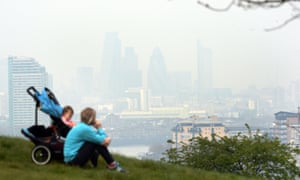
The UK government is “flouting” its duty to protect the lives and health of its citizens from illegal and dangerous levels of air pollution, according to the UN’s special rapporteur on human rights related to toxic waste.

Baskut Tuncak issued his warning after a fact-finding mission to the UK in January at the invitation of the government in a report that has been shared exclusively with the Guardian before it is presented to the UN human rights council this week.

“Air pollution continues to plague the UK,” he said. “I am alarmed that despite repeated judicial instruction, the UK government continues to flout its duty to ensure adequate air quality and protect the rights to life and health of its citizens. It has violated its obligations.”

Such harsh international criticism will be embarrassing for the government, whose air pollution plans have already been ruled illegally poor twice. The latest plan forced by the courts was released in July but condemned as “woefully inadequate” by city leaders and “inexcusable” by doctors.

Air pollution causes an estimated 40,000 early deaths every year in Britain and was declared a “public health emergency” by MPs in 2016. Air pollution is worst overall in London, but many other places have illegal levels of nitrogen dioxide emitted by diesel vehicles, such as Leeds, Birmingham, Bournemouth and Northampton. Ipswich has higher levels of particulate matter than London.

London breached its nominal annual air pollution limits five days into 2017 at Brixton Road in south London. Other known pollution hotspots in the capital include Putney High Street in west London, Oxford Street, Kings Road in Chelsea and the Strand.

Vulnerable groups were worst affected by air pollution, he said: “Children, older persons and people with pre-existing health conditions are at grave risk of mortality, morbidity and disability, with magnified risks among the poor and minorities.”

A government spokeswoman said Brexit represented an opportunity to improve the UK’s air quality standards. “EU policies, from the common agricultural policy to vehicle emissions tests, have damaged the environment. Our £3bn air quality plan will address the dirty air caused by the EU’s failed testing regime, and in ending the sale of new diesel and petrol cars by 2040, the UK is more ambitious than most EU member states including Germany.

“We now have an opportunity to deliver a green Brexit, ensuring the UK is a global leader in environmental protection,” she said.

Anna Heslop, at ClientEarth, the lawyers who have twice defeated the government on air quality standards, said: “This damning report with regard to air pollution is unsurprising but no less shocking for that. The UK has illegal levels of air pollution and successive governments have fought us in the courts rather than tackling it effectively.

“We are glad the report says the government must listen to the experts, including its own, and develop a national network of clean air zones to keep the worst polluting vehicles out of the most polluted areas of our towns and cities. This should happen as soon as possible.”

A new, wide-ranging ClientEarth report argues the government’s claim that all EU environmental laws will be retained after Brexit is misleading. It also criticises the government over other aspects of environmental policy “loopholes” in fracking regulation; the loss of environmental staff due to austerity which has resulted in “serious governance gaps”; and the risks to environmental safety posed by Brexit.

All the UK’s environmental regulators have suffered due to budget cuts, he found: “The decreasing financial, technical and human resources due to austerity have created serious governance gaps.” The Department for Environment, Food and Rural Affairs (Defra) has lost a third of its staff compared with 2007.

Another consequence of austerity was Defra’s ending in March of capital grants to local councils for cleaning up contaminated land sites, which the UN report said posed “potentially serious health risks”.

Tuncak warned that unless the UK’s future green standards equalled those of the European Union, “the UK could risk becoming a haven for ‘dirty’ industries and a dumping ground for products failing to meet EU regulations”.

The committee warned in January that Brexit could result in key environmental protections being left as ineffective “zombie legislation”. Creagh said the UN report highlighted the “government’s lack of clarity about the future of environmental issues after Brexit and how they will stop the UK from becoming a dumping ground for dirty industries and a haven for bad practice”.

Tuncak’s report also asks the UK government to “reconsider national plans to increase reliance on nuclear energy, considering that long-term storage of nuclear waste is uncertain and poses significant risks to the population”. He criticised the UK’s cuts to legal aid and protection from legal costs which make it “extremely challenging” for victims of environmental harm to seek redress in the courts.

Source: Britain flouting duty to protect citizens from toxic air pollution – UN | Environment | The Guardian

Posted in Air Quality, Europe, London, UK | Tagged , , , , , , , , | Leave a comment

Dutch court orders government to step up fight against air pollution

A Dutch court on Thursday ordered the government to take immediate action to limit air pollution, as emissions in various parts of the country were in breach of European rules.

The case was brought by environmental activists, and the ruling marked their second victory in a legal campaign against what they consider the government’s wilful failure to act on pollution and climate change.

“Limits on the emissions of particulate matter and nitrogen dioxide are still being violated, although they should have been restricted to the permitted levels long ago”, the District Court in The Hague said. “This the responsibility of the state.”

Caretaker Deputy Environment Minister Sharon Dijksma said the government would speed up existing plans to improve air quality in problem areas, such as city centres.

“The judge is forcing the state to better protect the health of its citizens”, spokeswoman Anne Knol of environmentalist group Milieudefensie said. “This is a major breakthrough.”

In a landmark decision in 2015, the same court ordered the government to cut carbon dioxide emissions to at least a quarter below 1990 levels by 2020. Estimates published this week showed emissions were 11 percent lower in 2016.

The health ministry has warned that current levels of nitrogen dioxide and particulate matter emissions, mainly caused by road traffic and factories, can lead to respiratory illnesses, with chronic exposure shortening life expectancy by more than a year.

Emissions of particulate matter should have been limited six years ago, while the deadline to adhere to European rules on nitrogen dioxide was the start of 2015.

The court therefore ordered the government to take immediate measures to improve air quality and said that current plans to do so fell short of European and national regulations. It also banned the government from taking steps that would lead to further violations of European emissions rules.

Source: Dutch court orders government to step up fight against air pollution

Posted in Air Quality, Europe | Tagged , | Leave a comment

Utah air quality is getting worse and worse, thanks to wildfires in the north 

Air quality has worsened rapidly across the Wasatch Front in recent days, leading state regulators to warn Utahns against prolonged exertion outdoors.

With huge wildfires burning across Washington, Oregon, Idaho, Montana and Canada, the northern Utah counties of Box Elder and Cache already have more small-particulate pollution in their air than is considered healthy for the general population, according to the state’s air-quality monitors.

Salt Lake, Davis, Weber, Utah and Tooele counties have also exceeded the Environmental Protection Agency’s standard for small particulates, though their air remains less smokey in general than farther north.

“As residents of the Beehive state and others across the U.S. are learning,” wrote Jon Meyer, a climatologist at the Utah Climate Center, “you don’t need to have flames in your backyard to feel the negative effects a bad wildfire season can have on our daily lives.”

Bo Call, who oversees air monitoring for the state Division of Air Quality, said Wednesday he expects conditions will continue to worsen through Friday, unless some of the fires raging to the north subside or a storm front arrives to blow the smoke elsewhere.

“The nature of particulate [pollution] is it really doesn’t go anywhere until a front comes through and blows it out,” Call said, “unlike ozone that goes up and down every day.”

Ozone levels over the Wasatch Front continue to rise and decline with daily temperatures, sometimes spiking to unhealthy levels — a trend unrelated to smoke that has continued to fluctuate all summer long.

States across the West, meanwhile, are experiencing a severe fire season. This year’s weather — a wet winter that fueled early plant growth followed by a dry summer that turned it all to tinder — has led to several large and smokey blazes, some of them record-breaking in size.

Even though air and fire-fighting experts saw the problems coming, Meyer wrote in an email, “watching it all unfold has been troubling.”

A final tally on the 2017 fire season is still pending, he wrote, “but it is certainly pushing the envelope for what many states expect or plan to occur under a ‘bad’ year.”

The Utah Department of Health guidelines last year lowered the threshold for when students should be kept indoors due to poor air quality. They recommend all students remain inside when levels of fine particulate matter, known as PM 2.5, reach 55.5 micrograms per cubic meter — enough to earn either a “red” or “purple” on the state’s air quality color scale.

Officials in Ogden School District sent out information on the bad air Wednesday to school administrators, advising them of the poor conditions and suggesting ways to limit student exposure.

Call urged residents to use common sense about activity outdoors.

People with respiratory conditions such as asthma should stay indoors as much as possible and healthy individuals should pay attention to their bodies when outside. If they can smell or taste smoke or feel it burning their eyes, he said, they are advised to remain indoors.

Source: Utah air quality is getting worse and worse, thanks to wildfires in the north – The Salt Lake Tribune

Posted in Air Quality, USA & Canada | Tagged , , , , , | Leave a comment

Wildfires create unhealthy air for Valley

The haze hanging over much of the Central Valley region is expected to continue through the foreseeable future because of wildfires raging in the area and has officials warning residents of the potentially hazardous health consequences.

Three large wildfires, the Mission Fire in Madera County, the Pier Fire in Tulare County and Railroad Fire in Madera/Mariposa Counties, have prompted the San Joaquin Valley Air Pollution Control District to extend the current health cautionary statement through the week.

Currently, smoke impacts are concentrated in the mountain and foothill areas of the air basin, but impacts on the Valley floor are possible until the fires are extinguished.

Overnight and early morning downslope flow may cause smoke to drift toward the San Joaquin Valley.  While air quality impacts are forecast to be not as severe as over this past weekend, certain foothill and mountain areas may see unhealthy air quality with isolated pockets of smoke reaching the Valley floor.

Smoke from fires can cause serious health problems including lung disease, asthma attacks and increased risk of heart attacks and stroke. Where conditions warrant, people with heart or lung disease should follow their doctors’ advice for dealing with episodes of particulate exposure.   People with existing respiratory conditions, young children and elderly people are especially susceptible to the health effects from these pollutants.  Anyone being exposed to poor air quality or wildfire smoke should move inside to an air-conditioned environment.

Be advised that the District’s Real-time Air Advisory Network (RAAN) monitors are designed to detect the fine particulates (called PM2.5 which are microscopic in size and not visible to the human eye) that exist in wildfire smoke. Ash particles are much larger in size and will not be detected by the monitors. Therefore, an area may be experiencing ash impacts from these wildfires while the PM monitor reflects a moderate reading. If you can see or smell smoke or ash it is an indication that you should be treating air quality conditions as “Unhealthy” (RAAN Level 4 or higher) and remain indoors.

Residents can check the District’s wildfire page at www.valleyair.org/wildfires for information about any current wildfires and whether they are impacting the Valley. Residents can also check the nearest air monitor to their location to determine localized air-quality conditions. Visit the Real-time Air Advisory Network page on the District’s website to subscribe for free: www.valleyair.org/RAAN.

Source: Wildfires create unhealthy air for Valley

Posted in USA & Canada | Tagged , , , , , | Leave a comment

German cities to get more money in air pollution fight

The German government will double a fund meant to help cities cut air pollution to €1 billion, Chancellor Angela Merkel said Monday after a meeting with city officials.

It’s part of an effort to clean up air in German cities without resorting to bans of diesel-powered cars, which could wreak havoc on the country’s important and politically powerful car industry.

“The government has agreed to increase the fund, which is financed half by the car industry and half by the government, to €1 billion,” Merkel said, adding that the extra €500 million will be drawn from the government’s current budget. Merkel added that she’ll raise possible further contributions with the industry.

Cities failing to meet pollution standards are under growing pressure from courts and environmental campaigners. With the German election on September 24, the issue has become deeply political.

The mayors and state premiers met with both Merkel, who heads the ruling Christian Democrats, and Deputy Chancellor Sigmar Gabriel from the Social Democrats.

“How do we avoid driving bans? How do we avoid that courts will force them on us — that is the big challenge,” said Winfried Kretschmann, the Green premier of Baden-Württemberg.

The car industry has agreed to update car software to reduce their emissions, but that isn’t seen as enough to deal with the pollution problem.

Gabriel said that any solution can’t rely just on tackling pollution from public transport like buses, but also has to include passenger vehicles. He also warned against placing too much hope on electric cars, and “ignoring the potential of the internal combustion engine of the future.”

Another meeting is planned for the end of October or early November to work out concrete measures, Merkel said.

Source: German cities to get more money in air pollution fight – POLITICO

Posted in Air Quality, Europe, Germany | Tagged , | Leave a comment

Air pollution throws shade on India’s solar success

Air pollution is diminishing India’s capacity to harness power from the sun, experts say, undermining billions being invested in renewables as the energy-hungry giant emerges as a solar superpower.

New research has found the smog and dust that sickens millions across India every year is also sapping solar power generation by more than 25 percent, far beyond levels previously thought. In the first study of its kind, U.S. and Indian scientists measured how man-made particles floating in the air and deposited as grime on solar panels combined to seriously impair sunlight from converting to energy.

This interference causes steep drops in power generation, they found. At present levels in India, it could amount to roughly 3,900 MW of lost energy — six times the capacity of its largest solar farm, a gigantic field of 2.5 million panels. “A simple calculation shows that this is a big amount of energy we are going to lose,” Professor Chinmay Ghoroi, who co-authored the paper, told AFP at the IIT-Gandhinagar. These huge losses will only compound as India realises its grand solar ambitions, experts say.

Source: Air pollution throws shade on India’s solar success – The Hindu

Posted in Air Quality, Asia, India | Tagged , | Leave a comment

One million premature deaths linked to ozone air pollution

Scientists at the University of York’s Stockholm Environment Institute (SEI) have released new figures showing long-term exposure to ozone air pollution is linked to one million premature deaths per year due to respiratory diseases – more than double previous estimates.

In 2010, long-term outdoor exposure to ozone air pollution contributed to about one million premature respiratory deaths globally – approximately one in five of all respiratory deaths.

This is substantially larger (125 per cent) than previous estimates of the global health impacts of ozone (0.4 million premature respiratory deaths).

Published in the journal Environmental Health Perspectives, findings were based on results from a recent US analysis of the association of long-term ozone exposure and respiratory mortality in 670,000 adults. This is a substantially larger number of study participants and observed deaths than a previous estimate from 2003, on which previous global ozone health impact calculations have been based.

Ozone is formed in the atmosphere from emissions of pollutants such as nitrogen oxides from vehicles, organic compounds from solvent use, and methane from agriculture. Once formed, ozone can stay in the atmosphere for weeks and travel long distances from emission sources, across countries and continents.

The largest number of ozone-attributable respiratory deaths was from Asia, accounting for about 79 per cent of the total one million global estimated deaths.

India accounted for about 400,000, and China for about 270,000. Africa, Europe and North America each had between 50,000 and 60,000 ozone-attributable deaths, with fewer in Latin America and Oceania.

Chris Malley, Researcher at the University of York’s Stockholm Environment Institute and lead author of the study, said: “This study highlights that exposure to ozone may make a substantially greater contribution to the global burden of disease than previously thought.

“There is a degree of uncertainty in these estimates because the concentration-response function we used is based on analysis from the United States. We don’t know whether the relationship is the same in other regions, such as in India and China, where the prevalence of other risk factors for respiratory diseases varies considerably.

“We also estimated people’s ozone exposure using a global atmospheric chemistry transport model, which means that we could not account for differences in ozone exposure at small geographic scales.”

The analysis grew out of SEI’s Initiative on Low Emission Development Pathways, which includes the development of a “benefits calculator” to help policy-makers and planners assess the potential benefits of undertaking measures that reduce air pollution.

SEI’s Policy Director Johan C.I. Kuylenstierna, co-author of the study and a member of the CCAC Scientific Advisory Panel, said: “Our colleagues from countries such as Ghana, Peru, Nigeria and Bangladesh have highlighted the importance of air pollution impacts on health as a motivation for reducing emissions.

“The key in reducing ozone exposure lies in addressing the sources of pollution, given that many people, particularly in the poorest and most vulnerable populations, cannot easily relocate.

“To reduce ozone pollution, you need to control emissions of different precursors from many different sources. This includes emissions from road transport, household energy use, as well as methane emissions from agriculture.

“Due to the long-range transport of ozone, it is important to realise that action is needed on local, national, regional and global scales. That means that regional cooperation is needed to solve the problem.”

 Journal reference: Environmental Health Perspectives

Source: One million premature deaths linked to ozone air pollution

Posted in Air Quality, Health Effects of Air Pollution, Medical Studies | Tagged , , , | Leave a comment

Hong Kong residents told to limit time outdoors as serious air pollution hits city 

Environmental Protection Department says hot weather and light winds means pollution poses a serious health risk

Hong Kong authorities urged the public to limit their time outdoors on Wednesday as severe pollution hit the city’s northern areas.

The Environmental Protection Department recorded higher than normal pollution levels in the city, with air quality in both Tuen Mun and Yuen Long measuring over 10 for health risk – the most serious ranking.

Air in a number of other areas – including Mong Kok and Tseun Wan – was rated as “very high” risk, the second highest ranking on the department’s Air Quality Health Index.

The department expected other monitoring stations around the city to measure similarly poor air quality later on Wednesday.

According to the department, when the health risk is rated “very high” or “serious”, older people and children should keep outdoor activities to a minimum.

“The general public are advised to reduce, or reduce to a minimum, outdoor physical exertion, and to reduce time staying outdoors, especially in areas with heavy traffic,” the department said in a statement.

The pollution was caused by hot weather, which was forecast to reach a high of 33 degrees Celsius, combined with light winds, the department said. The sunny weather caused a higher ozone concentration, while the lack of strong winds meant air pollutants were not being blown away.

Higher-than-normal pollution levels are expected to continue until Friday, when the Hong Kong Observatory is forecasting showers.

Over the weekend, the city can expect more bad weather due to a tropical storm brewing in the region, an observatory forecaster said.

Source: Hong Kong residents told to limit time outdoors as serious air pollution hits city | South China Morning Post

Posted in Air Quality, Asia, China | Tagged , , | Leave a comment