All of That Pollution In Asia Turns Into Smog In the U.S.

New research has found that the United States’ reductions in air pollution have been stymied by the exponential increase of pollutants coming from Asia. As long as you don’t like breathing, that’ll be no big deal.

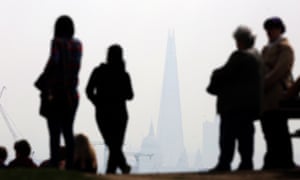
The smog in Los Angeles tends to produce beautiful sunsets as opposed to the grey, apocalyptic photos that routinely come from China. But that doesn’t mean it’s any less bad for you. The nitrogen oxide emissions that are largely produced by manufacturing is broken down by sunlight into ozone. Among the many problems associated with ground level ozone, respiratory problems can be aggravated, the cells that line our lungs can be damaged and crops can be harmed. As far as air pollution in general goes, it’s been found to leave toxic magnetic waste in human brains and causes 5.5 million premature deaths each year.

According to a new paper published in the journal Atmospheric Chemistry and Physics, the United States has cut nitrogen oxide emissions by 50 percent. But those same emissions have tripled in Asian countries since 1990 and those gases circulate to the western United States.

NPR reports:

The study looked at levels of ground-level ozone (the key component in smog) from 1980 to 2014. To determine U.S. trends, pollution levels in cities, rural areas and national parks were collated. Scientist Meiyun Lin of the National Oceanic and Atmospheric Administration led the work, along with others from her agency and the Environmental Protection Agency.

They concluded that the spike in man-made emissions in Asia “is the major driver” of the rise in ozone levels in the western U.S. for both spring and summer in recent decades. The researchers cited data that ranges from Joshua Tree National Park in Southern California to observations in Denver, Colo., and the eastern U.S.

Globalization and rising economies are cited as the problem. China and India, where manufacturing is king are considered the biggest culprits. So, before you start feeling like the U.S. is doing its part, consider where the device you’re reading this article on actually came from.

The good news is that China appears to understand the gravity of the issue. It has recently announced initiatives to increase the prevalence of electric cars and it’s cutting steel and coal production. Just this week, Chinese Premier Li Keqiang pledged to accelerate reductions in pollution as unrest among the population grows. And China’s leadership has insisted it will stick to its agreement in the Paris Climate Accords, while the world nervously waits for the Trump administration to make a decision on the United States continued participation in the agreement.

“A global perspective is necessary when designing a strategy to meet US O3 air quality objectives,” the authors of the study wrote. Indeed, if the United States hopes to protect our environment and curb climate change, it will have to accept that this will take a global effort. Even amidst political chaos and stagnation, the new administration has managed to tear through regulations at a brisk pace. And we’re just getting started.

Source: All of That Pollution In Asia Turns Into Smog In the U.S.

Posted in Air Quality, USA & Canada | Tagged , , , , | Leave a comment

Lampang at risk from forest fire haze 

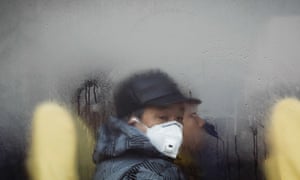
Residents of Muang district in Lampang have been urged to wear face masks to protect themselves against haze pollution as authorities step up efforts to stop forest fires near Doi Phra Bath.

Healthcare workers are advising people on how to deal with air pollution to reduce health impacts as levels of harmful air particles exceeds the safety limit due to a forest fire.

They urged them to avoid outdoor activities and to wear face masks.

Anyone who has respiratory problems, or has symptoms of red eyes or a cough, should consult a doctor, experts said. According to the Air Quality and Noise Management Control Bureau, the level of air particles in tambon Bandong, Mae Mo district was 168 microgrammes per cubic metre (u/cg) and 144u/cg in tambon Phra Baht, Muang district Sunday which exceeds the safety limit of 120u/cg which poses a health risk.

It was reported that a combined team of military officers and local officials were making haste to put out a forest fire near Doi Phra Baht in tambon Phra Baht.

The fire reportedly broke out at an area near Doi Phra Bath two days ago.

Source: Lampang at risk from forest fire haze | Bangkok Post: news

Posted in Air Quality, Asia | Tagged , , , , | Leave a comment

Omega-3 oils could tackle damage caused by air pollution, research shows 

New research indicates the benefits of eating omega-3 fatty acids, but also that pollution particles can penetrate the lungs into many organs, including testicles
Supplements of healthy fats could be an immediate way of cutting the harm caused to billions around the world by air pollution, according to emerging research.

However, the research also shows air pollution particles can penetrate through the lungs of lab animals into many major organs, including the brain and testicles. This raises the possibility that the health damage caused by toxic air is even greater than currently known.

The new research on mice showed that omega-3 fatty acids (OFAs), found in flax, hemp and fish oils, can both prevent and treat the inflammation and oxidative stress caused by air pollution, with the OFAs delivering a 30-50% reduction in harm.

Air pollution around the world is rising at an alarming rate, according to the World Health Organization, with virtually all cities in poorer nations blighted by unhealthy air and more than half of those in richer countries also suffering.

Low air quality has long been linked to lung and heart disease and strokes, but scientists are now uncovering links to brain problems such as dementia, mental illness and reduced intelligence, as well as diabetes, kidney disease and premature births.

Dr Jing Kang, at Massachusetts General Hospital, part of Harvard Medical School in the US, who led the research said: “These pathological changes are very important because they are the fundamental mechanisms for the common chronic diseases we have today.

“I can anticipate the same things [that happen in mice] would happen in humans, because many other inflammatory diseases in humans can be treated with OFAs. We feel very confident OFAs can do something very good.”

“I would definitely recommend taking OFAs to counter air pollution problems,” he said. “OFAs are well known to have many other healthy benefits and the key thing is they are not like a drug, but a nutrient with so many benefits.”

Kang said two to four grammes per day would be the equivalent dose in humans to that given to the mice. A small human trial in 2012 also indicated OFAs offered protection against the adverse effects of air pollution and the US Environmental Protection Agency has now begun a larger trial. There is also supporting evidence from work on human cells in the lab.

Two to four grammes of OFAs would be roughly equivalent to two 85g portions a day of salmon or herring, but the NHS recommends no more than one such portion a day and significantly less for children and pregnant women due to the risks of mercury and other pollutants in fish. Flax oil is about 50% OFA and OFA capsules are also widely available but the NHS says people should get medical advice before taking them.

Dr Richard Russell, a consultant respiratory physician in the NHS and medical adviser to the British Lung Foundation (BLF), said the new research from Kang’s team is “a thorough piece of work and the science is good”. But he added: “The findings need to be interpreted with some caution, given that responses in mice are quite different to humans.” He also noted the level of air pollution the mice were exposed to was high.

Nonetheless, Russell said: “There is an increasing amount of evidence showing that these fatty acids do have significant anti-inflammatory effects. Can they be recommended as a healthy thing to be supplementing the diet of us all? Yes, probably. They do not do harm and may well do good.”

Cutting air pollution at source is the ultimate solution to the problem, said Kang: “Pollution is a very critical issue for human health, but we cannot change the environment right away.” His team concluded that OFAs present “an immediate, practical solution for reducing the disease burden of air pollution”.

In September, a new inhaler that could protect the lungs was revealed, and the BLF recommends avoiding hotspots such as busy road junctions when pollution levels are high and reducing strenuous outdoor exercise.

In the experiments, Kang’s team exposed the mice to fluorescent particles of similar size to the tiny specks that form dangerous PM2.5 air pollution. This made it easier to track the progress of the particles through the bodies of the mice.

“Fine fluorescent particles were observed not only in the lungs but also in other organs, including the brain, liver, kidneys, spleen, and testes,” the researchers reported. “These results demonstrate that fine particles can penetrate the [lung] barrier and travel to other organs, potentially inducing systemic illnesses.”

The discovery of particles in the testes “is a concern for fertility and reproduction”, said Kang. Further research is needed to investigate whether this also occurs in men and the risk posed, but he said: “At least we know the particles can harbour in that type of tissue.”

Previous work in rats has found that nanoparticles are able to pass through the lungs into internal organs, but the particles used in Kang’s work are about 200 times larger. The discovery of “abundant” toxic nanoparticles from air pollution in human brains was revealed in September.

How much omega-3 fatty acids could protect against air pollution?

The research is at an early stage but the doctor leading the latest study, conducted in mice, said 2-4g of omega-3 fatty acids (O3FAs) would be the equivalent human dose. A small human trial found benefits from 3g of fish oil per day, though only some of which will be O3FAs.

Does this mean we should eat fish every day?

Two portions (85g) a day of salmon or herring would give roughly 3g of O3FAs a day, but the NHS recommends not more than one such portion a day and just three a week for pregnant women due to the risks of mercury and other pollutants in fish.

How else can you consume these fats?

Both flax and hemp seed oils are rich in O3FAs, with the former containing about 50%. Supplement capsules of O3FAs are also available and, while the fats are widely thought to the beneficial to health, the NHS says people should get medical advice before taking supplements.

Is food a better way to consume O3FAs than supplements?

A balanced and healthy diet is the best way to get the nutrients the body needs and there is some evidence that supplements do not provide the same benefits as O3FAs obtained from food.

What other measures can you take to protect against air pollution?

When air pollution is high, the British Lung Foundation advises avoiding hotspots such as main roads and strenuous outdoor exercise. If in a vehicle, the BLF says keep the windows closed and recycle the air. It says there is little evidence to recommend the use of face masks.

Can planting more trees and plants help cut air pollution?

Trees do reduce pollution, by 7-24% according to one recent study. But poorly planned trees could actually make things worse. If they are too close together along a street they can form a tunnel that traps traffic pollution and prevents the wind from dispersing it. Hedges and plants can help form physical barriers that protect gardens and playgrounds.

Source: Omega-3 oils could tackle damage caused by air pollution, research shows | Environment | The Guardian


Posted in Air Quality, Health Effects of Air Pollution | Tagged , , , , , , , , , , | Leave a comment

Air pollution leads to more drug resistant bacteria, study finds  

Research shows how black carbon affects the nose, throat and lungs of humans, possible beating the immune system

Black carbon found in air pollution can increase the resistance of bacteria that cause respiratory disease, research has found.

The discover could lead to a greater understanding of the effects of air pollution on human health, according to the lead scientist of the University of Leicester study.

The four-year investigation focused on how pollution in the air, which is thought to be responsible for millions of deaths each year, affects bacteria in the nose, throat and lungs of humans.

It found black carbon, produced when diesel, biomass and biofuels are burned, changes the way bacteria grow, possibly affecting their ability to survive and beat human immune systems.

The study concluded that the resistance of communities of Streptococcus pneumoniae – a major cause of respiratory diseases – to penicillin was increased by black carbon. It also caused this pathogen to spread from the nose down the respiratory tract, allowing disease to develop.

Dr Julie Morrissey, the lead author of the paper, said: “This work increases our understanding of how air pollution affects human health. It shows that the bacteria which cause respiratory infections are affected by air pollution, possibly increasing the risk of infection and the effectiveness of antibiotic treatment of these illnesses.

“Our research could initiate an entirely new understanding of how air pollution affects human health. It will lead to enhancement of research to understand how air pollution leads to severe respiratory problems and perturbs the environmental cycles essential for life.”

The university’s Prof Paul Monks, a leading expert on air pollution, said: “The lead investigators have brought together their expertise in genetics, microbiology and air pollution chemistry to provide truly multidisciplinary, ground-breaking insights.

“This research has significant potential to initiate a global research effort to understand a hitherto unknown effect of air pollution and provide significant additional impetus to the control of pollution.”

Source: Air pollution leads to more drug resistant bacteria, study finds | Environment | The Guardian

Posted in Air Quality, Health Effects of Air Pollution | Tagged , , , , | Leave a comment

Stuttgart residents sue mayor for ‘bodily harm’ caused by air pollution

To highlight the dangerous air quality in the German city, which breached EU limits 25 times in January, two neighbours lodged a criminal complaint against city officials. Popular resistance to Stuttgart’s pollution problem is growing

On a frosty Friday evening at the end of January, after her usual walk around her central Stuttgart neighbourhood, Susanne Jallow felt an unusual cough and irritation in her throat.

Jallow, 54, lives in Neckartor, an area chock-a-block with residential buildings hugged by a busy road, B14, which handles around 100,000 vehicles a day.

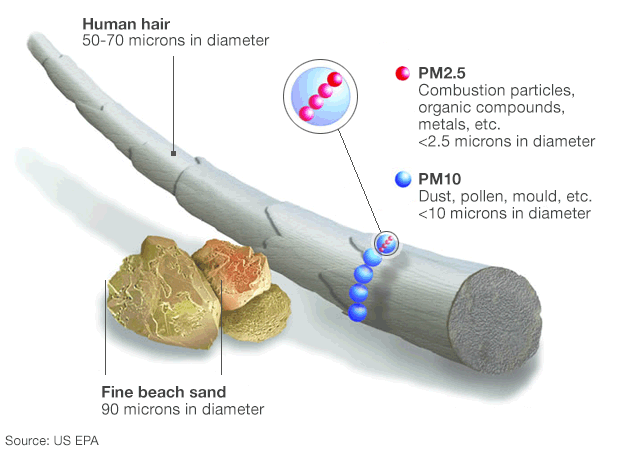
Neckartor is a hotspot for air pollution, not just in Stuttgart but in the whole of Germany. PM10 values (coarse dust particles between 10 and 2.5 micrometres in diameter) recorded on sensors installed in the busy intersection of B14 often hit around 200 micrograms per cubic metre (µg/m³). EU standards set the top limit of safe PM10 levels at 50µg/m³.

On this particular evening, however, Jallow came home and checked the readings on a sensor hanging from her balcony, provided to her as part of an open data citizen initiative called Luftdaten (“air data”), and found that it had recorded 300µg/m³.

Keen to draw attention to the scale of Stuttgart’s problem, Jallow and her neighbour Peter Erben – both members of local citizens’ forum BI Initiative – lodged a criminal complaint on 23 January against the city’s mayor, Fritz Kuhn, and the district president, Wolfgang Reimer. The complaint accuses the officials on two counts: bodily injury with death as a consequence (due to air pollution), and lack of assistance.

The issue was immediately picked up by local media. “We wanted to highlight the bureaucratic apathy of the city administration. There is a pressing need for more proactive measures to combat air pollution. The existing ones are inadequate,” says Erben.

He suspects other neighbourhoods in Stuttgart are just as in danger of air pollution from PM10 and nitrogen dioxide as Neckartor is. “Right now, the official explanation is that only Neckartor suffers from bad air in all of Stuttgart. I don’t necessarily think that is true.”

Popular resistance to air pollution in Stuttgart has been ongoing for more than a decade. In the autumn of 2004, two of its citizens approached the court seeking redressal from air pollution and fine particulate matter. The government reacted by introducing a truck transit ban that did little to control PM levels. In 2008, a Neckartor resident filed another lawsuit – and the court, in its ruling, noted that no effective measures had been taken to address the city’s poor air quality.

The concept of Feinstaubalarm (“fine particulate matter alarm”) was introduced in January 2016 to mark the days when the city’s air pollution exceeds EU limits. On these days, the city administration urges residents to stop using their wood-fired chimneys and utilise public transportation rather than cars – tickets are reduced to half price as an incentive.

Last year, Stuttgart breached the EU’s daily permitted PM10 levels on 63 days – almost double the allowed 35 days.

“Combustion residues, mainly from diesel engines, as well as the abrasion of brakes and tyres, are the main reasons for these high PM10 values,” says Dr Ulrich Vogt, head of the Department of Air Quality Control at Stuttgart University.

One reason for Stuttgart’s heavy traffic is that it doesn’t possess any ring roads, so much of the traffic passes straight through the city. In contrast, Munich has three ring roads.

“Another reason we have such a high concentration [of air pollution] is that everything is very, very densely populated,” Vogt says. “Stuttgart west has the highest population density in Europe. There are no broad avenues here, only narrow street canyons.”

But the problem is also geographical: Stuttgart’s city centre is located in a basin, surrounded by mountains on three sides. “We do not have good ventilation and hence no way of diluting the air pollutants,” Vogt adds.

Winter brings further weather-related issues: “We are now experiencing a phenomenon called temperature inversion. It acts like a lid, trapping cold air in the ground without allowing for exchange,” explains Dr Ulrich Reuter, an environment counsellor with Stuttgart’s Office of Environmental Protection.

From Reuter’s office window on a late January afternoon, the city’s landmark Fernsehturm (TV tower) is shrouded in thick smog. “I hope it will be possible to bring down the pollution levels,” he says. “But I’m afraid it’s not possible without restrictions.”

“The politicians are satisfied with Feinstaubalarm without considering any other action,” says Jallow. “Why can’t we have a ban on vehicular traffic on pollution days, like Paris and Madrid?”

But such a ban would be controversial in the industrial city home to major manufacturers including Porsche, Daimler and NeoPlan (the maker of Man buses and trucks).

“I think it would be fatal,” Thomas Bareiss, the commissioner for energy policy, told a local newspaper. “Even the discussion about driving bans will lead to the destruction of [Stuttgart]. There are more intelligent ways to tackle the fine dust problem.”

But according to Julia Pieper, a spokesperson for the Ministry of Transport for the state of Baden Württemberg, of which Stuttgart is the capital, traffic restrictions are being considered for next year.

“In the eventuality that the 2017 limit values are not met, traffic restrictions on individual days are planned for the year 2018,” Pieper told the Guardian. “In doing so, the affected area is kept as small as possible.”

In the month of January alone, the city experienced around 25 of the acceptable 35 Feinstaubalarm days – so restrictions look certain to be introduced next year.

No threshold

The grubby, soot-laden walls of the grand old houses that sit along B14 in Neckartor bear the tell-tale signs of air pollution.

“You can only imagine what the lungs of people who live inside those houses look like,” says Erben, rubbing his fingers across the soot. An acrid smell hangs heavily in the air, resulting from the emissions let out by the cars hurtling past the busy intersection.

Experts such as Vogt and Reuter agree a reduction in car traffic is the most effective measure for improvement of air quality. “Every microgram per cubic metre of PM10 is unhealthy,” Vogt says. “So there is no threshold value or lower limit [of acceptability].”

There is certainly growing awareness of the issue among Stuttgart residents. Luftdaten is in the process of installing low cost, crowdfunded sensors across the city to measure PM levels, much like the one on Jallow’s balcony.

“I wanted to build cost-effective sensors, given the less than reliable government data and coverage regarding air pollution,” explains Jan Lutz, a social entrepreneur who runs Luftdaten’s website.

“But I think in five years Stuttgart will be like Detroit or something, because there is simply no innovation,” he adds. “The automobile industry continues to produce more cars, which is basically two tonnes of steel transporting a 70kg human. It’s an overkill, and not sustainable in the long run.”

Source: Stuttgart residents sue mayor for ‘bodily harm’ caused by air pollution | Cities | The Guardian

Posted in Air Quality, Europe, Germany | Tagged , , , , , , | Leave a comment

Nepal bans old vehicles in Kathmandu to combat air pollution 

Around 2,500 old vehicles have been banned in Nepal’s capital Kathmandu, in a bid to curb the high levels of air pollution in the city

Air pollution levels in Kathmandu have reached nine times the limits set by the World Health Organisation (WHO).

The capital – which is located in a Himalayan valley – is home to a growing population of over three million people who are becoming restless about the city smog.

Dust from construction, exhaust fumes from old and poorly maintained vehicles, and smoke caused by coal-burning kilns have plagued Kathmandu, as well as increasing the risk of multiple health issues including asthma, strokes and cancer – according to health experts.

Khem Bahadur Karki, Head of state-run Nepal Health Research Council, reportedly said: “It is a very serious problem, which poses a threat to people’s health”.

Referring to a recent study, Karki said that approximately 30 per cent of respiratory illnesses are contributed by outdoor air pollution.

It is hoped that the ban on all vehicles older than 20 years will address the city’s air quality and ease congestion, paving the way for a cleaner future.

Tok Raj Pandey, a Transport Department official, said: “The old vehicle ban will help improve air quality and ease traffic congestion”.

However, activists have called for more to be done, including the introduction of stricter emission standards for new vehicles and the adoption of cleaner transport.

Kathmandu’s ban on old vehicles follows a number of cities that have imposed similar measures to combat air pollution.

Towards the end of last month, London Mayor Sadiq Khan announced the introduction of a new £10 charge on all old polluting cars driving in central London’s congestion charge zone.

In Paris, more polluting vehicles are now banned weekdays between 8am and 8pm.

Source: Nepal bans old vehicles in Kathmandu to combat air pollution – Climate Action Programme

Posted in Air Quality, Asia | Tagged , , , | Leave a comment

Stronger wind expected to ease high-risk air pollution

High-risk air pollution in Hong Kong is expected to ease on Thursday as the dry northeast monsoon affecting southern China gets stronger, according to the Hong Kong Observatory

Hong Kong suffered higher than normal pollution levels on Wednesday afternoon, Ming Pao Daily reports.

Readings from air monitoring stations showed the Air Quality Health Index in most districts reached 8 or above, or “very high” health risk.

At some point, the index hit 10 in some stations in Causeway Bay and Central.

The Environmental Protection Department (EPD) said Hong Kong was affected by an airstream with higher background pollutant concentrations on Wednesday, with the light wind hindering dispersion of air pollutants.

In addition, the sunshine enhanced photochemical smog activity and the formation of ozone and fine particulates during daytime, resulting in high pollution.

At 4 pm. Wednesday, the concentration of PM2.5 — fine particles 2.5 microns or less in diameter — was 73 percent higher than the acceptable standard

Citing forecasts by the Observatory, the EPD said a stronger northeast monsoon will continue to bring generally fine weather to southern China in the next couple of days.

The wind is expected to increase from Thursday and reduce air pollution with improved dispersion, according to Headline Daily.

With the health risk index in the “very high” range or above, children, the elderly and those suffering from heart or respiratory illnesses are advised to reduce physical exertion and outdoor activities to a minimum or avoid such activities entirely.

Source: Stronger wind expected to ease high-risk air pollution

Posted in Air Quality, Asia, China | Tagged , , , | Leave a comment

Shining a light on the darkness of soot in air pollution

Researchers are a step closer to understanding the relationship between the colour of soot particles and the effect of such atmospheric pollution on climate.

Their breakthrough, which relates how transparent coatings on atmospheric soot particles enhance light absorption, will help inform policymakers considering climate change.

A study published in Nature Geoscience, which involved scientists from the University of Leeds, identifies the specific amount of transparent material at which light absorption enhancement begins to take place, causing soot to become darker.

Lead author Dr Dantong Liu, from the University of Manchester, explained: “The atmosphere contains a mixture of man-made and natural particulates that can have either a warming or cooling effect on climate.

“Of the pollutant particles, black carbon is the most important contributor to warming. Black carbon absorbs light at all wavelengths, causing a highly efficient and very localised warming effect on the atmosphere.”

The researchers focused on the mix of black carbon and other substances in soot particles that are released by combustion processes, such as wood burning, diesel engines and industry. They tested different types of soot during Bonfire Night in 2014 which, due to weather conditions that day, was particularly polluted and had a high concentration of atmospheric woodsmoke particles.

GLOMAP, a computerised model of aerosol microphysical and chemical processes developed by the University of Leeds, was then used to calculate the details of the particle distribution in the atmosphere.

Study co-author Professor Dominick Spracklen, from the School of Earth and Environment at Leeds, said: “The right mix of black and non-black carbon forms a coating that makes the black carbon interact strongly with light. GLOMAP lets us look at the quantity and ratio of black and non-black carbon contained in particles in the atmosphere.”

Different forms of combustion create different ratios of black and non-black carbon and the study identified the specific mass ratio at which the light absorption enhancement begins to take place, causing the soot to become darker.

If there is less than one-and-a-half times more non-black carbon to black carbon on the soot particle – then no enhanced absorption is detected. This is believed to be because the material fails to fully coat the black carbon. This ratio is typically found in diesel exhaust fumes, for example.

But if there is more than three times non-black carbon than black carbon on the soot particle, this creates an optimum lensing effect and light absorption is enhanced. These higher ratios are found on soot from wood burning, which is a major source of soot worldwide from forest fires and farming.

Study co-author Dr James Allan from the University of Manchester said: “Soot particles are known to affect climate, particularly on local scales where they can influence weather systems – but their exact effect is currently highly uncertain.

“However, evidence for this effect in the field has been inconsistent. With a combination of lab and atmospheric measurements we’ve shown that this coating mass has to reach a certain threshold for this to take effect.

“These finding will help us reconcile results from previous experiments and field observations and should help us develop more accurate climate models in the future.”
Source: Shining a light on the darkness of soot in air pollution

Posted in Air Quality | Tagged , , , | Leave a comment