APH compares air pollution levels in some of the most popular holiday destinations 

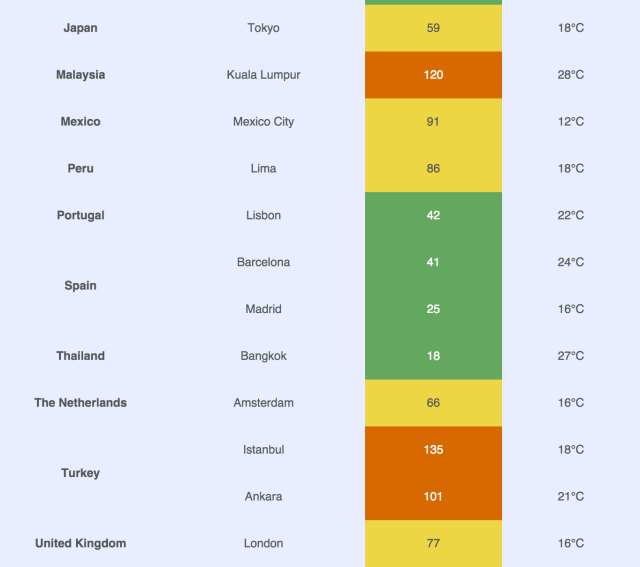
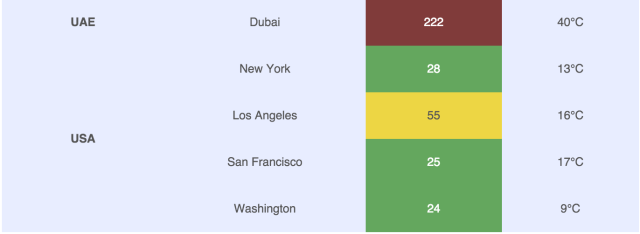
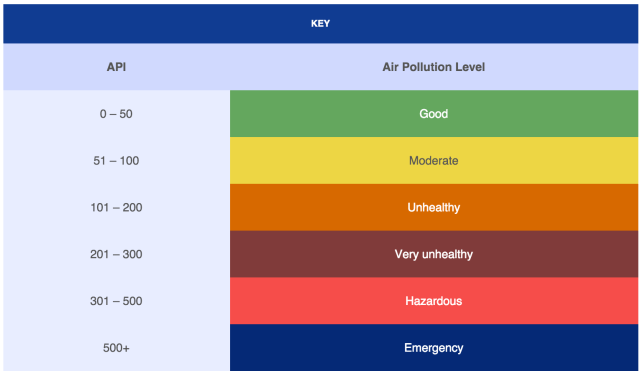
According to research published by Nature*, over three million people around the world die prematurely each year from outdoor pollution. For those holidaymakers concerned about air quality when travelling abroad, Airport Parking and Hotels (APH) has put together a guide comparing the air pollution levels in some of the world’s top holiday destinations.

Screen Shot 2015-11-24 at 07.47.02 Screen Shot 2015-11-24 at 07.47.23 Screen Shot 2015-11-24 at 07.47.45

Screen Shot 2015-11-24 at 07.46.34

Source: APH compares air pollution levels in some of the most popular holiday destinations – APH Parking News

Posted in Air Quality, Asia, Europe, Latin America, Middle East, USA & Canada, World News | Tagged , , , , , , | 1 Comment

Air pollution linked to asthma in children and teens 

Exposure to air pollution early in life may contribute to the development of asthma in childhood and adolescence, a European study suggests.

Researchers followed more than 14,000 children from birth through ages 14 to 16 and found those born in communities with more polluted air were more likely to develop asthma than other kids, particularly after age 4.

While previous research has linked asthma to air pollution exposure in early childhood, the current study offers new evidence that this connection extends into adolescence, said lead author Dr. Ulrike Gehring, a researcher at Utrecht University in The Netherlands.

“Exposure to air pollution is thought to cause asthma by effecting the size and structure of the developing lung as well as the developing immune system,” Gehring said by email. “The exact mechanisms behind the association between air pollution exposure and asthma in children, however, are not clear.”

To look at the link between asthma and air pollution, Gehring and colleagues examined concentrations of nitrogen dioxide, a byproduct of fossil fuels that can contribute to smog, and so-called particulate matter, a mixture of solid particles and liquid droplets that can include dust, dirt, soot and smoke.

Then, they examined questionnaire data about the children’s respiratory health that was collected several times during childhood. Parents were asked if kids were diagnosed with asthma, prescribed asthma drugs or experienced wheezing. Parents were also asked if kids had sneezing, congestion or itchy, watery eyes when they didn’t have colds.

The study included kids from Germany, Sweden and The Netherlands.

Overall, the risk of asthma by ages 14 to 16 increased with increasing exposure to nitrogen dioxide and particulate matter at the birth address, but not with exposure levels for the address at the end of the study.

Researchers didn’t find a link between air pollution exposure and allergies.

One limitation of the study is that researchers used air pollution measurements from 2008 to 2010 for the entire duration of follow-up, the researchers acknowledge in The Lancet Respiratory Medicine. Researchers also didn’t look at air quality at school or daycare centers, which might differ from where the children lived.

It’s also possible that children growing up near major, heavily trafficked roadways, who are at the greatest risk for exposure to air pollution, may differ from kids who grow up in other locations like suburbs in other respects, such as lower socioeconomic status, that also increase asthma risk, said Steve Georas, a researcher at the University of Rochester Medical Center who wrote an accompanying editorial.

Even so, the findings add to a growing body of research linking asthma to pollution, Georas said by email.

“It is probably time to doubt no more that early life air pollution exposure is a risk factor for asthma for some children,” Georas said. “What we need now are more studies to understand (why) some children are particularly susceptible to these adverse effects.”

SOURCE: bit.ly/1MXLSwc The Lancet Respiratory Medicine, online November 10, 2015.

Source: Air pollution linked to asthma in children and teens | Reuters

Posted in Air Quality, Asthma, Health Effects of Air Pollution, Medical Studies | Tagged , , , | Leave a comment

Shipping causes hazardous levels of air pollution along coastlines, study finds 

The air along coastlines is being heavily polluted by hazardous levels of nanoparticles from sea traffic, a new study has found.

Almost half of the measured particles stem from sea traffic emissions, while the rest is deemed to be mainly from cars but also biomass combustion, industries and natural particles from the sea.

“This is the first time an attempt has been made to estimate the proportion of nanoparticles stemming from sea traffic. The different types of nanoparticles have previously not been distinguished, but this new method makes it possible”, says Adam Kristensson, researcher in Aerosol Technology at the Lund University Faculty of Engineering in Sweden.

“Previously, we thought that land-based pollution from northern European countries and emissions of natural particles from the surface of the sea accounted for a much larger proportion”, he says.

Nanoparticles can be hazardous to our health as they, because of their small size, can penetrate deeper into the lungs than larger particles contributing to both cardiovascular and pulmonary diseases. A cubic centimetre can contain several thousand nanoparticles.

To arrive at these results, he and his colleagues have studied the air flow from their measuring station in southern Sweden as it passes over the Baltic Sea, all the way to the measuring station on the Lithuanian coast. The wind often travels towards the east, and the particles can travel long distances before they are trapped in our lungs or washed away by the rain. They have also studied the air flow from a station in the Finnish archipelago towards the Lithuanian station.

By comparing levels of nanoparticles, the researchers can draw conclusions about the respective proportions that stem from cars and other emissions, and sea traffic.

Particles from sea traffic in the North Sea and the Baltic Sea are expected to contribute to 10,000 premature deaths every year, but Adam Kristensson stresses that this estimate is very uncertain, and believes that it is important to continue to conduct these types of measurements.

He also advocates stricter legislation. “It is especially important to continue to set stricter caps on nitrogen oxides and sulphate content from ship fuel.”

“It is especially important to continue to raise the caps on emissions of nitrogen oxides and sulphate content from ship fuel.

Future regulations will hopefully reduce the emissions of harmful nanoparticles, especially soot particles, which are considered the most hazardous.

“This year a new regulation was introduced for the North Sea and the Baltic Sea that limits the sulphate content in fuel to 0.1%. As researchers, we still have to look at what positive effects this has had so far with regard to the particle levels.”

Source: Shipping causes hazardous levels of air pollution along coastlines, study finds > Trends > Research | Click Green

Posted in Air Quality, Europe | Tagged , , , | Leave a comment

Air pollution death toll – 698 people died prematurely in South Yorkshire in a year 

Air pollution caused the premature deaths of an estimated 698 people across South Yorkshire in a year, according to statistics highlighted today.

The figures for Sheffield, Doncaster, Rotherham and Barnsley were revealed by charity Brake as it called on people to ‘drive less and live more’ in a new campaign for the launch of Road Safety Week .
Sheffield had the highest number of estimated deaths in 2010 – 269 people aged over 25, while Doncaster had 160 people, Rotherham 145 and Barnsley 124.

A Brake spokesman said: “The figures for premature deaths as a result of air pollution come as a shock to us.

“If anything we believe these figures are under reported, which is why we call on Government to increase their investment in alternative fuel sources for vehicles.”

Earlier this year analysis before Sheffield Council’s health and wellbeing board said there was a ‘strong correlation’ between hospital admissions for circulatory and heart diseases and average levels of pollution.

Road transport is the largest contributor to Sheffield’s nitrogen dioxide emissions, the city is missing its EU air quality targets and is not likely to be below the legal limit until 2020.

The council’s own action plan said poor air quality causes an estimated 500 premature deaths a year.

It is also now running an Air Aware campaign, which the council said had increased the number of people describing themselves as aware of air pollution by 27 per cent.

An electric vehicle project has supported firms to switch cars and installed rapid vehicle charging points while a feasibility study into a scheme to increase the number of low emission taxis is underway.

Sheffield is also in the running to become one of the UK’s first ‘Go Ultra Low’ cities, which are leaders in electric vehicle uptake.

If the city is successful in its bid for funding, more than 50 new charging points will be installed and 300 vehicles purchased for use by the council. car clubs and others.

A council spokesman said: “The number of deaths in Sheffield due to poor air quality is too high but we are not complacent and are actively working with partners to drive down pollution levels.

“We know there is more to be done, but are already taking this issue very seriously and hope thatby working with the public, businesses and partners together we can drive down air pollution.”

Barnsley Council said several areas were subject to an air quality action plan with measures like building bypasses to move traffic away from housing or creating bus corridors used.

Coun Roy Miller, cabinet member for place, said: “These locations are constantly monitored by regulatory services who report progress annually to Defra.

“We are pleased the number of air quality management areas in Barnsley is reducing each year.

“The council is working hard to lower emissions with the aim of improving air quality and health.”

Other Barnsley projects include encouraging staff to choose sustainable travel and running council vehicles as efficiently as possible.

In Doncaster, tackling emissions is a consideration for new planning applications and the council has invested in new efficient street sweeping vehicles.

Assistant director of environment Gill Gillies, said: “As is the case in many areas of the UK we know that there are parts of Doncaster, typically near busy roads, which have poor air quality.

“We have developed detailed air quality action plans for these areas and take a range of measures to reduce pollution in the borough.

“We also have the highest percentage of residents who cycle to work in South Yorkshire, emphasising that local people are becoming increasingly passionate about protecting the environment.”

Read more: http://www.thestar.co.uk/news/air-pollution-death-toll-698-people-died-prematurely-in-south-yorkshire-in-a-year-1-7582657#ixzz3sIkpxWq9

Source: Air pollution death toll – 698 people died prematurely in South Yorkshire in a year – The Star

Posted in Air Quality, Europe, UK | Tagged , , , , , | Leave a comment

MPs call for diesel cars scrappage scheme to tackle air pollution 

Environmental audit committee joins Boris Johnson in calling for payments to encourage people to ditch diesel cars, as part of measures to clean up UK air

The government should consider a scrappage scheme for diesel cars to get polluting vehicles off the streets of England’s cities, where they contribute to tens of thousands of premature deaths every year, according to an influential committee of MPs.

The call echoes a proposal from London Mayor Boris Johnson who has suggested up to £2,000 per car could be paid to get 150,000 diesels off the capital’s roads.

Ministers should also revise vehicle excise duty (’road tax’) to encourage drivers to buy cleaner cars, the Environment Audit Committee (EAC) said on Friday in its response to the government’s proposals for tackling air pollution. Air pollution has been illegally high in some British cities for years and in April the Supreme Court ordered the government to take action.

“Introducing a national diesel scrappage scheme could provide a short-cut to cleaning up the air in our cities,” said Huw Irranca-Davies, chair of the EAC. Ahead of George Osborne’s autumn statement next Wednesday, he said: “The Treasury must use VED to create long-term incentives for drivers to buy cleaner hybrid and electric cars that minimise both CO2 and harmful pollutants.”

Irranca-Davies said that changes to VED earlier in 2015, which removed exemptions for low-emissions cars, was a “missed opportunity” and said VED should be changed to focus not only on CO2 emissions, but also on NOx emissions, which the government estimates cause 23,500 premature deaths a year. Most diesel cars emit far more NOx on the road than in official tests, a problem that gained prominence after VW admitted cheating regulatory tests.

The EAC welcomed the government proposal to create a national framework of Clean Air Zones, something it had called for on repeated occasions. This would give councils the power to ban or limit diesel cars from cities, but the MPs warned that different rules in different cities would be confusing. “It will be important to avoid sending out conflicting signals to drivers across the country,” said Irranca-Davies.

Making local councils responsible to tackling air pollution made sense as they were best placed to understand local problems, he said. But he warned that council budgets were under extreme pressure.

“We are concerned that central government is trying to shift responsibility for meeting air quality targets to local authorities at a time when they are facing severe funding cuts.” he said. “The government has a duty to ensure that local authorities have the financial means at their disposal to adequately implement air quality action plans.”

In Brussels, MEPs have written to the European Commission demanding tolls on trucks to limit their CO2 emissions. Currently there are no CO2 standards for trucks in Europe, although cars and vans’ CO2 emissions are limited.

Source: MPs call for diesel cars scrappage scheme to tackle air pollution | Environment | The Guardian

Posted in Air Quality, UK | Tagged , , , , , , , | Leave a comment

Experts warn of poor air quality in Valley

Though the availability of firewood for cooking in Kathmandu Valley may bring respite from the acute fuel crisis, it could contribute to deteriorating air quality in the Valley with onset of winter season this year, experts said.

The government has already distributed more than 200,000 kilograms of firewood from various depots set up inside the Valley since the decision was taken on Sunday, according to the Timber Corporation Nepal. This is equivalent to 340 tonnes of carbon dioxide, one of the greenhouse gases responsible for climate change and global warming as well as affecting the local environment. Besides carbon dioxide, other harmful pollutants, including methane, carbon monoxide and soot particles, are also released from burning wood.
Experts said though the decision was taken to address the severe shortage of cooking gas, the burning of firewood is likely to increase the emissions of air pollutants and contribute towards indoor air pollution. “Most people are using traditional fireplace to burn firewood in the open, releasing emissions containing harmful pollutants that pose severe health risks,” said Dhiraj Pokhrel of the Society for Legal and Environmental Analysis and Development Research (LEADERS Nepal), a non-governmental organisation working on indoor air pollution in the country.
Pokhrel’s organisation has been conducting air quality monitoring, especially of PM2.5 particles that pose greatest health risks, by setting up monitoring stations in Kathmandu, Bhaktapur and Kavre. “When we analysed the data collected from this three stations last week, we found that the concentration of dust and soot particles that pose severe health risk is three times higher in Bhaktapur than in Putalisadak area,” Pokhrel said, arguing that causes of the scenario may be due to the drop in number of vehicular movement along the main street in Putalisadak while increase in the use of firewood in Bhaktapur.
The decreasing number of vehicles on road due to fuel shortage could reduce the emissions, but other sources, including the operation of the brick kilns and the use of firewood, is likely to increase pollution level during the winter this year. The bowl-shaped topography of the Valley makes it vulnerable to pollution by restricting the movement and trapping pollutants, and the situation gets worse during the dry season.
Officials at the Department of Environment agree that the burning of firewood is not a sustainable solution to the ongoing crisis but state that the decision has not much considered its environmental aspect to address the humanitarian issue. “The crisis situation for more than two months now has led to hardships with people looking for any alternatives available to run their day-to-day life,” said Surendra Subedi, deputy director general at the department.

Source: The Kathmandu Post :: Experts warn of poor air quality in Valley

Posted in Air Quality, Asia | Tagged , , , | 1 Comment

WHO: 7 Million People Die Each Year Due to Air Pollution 

About 56 million people die worldwide. Of those, at least 7 million die from pollution-related diseases each year, the U.N.’s health body said.

The U.N.’s body for health, WHO, reported on Wednesday that if the world powers reach a global legally binding agreement to cut greenhouse gas emissions, they will not only save the planet, but millions of people living on it, as 7 million die each year of contamination-related diseases. The organization noted that 56 million people die each year. ​

“If the agreement is achieved, it will be one of the most important on public health of the century,” the WHO’s public health and environment director, Maria Neira, added.

Neira made her statements ahead of the 21st Conference of the Parties, or COP21 that will be held in Paris later this month, and that will be attended by climate negotiators from over 190 nations.

The agency has warned in several reports that at least 7 million people die every year from air pollution-related diseases, making it the world’s largest single environmental health risk. Illnesses like malaria and cholera are also exacerbated by weather phenomena caused by climate change effects.

Given this reality, WHO says negotiators in Paris can use health as an argument, the main goal of the COP21 meeting is to agree on ways of maintaining global warming below the 2-degree-Celsius threshold, as well as to implement viable solutions worldwide to combat the adverse effects of global climate change.

The agency said that implementing proven interventions to reduce emissions of short-lived climate pollutants, like black carbon and methanes, would be expected to save approximately 2.4 million lives a year and reduce global warming by about 0.5 degree Celsius by 2050.

The COP21 has been called by many as “the most important global conference of the century.” However, environmentalists and pressure groups have said its scope could be reduced due to the security measures that the French government has imposed after last week’s attacks in Paris, in which more than 120 people were killed and several hundreds injured.

Although the conference will be held as planned, several activities like public demonstrations and the mass participation of civil society in the talks have been cancelled.

Source: WHO: 7 Million People Die Each Year Due to Air Pollution | News | teleSUR English

Posted in Air Quality, Health Effects of Air Pollution | Tagged , , , | Leave a comment

Scottish Parliament debates air pollution 

The Scottish Parliament will debate air pollution today, for the first time since the publication of the Scottish Government’s Air Quality Strategy.

The Scottish Government was required by the UK Supreme Court to produce the strategy after the UK failed to meet European legal air quality limits by a 2010 deadline.

The document, ‘Cleaner Air for Scotland – The Road to a Healthier Future’, commits the Scottish Government to improve monitoring and modelling of air pollution, adopt World Health Organization guidelines on particulate matter pollution in legislation and work to increase awareness of the problem.

Friends of the Earth Scotland (FoE) called for specifics on how the Government would meet European air quality limits by 2020.

Friends of the Earth Scotland air pollution campaigner Emilia Hanna said: “Today in Parliament, the Scottish Government need to confirm commitments that government officials made to introduce low emission zones in Scottish cities by 2018 at the latest. Low emission zones exist in around 200 cities in Europe and have been proven to reduce air pollution. The Government must also clarify that it will provide the funding for local councils to implement such zones.

“There are still 32 pollution zones in Scotland where air pollution levels are breaking safety standards that should have been met years ago, and at least 2,000 people in Scotland are dying early every year from toxic air, so it is crucial that in today’s debate the Scottish Government is questioned hard on when all Scottish air quality standards will be met.”

FoE Scotland previously warned the new strategy is still in breach of the European Ambient Air Quality Directive.

The Scottish Government’s ‘Cleaner Air for Scotland’ report estimates that, across the UK, the impact of poor air quality on health costs around £15bn per year. It found the total annual cost of air pollution to the UK’s economy may be as much as £54bn.

In Scotland in 2010 fine particulate matter was associated with around 2,000 premature deaths and around 22,500 lost life-years across the population.

Levels of air pollution are breaking health standards in 32 official pollution zones across Scotland, including in parts of Glasgow, Edinburgh, Dundee, and Aberdeen.

Source: Scottish Parliament debates air pollution | Holyrood Magazine

Posted in Air Quality, Europe, UK | Tagged , , , , , , | Leave a comment