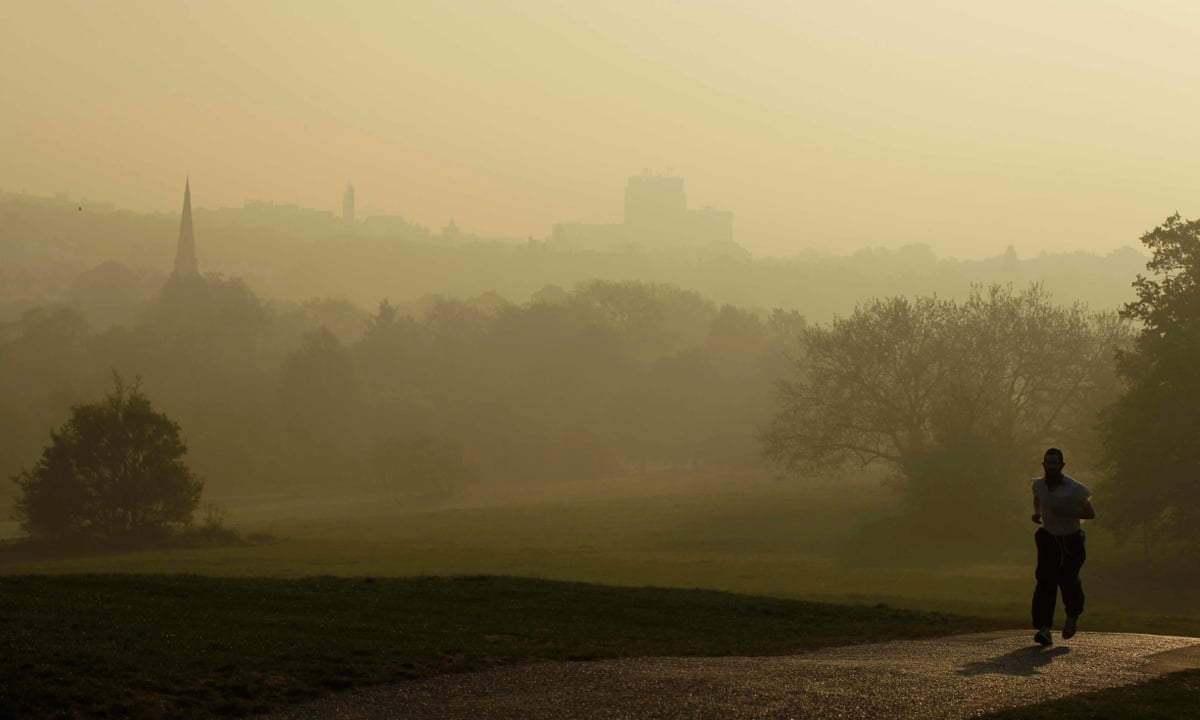
Air and noise pollution has severe consequences on heart health

Cardiovascular diseases (CVD), including heart disease and stroke, are the no 1 killer worldwide and in Europe, where they cause the death of over 10 000 people daily, i.e. more than all cancers combined.

Recent scientific evidence shows that air and noise pollution are environmental health risks which have severe consequences on heart health.

CVD account for 80% of all premature deaths due to air pollution. The effects may be so serious that experts advise heart disease patients to stay inside during rush hour traffic. In the UK, the government will have to submit air quality plans to the European Commission by the end of 2015. The ruling came after the government failed to comply with European limits on nitrogen dioxide set to protect health and outlined in the European Union (EU) Air Quality Directive (6). The European Commission also took Belgium and Bulgaria to court over poor air quality and Sweden was given a final warning.

Noise pollution increases the risk of CVD, including hypertension and heart disease. In Europe, it is estimated to contribute to at least 10 000 premature deaths due to heart disease and stroke each year.

Public policies can do much to protect health and, ultimately, to reduce the burden of CVD in Europe.

Tomorrow the European Society of Cardiology (ESC), together with the European Association for Cardiovascular Prevention and Rehabilitation (EACPR) and the European Heart Network (EHN), will be officially launching the ‘Environment & the Heart Campaign’ to raise awareness about the need to create healthy environments for the protection of heart health and to encourage policymakers’ action.

Healthcare professionals, patient advocates, policymakers and the wider public are invited to join the campaign by signing the online petition on change.org/p/environment-and-the-heart

The campaign is being launched at ESC Congress, the world’s largest and most influential cardiovascular event, set to assemble over 30 000 delegates for five days in London. It is no coincidence that “Environment and the Heart” is the spotlight theme of ESC Congress 2015 and new research will be presented on this increasingly important risk factor.

The outcome of the campaign together with the collected signatures will be presented to European Commissioners for Health, Environment, Climate Change and Transport in Brussels on World Heart Day (29 September), which this year is also focused on creating heart healthy environments.

The campaign comes at a crucial time as Paris prepares to host the UN Climate Change conference from 30 November to 11 December this year, which aims to achieve a new international agreement to keep global warming below 2°C.

Momentum is growing to take action on environmental factors that damage health. Please use your signature to help fight cardiovascular disease.

Source: Air and noise pollution has severe consequences on heart health
Posted in Air Quality, Health Effects of Air Pollution | Tagged , , , | Leave a comment

World Pollutionwatch: Fire can kill – far from the flames 

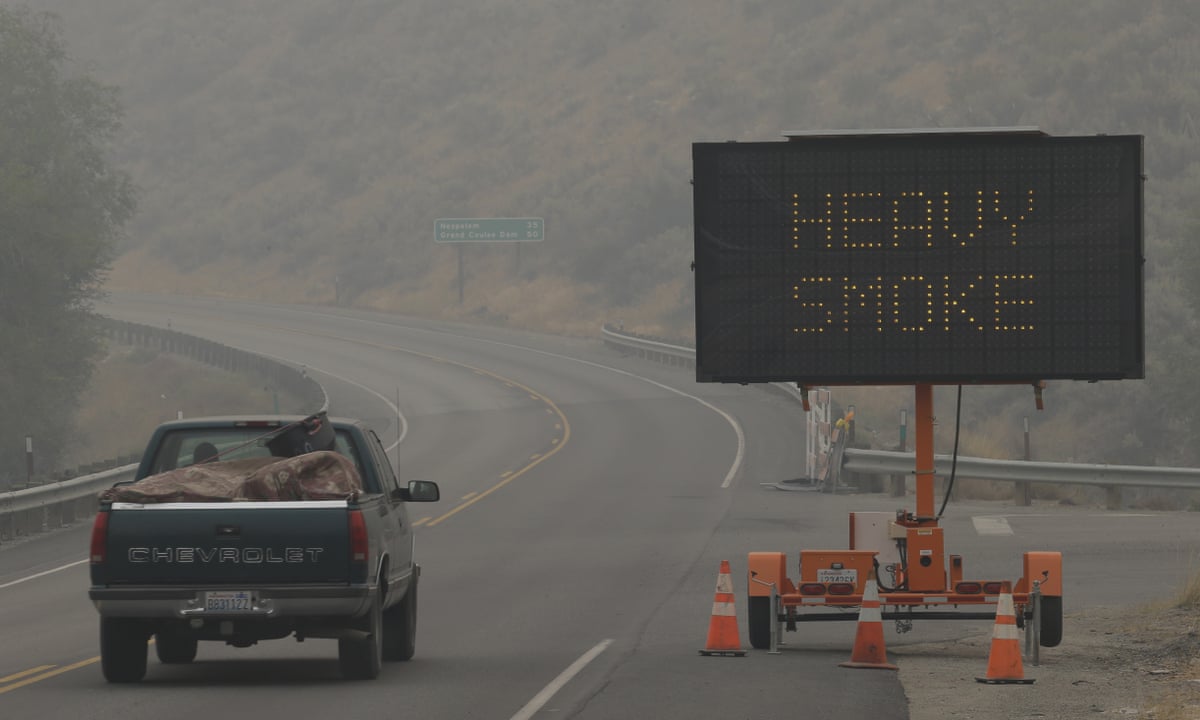
Vancouver is normally one of the world’s cleanest cities but this July its air resembled that in Beijing due to smoke and ash from forest fires over 200 kilometres away. Further fires along the western side of the US and Canada have caused numerous health warnings especially at night when smoke settled on valley communities. During August hot weather across southern Europe also led to forest fires in Spain, Portugal and Greece.

Most landscape fires are not truly natural since they occur in areas managed for agriculture or forestry. Although they are generally well away from large cities, the smoke from these fires can travel a long way. Fires in western Russia in 2002 and 2006 led to air pollution problems across Europe as far as the UK. Forest fires across Spain and Portugal added to the health impacts of the 2003 European heatwave and Singapore and Kuala Lumpur experience annual air pollution problems from fires in Indonesia – most notably in 2013.

But these are the fires that feature in the news. Globally around 340,000 deaths per year are thought to be attributable to the additional pollution from landscape fires. This health burden is largest in sub-Saharan Africa and south-east Asia. Landscape fires have greatest impact during El Niño years and least during La Niña, mainly due to differences in weather patterns across south east Asia. Here peat swamps and rainforests rarely burn without human instigation and fires can easily run out of control during dry years.

Ending deforestation by burning would have many benefits, not only for global climate and biodiversity but for human health too.

Source: World Pollutionwatch: Fire can kill – far from the flames | Environment | The Guardian

Posted in Air Quality, Singapore, USA & Canada | Tagged , , , , , , , , , , , , , | Leave a comment

Wanted! An army of citizen scientists to tackle air pollution 

Turn off Tinder and exit Instagram – scientists want you to turn your iPhones to research. Launching on Tuesday, the iSpex-EU project aims to recruit people from major cities across Europe, including Manchester and London, to take part in an initiative to monitor levels of air pollution.

Run during the International Year of Light, a worldwide celebration of light and light-based technologies this year, the project aims to raise awareness of air pollution and contribute to scientific research by encouraging people to use their mobile phones to record levels of airborne particles and droplets known as atmospheric aerosols.

“The point of the project is to measure the concentration of very fine particles in the atmosphere and these can be from natural sources, things like forest fires or volcanic eruptions, through to manmade factors like burning diesel,” explains Toby Shannon, the UK national co-ordinator of the International Year of Light, who is based at London’s Institute of Physics, one of the organisations supporting the UK side of the iSpex-EU project.

Armed with a free accessory dubbed an “iSpex add-on”, participants will use their iPhones to scan the sky to capture the spectrum of light reaching the device, the angle of the measurement and a property of light known as its polarisation.

“When there are particles in the air, they change the polarisation state of sunlight and that is what we record with iSpex,” says Elise Hendriks, co-ordinator of the iSpex-EU project based at Leiden University in the Netherlands. A free accompanying iPhone app will automatically collect the data and display it on a map, visible both in the app and on a desktop site, together with colour-coded feedback of the aerosol level measured. The data will then be processed and further analysed by the iSpex team.

The initiative follows an initial iSpex project, led by Leiden University, which used a similar set-up to monitor such air-pollution across the Netherlands in 2013. Now the project is going further, looking at atmospheric aerosols in a number of cities across Europe. “Cities are involved generally because there is a higher chance of getting pollution, but also because you need a certain density of people to get good measurements,” explains Dr Hugo Ricketts from the National Centre for Atmospheric Science who is involved in the Manchester arm of the project.

It’s a pressing problem. The Earth’s climate, air traffic and human health are all affected by air pollution. A report from King’s College, London published this summer estimates that in London alone around 9,500 premature deaths a year are linked to high levels of air pollution, of which particulates in the air are a component. Indeed, after smoking “it is the second biggest public health challenge,” says Professor Frank Kelly, an expert in environmental health at the university.

While air pollution is currently monitored using satellite systems as well as ground-based monitoring stations, Kelly believes mobile devices could offer a host of advantages, and is involved in the development of such technologies himself.

“In an ideal world you want to know what the pollution is where you are at that particular point in time and for that you need small, mobile, accessible, cheap instrumentation,” he says. While iSpex is a step in the right direction, Kelly believes that there is room for development.

“It’s good for improving awareness and allowing people to make decisions about how they go from A to B,” he says. “But beyond that it’s not that useful as it doesn’t tell you exactly what you are being exposed to.”

But others believe the data collected by citizen scientists will complement current techniques and could lead to new insights and aid mapping. “What we are hoping to get out of this project is enough distribution [of measurements] over Manchester that you should be able to start seeing whether there is a particular area that is more affected by pollution or less affected by pollution,” says Ricketts.

The iSpex units can be requested by email from co-ordinators within participating cities. Contact details are available at ispex-eu.org. “We’re hoping to get 750 citizen scientists in London and then a similar number in Manchester,” says Shannon. And with the campaign running until 15 October, he’s hoping for an Indian summer. “You need a nice clear blue sky to take the measurements,” he says as he looks over rainswept London. “I’m hoping it is not going to be like this for six weeks.”

Source: Wanted! An army of citizen scientists to tackle air pollution | Environment | The Guardian

Posted in Air Quality, Europe, London, UK | Tagged , , , | Leave a comment

Respro® Masks FAQ: Do I need to replace the valves?

DO I NEED TO REPLACE THE VALVES?

The valves should not need replacing on a regular basis assuming that they are maintained properly. On a monthly basis, it is advisable to flush the valves through with warm water, allow to dry and apply a little talcum powder to prevent the valve from sticking. On the Powa valve, it is essential that you locate the two pins, nearest the hinge, properly into the body of the valve, and check that they are seated properly.

For more Frequently Asked Questions,  go to Respro® Mask FAQ

All Respro® products are available from our website respro.com

Respro® will ship your order to anywhere on the planet free of charge.

Posted in Air Quality | Leave a comment

Praise for Fife Council’s efforts to improve air quality – Fife Today

Efforts to improve air quality in Fife have been highlighted as an example of ‘best practice’.

Fife Council was one of the first local authorities in Scotland to develop an Air Quality Strategy, and its progress report setting out an overview of air quality and how issues should be tackled has been described as ‘thorough’ and ‘comprehensive’ by the Scottish Government and the Scottish Environment Protection Agency (SEPA).

In general, Fife’s air quality is good, but pollution can be caused by a range of substances being released into the air. Emissions from vehicles – nitrogen dioxide and fine particulate matter – are the main sources of air pollution for local authorities to deal with, and Fife Council has established an extensive monitoring network targeted at the busiest roads.

Roy Stewart, senior manager for protective services, said: “Fife Council is committed to protecting and improving the Kingdom’s air quality. “This is an important public health and community safety issue, as clean air is essential for our health and to protect our environment. Research from Health Protection Scotland shows that air pollution is responsible for over 2000 deaths in Scotland each year and costs the NHS up to £2 billion annually. “

Actions taken to tackle air pollution caused by traffic congestion include traffic flow improvements, the promotion of cycling and walking, and the adoption of cleaner, greener technologies, such as low emission vehicles.”

Bonnygate in Cupar and Appin Crescent in Dunfermline were previously identified as potential ‘pollution hotspots’ and action plans were implemented to reduce the concentration of pollutants, mainly caused by the build-up of traffic. Latest monitoring results at these locations have revealed significant air quality improvements. Further council-led initiatives to tackle air quality issues include the introduction of a greener fleet of vehicles to reduce emissions, the establishment of an extensive electric vehicle charging network, and the setting up of the Fife ECO stars project, encouraging fleet operators to improve their eco-credentials, with this scheme set to be extended to taxis later this year.

Councillor Margaret Kennedy, who chairs the council’s safer communities committee, said: “Improved air quality makes a crucial contribution to enhancing the quality of life for communities and creating sustainable economic growth. “Our clear and credible strategy to reduce air pollution is being praised on a national level. This is important because high levels of air pollution are linked to both short term and long term effects on health including asthma and other respiratory problems.”

Source: Praise for Fife Council’s efforts to improve air quality – Fife Today

Posted in Air Quality, Europe, UK | Tagged , , , | Leave a comment

Smoke from Sumatran fires leads to air pollution warnings

The Meteorology, Climatology and Geophysics Agency (BMKG) in Pekanbaru, Riau, said that smoke from land and forest fires in several areas in Sumatra continued to cause the air quality to decline.

“The air quality in several areas in Riau has continued to decline. Currently, it stands between medium and low levels, which are considered unhealthy, or within a range of between 100 to 199 points on the Pollutant Standards Index [PSI],” the agency’s head of data and analysis division Slamet Riyadi told thejakartapost.com on Tuesday.

Thick smoke with strong smells blanketing several areas in Riau also reduced the visibility, particularly in the morning and the afternoon.

Based on monitoring results of the BMKG, the visibility in Pekanbaru and Pelalawan dropped to 500 meters on Tuesday morning. The visibility in Dumai and Rengat reached 2 and 3 kilometers, respectively.

“The smog-like haze, which loomed over several areas in Riau, came from provinces in the southern part of Sumatra. The wind is currently moving from the southern and southeastern parts of Sumatra to areas in the western and northern parts of the island, passing through Riau,” said Slamet.

He said Terra and Aqua satellites detected only four hot spots in Riau on Tuesday morning. Three hot spots were reported in three regencies, namely Indragiri Hilir, Indragiri Hulu, and Kampar, while the one remaining hot spot was detected in Pekanbaru City.

“Two hot spots were detected in Indragiri Hilir and Pekanbaru, with a confidence level of more than 70 percent,” said Slamet.

He said that smoke currently blanketing several areas in Riau was from land and forest fires in Jambi and South Sumatra, which had occurred during the last two days.

“Today, Jambi and South Sumatra reported 33 and 38 hot spots respectively, up from 107 and 79 hot spots the previous day,” said Slamet.

On Tuesday morning, Aqua and Terra satellites also monitored six hot spots in Bangka Belitung, followed by Aceh (3), Lampung (2) and Bengkulu (1).

“In total, there are 85 hot spots that are spread evenly in areas across Sumatra. Impacts of El Niño south of the equator are stronger than what happened last month. That’s why land in Jambi and South Sumatra is getting drier and easy to burn,” said Slamet.

via Smoke from Sumatran fires leads to air pollution warnings | The Jakarta Post.

Posted in Air Quality, Asia | Tagged , , , , , , , , | Leave a comment

Plans to extend Edinburgh’s air pollution zone

Plans to extend Edinburgh’s city centre air pollution zone by 3.5 km to the south and west of the city have been announced by the council.

It designates an area where air pollution has broken the Scottish air quality safety standard.

Edinburgh has five pollution zones, with the city centre pollution zone first designated in 2000.

Campaigners said long-term exposure to air pollution can increase the risk of heart attacks and strokes.

Lesley Hinds, Edinburgh city council’s transport and environment convener, said: “We recognise that improving air quality in Edinburgh can be a challenge and we are making every effort to address this.

“We monitor air quality continuously across the city and extending the air quality management area enables us to direct actions more effectively at those locations.

“We are already working closely with bus and road freight operators to reduce vehicle emissions on some of our busiest traffic routes and recent monitoring suggests that air quality is improving in many places, including the South Bridge/Nicolson Street corridor.”

Emilia Hanna, of Friends of the Earth Scotland, said: “Toxic traffic fumes right here on Nicolson Street are harming the public’s health.

“Long-term exposure to this sort of air pollution can increase the risk of having a heart attack or stroke and has been linked with babies being born with low birthweights.

“Air pollution causes 200 early deaths in Edinburgh alone every year.

“Road traffic is the main cause of air pollution, so the council needs to work together with the Scottish government to get more people walking and cycling and using public transport.”

via Plans to extend Edinburgh’s air pollution zone – BBC News.

Posted in Air Quality, Europe, UK | Tagged , , , | Leave a comment

Adapting to air pollution with clean air stands in China

As with climate change, both mitigation and adaptation are needed to tackle air pollution in China

To adapt or to mitigate? That is the question that faces governments and industries across the globe as the impacts of climate change and pollution become ever clearer. It turns out, we will need to do both. The longer we allow pollution to be freely emitted, the fewer and more expensive will be the choices remaining to us.

Pollution adaptation can take many forms, but it generally means dealing with a pollutant after it has been emitted, or it can mean changing infrastructure to make it more resilient to heavy rains, floods, or more intense storms.

One great example of adaptation is being developed in Hong Kong and elsewhere in Asia by a major engineering company (Arup Engineering) and the CSR arm of a Hong Kong property developer (Sino Green). Arup and Sino Green are dealing with the environmental problem of localized airborne pollution.

In many parts of the world, airborne pollution levels are very high and can be elevated for long periods of time. These high levels of pollution can pose health problems to people and animals, particularly people with other health problems or those who are young or the elderly. In some cases, the airborne pollution levels can be at high levels for 8,000 hours (90%+) in a single year.

There are many sources of pollution; for Arup Engineering, whose East Asia headquarters is in Hong Kong, much of the pollution is from nearby heavy industries across the border in mainland China and from vehicle emissions. At other locations, high levels of airborne pollution may be caused by burning of wood or dung for fire, slash-and-burn agricultural practices (particularly for countries near Indonesia), or from other causes. But, regardless of the cause, companies such as Arup are trying to find ways to reduce human exposure even when the airborne pollution levels are high.

Arup is embarking on an effort to provide filtered air zones for people who are street side, perhaps waiting for public transportation. Much like a bus stop, the proposed structure (called City Air Purification System) provides clean air flow to create a cocoon around bystanders, shown in the following photograph.

The stand is able to accommodate approximately 20 people and washes them with filtered air, protecting them from particulates from passing traffic. The company has shown by both experiment and by numerical simulation (similar to a climate model), that the occupants breathe significantly healthier air.

Not only is the Arup/Sino Green structure very energy efficient, but by providing clean air to residents, it is possible to counteract the deleterious health effects on the human body, particularly the respiratory and cardiovascular system.

I asked the lead inventor, Dr. Jimmy Tong (with whom I worked in the past) about this project. He told me,

The system tested in Hong Kong had demonstrated an effectiveness of reducing particulate matter by 30–70%, and the system is moving to Beijing, China for further testing. Its success could also have huge effects when used in other cities around the world struggling with air pollution.

My view is that it is always better to deal with pollution by reducing the emissions. Adaptation is more expensive and less certain than mitigation. However, when the will to mitigate is not found, adaptation is the only plan B. Arup/Sino Green’s device is a bit of a window on the future to local solutions for a global problem.

via Adapting to air pollution with clean air stands in China | John Abraham | Environment | The Guardian.

Posted in Air Quality, Asia, China | Tagged , , | Leave a comment