London schools may be sued if pupils fall ill because of pollution

Parent could sue London town halls for personal injury to their children for harm caused by toxic air at school, lawyers said today.

They stressed that the longer the Government takes to meet EU limits on air pollution, the more likely it was that cases could succeed which could lead to pay-outs running into tens of thousands of pounds.

Andrew Wiseman, a partner at specialist environmental lawyer Harrison Grant, told the Standard: “It may be possible that a claim brought by parents on the impact of air pollution on their children’s health while at school could succeed.”

Campaigners say more than 1,000 schools in the capital are within 150 metres of busy roads, carrying at least 10,000 vehicles per day. Living near roads with such heavy traffic levels could increase the risk of children developing breathing and heart problems, according to scientists.

Mr Wiseman said to win a court case for compensation for pupils harmed by pollution at school would be “difficult but not impossible”. A causal link would have to be proved between the child’s ill-health and dirty air.

The town hall, the school itself and the Government could all be sued for not safeguarding pupils from nitrogen dioxide and particulate pollution, partly blamed on vehicles emitting diesel fumes.

Emma Montlake, legal officer for London-based charity the Environmental Law Foundation, said: “There could be some justification for saying that local authorities are failing in their duty of care to local schoolchildren.”

The Government has already been ordered by the Supreme Court to draw up a new plan by the end of the year for Britain to meet EU limits on NO2.

Ministers have been made to act after losing the high-profile court case brought by activist environmental lawyers ClientEarth.

London-based charity Global Action Plan is calling for schools and hospitals to be able to declare “local clean air zones” around their premises. Its managing partner Andy Deacon said: “Schools are on the frontline of London’s fight against air pollution.”

via London schools may be sued if pupils fall ill because of pollution – Politics – News – London Evening Standard.

Posted in Air Quality, Europe, London, UK | Tagged , , | Leave a comment

Air Pollution Now Threatening Health Worldwide

Humanity is losing the battle for clean air. Despite decades of efforts to combat it, air pollution is taking a growing toll on human health, the environment, and the economy, according to a new Worldwatch Institute study.

Once primarily an urban phenomenon in industrial countries, air pollution has spread worldwide. More than a billion people–one-fifth of all humanity–live in communities that do not meet World Health Organization air quality standards.

In greater Athens, the number of deaths rises sixfold on heavily polluted days. Mexico City has been declared a hardship post for diplomats because of its unhealthy air. In Bombay, simply breathing is equivalent to smoking half a pack of cigarettes a day.

“The technological solutions tried to date have been inadequate, their gains often negated by growth,” according to Hilary F. French, a Researcher at the Washington, D.C.-based organization and author of Clearing the Air: A Global Agenda. “Restoring air quality depends on restructuring the energy, transportation, and industrial systems that generate the pollutants.”

In the U.S., air pollution causes as many as 50,000 deaths per year and costs as much as $40 billion a year in health care and lost productivity.

Around the world, Milan, Shenyang, Tehran, Seoul, and Rio de Janeiro reported the worst levels of sulfur dioxide–a pollutant directly harmful to humans. Paris and Madrid also made the top 10 in the list, produced by a U.N. monitoring network.

“Though concern for human health led to the world’s first control laws, air pollution poses an equally grave threat to the environment,” said French.

“Lakes, streams, and estuaries are dying because of acid rain, 35 percent of Europe’s forests are showing signs of air pollution damage, and crop losses in the U.S. caused by harmful emissions are estimated to be 5-10 percent of total production–more than $5 billion a year.”

Technological solutions–such as scrubbers, filters, and catalytic converters–have long been the primary weapons to control emissions. Their use has become widespread in the industrialized world, but they are still virtually non-existent in most of Eastern Europe, the Soviet Union, and the developing world.

“These technologies have helped, but they are increasingly being overwhelmed by industrialization and growth in car fleets. Policymakers nonetheless persist in combating specific pollutants with technological BandAids rather than addressing the problem at its roots.

“In the United States, for example, new clean air legislation currently before Congress mandates more pollution control technologies and may require the use of alternative fuels, but it pays scant attention to improving energy efficiency, decreasing reliance on cars, and reducing hazardous wastes.”

French advocates instead fundamental reforms in the regulation and design of polluting systems. For example, removing subsidies that keep fuel 3 prices artificially low and thus discourage energy efficiency would directly benefit air quality.

“China, for instance, has improved efficiency an average of 3.7 percent a year since it began its economic reform program in 1979. Similarly, adopting world market prices for energy could help clear the air in the Soviet Union.”

Incorporating the environmental costs of burning fossil fuels into energy planning could both encourage efficiency and the use of nonpolluting, renewable sources, according to French. An experiment under way in New York State forces power suppliers that burn fossil fuels to add one cent per kilowatt-hour to their contract bids to account for air pollution costs.

Taxing emissions can also be effective. Sweden is considering levies on sulfur dioxide, nitrogen oxides, and carbon dioxide from factories and power plants.

Taxes can also be used as an incentive to minimize pollution from automobiles. For instance, purchasers of low-emissions cars could receive a rebate funded by taxes on highly polluting ones. Sweden has such a system to encourage buying cars equipped with catalytic converters. Improved public transportation and urban planning designed to lessen dependence on autos, however, will be necessary to achieve lasting air quality gains.

“Freedom of information can be a crucial component in an air pollution strategy. In the United States, right-to-know legislation has been instrumental in spurring public outcry over toxic chemical emissions, leading to more responsible industrial behavior,” French said.

Because air pollution respects no national boundaries, stepped up international cooperation is critical, according to French. Treaties have already been signed under the auspices of the European Economic Community and the U.N. Economic Commission for Europe to reduce the flow of pollutants across borders.

Some Western European countries are even finding it cheaper and more effective to fund control measures in upwind Eastern European countries than to take further steps at home.

West Germany, for example, is providing East Germany with $163 million in environmental aid to purchase advanced coal-burning technology for power plants and other pollution control measures.

In other cooperative ventures, the U.S.-based Natural Resources Defense Council and Rocky Mountain Institute are advising the Soviet government on energy efficiency.

“While the means are available to restore air quality, it will be a difficult task. In the West, powerful business interests will strongly resist measures that cost them money. In Eastern Europe, the Soviet Union, and the developing world, extreme economic problems coupled with shortages of currency mean that money for pollution prevention and control is scarce.

“Around the world, however, the notion that ‘pollution is the price of progress’ has become antiquated. Faced with ever mounting costs to human health and economic losses in agriculture and forestry, countries everywhere are discovering that pollution prevention is a sound investment.”

via Air Pollution Now Threatening Health Worldwide | Worldwatch Institute.

Posted in Air Quality, Health Effects of Air Pollution, Iran | Tagged , , , , , , , , , , , , , , , , , , , , | Leave a comment

California wildfire prompts air quality advisory in Las Vegas

Smoke drifting into the Las Vegas Valley from a wildfire in the San Bernardino, Calif., area has prompted Clark County to issue an air quality advisory.

The advisory for smoke and ground-level ozone is in effect through Friday.

At this time, unhealthy levels of air pollution are not occurring, officials said. If unhealthy levels develop, an alert will be posted on the forecast page of the Department of Air Quality website.

Smoke contains small dust particles and other pollutants that can aggravate respiratory diseases.

Ozone is a gas that occurs naturally in the upper atmosphere, but at ground level it is a key ingredient of urban smog. Ground-level ozone can build up in the afternoon because of strong sunlight, high temperatures and pollutants from automobiles and other sources, including wildfires.

Unhealthy doses of ground-level ozone can reduce lung function and worsen respiratory illnesses such as asthma or bronchitis. Exposure to ozone also can induce coughing, wheezing and shortness of breath, even in healthy people.

When ozone levels are elevated, everyone should limit strenuous outdoor activity, especially people with respiratory diseases, officials said.

A seasonal advisory for ground-level ozone is in effect through September.

To reduce ground-level ozone, officials recommend the following:

• Fill up your gas tank after sunset.

• Plan errands so they can be done in one trip.

• Try not to spill gasoline when filling up, and don’t top off your gas tank.

• Keep your car well maintained.

• Use mass transit or carpool.

• Don’t idle your car engine unnecessarily.

• Walk or ride your bike whenever practical and safe.

To reduce the effects of smoke and dust, the department recommends:

• If you work outdoors, consider wearing a painter’s mask or surgical mask. This will help reduce your exposure to dust and particulates.

• Limit outdoor exertion. Exercise, for example, makes you breathe heavier and increases the amount of particulates you are likely to inhale.

• Keep windows closed. Run your air conditioner inside your house and car. Your air conditioner filters out dust and particulates.

• Consider changing your indoor air filters if they are dirty.

via California wildfire prompts air quality advisory in Las Vegas – Las Vegas Sun News.

Posted in Air Quality, USA & Canada | Tagged , , , , , , | Leave a comment

Ontario Launches New Air Quality Health Index

Air Quality OntarioNew Tool Will Help Ontarians Make Informed Decisions About Their Health

Today Ontario launched the new Air Quality Health Index to give Ontarians better information about health risks due to air pollution.

The Air Quality Health Index works like the UV index by providing real-time air quality measurements through a ranking of one through 10 or greater, with lower numbers representing better air quality. It also reports on the health risks of the combination of pollutants in the air, where previous air quality indices reported only on air quality for individual pollutants.

The 2013 Air Quality in Ontario report showed that air quality measurements fell into the good or very good category for 94 per cent of the year in 2013. However, at times when air quality is poorer, the Air Quality Health Index can help people:

Reduce or reschedule outdoor physical activities

Monitor possible symptoms, such as difficulty breathing, coughing or irritated eyes

Follow their doctor’s advice to manage existing conditions such as asthma

Do their part to reduce pollution by taking public transit

The index builds on recent actions that Ontario has taken to reduce harmful greenhouse gas pollution and airborne pollutants including announcing a cap and trade program to limit the main sources of greenhouse gas pollution, ending coal-fired electricity generation and improving Ontario’s commuter rail network.

Protecting air quality and fighting climate change is part of the government’s economic plan to build Ontario up. The four-part plan includes investing in people’s talents and skills, making the largest investment in public infrastructure in Ontario’s history, creating a dynamic and innovative environment where business thrives, and building a secure retirement savings plan.

Quick Facts

Ontario’s action to end coal-fired power is the single-largest greenhouse gas reduction initiative in North America, equivalent to taking seven million cars off the road.

The Air Quality Health Index can be accessed through www.airqualityontario.com and by calling the Interactive Voice Response system at 1-800-387-7768 or 416-246-0411 in Toronto.

About Air Quality in Ontario

Quotes

“Ontarians deserve the best possible information about the air they breathe. Ontario has done a great deal to reduce harmful air pollution and now the new index will help people make decisions to protect their own health and take action to lessen their own impacts to the environment.”

Glen R. Murray

Minister of the Environment and Climate Change

“The new Air Quality Health Index will help Ontarians better understand what the quality of air around them means for their health and the action they can take to limit their exposure to air pollution. The index is another way our government is supporting people and patients with the information and transparency they need to make the right decisions about their health.”

Dr. Eric Hoskins

Minister of Health and Long-Term Care

“The new Air Quality Health Index will help people better understand their level of risk from air pollution based on their age, health status and level of outdoor activity, and what to do to limit their exposure. The index will provide Ontarians with important information about the air they breathe and the best time to enjoy their favourite, outdoor activities.”

Dr. David Mowat

Interim Chief Medical Officer of Health

“Accurate, timely information about air quality benefits everyone who breathes, but it is of critical importance to the 2.4 million Ontarians living with a chronic lung disease. By putting more emphasis on the health impacts of air pollution, Ontario’s new Air Quality Health Index will ensure that vulnerable groups — including children with asthma and seniors with chronic obstructive pulmonary disease — can take steps to protect themselves when air quality is poor.”

George Habib

president and CEO, Ontario Lung Association

via Ontario Launches New Air Quality Health Index NorthumberlandView.ca.

Posted in Air Quality, USA & Canada | Tagged , , | Leave a comment

Air pollution: Delhi is dirty, but how do other cities fare?

The WHO last week named India’s capital the worst of 1,600 cities for PM2.5 particles. What are the other measures of pollution, and do the experts agree?

Last year, a study by the World Health Organisation found that Delhi had the dirtiest atmosphere of 1,600 cities around the world for PM2.5 particles.

PM stands for particulate matter – solid particles or liquid droplets in the air. When smaller than 2.5 micrometers (that’s 100 times thinner than a human hair), they are known as PM2.5. These are created by such things as vehicle emissions, forest fires and smelting and processing metals.

The WHO recorded an annual average concentration of PM2.5 of 153 micrograms per cubic metre in the Indian capital.

The particles are able to penetrate deep into the lungs, and have been linked with an increase in chronic bronchitis, lung cancer and heart disease. The WHO considers the measurement of PM2.5 to be the best indicator of the level of health risks from air pollution.

Screen Shot 2015-06-24 at 09.38.47

According to the WHO data, the equivalent measure for London was 16 micrograms per cubic metre. However, joggers in London were last week told to avoid certain streets in the City due to high levels of air pollution.

But how bad is London? It depends where you compare it with. As the London Air Quality Network (LAQN) points out, due to its dense road network, high buildings, the size of the city and the volume of traffic, the capital fares badly compared with other cities in the UK.

Globally, however, London doesn’t do too badly. The LAQN concludes that after ranking World Bank data on air pollution in 3,226 cities with a population greater than 100,000, from high to low, London would be placed 2,516th.

The World Bank data also shows that air pollution is a bigger problem in developing countries.

There isn’t universal agreement on the pollution measurements. In fact, a member of India’s state-run System of Air Quality Weather Forecasting and Research disputed the WHO figure for Beijing (56) at the time of the report’s publication.

The WHO states that the most health-damaging particles are those with a diameter of 10 microns or less. This is due to the ability of the smaller particles to travel deeper into the lungs and pass into the blood stream.

Sources of PM 10 particles, or coarse particles, can be dirt and dust stirred up on roads by vehicles, or crushing and grinding operations. Mould, dust and pollen are examples of the particles which are between 2.5 an 10 micrometers in size, or about 25 to 100 times thinner than a human hair.

Looking at the data for the annual average mean concentration of PM10 per cubic metre, Peshawar in Pakistan records the highest level. By this measure, Delhi is seventh highest on the list, behind other cities in India such as Gwalior and Raipur.

Screen Shot 2015-06-24 at 09.39.50

Pakistan records the highest level over all of the 91 countries in the WHO air pollution database.

Recent estimates by the WHO placed the number of global deaths as a result of air pollution exposure (inside and outside the home) at 7 million in 2012.

Screen Shot 2015-06-24 at 09.40.46

via Air pollution: Delhi is dirty, but how do other cities fare? | News | The Guardian.

Posted in Air Quality, Asia, Europe, India, Iran, London, UK | Tagged , , , , , , , , , , , , , , , , , , | Leave a comment

Respro® Masks FAQ: What size mask do I need?

With the exception of the Bandit™, the Allergy™ mask (small available) and the FB-1 mask (XL available), there are two sizes available, medium and large. Generally, medium will be suitable for the average size women and large for the average size man. Please use the table below for guidance.

As a rule of thumb mask sizing is as follows;

5′ Small Build – 5’3′ Slight Build = Small
5′ Heavy Build – 5’6′ Average Build = Medium
5’6″ Heavy Build – 6′ Average Build = Large
6′ Heavy Build – 6’+ Average Build = X-Large

A sizing chart is available here

To confirm your size or for us to advise you, please send the following details to customerservices@respro.com

Height:
Weight:
Neck size:
Hat size:

Height:
(most people know their height)
Weight:
(most people know their weight)
Neck Size:
Using piece of cotton or string, measure the circumference around the neck.  use a ruler to determine the length of string. This is the neck circumference.
Head size (AKA Hat Size):
Using piece of cotton or string, measure the circumference around the head.  use a ruler to determine the length of string. This is the head or hat size circumference.

size-chart_outline HC

Posted in Air Quality | Tagged | 2 Comments

Chile’s largest city temporarily shut down due to smog ’emergency’

Measures relaxed on Monday night after cars were ordered off streets of Santiago, businesses shut and 7 million residents told to stay indoors

Authorities in Chile’s capital shut down hundreds of businesses and ordered hundreds of thousands of cars off the streets on Monday as a grey carpet of smog caused an environmental emergency in the city hosting the Copa America soccer tournament.

The emergency was declared ended on Monday evening after air quality improved. But the Santiago government said it still would order about 300,000 vehicles off the streets on Tuesday, a little less than half the estimated 680,000 that had to be parked on Monday, especially older cars.

The emergency decree also forced closure of more than 1,300 businesses that emit high levels of contaminants in Santiago, which is the country’s largest city. The latest government statement did not say if businesses would be affected on Tuesday.

During the day authorities recommended that the 7 million residents of the capital avoid outdoor physical activity but the emergency order had no immediate effect on preparations for Wednesday’s Copa America soccer match between Chile and Uruguay. Chile’s team trained on Monday as did Colombia, which is scheduled to play on Friday.

Players were taking the alert in stride. “That topic we see on the television but we aren’t talking about it. We’re 100% involved in soccer,” said Uruguay team captain Diego Godin.

The Santiago regional governor, Claudio Orrego, blamed part of the pollution on masked protesters who have put up burning barricades in the streets trying to use the soccer tournament to draw attention to their causes. “These people not only have no head, they have no heart,” he said.

With so many cars off the roads subways were packed and officials forced to close some stations temporarily because of the jam.

Santiago has the Andes mountain range on one side and several smaller hills in different parts of the city that often trap a grey haze of pollution. Officials in 2015 have started to monitor the air for smaller particles – the sort that can easily reach the lungs.

The city has suffered the driest June in four decades and no rain is forecast for at least another week.

via Chile’s largest city temporarily shut down due to smog ’emergency’ | World news | The Guardian.

Posted in Air Quality, Chile, Latin America | Tagged , , , | Leave a comment

Respro® Masks FAQ: What differences are there with the new CiNQRO™ mask?

What differences are there with the new CiNQRO™ mask?

The CiNQRO™ mask focuses on the ‘urban trainer’, the ‘home runner’ or the multi-sport end user where breathing rates are typically higher than your average commuter.  Improved comfortability are key to this level of personal endeavor

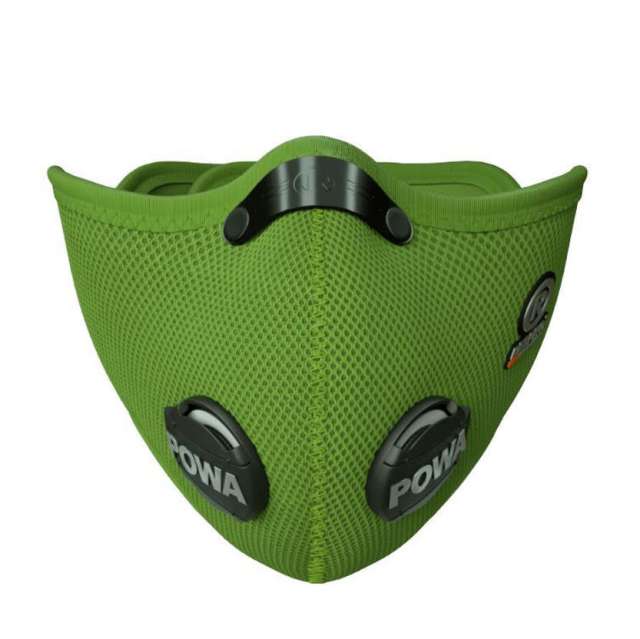
For improved air flow and comfortability the two Powa Elite valves on the CiNQRO™ mask allow faster air flow characteristics when breathing out at elevated breathing patterns, ie when you are giving it the beans from A2B which equates to less back pressure, less dampness in the filter, improved filtration, lower inhalation resistance all of which result in improved comfort and performance.

The CiNQRO™ package incorporates a complete mask fitted with a Hepa-Type particle filter for filtering submicron particles like diesel smoke, pollen, brake lining dust and any aqueous water vapor particles that  can carry various chemicals in the air. A spare DACC chemical/particle filter is also supplied as part of the package allowing filter interchangeability making the Cinqro™ mask suitable for use in a wider variety of environments from inner cities to the countryside.

A graphics rebuild for the look of the mask fits it squarely in the sports arena rather than the ‘scare the hell out of everyone’ arena.

For more FAQ,  see Respro® Masks FAQ

Posted in Air Quality | Tagged | Leave a comment