Sadiq Khan plans world’s first ultra-low emissions zone with new daily charges for swathes of London 

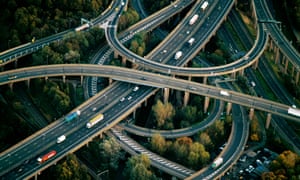
More than 150,000 Londoners with the most polluting cars will be hit with a daily charge to drive inside the North and South circulars from 2021, under plans announced today. Sadiq Khan set out his plans to clean up toxic air as he launched a consultation on the expansion of the world’s first ultra-low emissions zone (Ulez) across the capital.

Although the exact rate has yet to be decided, the Standard understands it could be as low as £3 or £4 a day, and would be no higher than £12.50.

The Mayor confirmed plans to introduce the Ulez in central London from April 2019 – six months earlier than expected – meaning drivers would pay £12.50 on top of the existing congestion charge.

 This would replace the “toxicity charge”, which comes in this October, under which pre-2006 diesel and petrol vehicles will face an extra £10 charge when they enter central London during peak times.

He also announced plans for the London-wide expansion of the Ulez for heavily polluting buses, coaches and lorries to take place in 2020.

It would be extended to the inner circular route round London for cars, vans, minibuses and motorbikes in 2021, leaving 170,000 motorists facing a choice of paying the levy or switching their vehicle.

Planned Ulez charges for diesel vehicles
Cars: £12.50

Vans: £12.50

Motorbikes: £12.50

Buses: £100

Coaches: £100

HGVs: £100

Mr Khan ruled out a ban on all diesel vehicles, which cities including Paris and Madrid are bringing in, insisting his plans would get rid of more polluting vehicles, sooner.

He said: “The air in London is lethal and I will not stand by and do nothing. Now I urge the Government to step up and match my ambition to transform the appalling air we breathe.

“Ministers need to deliver a national vehicle scrappage fund, reform fiscal incentives like vehicle excise duty and pass a powerful new Clean Air Act to Act end the toxic smog in London once and for all.”

Black cabs will be exempt from the Ulez, while minicabs like Uber will have to pay.

TfL figures show black taxis are currently responsible for 18 per cent of NOx emissions in central London, although all new cabs now have to be zero emissions capable.

Air quality and health campaigners welcomed the announcement while business groups expressed some concerns over the cost to small firms.

Friends of the Earth London campaigner Sophie Neuburg said: “The Mayor is absolutely right to announce plans to reduce the use of diesel in London – and call on Government to take stronger action nationwide.

“His proposals to introduce an Ulez earlier than originally planned, and expand it to the North and South Circular are a good first step. But as things stand, people in inner London will still be breathing in pollution belched out by dirty diesel vehicles for years to come.

“Sadiq Khan must follow the lead of Paris and Madrid, and commit to phase out diesel from London altogether by 2025.”

Dr Penny Woods, chief executive of the British Lung Foundation, said: “It’s great news that the Ulez will be introduced so much earlier than planned. Air pollution is a public health crisis that hits hardest people with a lung condition and children whose lungs are still developing.

However, Colin Stanbridge, chief executive of the London Chamber of Commerce, said: “We agree that it is important to reduce emissions, but we are also concerned about the financial impact on small businesses.

“We have significant concerns about the cost impact on business and would still call for a transitional fund to help those smaller businesses who could possibly go out of business without such support. We would also reiterate calls for an economic assessment by TfL before it goes out to statutory consultation.”

Source: Sadiq Khan plans world’s first ultra-low emissions zone with new daily charges for swathes of London | London Evening Standard

Posted in Air Quality | Tagged , , , , , , | Leave a comment

Report Highlights Australia’s Failure to Tackle Air Pollution 

State and territory governments have been accused of total failure in the fight for clean air after many of Australia’s largest polluters reported emissions hikes.

Environmental Justice Australia has delivered a scathing assessment of state regulators after crunching numbers from the annual National Pollutant Inventory at the weekend, AAP reported.

Toxic emissions from the coal industry’s mines, power stations and export terminals dominated the report.

The Bayswater coal-fired power station in NSW has reported a 770% increase in toxic coarse particle pollution during the past five years.

Further north, emissions from the Tarong Power Station in Queensland increased by 237% in just one year. A handful of other coal-fired stations on the country’s east coast also reported increased emissions, spurring calls from EJA for the commonwealth to take a bigger role in controlling toxic pollution.

“The health damage caused by air pollution costs Australians between $11 billion and $24.3 billion per annum, yet governments continue to allow polluters to poison communities,” EJA researcher James Whelan said.

Whelan added that the latest NPI data reveal the total failure of Australian governments to control air pollution and highlight the need for much stronger pollution controls and regulation.

Electricity generation from coal-fired power stations remains the single largest contributor of deadly fine particle pollution, which the EJA says accounts for more than 3,000 premature deaths a year.

Coalmines are the third-largest source of fine particle pollution.

“Particle pollution from coalmines has trebled over a decade, defying state government pollution controls,” Whelan said.

Coalmining is also Australia’s second-largest source of coarse particle emissions, accounting for 393 million kilograms of pollution, which is more than 40% of the nation’s total.

The National Pollutant Inventory is an annual report on air pollution in Australia, published by the federal government using information supplied by various industries and compiled by states and territories.

Source: Report Highlights Australia’s Failure to Tackle Air Pollution | Financial Tribune

Posted in Air Quality, Australia & Oceania | Tagged , | Leave a comment

Living in polluted cities is blamed for older men’s loss of brainpower 

Air pollution may take a much heavier toll on the mental abilities of men than it does on women, according to a study.

Men living in cities with high levels of pollution appear to lose their faculties for logical and verbal reasoning at a faster rate than women. For older men in the most polluted areas the loss could be equivalent to a year of education or a gap of more than 20 per cent in test scores.

Academics argue that the divide could be attributed to structural differences in the brain that leave men more vulnerable to the shrinkage of “white” connective tissue linked to air pollution. This theory has been challenged by independent scientists.

Public health researchers at Yale University in the United States and Peking University in Beijing analysed the performance of 25,485 people in China on maths and language exams conducted in 2010 and 2014. It is understood to be the first study to examine how these scores changed in relation to both day-to-day fluctuations and long-term trends in exposure to air pollution.

It found that young men and women tended to do equally well in the cognitive tests up to the age of 30, but men tended to do notably better than women later in adulthood.

In the most polluted cities, however, the scores of older men dipped dramatically, especially on the language papers. For every extra ten units on the Air Quality Index, which measures three different kinds of pollutant and runs from zero to 500, the average man was found to lose 2.1 per cent more of his cognitive ability than a woman of the same age in the same area. The index in London ranges from single figures to almost 200. The levels in Beijing tend to range between 35 and 250.

TOXIC CONSEQUENCES

  • Air pollution has been blamed for 40,000 early deaths a year in the UK and more than three million worldwide. The various particles and gases are known to irritate the lungs and exacerbate respiratory diseases. They have also been linked to a wide range of serious illnesses such as cancer and heart disease.
  • A report from the London School of Economics suggested that it may be responsible for a rise in road accidents, possibly because it reduces visibility or causes itchy eyes and noses.
  • In the past five years studies have shown that higher ozone levels make farm workers less productive, and that fine soot particles and carbon monoxide appear to harm teenagers’ exam performance.

The research is published as a working paper on the EconStor website. Xi Chen, assistant professor of public health at Yale, who led the study, said that the impact was large enough to be economically significant. “The gender gap in active white matter is a very plausible mechanism through which air pollution may impose a gender-differentiated impact on cognitive performance,” he said. “Our study might be the first step towards explaining this important phenomenon.”

Barbara Maher, of Lancaster University, who worked on research showing that nanoparticles of magnetite from air pollution can find their way into the brain, said that some important questions needed to be answered. “This paper suggests some gender differences in the impacts of air pollution on brain white matter and grey matter, but the measures of air pollution exposure are very broad-brush,” she said.

Gina Rippon, professor of cognitive neuroimaging at Aston University in Birmingham, said that the authors had misinterpreted the science of grey and white matter. “It would be interesting to know what kind of effects air pollution might be having on brain structure or function, but I do not think this paper is going to help that cause,” she said.

Source: Living in polluted cities is blamed for older men’s loss of brainpower | News | The Times & The Sunday Times

Posted in Air Quality, Health Effects of Air Pollution, Medical Studies | Tagged , , | Leave a comment

Lasers to track vehicles’ emissions in pollution test 

Drivers of polluting vehicles will have their emissions tracked next week in the first use of laser-based roadside technology in Scotland, The Scotsman has learned.

A busy junction in North Lanarkshire will be used to test the device, which analyses exhaust gases and records number plates.

The experiment on the A725 in Whifflet, south of Coatbridge, could lead to drivers being sent letters highlighting the pollution they cause.

The North Lanarkshire Council pilot, which begins on Saturday for two weeks, follows testing of the Emissions Detecting and Reporting (Edar) system by the East Central Scotland Vehicle Emissions Partnership, comprising East and West Lothian, Midlothian and Falkirk councils.

It was installed at the Maybury roundabout on the A8 in Edinburgh at the weekend, and on the A89 at Broxburn in West Lothian yesterday.

The move follows trials in London and Birmingham. US firm Hager Environmental and Atmospheric Technologies, which developed the pole-mounted device, said it produced a 3D image of a vehicle’s exhaust plume.

This calculates the concentration of pollutants such as carbon monoxide, carbon dioxide, nitrogen dioxide and particulates.

A spokeswoman for the Scottish Government’s Transport Scotland agency, said: “The trial will help to identify those vehicles causing the most pollution, support future development work of the vehicle emission partnerships and gather accurate emission factors for use in modelling and awareness-raising in the future.”

Environmental group Friends of the Earth Scotland said the technology must be backed by new low emission zones, which the Scottish Government has pledge to trial.

Air pollution campaigner Emilia Hanna said: “It will only be of practical use once councils start placing high emissions standards on vehicles via low emission zones, as the Mayor of London has committed to do.

“Scotland’s air pollution remains a public health crisis, with over 2,500 people each year dying prematurely because of toxic emissions, primarily from cars.”

Transport Scotland did not respond to questions over whether the equipment would be used for enforcement against drivers who breached low emission zone limits.

Source: Lasers to track vehicles’ emissions in pollution test – The Scotsman

Posted in Air Quality, Europe, UK | Tagged , , , , , , | Leave a comment

Survey finds poor air quality in Grand Harbour

Rome declaration calls for limits on air pollution from ships

The Grand Harbour has performed badly in a survey of air quality near cruise ships, according to a survey by an alliance of environmental organisations. (see www.NABU.de/mediterranean-eca )

NGOs from the Mediterranean and beyond are pushing for maritime emission controls for sulphur (SECA) and nitrogen oxides (NECA). The campaign is being led by the German Nature and Biodiversity Conservation Union (NABU).

The NGOs, which include BirdLife Malta, earlier this week met in Rome and adopted a declaration to designate the Mediterranean Sea an Emission Control Area (ECA) to limit air pollution from ships.

Spokesman Leif Miller said it was unacceptable that people and the environment in Southern Europe still suffered from the marine sector’s exhaust gas emissions while the Baltic Sea, North Sea and English Channel had much tighter standards in place since years.

Campaign spokesperson Daniel Rieger said: “We cannot accept any excuses for a further postponement of tighter emission standards for ships in Southern Europe as major shipping routes from Asia to Europe cross the Mediterranean Sea and ship traffic is expected to grow by up to 250% until 2050.

“Moreover we face a situation where the region is home to some of Europe’s most popular cruise destinations with a steadily increasing number of calls and subsequent local air pollution problems. Also intense solar radiation, especially during summer time, in combination with air pollutants causes health damaging smog and ground-level ozone.”

BirdLife Malta has written to Transport Minister Joe Mizzi highlighting its concerns about air pollution from ships and calling for action by Malta.

Source: Times of Malta ‒ Survey finds poor air quality in Grand Harbour

Posted in Air Quality, Europe | Tagged , , , , | Leave a comment

Mongolian capital to ban low-grade coal to ease smog

Mongolia will ban the burning of low-grade coal in its capital Ulaanbaatar within the next decade, the Ministry of Environment and Tourism said, as the country tries to curb toxic air pollution.

Ulaanbaatar is one of the world’s most polluted cities and also one of the coldest, and poor residents are forced to burn wood, coal and sometimes even trash as temperatures plunge below minus 40 Celsius (minus 40 Fahrenheit) in winter.

Poor “ger” districts, a sprawl of traditional tents that have sprung up on the edge of the city, account for about 80 percent of Ulaanbaatar’s winter smog, which has sparked protests from residents.

The country’s parliament has already approved a plan that will outlaw coal burning in the central business district next year, Lkhagvasuren Gunbileg, a senior officer at the National Committee on Reducing Air Pollution, told Reuters.

The ban will be implemented “systematically step-by-step” from 2018, she said, and will later be extended into the ger districts housing many former herders who have migrated to the city.

In these areas, harmful breathable particles known as PM2.5 can reach levels well above 1,000 micrograms per cubic meter during the winter, 40 times the maximum recommended by the World Health Organization.

Ulaanbaatar has previously focused on rehousing ger district residents into apartments with access to the heating grid. The government now plans to connect existing homes to city utilities and provide alternative heating methods, Gunbileg said.

“There will be a technical expo held to demonstrate to the masses what kind of technology is available and options for heating to choose from instead of coal,” she said.

Coal, one of Mongolia’s major export commodities, is a primary cause of the pollution, producing huge amounts of particulate matter as well as sulfur dioxide and nitrogen oxide, hazardous components of smog and acid rain.

China’s capital Beijing is also slashing coal use, while surrounding Hebei province plans to ban direct coal combustion in nine counties in 2017, with residents set to switch to electricity, natural gas or biomass.

Source: Mongolian capital to ban low-grade coal to ease smog | Reuters

Posted in Air Quality, Asia, Mongolia | Tagged , , , , | Leave a comment

Thousands of pollution deaths worldwide linked to western consumers – study 

Study shows extent to which US and western European demand for clothes, toys and mobile phones contributes to air pollution in developing countries

Western consumers who buy cheap imported toys, clothes and mobile phones are indirectly contributing to tens of thousands of pollution-related deaths in the countries where the goods are produced, according to a landmark study.

Nearly 3.5 million people die prematurely each year due to air pollution, the research estimates, and about 22% of these deaths are associated with goods and services that were produced in one region for consumption in another.

The analysis provides the first detailed picture of the extent to which consumer demand in the US and western Europe contributes to pollution in developing countries, with profound health consequences.

“If the cost of imported products is lower because of less stringent air pollution controls in the regions where they are produced, then the consumer savings may come at the expense of lives lost elsewhere,” the authors conclude.

The study also reveals how emissions from industrial hotspots affect the health of people in neighbouring countries and, to a lesser extent, more distant regions, as pollutants circulate on global air currents. About 12% (411,100) of early deaths globally were related to air pollutants emitted in a different region of the world, the research found.

The study focused on the emission of fine particulate matter pollution (PM 2.5) from power stations, factories, aeroplanes and shipping in 13 regions, taking in data from 228 countries. Particulates are thought to account for more than 90% of the global mortality from outdoor air pollution, raising the number of deaths from heart disease, stroke, lung cancer and asthma.

The tiny particles can trigger asthma attacks in the lungs and can cross from the air sacs in the lung into the bloodstream, where they can cause inflammation, alter the way blood clots, and make blood vessels more permeable. Particulates have also been shown to migrate into other tissues, such as the liver, kidneys and brain, although it is less clear what the health consequences are in these organs, and the effects also depend on the chemical makeup of the particulates.

“In general, air pollution links to general ill health,” said Matthew Loxham, a toxicologist at Southampton University who was not involved in the study. “It’s a range of different conditions.”

The scientists used a combination of air pollution data, emissions measurements and models of global air currents to tally up where pollution was emitted and where it ended up in 2007. An economic model, based on data from the Global Trade Analysis Project, was then used to attribute air pollution to the demand of consumers for finished goods, although the results were not broken down by product type.

Chinese emissions caused more than twice the number of deaths worldwide than the emissions of any other region, followed by emissions produced in India and the rest of the Asia region. The scientists calculated that PM 2.5 pollution produced in China is linked to more than 64,800 premature deaths in other regions, including more than 3,000 deaths in western Europe and the US.

However, this figure was significantly outweighed by the 108,600 premature deaths in China linked to consumption in western Europe and the US.

Steven Davis, a co-author based at the University of California, Irvine, said that the paper simply aimed to lay out the evidence for the benefit of policymakers. “It’s not really up to us to say what’s fair or not,” he said.

In a press briefing this week, his co-authors called for international action on the issue.

“For greenhouse gas emissions we have a global agreement. People can argue about whether its been effective or not – but at least we have a global framework,” said Dabo Guan, a professor in climate change economics at the University of East Anglia and the paper’s senior author. “People have thought air pollution was a local issue.”

Guan cites the example of mobile phones made in China, which might be sold for $200, around 70% of which goes to the company that designed the product and just $5-6 to the Chinese manufacturer.

“On average every six months we change our phone,” he said. “It has a health cost on the other side of the world.”

For countries like China, whose economies are dependent on exporting cheaply-made goods, improving environmental standards has to be balanced against potential negative economic impacts.

“Some other country would step up and say hey, we’re willing to let our people die to have that business,” said Davis.

Improving pollution control technologies in China, India and elsewhere in Asia would have a disproportionately large health benefit in those regions and worldwide, according to the analysis in the journal Nature.

Qiang Zhang, another author from Tsinghua University, Beijing, said that consumers in Europe and the US who buy cheap imported toys and clothes also bear a responsibility.

“We need to move our lifestyles away from cheap and wasteful,” he said.

Oliver Hayes, a pollution campaigner for Friends of the Earth air pollution, said: “No-one should be denied the right to breathe clean air, whether they live in Beijing or Barking. But air pollution doesn’t recognise borders, and it’s clear that the devastating impacts of polluters can be felt many miles from their activities.

Source: Thousands of pollution deaths worldwide linked to western consumers – study | Environment | The Guardian

Posted in Air Quality, Europe, Health Effects of Air Pollution, USA & Canada, World News | Tagged , , , , , | 1 Comment

Paris and London mayors announce scheme to gauge car emissions 

The mayors of Paris and London announced a new scheme for monitoring emissions from vehicles on Wednesday, aimed at improving air quality in the two capitals.

Anne Hidalgo of Paris and London’s Sadiq Khan said the system would set up a scoring system to identify real-life emissions from cars, with the aim of providing consumers with more accurate information.

“We should be able to set up a reliable scoring system which will be put to all our citizens and allow them to know what emissions are coming from which vehicles in reality,” Hidalgo said at an international conference on air pollution.

The scheme would rely on road and “real world” testing by emissions analytics and the International Council for Clean Transportation, and allocate each model of car a score based on all air pollutants emitted.

This would go further than present EU labelling schemes which regulate only certain pollutants and are based on laboratory tests.

“This new scheme will put an end to the ‘smoke and mirrors’ that has been employed and provide Londoners and Parisians with an honest, accurate and independent evaluation of the emissions of vehicles on our road,” Khan said.

“Tackling vehicle emissions is a priority if you are to tackle air pollution in your city,” said Wonsoon Park, mayor of Seoul, which also plans to try out the scheme.

Khan said 9,000 people in London died early every year because of air pollution. Hidalgo said the figure for Paris was 2,500.

French media said monitoring devices would be set up on Paris streets and on different makes of vehicles in the coming weeks as part of the scheme.

Source: Paris and London mayors announce scheme to gauge car emissions | Daily Mail Online

Posted in Air Quality, Europe, France, London, UK | Tagged , , , , , , | 1 Comment