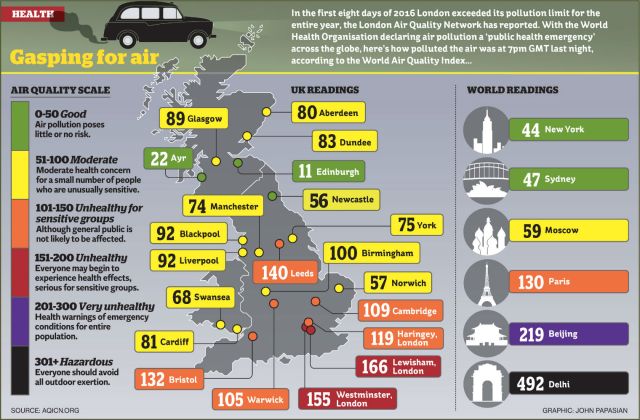
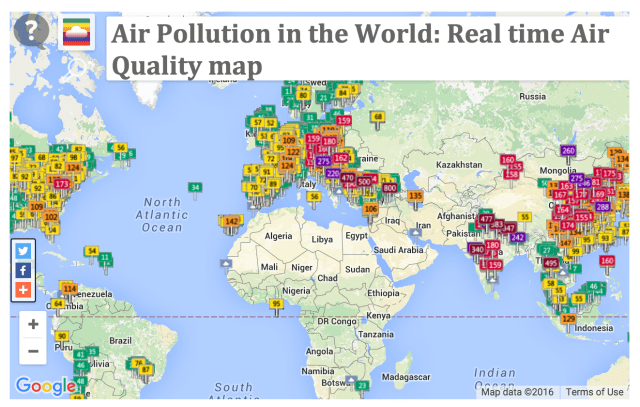
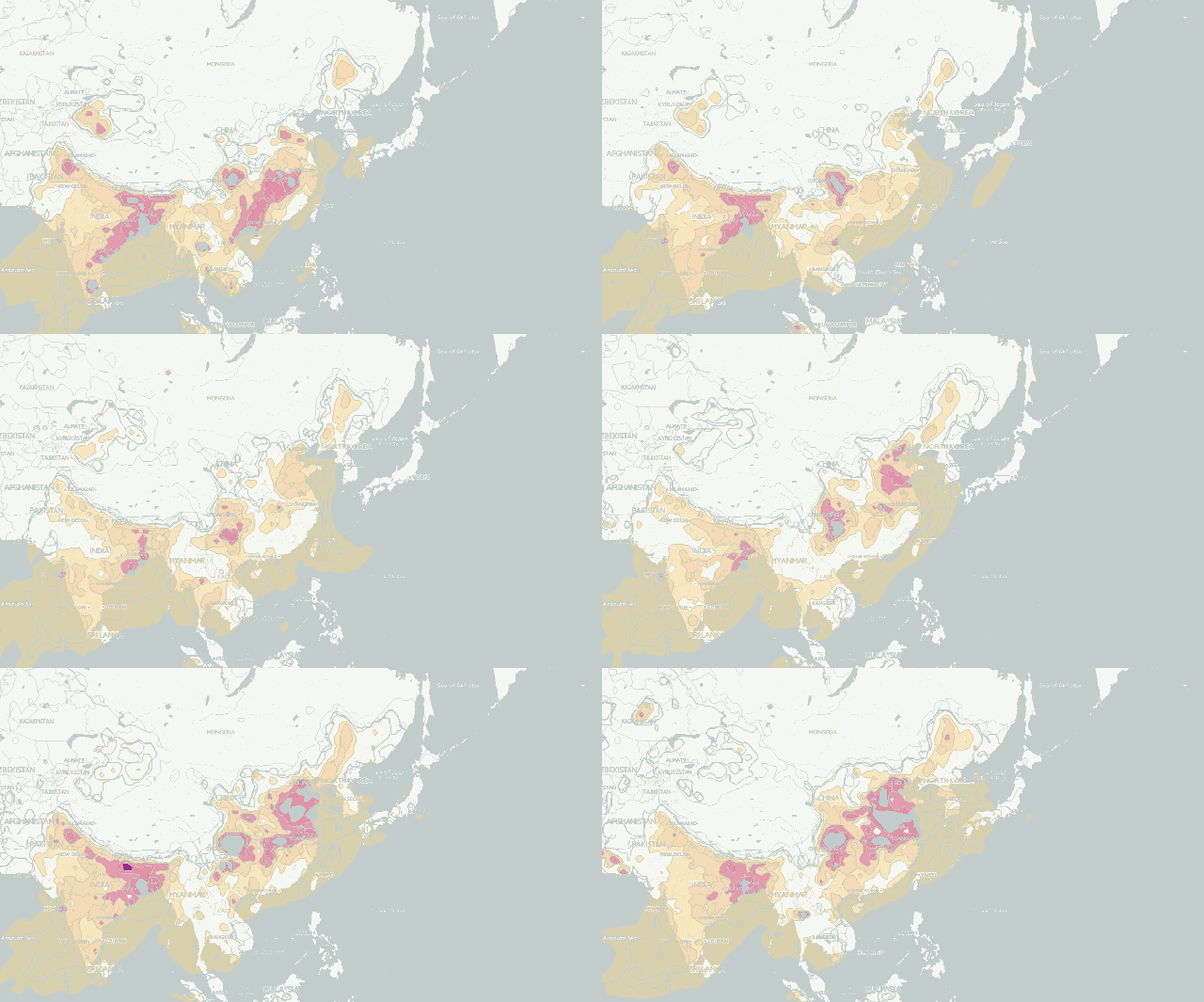
More people dying early from air pollution in England 

Premature deaths attributed to particulate pollution rose in 2013 after falling in previous years, government figures show

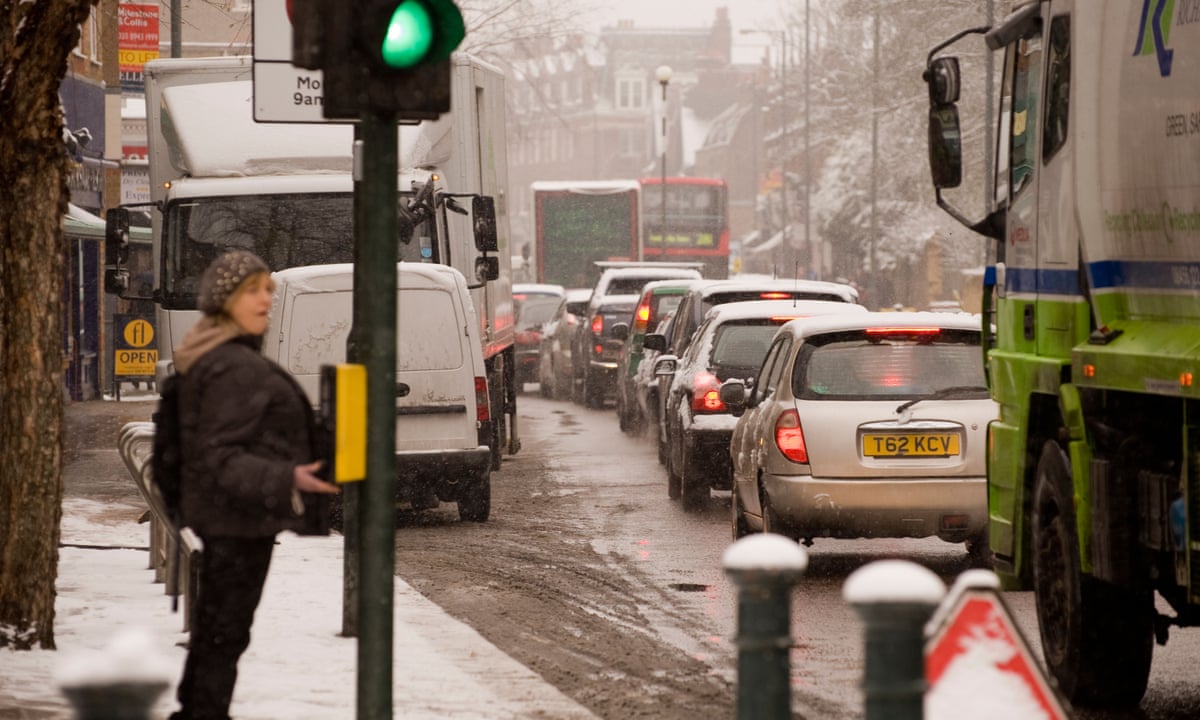
The rise in deaths attributed to air pollution was announced as scientists warned of high particulate pollution across much of London and south-east England. Photograph: Trevor Aston/Alamy

The number of premature deaths attributed to particulate pollution has risen,government figures show.

According to Public Health England, the percentage of premature deaths attributable to minute particles known as PM2.5s rose to 5.3% in 2013 in England from 5.1% in 2012. The death rate in London rose to 6.7% from 6.6%. The figures follow significant improvements in air quality across England in 2010 and 2011.

The figures were announced as scientists at King’s College London warned of “high” or “very high” particulate pollution across much of London and south-east England for a second day. People with heart conditions or breathing problems were advised to reduce exercise and to stay at home.

Much of the polluted air has drifted in from continental Europe and has been trapped by the cold air which is now spread over eastern England. “It has travelled through industrialised and urban parts of Europe over the last three days, picking up emissions.

“This will add to London’s already elevated pollution concentrations, and we are therefore likely to see widespread ‘high’ particulate pollution across the city with an outside chance of ‘very high’ at some very busy roadside locations,” said a King’s spokesman.

The high pollution levels are expected to drop within 24 hours as warmer, wetter air spreads from the west.

The government’s air pollution forecast today said: “Moderate, locally high, air pollution around London, which has built up due to persistent light winds, should gradually disperse during the day as winds begin to pick up a little. Similar for the pockets of moderate air pollution observed around central England.”

Official government figures suggest 29,000 people die prematurely from air pollution a year across the UK from particle pollution emitted by vehicles, central heating systems and dust.

However this figure does not include deaths attributable to the noxious gas NO2 which is largely emitted from diesel engines, the impact of which is proving harder to distinguish from particulate pollution than scientists had hoped.

Environment groups called for government and city authorities to issue better warnings of air pollution episodes and for immediate traffic restrictions.

Screen Shot 2016-01-22 at 08.45.43

A spokeswoman for Friends of the Earth said: “There must be proper public warnings when there are bad air pollution episodes like today’s – but rather than people having to restrict their activities it must be vehicles which are restricted so that people’s health is protected.”

Source: More people dying early from air pollution in England | Environment | The Guardian

Posted in Air Quality, Europe, London, UK | Tagged , , , , , | Leave a comment

Air pollution levels high as sandstorm envelopes Israel

Due to the heavy pollution levels, the Environmental Protection Ministry advised that sensitive population members, including those with heart and lung conditions, the elderly, children and pregnant

As a sandstorm blurred  visibility and engulfed much of Israel on Monday, air pollution levels climbed problematically high.

Hourly maximum levels of PM10 – particulate matter with a diameter of 10 microns or less – reached up to 27 times typical daily values on Monday morning, with the highest level recorded at noon in Rehovot, at 1,592 micrograms per cubic meter, according to Environmental Protection Ministry data. On a typical non-stormy day, levels of PM10 rest at around 60 micrograms per cubic meter.

Due to the heavy pollution levels, the Environmental Protection Ministry advised throughout the day that sensitive population members, including those with heart and lung conditions, the elderly, children and pregnant women, refrain from strenuous physical activity.

Although pollution levels reached their peaks in most regions of Israel between noon and 2 p.m., the ministry warned during the evening hours that significant concentrations of dust still impacted much of the country.

Improvements in air quality would only occur once expected rains begin – overnight in the North and gradually, during the morning hours, in the Tel Aviv region, the ministry said.

Other areas in addition to Rehovot with particularly high hourly PM10 values included Hadera, with 1,470 micrograms per cubic meter at 1 p.m.; Modi’in, with 1,193 micrograms per cubic meter at 1 p.m.; Beit Shemesh, with 1,175 micrograms per cubic meter at noon; and Arad, with 1,156 micrograms per cubic meter at noon.

Although the sandstorm only began wreaking havoc on Monday morning, 24-hour average pollution levels were still high as of 6 p.m. on Monday, according to ministry data.

In Rehovot and Hadera, the 24-hour PM10 averages were 8.5 times normal levels, while they were 6.9, 6.7 and 6.5 times typical levels in Tel Aviv, Nir Galim and Kiryat Ata.

The dusty conditions, and the rains projected to begin Monday evening, are the result of a wintry depression coming in from the Aegean Sea through southern Turkey and the Gulf of Iskenderun, Dr. Amos Porat, head of the climate department at the Israel Meteorological Service, told The Jerusalem Post on Sunday. Strong, southerly to southwesterly winds that brought in the sandstorms were expected to turn to a southwesterly to westerly direction, spurring rains in northern and central areas, Porat explained. Temperatures would become increasingly cool due to cold air flowing in from Eastern Europe and Turkey through the Mediterranean, he said.

For Tuesday, the IMS predicted frequent showers in the North and Center, with a chance of isolated thunderstorms, as well as snowfall on Mount Hermon, and strong winds and unseasonable cold throughout the country. Hazy conditions would persist, predominantly in the South, but also possibly in the Center, the forecast said.

By Wednesday, the IMS predicted scattered showers in the North and Center, gradually weakening throughout the day. Light snow was expected to continue falling on Mount Hermon, with unseasonable cold temperatures continuing around Israel.

Both Thursday and Friday would likely feature partly cloudy skies with a rise in temperatures to seasonal norms, the forecast added.

Source: Air pollution levels high as sandstorm envelopes Israel – Business & Innovation – Jerusalem Post

Posted in Air Quality, Middle East | Tagged , , , | Leave a comment

Pacific air pollution traced to Africa and Asia

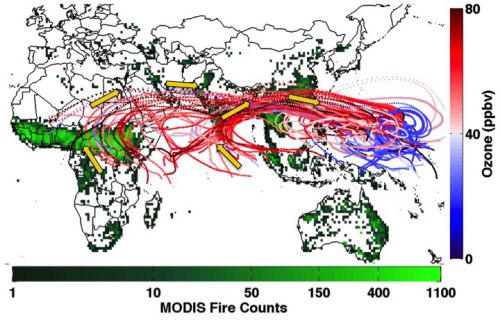
Burning down forests in Africa and South-East Asia causes ozone pollution in the air as far as the western Pacific Ocean, researchers say, calling for revision of global climate models to reflect their findings.

In a paper published in Nature Communications last week (13 January), the scientists say their data contradicts earlier theories on the origins of ozone-rich air parcels above the tropical western Pacific, which were thought to descend naturally from a higher atmospheric layer.

Ozone, a greenhouse gas, occurs naturally in the atmosphere. But it is also created from the reactions of pollutants produced by combustion engines and burning trees to clear land for agriculture.

Flying in two research planes at two different heights, the scientists analysed the air composition over Guam, the largest island of Micronesia, in the western Pacific.

Using data and models on wind, rainfall and forest fires, the researchers found that the Guam skies contained a cocktail of chemicals, alongside ozone, similar to the signature chemicals from fire smoke in Africa and South-East Asia.

Map showing Guam, Indonesia and Africa

“It’s surprising because we were very far away from any sort of pollutant source and we are still seeing levels of pollutants that we would see in very populated environments,” says lead author Daniel Anderson, an atmospheric chemist at the University of Maryland in the United States. “It is important to figure out where this pollution is coming from because it affects global temperatures and precipitation patterns.”

Anderson says thunderstorms and winds from South-East Asia could carry this polluted air high up to the atmosphere and far from its source in countries where deforestation is common, such as Indonesia — 3,750 kilometres away from Guam — and even those in tropical Africa.

Ozone-polluted air paths are red and regions with active fires are green. Credit: Daniel Anderson – See more at: http://www.scidev.net/global/climate-change/news/pacific-air-pollution-africa-asia.html#sthash.I7fX4QUm.dpuf

Robert Nasi, director of the forestry research programme of the global research group CGIAR, says he is unsurprised by the results, but is sceptical about the study attributing some of the ozone pollution over Guam to fires in West Africa.

“It would be important to look at this in more detail, because I have the strong feeling that the main culprits are the peat fires in Indonesia,” Nasi tells SciDev.Net. Looking at the composition of the aerosols from West African and Indonesian peat fires should give clues about this, he says.

He adds that, as well as efforts to reduce deforestation, bans on draining peat swamps and realistic fire management policies could keep the fires in check.

William Collins, an atmospheric chemist at the University of Reading in the United Kingdom, says the paper provides a good new data set to test climate models against, but points out that the study does not quantify the actual effect of biomass burning on climate change.

Researchers “could take this study forward and calculate […] how important it could be for climate change”, Collins says.

Source: Pacific air pollution traced to Africa and Asia – SciDev.Net

Posted in Africa, Air Quality, Asia | Tagged , , , , , , | Leave a comment

Killer pollution in City hits top ‘black’ alert level 

LONDONSKYLINE1210A

Pollution alert: Smog over the City FILE IMAGE Rex

Pollution in the City hit the top “black” alert as the latest figures showed tiny killer toxins in London’s air still claiming more than 3,000 lives a year.

A spike of particulate pollution reached a “very high” in Upper Thames Street yesterday, a 10/10 level which has previously been recorded just three times in the capital in the last two years.

People in the area should have reduced physical exercise, particularly outdoors and especially if experiencing symptoms such as a cough or sore throat, according to Government guidelines.

Scientists at King’s College London predicted this pollution would reach 9/10 in the busy street in the City today, which is “high”.

It was also forecast to hit 7/10 in Cromwell Road, in Kensington and Chelsea, also a “high”.

Anti-pollution campaigners seized on the figures to demand better public warnings from City Hall and Public Health England about filthy air.

“For goodness sake @PHE_London @MayorofLondon What does it take to get you to issue an #airpollution alert? Bodies?” tweeted Simon Birkett, director of Clean Air in London.

The City of London Corporation urged people to use its “City Air” app which gives alerts and routes to avoid pollution blackspots.

Meanwhile, latest PHE figures show the rate of fatalities attributable to PM2.5 particles rising in 30 out of 33 boroughs, having previously steadied in London and even declined.

Westminster now has the worst record for this pollution which scientists say is particularly dangerous as the particles are so small they can get deep into lungs and the bloodstream.

Frank Kelly, professor of environmental health at King’s College London, said the lack of any “substantial” decrease in deaths attributable to PM2.5 highlighted that “considerable more ambition” will be needed by the incoming mayor to address “this pressing public health issue”.

PM2.5 pollution is significantly blamed on diesel engines, coal-burning power stations, agriculture and shipping, with a large proportion in the capital blown in from outside, including from the Continent.

PHE previously put the death toll attributable to human-made PM2.5 pollution in London at the equivalent of 3,389 a year, based on 2010 figures, with Kensington & Chelsea the worst area.

The death rate associated then with PM2.5 was 7.2 for 1,000 people passing away, which declined to 6.6 in 2012 but nudged up to 6.7 in 2013, the most recent figures, equivalent to more than 3,000 deaths.

Eleven boroughs saw a rise of 0.2, including several leafy suburbs in south London.

They were Bromley, Croydon, Ealing, Hounslow, Kensington & Chelsea, Lambeth, Merton, Richmond, Sutton, Wansworth and Westminster which now has a rate of 7.9.

City Hall stressed air quality was improving, described the lastest PHE figures as “historic” but said they showed the need for more “bold measures” on top of those already introduced by the Mayor which include cleaning up the bus and taxi fleet.

“Our more recent measurements of particulate matter have shown the greatest improvements by busy roads where people are most exposed to pollution,” added a spokeswoman.

Nearly half of the health effects from air pollution are caused by toxins from outside London, including 75 per cent of cardiovascular hospital admissions associated with PM2.5, according to a report published by the Mayor.

Public Health England said it was “too early to read a trend because individual years are likely to fluctuate due to changes in weather conditions”.

Source: Killer pollution in City hits top ‘black’ alert level | London | News | London Evening Standard

Posted in Air Quality, Europe, London, UK | Tagged , , , , , , | Leave a comment

Air pollution: Car industry hub Stuttgart urges auto ban 

Residents of one of Germany’s foremost car manufacturing bases have been asked to leave their vehicles at home after smog breached maximum safe levels.

The south-western city of Stuttgart is home to Daimler – the makers of Mercedes – and Porsche.

Stuttgart’s mayor urged residents to use public transport or electric taxis, or to form carpools.

Stuttgart is the first city in Germany to issue an official alarm over levels of polluting particles in the air.

On Monday, levels of harmful PM10 particles in Stuttgart reached 89 microgramsper cubic meter – nearly double the safe maximum of 50 micrograms, according to the regional environment agency for the state of Baden-Wuerttemberg.

In a statement (in German), the city website urged residents to use public transport, electric taxis, or form carpools.

Some 500,000 car journeys are made each day in Stuttgart – the home of the famous Daimler and Porsche brands.

In a statement (in German), the city council also asked employers to let staff work flexible hours or even from home. It advised against using wood-burning stoves which could increase pollution levels.

“The aim is to improve the quality of life in Stuttgart,” the statement said.

Authorities acted after meteorologists warned there was a danger that cancer-causing particles would be trapped in the air above the city for several days.

They said it was because a layer of warm air higher up would prevent the particle-rich colder air near the ground from rising out of the city.

Source: Air pollution: Car industry hub Stuttgart urges auto ban – BBC News

Posted in Air Quality, Europe, Germany | Tagged , , | Leave a comment

Log fires or traffic fumes: what’s the real cause of Bergen’s air pollution? 

A recent spate of bad air days caused the Norwegian city to introduce a controversial alternate-day car ban. Yet research shows the burning of logs in homes is a far bigger contributor to Bergen’s pollution problems

The air quality in Norway’s second largest city, Bergen, grew so bad earlier this month that the council surprised residents by introducing a week-long, alternate-day plan for private vehicles based on their number plates. Cars with odd-numbered endings were allowed to drive on odd dates, while those with even endings could drive on even dates.

The plan, which terminated on 13 January as snowfall finally cleaned the air, reflected the fact that traffic is typically raised in public debates as the major cause of this pollution. But the reality is rather different: new research shows that in Norway, the burning of logs in homes is a far bigger contributor to the problem than traffic – and more damaging to residents’ health.

Recently, the Norwegian Institute for Air Research (NILU) published statistics showing that “particulate matter from log burning in cities is more dangerous than pollution from traffic”. Research by Statistics Norway (SSB), meanwhile, concluded that 61% of the particulate matter in Norway’s air stems from its 1.7 million existing log fires, compared to 39% from private vehicles, buses and lorries.

With more than 275,000 inhabitants, Bergen is the largest city on the western coast of Norway. Surrounded by seven mountains, its picturesque city centre boasts timber seaside warehouses that are on Unesco’s world heritage list. Its proximity to Norway’s fjords keeps residents and visitors in close contact with natural delights both green and blue.

That such a reputedly unspoilt city has become so heavily polluted is a subject of major concern for its inhabitants, and the causes are much discussed by local media. As well as the vehicle traffic and the grey, at times black, smoke from private and public chimneys, Bergen’s deep-water port also services huge supply ships that move equipment to oil installations out in the North Sea.

In winter, the weather phenomenon of temperature inversion worsens the situation. A horizontal “lid” forms over the city when the air near the ground is colder (and so heavier) than the air above it, trapping the polluted air which then fills up with more particles from vehicles, log- and oil-burners.

People with heart- or lung-related illnesses are periodically encouraged to stay indoors to avoid being exposed to this pollution. For the worst hit, it can be like breathing through a straw while your nose is blocked; for others, sore throats and eyes are the typical symptoms. Over the years, numerous residents have moved out of the city in order to improve their quality of life.

Terje Kindt-Lien, a retired engineer who was born and still lives in Bergen, recalls days 40 years ago when the city centre was hardly visible from the hillsides above due to the coke and log fires burning in peoples’ homes. In his view, “the effect of the alternate car-use scheme has been marginal – I notice an extremely small difference. Visually, the impression is still that the air is grey.”

Kindt-Lien is concerned that other sources of pollution are not being adequately dealt with: “The main polluter is perhaps not the private car,” he says. “The city council’s former deposit scheme for exchanging old private log burners with modern ones used to offer 5,000 krone (£400) per burner, but it was terminated a few years ago as it seems they ran out of money. It could be reintroduced. The municipality has also not ordered all public buildings to terminate the use of oil for heating.”

Kindt-Lien is also troubled by all the supply ships that visit Bergen’s port: “While the focus has been on the private car, one supply ship during 24 hours emits the equivalent pollution of 4,800 cars. So, the alternate car ban is unbalanced.”

Across several Norwegian cities, it has been reported that death tolls for people with heart and lung disease generally increase three-to-five days after pollution levels peak. According to Christina Guerreiro from NILU: “1,700 Norwegians die prematurely every year from being exposed to log fire particulate matter.”

This is confirmed by data from the European Environment Agency which records that, of approximately 2,000 Norwegians who died prematurely in 2012 because of air pollution, “more than 80% of the deaths were not caused by nitric oxide from diesel fumes – but by the fine small particles stemming from burning wood”.

According to Guerreiro, these particles – known as PM2.5 – not only enter deep into people’s lungs but also “the blood circulation system and have an impact on the cardiovascular system [heart and blood vessels]”.

Speaking while the alternate car-use scheme was in effect, Bergen’s councillor for climate, Julie Andersland, said she was aware of the potential effects of log burning but that the council had not yet discussed a ban. “In Bergen, it is hard to ban heating by logs because of other health-related worries, including people freezing. We have many poorly insulated, old timber houses where log fires are a major heat source. But we are working on this. If a ban is considered, the city council will have to agree on a new regulation and we are not there yet.”

Two days later, a message on the Bergen council website stated that the city “has started working on the introduction of a deposit scheme for old log burners to be implemented as soon as possible”.

Other European cities have already acted to deal with the challenges of log fires. From 1 January 2015, the use of log fires for heating was banned in Paris and seven of its surrounding regions (the ban includes open fireplaces and log burners). From the same date, 435 other cities in France banned open fireplaces.

This ban was enforced because of the low heating efficiency of open fireplaces (less than 20% of a log’s energy ends up as heat in the room), and the heavy air pollution caused by not burning the logs properly. Modern, clean-burning and closed fireplaces are not banned; their higher efficiency, around 80%, results in less particulate matter.

Andersland said she was aware of the Paris ban, adding that “there has not yet been a wide discussion in Bergen on this, although I get more and more input from people on the issue nowadays”.

It is a controversial subject, not least because Norwegians love their log fires. In 2013, the state-owned TV station NRK famously televised a 12-hour, prime-time “slow” programme on log fires titled “National Firewood evening, night and morning”. According to the New York Times, “The programme consisted mostly of people in parkas chatting and chopping in the woods – and then eight hours of a fire burning in a fireplace.” It followed on the heels of the bestselling book, Norwegian Wood: Chopping, Drying and Stacking Wood the Scandinavian Way, by Lars Mytting.

In addition, Norwegians can be reluctant to “talk down” the traditional image of Norway as a huge, unspoilt land and beautiful country, in spite of hard-hitting air quality data from both national and international institutions.

In December 2014, for example, the EFTA Surveillance Authority decided to take Norway to its court for a breach of the EU’s Air Quality Directive, following a complaint by the Norwegian Asthma and Allergy Association. Norway lost.The judgment stated: “It is indisputable that the tolerance levels were surpassed in Oslo, Bergen, Trondheim and the western region as early as 2008.”

So now, even if only temporarily, Bergen has had to do what the Greek capital, Athens, did decades ago: introduce alternate-day car use. “There has been an expected traffic reduction of 14-19% so far,” Andersland told the Guardian after five days of the ban. “When we tried this in 2010 the effect was 25%, but at that time there were fewer exemptions than today.”

Critics of the scheme, however, say it did little to address the fact that some cars produce much more pollution than others. Meanwhile, the grey smoke keeps on rising from Bergen’s chimneys, and the dangers of log burning are barely on the agenda.

Professor Harald N Røstvik specialises in sustainable architecture at the Bergen School of Architecture and UiS, and is the author of Corruption the Nobel Way: Dirty Fuels and the Sunshine Revolution


Source: Log fires or traffic fumes: what’s the real cause of Bergen’s air pollution? | Cities | The Guardian

Posted in Air Quality, Europe | Tagged , , , , , , , | Leave a comment

What is China doing to tackle its air pollution? 

The air in much of China is so bad the government has repeatedly declared “war” on it. The enemy are tiny particulates which spew forth from countless cars, coal-fired power stations and steel plants to create a dense, putty-coloured smog.

Beijing recently issued its first pollution ‘red alert‘, closing schools, factories and construction sites, and ordering half of all private cars off the road.

But these measures were only temporary. In a country where millions of people still look to industrialisation to lift them from poverty, what can China do to clear the air for good?

Four experts talk to the BBC World Service Inquiry programme.


Dr Jim Zhang: Frustrating that Olympic gains have been lost

Dr Jim Zhang, is a professor of global environmental health at Duke University and works in the US and China.

“You can definitely smell the pollution. Your eyes itch, you cough. It’s like a very rich, dense soup when the pollution levels are very high: thousands of chemicals, gases that are irritants, carcinogens.

“We have particles that have a diameter smaller than a virus. Human hair is very big compared to these. The larger ones will be deposited into the lung – that’s the biggest worry. But recent scientific evidence shows that when the particles are small enough they go into the bloodstream, they can go directly into the brain.

“It’s very hard to get data to show whether the pollution is going to have a long-lasting effect, like a cancer, but there is a reason to believe that, because the pollution soup contains chemicals which can induce cancer.

“It’s very frustrating to see pollution get worse after the huge effort which went into cleaning up the air in Beijing for the Olympics.

“I did several studies demonstrating that if you do a temporary intervention to bring the air pollution down, [and] measure cardiovascular and respiratory health indicators in young healthy people, all those indicators significantly improve.

“Women whose pregnancy was during those eight weeks of improved air quality got babies with a significantly higher birth weight, and we have a large database to show that in general if your birth weight is higher, your later life is healthier.

“In 2008 the air quality data was considered a state secret. The government was in a denial stage for years until 2013 when those huge episodes happened, and then they started to say ‘This is real now’. Because of [prioritising] economic interest over public health interest, the way they implement the existing air quality regulations is very inefficient.

“Although it’s now getting much better – the urgency is there – it’s still very challenging.”


Hongjun Zhan: Legislation is better; enforcement is still weak

Hongjun Zhan used to write China’s air pollution laws and now works for a US law firm advising foreign companies operating in China.

“Back in the late 1980s, people didn’t really think about air issues at that time. The pressure [to get the legislation right] was not big at all.

“From the late 1980s to, let’s say, the year 2000, just about a dozen years, that air quality has been getting worse and worse.

“In many situations, industry discharges pollutants without meeting standards. And very often they are not penalised by the enforcement officers.

“The law drafters today are doing a much better job than I did. The environmental laws today are more aggressive: [more] detailed, accurate, and comprehensive than the law I wrote.

“Enforcement is still not good enough. It is slightly better, but it’s still far from where it should be.”


Li Yan: ‘Red alerts’ represent real progress

Li Yan is the voice of Greenpeace in China.

“Actually what’s happening in China right now is quite positive. [The red alert] is a sign of progress in government’s understanding of how they should react and respond to these extreme conditions.

“Not only is it responding to 20 million Beijingers’ demand for clean air, it’s also setting a precedent for many other Chinese cities to follow.

“After the ‘airpocalypse’ in 2011/2012, the central government responded with a National Air Pollution Action Plan. At the core of that is a scheme to cut back coal use in the big metropolitan regions.

“Beijing’s extreme pollution and the ‘red alert’ are connected to China’s addiction to coal burning, and it’s very energy intensive way of industrial growth. Coal burning is the biggest single source of air pollution in China, and burning of coal, has for the first time in this century declined in 2014 compared to 2013.

“That’s a very significant thing. As a result air quality in the major cities like Beijing and regions in the Yangtze River Delta has seen improvements.

“Greenpeace has been capturing the government-released hour-by-hour data of 190 cities, and only 15% of them have seen an increase of their readings, and all the rest of them are more or less improved.

“We’re seeing renewable energy picking up and taking larger share of total power use in China, and then it’s actually already eating up the market space of coal.

“New coal power plants are still being proposed and still being invested [in] by local government and state-owned enterprises as if it was still the good old days. However I doubt there will be enough demand to support them, and they will very likely become idle plants.”


Mun Ho: Economic slowdown is complicating anti-pollution efforts

Mun Ho is an economist at the Harvard University China project, specialising in Chinese environmental policies.

“The Chinese system is very decentralised: the provincial and local city authorities have a lot of power. And it is not a simple matter of the central government in Beijing pressing a button and all the laws are enforced.

“All the city environmental protection bureaus are in charge of enforcing [pollution] laws, and you can imagine there is a wide range of enforcement standards across the country.

“For the past 30 years, the main criteria of promotion other than maintaining security, is economic growth, the competition to bring jobs and growth.

“We should align incentives so that the environmental officials have the incentive to enforce the rules throughout the system, not just the central government.

“The unexpected economic slowdown and the prolonged global recession has been a new challenge. It is complicating efforts to convince people to put in costly pollution equipment and to think about energy-saving technologies.

“China is officially growing at about 7%, but that hides quite a big range of experience. In some places – in the ‘rust belts’ – growth has really decelerated, perhaps even to 2%.

“The priority obviously then is to prevent layoffs and factory shutdowns. They have to worry about social stability if there is high unemployment.

“The issue really is spending a bigger part of the government’s budget on pollution control equipment. Governments today are rich enough that this is no longer such a very big issue. We are not talking about building houses versus building pollution control equipment. This is no longer the stark choice facing China today.”

The Inquiry is broadcast on the BBC World Service on Tuesdays from 12:05 GMT. Listen online or download the podcast.

Source: What is China doing to tackle its air pollution? – BBC News

Posted in Air Quality, Asia, China | Tagged , , | Leave a comment

How air pollution could harm YOUR chances of having a baby 

Scientists from Boston University revealed women who live close to major roads may struggle to become pregnant, and warned though small, the risk could pose a ‘global health problem’.

  • Areas of heavy pollution and traffic are linked to infertility, a study found
  • Women who live near major roadways have 11% higher risk of infertility
  • City couples with fertility issues may want to relocate, scientists suggest

Living in the city can harm a woman’s fertility, scientists revealed.


The high levels of air pollution and traffic fumes associated with heavily populated areas increases a woman’s risk of infertility, according to a new study from Boston University.

Furthermore, city dwellers are far more likely to have fertility problems than those who live in the country – because country air is cleaner.

Dr Sajal Gupta of Cleveland Clinic, who wasn’t involved in the study, told Reuters: ‘Couples suffering from infertility need to exercise caution especially if they are residing in areas with high ambient particulate matter.

‘Relocating to areas with low contamination of particulate matter is an alternative to prevent adverse impact on fertility.’

However, researchers cautioned, the increased risk was only slight.

The study followed more than 36,000 women from 1993 to 2003.

Scientists analyzed air pollution and traffic exhaust near their homes to see if there is a link between the air they breathed and their ability to conceive.

During the study period, there were nearly 2,500 reported cases of infertility.

Women who lived within 199 meters – or about a tenth of a mile – of a major roadway were 11 per cent more likely to experience fertility issues, the study found.

Lead study author Dr Shruthi Mahalingaiah said: ‘The risks are slight.’

However, Mark Nieuwenhuijsen, a researcher at the Center for Research in Environmental Epidemiology and the Barcelona Institute for Global Health, said even the slight increased risk can present a global health problem.

Dr Nieuwenhuijsen said: ‘For an individual woman, the results may not be that important because the risk of infertility only increases slightly, but for society as a whole it is important because so many women are exposed to pollution.’

The study examined data on particulate matter – which is a mixture of solid particles and liquid droplets that include dust, dirt, soot and smoke – found near the participants’ homes.

The scientists also assessed how close their homes were to major roads.

The team of researchers focused on primary infertility – which is when a woman tries to conceive for at least a year without success.


They also looked at secondary infertility – which occurs when a couple struggles to conceive again after having at least one prior pregnancy.

Those who lived close to major roads were five per cent more likely to report primary infertility.

And, those same women were also 21 per cent more likely to report secondary fertility than women who lived further away.

The link between air quality and fertility problems was found even in areas with less polluted air.

But, the association became stronger as the pollution levels increased.

However, the scientists didn’t know the exact dates when conception efforts started or infertility was diagnosed, which could provide a limitation to the study’s finding.

Dr Mahlingaiah added that while the study is one of the first of its kind to follow women over such a long period of time, more research is needed before any medical recommendations are made.

Yet, Dr Christopher Somers of the University of Regina, who wasn’t involved in the study, said: ‘Air pollution is worse near major roads with high traffic volumes, so avoid living in these areas if you can.

‘If this is not an option, pay attention to air quality advisories and adjust outdoor activities accordingly.’

The study was published in the journal Human Reproduction.


Source: How air pollution could harm YOUR chances of having a baby | Daily Mail Online

Posted in Air Quality, Health Effects of Air Pollution, Medical Studies | Tagged , , | Leave a comment