Traffic jams worsen air quality–study 

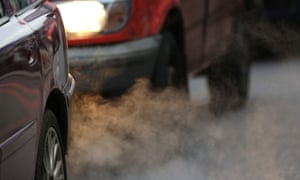
Here’s more bad news about the pesky heavy traffic in Metro Manila. A recent study by technical experts commissioned by the civic group Kaibigan ng Kaunlaran at Kalikasan (KKK) said traffic jams continue to worsen air pollution in Metro Manila, exposing people to risks of acquiring cardiovascular diseases and various health problems associated with breathing dirty air every day.

But what is causing the traffic? Ed Alabastro, executive director of KKK said: Overpopulation and the sheer lack of discipline of Filipinos.

These two, he said, are the reason for Metro Manila’s major traffic woes.

“Traffic is the reason for poor air quality but it’s the population that is causing traffic in Metro Manila. We are over populated,” he told the BusinessMirror in telephone interview.

Besides Metro Manila’s huge population, “Filipinos lack discipline. That’s another problem,” he added.

He said like Metro Manila, highly populated urban centers, like Metro Cebu and Metro Davao, are sure to experience living with poor air quality sooner or later.

“Metro Cebu’s traffic will lead to poorer air quality,” he said.

The study commissioned by KKK, he added, confirms the problem caused by traffic congestion—which is poorer air quality.

“The more engines are running longer, the more pollution we get,” he said in Filipino.

Based on the study, the congestion in Metro Manila is costing the country billions in lost revenues.

It is also contributing largely to respiratory and cardiovascular diseases, according to the study.

“Inhalation and ingestion of pollutants from mobile sources can cause diseases, such as asthma, chronic obstructive pulmonary disease, heart disease and stroke,” the study said.

Conducted for a period of two years, the study was completed recently with support from nonprofit group Clean Air Asia, scientific research institute Manila Observatory and independent professionals.

Other “area” sources, including burning refuse, street-side cooking and construction work, account for 20 percent of air pollution, while only 4 percent is attributed to “industrial” sources.

The project, “Modeling Particulate Matter Dispersion in Metro Manila”, used an internationally recognized mathematical technique to predict the pathways of pollution from various sources.

Factors that impact air quality were used as inputs to the mathematical modeling: air quality-monitoring data, topography, actual traffic count, type of vehicles and fuels, and meteorology, such as wind speeds and directions that vary in different months.

Due to variability of these factors, not all of Metro Manila experiences dirty air the same way, the study noted.

KKK, or “Friends of Progress and the Environment”, a nongovernmental organization that advances sustainable development by providing science-based research to policy-makers, said that traffic congestion is now a critical health issue.

The study specifically focused on particulate matter that can easily enter people’s lungs and cause coughing, sneezing and asthma in children. Such small particulates are also internationally recognized as causes of ischemic heart disease, cardiopulmonary diseases, respiratory dysfunctions and lung cancer.

According to the World Health Organization, around 3 million deaths per year are linked to outdoor pollution, with the majority occurring in Southeast Asia and the Western Pacific.

In the Philippines, the Department of Health has noted that the leading causes of death include cardiovascular and respiratory diseases, among them, lung cancer exacerbated—if not directly caused—by air pollution.

While the group lauded the national government’s drive to solve traffic congestion, it emphasized that a lot can still be done to address traffic and the critical risk it continues to pose to citizens.

To address the problem, the study recommended a “holistic” approach to solving air pollution and traffic congestion. It proposed greater coordination among agencies handling traffic and environmental issues; establishment of a traffic-management bureau to oversee the traffic situation.

Strengthening of the motor-vehicle inspection system and traffic-management efforts; installation of more closed-circuit television cameras to monitor both social and environmental concerns; and upgrading of traffic light system to deal with increased traffic volume; and lesser dependence on manpower to direct traffic.

The study also recommended that enforcers should undergo a uniform training program, implementation of the no-contact apprehension and stricter compliance to existing emission standards.

Motorists should also consider the quality of fuels they use, along with reliability and cost.

It recommended the enhancement of air-monitoring capability of the Department of Environment and Natural Resources, by putting up more monitoring stations in critical areas.

The group also called on government to lead a shift from cars to mass transit over the long term.

“A highly functional mass transport system, combined with land use and population management, would greatly support a drive for cleaner air in Metro Manila,” the study said.

Source: Traffic jams worsen air quality–study | BusinessMirror

Posted in Air Quality, Asia, Philippines | Tagged , , | Leave a comment

Traffic-clogged Cairo shifts sights to cycling 

Choked with high air pollution and chronic traffic congestion, the Egyptian capital is struggling to shed off this image.

Cycling seems one key. Local authorities in Cairo, one of the world’s most populous cities, this week unveiled a project aimed at weaning people from private and public motor transport to bicycles.

Titled “Biskelta”, Arabic for “A bicycle”, the project targets areas in the vicinity of the city’s subway system, pedestrians-only areas as well as surroundings of the main two state-run universities in Cairo.

Bicyle lanes

“The state seeks to encourage citizens to reduce the use of private cars by providing a safe and inexpensive means of transport in order to ease overcrowding and curb air pollution,” Cairo Governor Atef Abdul Hamid said after he signed an agreement on the project with the United Nations Humanitarian Settlements programme, UN-Habitat.

“Both sides have agreed on sites of the project, its management and building lanes for bicycles in the designated areas in order to ensure safe use of bicycle sharing.”

Abdul Hamid said that the project has received backing from President Abdul Fattah Al Sissi. Since he took office in 2014, Al Sissi has been seen on several occasions participating in street cycling rallies.

Young people, who account for more than 60 per cent of Egypt’s 93 million population, are the main target group of the group, according to Abdul Hamid.

The project, expected to cost 30 million Egyptian pounds (Dh5.1 million), is based on picking, riding and parking bikes in designated brackets.

“The bike-sharing system has been tried around the world and has proved success in encouraging the use of non-motorised transport,” Rania Hedeya, the UN habitat manager in Egypt, said at the signing ceremony.

“Cairo is seeking to benefit from global experiences in the transport field, especially those cutting pollution,” she added.

More than 20 million people are estimated to living in the Greater Cairo zone that includes Cairo and the adjoining cities of Giza and Qaliubia.

The Egyptian government is currently building a new administrative capital outside Cairo with the aim of easing population and bureaucratic pressures on the age-old capital.

The “Biskelta” project is part of ongoing efforts to upgrade the urban transport system in Cairo, according to Khalil Saad, an adviser to the Cairo governor.

“The bikes will become part of public transport in Cairo. They will be available at designated places where the citizen will ride the bike to reach the nearest place where he’ll leave it,” Saad told private television station Al Mehwar.

This bike-sharing scheme will be covered by a protection tracking system, the official added.

Public awareness

“There will be a public awareness programme before the project comes into effect.”

He did not provide details about the timetable of the project or fees for individual use.

The idea of introducing a bike-sharing system into Cairo has enthralled some residents of the sprawling city.

“This is good news for Cairo, its people and the environment,” Wajdi Mahmoud, an engineer, said enthusiastically.

“Encouraging people to ride bikes will certainly help in controlling air pollution, a matter that will have a positive effect on the public health and the capital’s environment.”

The 38-year-old man said he has the habit of riding his bicycle on weekends when Cairo usually has light traffic as part of his exercising.

“Doing this on other days will be a kind of madness because you can’t compete with cars and pedestrians, who don’t need any of road rules,” Mahmoud said.

“Let’s hope the ‘biskelta’ project will be the first step in spreading the bike culture in Egypt. Lanes for bikes should be part of the new network of roads,” he added, referring to an ongoing massive scheme undertaken by Al Sissi’s administration to revamp and expand the nation’s routes.

Source: Traffic-clogged Cairo shifts sights to cycling | GulfNews.com

Posted in Africa, Air Quality | Tagged , , , | Leave a comment

Chinese cities deal with extreme smog, haze

The smog and haze issue in China has been a problem for many years, and recently it has become a severe problem. It has the potential to ruin a healthy life for millions of civilians.

The concept of environmental pollution is still very unclear to a mass majority of the population. Out of many cities in China suffering from the issue and its consequences, Xi’an residents are tired of living their life in a town full of smog and is ready to take action.

“It’s just an average day, I didn’t even realize that the haze is still there,” said Xi’an resident Yu Liu. “I mean, it was way worse in the winter, you can barely see the buildings in front of you some time, and it’s quite impossible for me not to wear a mask to go outside.”

In 2016, Xi’an became the Chinese city with the worst and most serious haze problem. According to the data from the Airvisual app, the air quality index (AQI) number reached a high of 687 on May 5, 2017. The Airvisual is a smart air quality monitor that shows immediate and accurate air quality data; the AQI is the universal index that tells people how clean or polluted the air is.

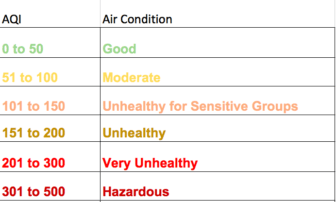
According to the United States Environmental Protection Agency (EPA), when the AQI number reach 101, it’s already unhealthy for sensitive groups, more related numbers show in the chart below.

EPA AQI standard of air quality. 

“The emission of anthropogenic pollutants is much larger,” said Tao Jiang, the Municipal Environmental Protection Bureau Director of Air Pollution Control. “There are few winds, less rain, and less light during the spring, fall, and winter. These three factors lead to the difficulty of spreading pollutants and accumulate in the atmosphere. In general, the character factor and meteorological factors result in the Xi’an haze.”

According to Jiang, the EPA is a comprehensive organization, and it has the responsibility of coordination and policy development work, from the development of Xi’an, pollution problems look like air pollution problems. However, it’s urban development issues that need every resident’s effort to solve.

The causes of haze. Infographic by Kaiyue Zhang

“The protection of the environment is everyone’s responsibility,” said Jiang. “Especially the air pollution, we have the responsibility to protect the environment. Now with the attention of the country and the urgent needs of the people, everyone’s environmental awareness has improved, and I believe it will be better.”

The website earth.nullschool.net directly visualized various environmental conditions and atmospheric climate on a worldwide scale. They do this by putting what you want to observe, the latitude and longitude of a particular area, which is pictured in Figures below. The vivid visualized data would show on board.

Compare to the U.S., more specifically, to Michigan, the air condition and pollution is much better than Xi’an, like shown in the comparison diagram below.

“We all know it’s bad, but not a lot of people can realize how bad, and that is has the potential to ruin our life,” said Fanshi Xi, a Xi’an resident who has been volunteering to promote the awareness of environmental damage in Xi’an. He has been working toward informing the population through Wechat and Weibo media platform since 2015.

“The government won’t stop building new construction projects. Even though they have the knowledge that it would cause serious, long-lasting environmental issues. There are always new buildings, new neighborhoods, and new subways, but there has been little improvement on how to reduce the haze. It looks better only because it’s the summer, they all know the haze will get worse again in the winter, but nobody seems to care.” Xi said angrily.

“More and more tall and dense buildings in Xi’an are being built,” said Nan Jiang, the director of the atmosphere room at Xi’an Municipal Environmental Protection Bureau Environmental Monitoring Station. “They’ve blocked the flow of air, increased the city heat island effect, the city government has been informed, and are aware of this problem. In 2014, the city already passed two documents to form the corridor of city surroundings, and we are working on it.”

The officials release the announcement that the relevant department is trying their best to improve the air condition by paying close attention to coal pollution control, for example, the Gaoxin district in Xi’an has demolished 18 coal-fired boilers and fund ¥3 million, which equates to $444,444.

“The city is making efforts, but it cost more than money, it is going to take a massive amount of time and the support from all the residents,” Jiang said. “It will be better, someday.”

Source: Chinese cities deal with extreme smog, haze | Spartan Newsroom

Posted in Air Quality, Asia, China | Tagged , , , , | Leave a comment

Belfast bonfires pollution ‘double recommended limit’ 

Dozens of bonfires lit across Belfast on the Eleventh Night saw dangerous air pollution reach more than double internationally accepted levels.

Pollution in the city began to rise after 10pm on Tuesday and peaked at midnight before dropping and then peaking again at 6am on Wednesday.

Levels of potentially lethal fine particulates soared during monitoring, prompting concerns about the impact on health – particularly for the young, old, vulnerable and sick.

Pollutants known as PM2.5 were detected at four or five times the levels normally seen in Belfast.

“Some problems associated with PM2.5 are lung problems, cardiovascular problems, and recent studies link exposure to fine particles to dementia,” Dr Liz Coleman, from NUI Galway’s School of Physics and Centre for Climate and Air Pollution Studies, said.

The levels in the city were found to be more than twice the limit recommended by the World Health Organisation.

The UK’s Department for Environment, Food and Rural Affairs states that there is no safe level for this type of pollution.

It warns that long-term exposure is the biggest issue, but high concentrations over a short period can exacerbate lung and heart conditions, significantly affecting quality of life, and increase deaths and hospital admissions.

Air quality is monitored at seven locations across greater Belfast.

Bonfires lit on the Eleventh Night were still smouldering as Twelfth of July parades got underway on Wednesday, ahead of the clean-up operation.

In some areas, damage was caused to nearby homes with windows cracked or frames melted.

Firefighters were kept busy dealing with incidents and calls peaked at a rate of one every minute.

Source: Belfast bonfires pollution ‘double recommended limit’ | UTV – ITV News

Posted in Air Quality, UK | Tagged , , , | Leave a comment

Smog and pollen: Double-whammy for 127 million Americans

About 40% Americans live in counties where a “double whammy” of unhealthy levels of smog and ragweed pollen — both tied to climate change — combine to threaten respiratory health, a Natural Resources Defense Council report released Tuesday finds.

“Today, 127 million Americans live where ragweed and ozone can threaten their next breath,” said Kim Knowlton, senior scientist at the NRDC, who oversaw the project. “This health threat will just get worse if we don’t curb climate change soon.”

Climate change, caused by the burning of fossil fuels such as oil, gas and coal, both worsens ozone pollution and extends the ragweed season, the report said.

The late summer and early autumn season for ragweed pollen is now almost a month longer in many parts of the U.S. than 20 years ago, and that trend is likely to continue, the NRDC said. 

Smog forms on warm, sunny days and is made worse from the chemicals that come out of vehicle tailpipes and from power plant and industrial smokestacks. It worsens respiratory illnesses such as asthma and chronic obstructive pulmonary disease (COPD). Plus, allergies alone can be life-threatening, especially in children, said Perry Sheffield, a pediatrician at Mount Sinai in New York.

In addition, air pollution from smog and allergens doesn’t just impact the lungs, it also affects the brain, heart and skin. “Clean air is so important for human health,” Sheffield said.

Ragweed was selected for this report instead of other pollens, such as tree and grass, because more people are allergic to it than to all the others combined, Knowlton said. Also, ragweed comes out toward late summer when temperatures, and thus smog levels, are highest.

The report includes a special focus on 15 of the worst jurisdictions and states where both smog and pollen are especially bad. Those, listed in order starting with the worst, include: the District of Columbia, Connecticut, Rhode Island, Illinois, Pennsylvania, Utah, Ohio, Arizona, Michigan, Massachusetts, Delaware, Wisconsin, New Hampshire, Indiana and Kansas.

“It’s ironic and tragic that the nation’s key ‘hot spot’ is Washington, D.C., the very place where wrongheaded policy threatens to make climate and pollution problems worse by the day,” said Juanita Constible of the NRDC. Instead of dismantling the Clean Power Plan, the federal government should focus on limiting smog, curbing power plant pollution and increasing vehicle fuel efficiency, she added.

The group said governments at the state and local levels should also work to ramp up the use of clean energy and diminish smog levelsamong other actions.

The National Climate Assessment, a federal report released in 2014, also warned both ozone levels and allergens would likely worsen due to climate change. The NRDC report is a follow-up to previous air quality reports released in 2007 and 2015.

Source: Smog and pollen: Double-whammy for 127 million Americans

Posted in Air Quality, Allergies, USA & Canada | Tagged , , , , , , , , , , , , , , , , , , | Leave a comment

Delhi air pollution study: Forget peak hour, now Nitrogen oxide level spikes to unacceptable levels throughout the day 

The concept of travelling in non-peak hour is slowly disappearing as Delhi faces rush hour between 8 am-8 pm, every day and it is only getting worse day by day. A study by the Centre for Science and Environment for the month of June has shown there is virtually no difference in travel time between peak and non-peak hours. During the peak hour with lower traffic speed, the level Nitrogen oxide emitted by the vehicles increase by 38 per cent, according to a report by Indian Express.

The study was conducted through Google maps on 13 connecting roads with more than 60,000 passenger car units per day on an hourly basis for one month, the report said.
Using Central Pollution Control Board’s real-time monitoring data in four stations, the study found that when the average speed reduces to 25km/hr the NO2 level increases to 94 microgramme/cubic metre from 68 microgramme/cubic metre in the morning when the average speed 28km/hr is present, the IE report said. The report presented the grim picture of traffic in the national capital and warned off even worse situation during the winter when temperature inversion happens during evenings.

The CSE Director Anumita Roychowdhury has said to the newspaper that if the action is not taken immediately, Delhi will merely run to a standstill. Raising concerns she also pointed out that the number of cars in the city will only increase as prices drop after the implementation of Goods and service tax, the IE report said. Roychowdhury said the consequence is inevitable as in 2017 unrestrained vehicle numbers have crossed the 10 million-mark.

Source: Delhi air pollution study: Forget peak hour, now Nitrogen oxide level spikes to unacceptable levels throughout the day – The Financial Express

Posted in Air Quality, Asia, India | Tagged , , | Leave a comment

Air pollution a concern at levels currently accepted as ‘safe’ 

Government agencies must not become complacent in the effort to provide clean air to all citizens, warn authors of a new report.

The Forum of International Respiratory Societies (FIRS) warns today that government agencies must not become complacent in the effort to provide clean air to all citizens. Despite the advancements that have been made since the 1963 introduction of the Clean Air Act in the United States, much more remains to be done. The most recent example of this is a report published in the New England Journal of Medicine looking at 12 years of Medicare beneficiary data, which showed the risk of death increased in proportion to the amount of fine particulate matter in the atmosphere. Most concerning was the finding that, although the current National Ambient Air Quality Standards declare that 12 micrograms per cubic meter of fine, inhalable particles (those with an aerodynamic diameter of 2.5 micrometers or less, or “PM2.5“) is an acceptable level, there was a 13.6% increase in the risk of death for every increase in 10 micrograms of fine particles per cubic meter of air below that “acceptable” threshold. The study also found there was no “safe” level of exposure, or level where the risk of death was unchanged.

Major producers of PM2.5 particles globally include the burning of solid fuels (such as coal and wood), and various fuels for transportation. “More than 2.8 billion people worldwide use solid fuel for cooking, and many more use solid fuels for heating their homes,” according to Dr. Akshay Sood, Professor of Medicine at the University of New Mexico and member of FIRS Environmental Committee.

Dr. Sood continues, “People have seen pictures of New Delhi, Beijing, or Los Angeles smog. This smog is made up of these fine particles. It is concerning that communities in the United States that meet the National Ambient Air Quality Standards and believe their air is ‘safe’ may not entirely be protected from the adverse health effects of PM2.5.” Certain segments of the population, such as children, the elderly, and those with cardiopulmonary diseases are at higher risk of the health effects of pollution.

Inadequate outdoor air quality affects many people around the world. The World Health Organization (WHO) estimates that 92% of the world’s population live in areas with inadequate outdoor air quality, and this pollution contributes to 1 out of every 8 deaths. This new data from the United States should spur governments to redouble their efforts to provide their citizens with the cleanest air possible. FIRS strongly recommends compliance with WHO Air Quality Guidelines, as well as the Paris Climate Agreement.

Source: Air pollution a concern at levels currently accepted as ‘safe’ — ScienceDaily

Posted in Air Quality, Health Effects of Air Pollution | Tagged , , , | Leave a comment

Tube passengers ‘breathe in 12m toxic air particles a minute’… and could be at risk of dementia 

Tube travellers could be at risk of developing dementia as it emerged passengers can inhale more than 12 million toxic air particles a minute on the Underground.

Monitors placed on the Tube network by Transport for Londonfound that “nanodusts” comprised mostly of iron oxides surge with the movement of trains.

They are thought to spike because of the grinding of wheels and rails as trains brake, and are also blown up from the tracks as trains move along them.

Peaks measured by TfL and released to The Sunday Times under freedom of information laws found that particle levels on the Central line exceeded two million particles for every litre of air.

Ten litres of air are breathed in by adults every minute, meaning passengers could inhale between 12 and 20m particles in that time. Despite being different from pollution on roads, the “nanodusts” are said to be equally toxic and are often so small they can pass straight into people’s organs and brains.

The British Lung Foundation’s Professor Stephen Holgate warned such exposure could lead to dementia.

He told The Sunday Times: “The particles in underground railways are rich in iron and other metals such as copper, chromium, manganese and zinc. Metal particles increase our risk of asthma, lung and cardiovascular disease and possibly dementia.”

The World Health Organisation (WHO) says humans should not be exposed to more than 50 micrograms of particles per cubic metre in an average 24-hour period.

But on the Northern line, TfL measured the mass of particles per cubic metre of air peaking at between 250 micrograms and 1,000 micrograms. Similar levels were reportedly found on the Victoria and Piccadilly lines.

TfL insisted commuters and staff would not be exposed to excessive levels of toxic air because they do not spend all day in the Tube.

Mark Wild, managing director of London Underground, said: “We have a new air quality programme to ensure particles are kept to a minimum. Levels are well within Health and Safety Executive guidelines.”

But Professor Barbara Maher of Lancaster University told the Sunday Times: “There is growing evidence that exposure to iron magnetite nanoparticles, from urban air pollution, raises the risk of Alzheimer’s disease.”

Source: Tube passengers ‘breathe in 12m toxic air particles a minute’… and could be at risk of dementia | London Evening Standard

Posted in Air Quality, Europe, Health Effects of Air Pollution, London, UK | Tagged , , , | Leave a comment